


⚡ TL;DR: Homeowners in Sunrise should avoid common errors like using bleach or ignoring moisture, as professional mold remediation is essential for ensuring your indoor environment stays healthy and safe.
📋 What You’ll Learn
If you live in Sunrise, Florida, protecting your home from mold requires specific knowledge of our humid climate. This guide reveals how to avoid common pitfalls during the mold remediation process.
- Avoid the common bleach trap by understanding why standard household cleaners often fail to kill mold roots on porous surfaces and instead feed the growth of new colonies.
- Control South Florida indoor humidity by learning how to establish and maintain a proper baseline moisture level to prevent mold spores from taking hold in your living spaces.
- Locate hidden moisture sources effectively before you attempt any repairs, ensuring that water trapped behind your drywall and baseboards is fully addressed to stop recurring mold outbreaks.
- Prevent dangerous cross contamination risks by mastering the containment techniques required to stop mold spores from spreading to unaffected rooms while you are performing necessary cleanup and remediation.
📖 Reading time: 7 min
✍️ Author expertise: Certified Sunrise water damage technician with extensive field experience handling local mold remediation.
You think you wiped out that patch of mold in your Sunrise laundry room, but deep down, you know it’s coming back. You scrubbed, you bleached, and you hoped for the best, yet that telltale musty smell is already creeping back through your vents.
Most homeowners in South Florida approach mold like a weekend DIY project, not realizing they are actually fueling the fire. That simple mistake is silently wrecking your home's air quality and costing you thousands in future repairs.
If you keep treating the symptom instead of the source, you are throwing your money away. Here are the 7 critical errors local homeowners make that turn a small spot of mold into a full-scale property nightmare.
The Bleach Trap: Why Household Cleaners Feed Mold Colonies
Most Sunrise residents grab a bottle of bleach the moment they spot black spots on their walls. It seems like the logical weapon, but you are actually doing the mold a favor. Bleach is mostly water, and water is the primary fuel that mold needs to thrive.
When you spray a porous surface like drywall or wood with bleach, the chemical component stays on the surface while the water content soaks deep into the material. You might kill the surface color, making the area look clean for a few days, but the root system remains alive and well underneath.
Think of it like cutting the top off a weed while leaving the roots buried in the soil. Eventually, that root structure pushes back through the surface, usually angrier and more resilient than before.
Why Bleach Fails on Porous Surfaces
- The chlorine in bleach cannot penetrate porous materials, leaving mycelium roots untouched.
- The moisture added by the liquid encourages the colony to spread further into your wall cavity.
- Cleaning with bleach without protective gear puts you at risk of inhaling toxic spores released during the scrubbing process.
Stop feeding the fungus with household chemicals that were never designed for professional mold remediation. If you have a colony growing in your home, you need to starve it of moisture and remove the contaminated material entirely, rather than just whitening the surface.
Ignoring the Humidity Baseline in South Florida Homes
Sunrise is beautiful, but our subtropical climate is a literal petri dish for fungal growth. Most homeowners treat mold as a localized surface issue, completely ignoring the fact that our local humidity baseline is the real culprit.
When your indoor relative humidity climbs above 60 percent, you are rolling out the red carpet for mold spores. If you aren't actively monitoring and controlling your home's moisture levels, cleaning that spot is like bailing out a sinking boat with a spoon.
The Danger of Ignoring Your Home’s Atmosphere
You might think your air conditioner is doing enough, but it only dehumidifies if it is sized correctly and running frequently. In South Florida, your AC is often working against a constant influx of heavy, moisture-laden air.
If you ignore the hidden humidity, you are setting yourself up for failure. Mold thrives in spaces where moisture lingers, even if those spaces seem dry to the touch.
- Target your humidity: Keep your indoor levels between 30 and 50 percent.
- Use a hygrometer: It is a cheap, digital tool that tells you exactly how much moisture is in the air.
- Check your exhaust: Ensure bathroom and kitchen fans vent directly outside, not into your attic or wall cavities.
When you ignore the humidity, you lose the war before you even pick up the scrub brush. Proactive monitoring is the only way to stop the cycle of recurring growth. If you don't lower the moisture content in your home, the mold will simply find a new place to call home tomorrow.

Failure to Address Hidden Moisture Behind Drywall and Baseboards
The biggest lie you tell yourself is that the mold you see is the only mold that exists. In our humid Sunrise climate, moisture loves to travel behind your walls through wall cavities, floor joists, and porous insulation.
When you focus only on the surface, you are simply leaving a toxic buffet for the spores to feed on. If your baseboards are soft or your drywall feels spongy to the touch, the damage has already moved deep into the structural components of your home.
Ignoring what lies behind the surface often leads to structural rot that goes way beyond a weekend patch job. To stop the spread, you must look for these hidden warning signs:
- Peeling or bubbling paint near the floorboards.
- A persistent, damp smell that refuses to go away even after cleaning.
- Soft spots or bowing surfaces on drywall panels.
- Warped wood flooring located near plumbing walls or exterior structures.
Professional remediation involves moisture mapping and the use of specialized tools to detect water intrusion before it destroys your property. Simply painting over a spot or wiping it with a cloth does nothing to address the trapped moisture that keeps the colony alive. You need to identify the entry point of the water, whether it is a pinhole leak or high humidity seeping through the slab, before you attempt any repairs.
Cross-Contamination Risks During Improper DIY Removal
Most homeowners assume that if they cannot see the mold anymore, the problem is gone. The reality is that amateur cleaning methods often launch millions of microscopic mold spores into the air, effectively turning a localized patch into a full-home infestation.
When you scrub an affected area without proper containment, those spores drift through your Sunrise home on air currents. They settle in your carpet, upholstery, and HVAC system, where they wait for the next humid day to explode into new colonies. You are essentially taking a minor issue and broadcasting it into every corner of your living space.
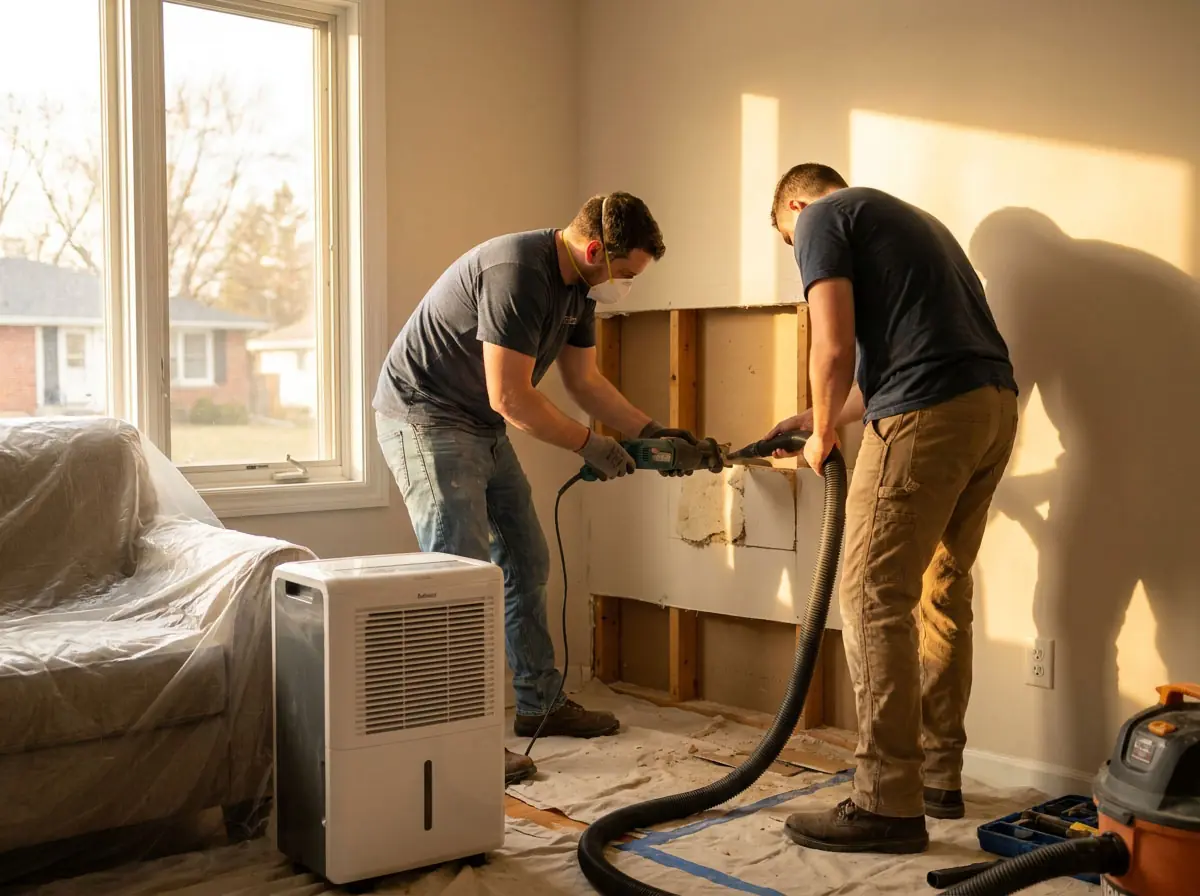
Professional remediation relies on strict containment protocols to stop this migration. Without these tools, you are setting yourself up for a disaster:
- Negative air pressure is not used, allowing spores to travel room to room.
- Standard vacuums suck up spores and blast them back out into the air through exhaust vents.
- Fans used to dry the area act as high-speed distribution systems for fungal growth.
- Lack of personal protective equipment leads to the homeowner tracking spores on their shoes to unaffected rooms.
Think of mold spores like glitter. If you try to clean up a pile of glitter with a dry rag and a box fan, you will end up with sparkle in every room of the house. You need specialized filtration and isolation barriers to trap the contaminants at the source. Otherwise, your DIY attempt is just a one-way ticket to a much larger, more expensive restoration job down the road.

Case Study: How a Sunrise Resident’s Quick Fix Led to Full-Home Remediation
Consider the story of a homeowner in a Sunrise gated community who found a small patch of black mold under their kitchen sink. Thinking it was no big deal, they grabbed a store-bought fungicide, wiped the surface clean, and taped over the damp area to prevent airflow.
They felt like a hero for saving a few hundred bucks. Within three weeks, the microscopic spores had already traveled through the HVAC system, settling into the porous materials of the master bedroom and the living room carpet.
What started as a twenty minute surface wipe turned into a full-scale property disaster that required industrial air scrubbers and total drywall removal. They skipped the most important step: finding the actual leak inside the wall.
The Ripple Effect of One Bad Decision
By failing to address the plumbing failure, the moisture remained trapped behind the cabinets, feeding the colony 24/7. Here is how that "quick fix" spiraled out of control:
- The lack of professional containment allowed spores to migrate into the air ducts.
- Surface cleaning ignored the heavy growth on the backside of the drywall.
- The persistent humidity warped the floorboards, leading to structural rot that insurance wouldn't cover due to negligence.
The lesson here is simple. If you see mold in a Sunrise home, you are likely only seeing the tip of the iceberg. Professionals use moisture meters and thermal imaging to find what you cannot see, stopping the spread before it claims your entire home.
A Comparative Cost Breakdown: DIY Remediation vs. Professional Restoration
Most homeowners assume they are saving cash by grabbing a spray bottle and heading to the hardware store. In reality, you are often paying for the same job twice because the mold never truly leaves the building.
Professional restoration in Sunrise isn't just an expense; it is an insurance policy against structural failure and health risks. Here is how the math actually stacks up when you account for the hidden costs of doing it yourself.
| Factor | DIY Approach | Professional Restoration |
|---|---|---|
| Initial Cost | Low (Supplies) | Moderate (Service Fee) |
| Hidden Damages | Not Detected | Located and Treated |
| Longevity | Short Term | Long Term Guarantee |
| Health Risk | High Exposure | Containment Systems |
| Future Repairs | High Probability | Minimal |
When you DIY, you spend money on protective gear, chemical agents, and cleaning tools that often fail to kill deep-seated spores. If you miss even a small percentage of the mold, it will regrow within days, forcing you to purchase more supplies or eventually call in a crew anyway.
Professional services bring more than just stronger chemicals to the job site. We use:
- Industrial grade dehumidification equipment to dry out the source.
- Advanced moisture mapping to find what is hiding behind your walls.
- HEPA filtration systems that keep spores from drifting into your clean rooms.
You might save a few hundred dollars today, but a botched DIY attempt can lead to drywall replacement, mold testing, and doctor visits. Professional restoration stops the cycle of regrowth, ensuring you only pay for the solution one time.
Securing Your Home’s Health for the Long Haul
Stopping mold isn't just about grabbing a rag and hoping for the best. It is about understanding that your home is a living system that requires constant protection against the aggressive humidity we face here in Sunrise.
When you ignore the warning signs or try to patch over issues, you are playing a losing game with your property value. You need a proactive strategy that keeps spores from finding a foothold in your walls, ceilings, or air ducts.
If you want to keep your family safe and your bank account intact, you should prioritize these steps:
- Keep indoor humidity levels strictly below 50% using high-quality dehumidifiers.
- Schedule regular professional inspections to identify leaks before they become colonies.
- Ensure your HVAC system is serviced seasonally to prevent moisture buildup inside your vents.
- Rely on our expert Mold Remediation services the moment you spot a recurring issue.
The smartest move you can make is to stop treating mold as a surface stain and start seeing it as a structural threat. Your home is your biggest investment, so don't let a tiny patch of fuzz turn into a major hazard that requires gutting entire rooms.
Protecting your air quality starts with professional diagnostics. We stop the growth at the root so it does not have the chance to return. Consistency is the only way to win this battle for your peace of mind.
People Also Ask
How can I tell if my Sunrise home has hidden mold?
Look for persistent musty odors, visible water stains, or warping baseboards in areas prone to dampness. Because South Florida humidity is high, mold can often grow inside wall cavities before appearing on the surface.Is it safe to clean mold with bleach?
Bleach is generally ineffective on porous surfaces like drywall because it does not kill the roots of the mold colony. The EPA guidelines suggest that cleaning methods must physically remove the mold rather than just bleaching the discoloration.Why does mold keep returning after I clean it?
Mold returns because the underlying moisture source has not been addressed or the spores have spread to other rooms. Without professional moisture mapping and industrial drying, the conditions remain ideal for fungal regrowth.Do I need a professional for mold removal in Florida?
Professional remediation is highly recommended for any mold growth exceeding ten square feet or mold originating from sewage backups. Certified experts utilize containment procedures and HEPA filtration to ensure that spores do not cross contaminate clean areas of your house.How do I prevent mold growth in a humid Sunrise climate?
Maintaining indoor relative humidity levels between 30 and 50 percent is the most effective way to prevent outbreaks. Use high quality dehumidifiers and ensure that your HVAC system is properly sized and serviced to manage the moisture in your indoor air.Need Water Damage Restoration Services?
We provide immediate emergency water extraction and structural drying to restore your property in Sunrise and surrounding communities. Our rapid response teams minimize damage to protect your home or business (33322, 33323, 33324, 33325, 33351).
Request Price Estimate