


⚡ TL;DR: This guide provides St. George residents with essential steps for flood damage restoration, covering immediate mitigation, structural safety checks, professional drying techniques, and effective ways to prevent future flooding.
📋 What You’ll Learn
Navigating flood recovery in St. George requires fast action and expert knowledge. This guide provides essential steps to mitigate damage, secure your property, and restore your home after a flash flood.
- Execute immediate mitigation steps to prevent further water intrusion, stabilize your home environment, and reduce the risk of structural decay while waiting for our professional restoration team to arrive.
- Identify hidden structural risks by learning how to spot moisture trapped within walls or foundations, ensuring you catch potential mold growth before it compromises your home and health.
- Understand professional drying science through a breakdown of how commercial dehumidifiers and air movers work together to extract deep moisture from Southern Utah homes during the restoration process.
- Follow our restoration roadmap to gain clarity on realistic project timelines, common cost factors, and effective strategies for hardening your property against future flash floods in this region.
📖 Reading time: 8 min
✍️ Author expertise: Local water damage specialist in St. George with years of real field experience.
You wake up to the sound of water sloshing against your baseboards, realizing that the dream of a quiet St. George morning just became a nightmare. Your floors are warping, your walls are soaking up moisture like a sponge, and the clock is officially ticking on your property's value.
Most homeowners freeze when they see standing water, but hesitation is the exact enemy that turns a small leak into a total structural loss. You have a very narrow window to prevent mold, rot, and permanent damage from gutting your home.
We have seen the aftermath of flash floods and burst pipes across Southern Utah enough to know exactly what works and what will cost you thousands in unnecessary repairs. Read on to discover the specific steps you must take right now to stop the destruction before it becomes irreversible.
Immediate Mitigation: Critical First Steps Before the Professionals Arrive
Your first move determines whether you face a simple drying project or a total home gutting. Before you call for backup, prioritize your personal safety above all else.
If the water has reached electrical outlets or your breaker panel, keep your distance. Standing water is a conductor; if you are not certain the power is cut, do not step into the room.
Safety and Source Control
Once you are sure the area is safe, stop the flow of water. If the culprit is a burst pipe, shut off the main water valve immediately.
- Move valuable items, electronics, and rugs to a dry area if you can reach them without slipping.
- Punch small holes in ceilings if water is bulging under drywall to prevent a total collapse.
- Use a wet-dry vacuum to extract as much standing liquid as possible while waiting for the pros.
Do not wait for insurance adjusters to grant permission to act. The clock is ticking on secondary damage like mold growth and warping subfloors.
Take clear photos of the damage for your claim, then get to work removing the water. Every minute you spend moving that moisture out now saves you ten times the cost in professional restoration later.
Hazard Identification: How to Spot Hidden Structural Risks in Your Home
Most homeowners assume that if the floor looks dry, the danger has passed. In St. George, where our soil types and foundation construction vary, water often travels behind walls or beneath flooring where you cannot see it. This trapped moisture acts like a silent wrecking ball, compromising the integrity of your drywall, insulation, and wooden subfloors.
You need to play detective before the structural decay sets in. Start by checking these specific danger zones for signs of hidden saturation:
- Baseboard separation: If your baseboards are pulling away from the wall, it is a sign that the wall cavity behind them is swollen with water.
- Soft spots: Walk across your flooring and listen for creaks or feel for spongy areas that indicate subfloor rot.
- Discoloration: Yellow or brownish stains appearing on walls or ceilings are often the result of water wicking upward from the floor level.
- Musty odors: A damp, earthy smell in a specific room is the first warning sign that mold colonies are already active behind your finishes.
Do not wait for the drywall to crumble before you take action. Press firmly against the lower sections of your walls; if the surface feels soft or yields under your hand, you are dealing with deep saturation. Electrical outlets near the floor are also a major concern. If you see water near these fixtures, kill the power to that circuit immediately to prevent a dangerous short circuit or fire hazard.

Decoding the Drying Process: A Scientific Look at Professional Dehumidification
Most folks think a few box fans and an open window will dry out their home after a flood. That is a dangerous mistake. In our arid St. George climate, you need more than just air movement; you need psychrometric control to actually pull moisture out of the building materials.
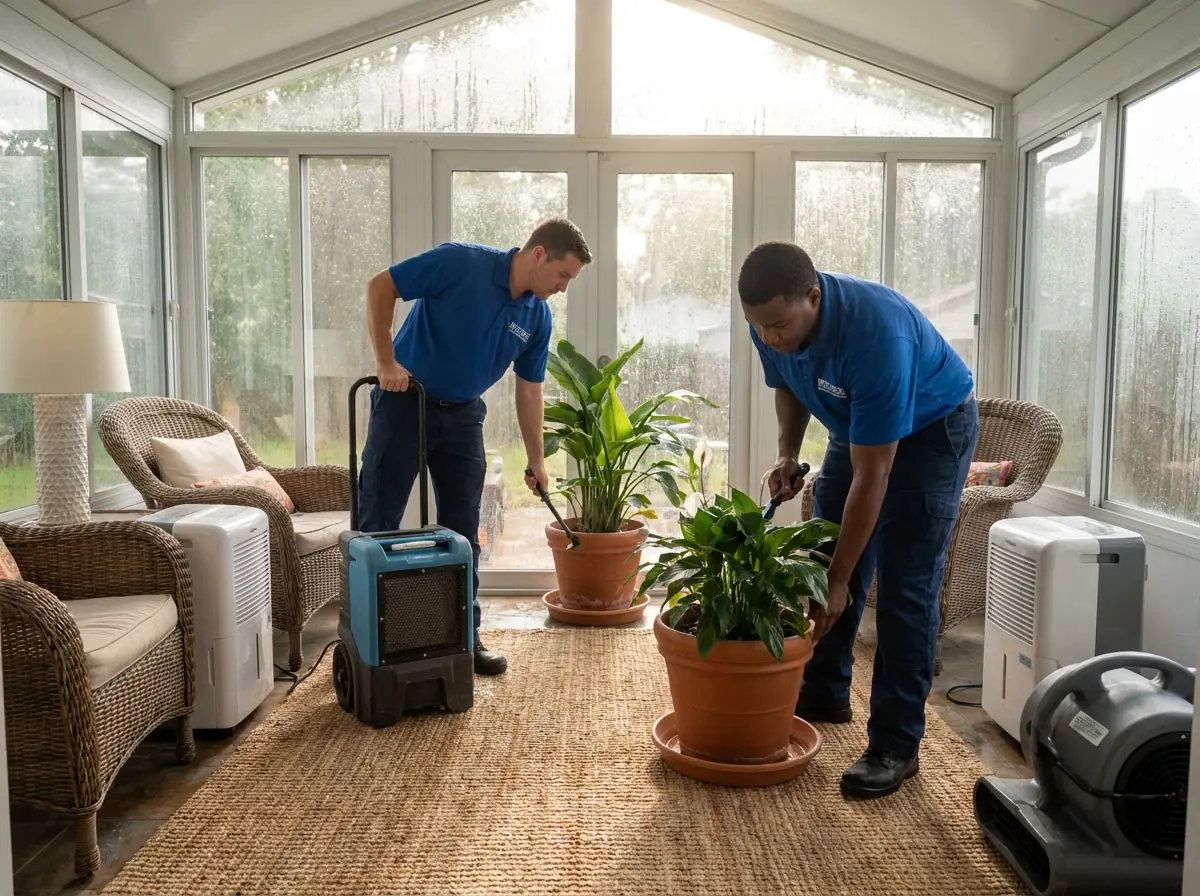
Professional restoration relies on the science of humidity, temperature, and dew point. We use industrial-grade equipment to create a specialized environment where moisture is forced out of your drywall, subfloors, and studs and then trapped into a dehumidifier.
Why Standard Drying Fails
If you leave moisture trapped behind your baseboards or under your flooring, you are rolling the dice with toxic mold. Here is why our approach works while DIY methods often result in hidden rot:
- Vapor Pressure Differential: We lower the moisture content in the air so the water trapped in your wet materials is forced to evaporate into the room.
- Dehumidification Systems: Unlike a store-bought unit, our commercial machines process hundreds of cubic feet of air per minute, pulling liters of water out of the structure every hour.
- Temperature Regulation: We calibrate the heat to speed up the evaporation rate without damaging your property or causing further warping.
Without this controlled approach, you are just moving damp air around. You need to pull the water out of the house, not just move it from the carpet to the air where it will settle on your furniture or climb up your walls.
Case Study: Rescuing a St. George Basement After a Major Flash Flood
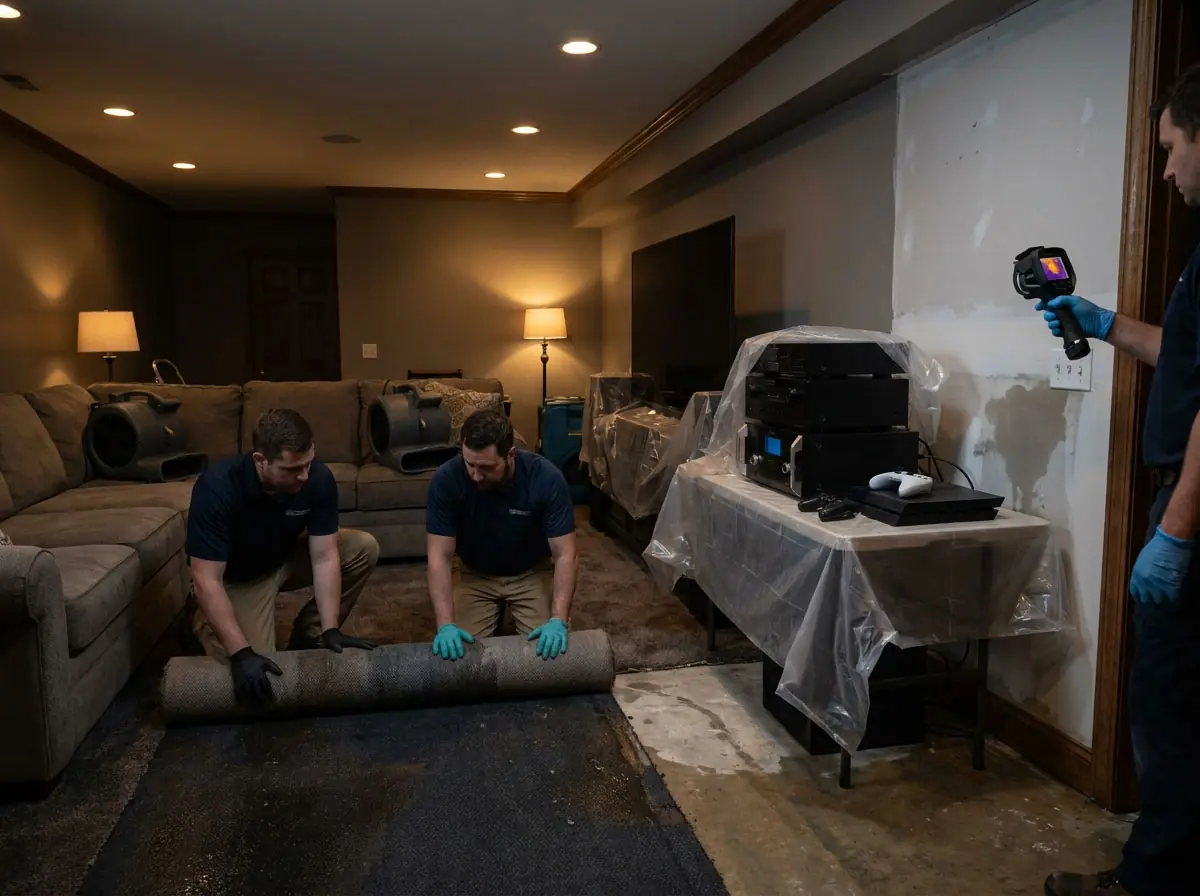
Last summer, a client in a historic St. George neighborhood experienced a sudden flash flood that sent six inches of water rushing into their finished basement. The drywall was wicking moisture like a straw, and the family was worried about the expensive flooring they had just installed months prior.
When we arrived, we did not waste time with guesswork. We immediately extracted the standing water using industrial pumps and performed a moisture map of the entire lower level. By removing the bottom two feet of saturated drywall, we exposed the framing to high velocity airflow, which saved the home from a total gut job.
The Keys to the Save
- Targeted moisture extraction within the first four hours.
- Antimicrobial treatments applied to the subfloor to prevent fungal blooms.
- High-capacity air movers placed to create a vortex of drying power.
The family was back in their basement in under a week. Because we acted fast, we avoided the need for full mold remediation. Speed is your greatest asset when the desert floor turns into a river. If you let that moisture sit, the damage becomes permanent, and your costs will skyrocket as you move from simple drying to full-scale reconstruction.

The Restoration Roadmap: A Comparison Table of Timelines and Cost Factors
Restoration isn't just about mopping up water; it is a calculated race against structural decay. When disaster strikes your St. George property, the scope of work depends on the category of water and how long it has been sitting in your walls.
| Project Phase | Estimated Timeline | Cost Impact |
|---|---|---|
| Water Extraction | 4 to 24 hours | Low (Flat fee) |
| Structural Drying | 3 to 7 days | Medium (Equipment rental) |
| Mold Remediation | 5 to 14 days | High (Labor intensive) |
| Full Reconstruction | 2 to 6 weeks | Highest (Materials + Labor) |
Every home presents a unique set of challenges based on materials like hardwood flooring, drywall, or concrete foundations. While the initial extraction might seem straightforward, the hidden costs often hide behind baseboards and inside ceiling cavities where trapped moisture breeds toxic mold.
To keep your out-of-pocket expenses from spiraling, focus on these critical variables that impact your final invoice:
- Materials: Specialized wood and carpet require more drying time than tile or concrete.
- Access: Tight spaces in older St. George homes often require extra equipment setups.
- Secondary Damage: Waiting even 48 hours shifts the job from a simple dry-out to a full-blown reconstruction project.
- Insurance Coverage: Documenting the source of the flood immediately can be the difference between a claim approval and a denied payout.
Professional restorers prioritize cost-effective drying by using high-velocity air movers and industrial dehumidifiers. This strategy prevents you from having to replace expensive structural beams and subflooring, which is the fastest way to blow your budget.
Preventing Future Disasters: Hardening Your Property Against Southern Utah’s Climate
St. George poses a unique threat because our red dirt soil is notorious for poor drainage and sudden, violent monsoons. You cannot control the clouds, but you can force water to move away from your foundation instead of soaking into it.
Start by walking your property line during the next rainstorm. If you see water pooling near your siding, your grade is wrong; it should slope away from your house at a rate of at least one inch per foot for the first six feet.
Essential Defense Tactics
- Extend downspouts: Ensure every gutter pipe deposits water at least ten feet away from your home.
- Install French drains: Use these to redirect subsurface water that gathers in low spots of your yard.
- Seal foundation cracks: Use high quality masonry sealant to stop water from finding a path into your basement.
- Maintain window wells: Clear out debris regularly and install fitted covers to prevent accumulation during heavy downpours.
Landscaping choices matter more than you think in this dry climate. Replacing thirsty plants near your walls with gravel or river rock helps water move quickly into the ground and away from your structural wood.
Finally, check your exterior vents and seals every spring. Our intense sun dries out caulk and weather stripping, creating easy entry points for blowing rain that can lead to hidden moisture buildup inside your wall cavities.
Final Words
When the waters recede, the real work of securing your home begins. You cannot afford to play guessing games with your family's safety or your investment.
If you suspect water damage, treat it like a ticking time bomb. Professional intervention is the only way to ensure your property remains a healthy, livable space.
Our team specializes in Flood Damage Restoration, and we have handled every type of disaster Southern Utah can throw at a building. Whether it is a basement soak or a slab failure, we have the specialized gear to catch what the naked eye misses.
Why Speed Matters More Than Anything
Mold does not wait for your insurance adjuster to call you back. It begins to colonize within 24 to 48 hours of saturation.
- Standing water breeds bacteria instantly.
- Damp drywall creates a permanent home for toxic spores.
- Structural integrity degrades faster than you might think.
Stop watching the damage get worse by the hour. Pick up the phone, contact a certified team, and reclaim your home before the damage becomes a permanent part of your floor plan.
People Also Ask
Does homeowners insurance cover flood damage in St. George?
Standard homeowners insurance policies typically exclude flood damage, requiring a separate policy for coverage. You should check your specific plan or visit FEMA to determine if your property is located in a designated high risk zone.What should I do immediately after my basement floods?
Prioritize your safety by shutting off the main electrical breaker if it is not in the flooded area. Once safe, remove standing water and contact professional restoration services to prevent secondary issues like mold growth.How long does it take to dry out a home after water damage?
The professional drying process generally takes between three to five days depending on the moisture level and structural materials. Industrial dehumidifiers and air movers are utilized to accelerate evaporation and protect your property from long term damage.Why is professional restoration better than DIY drying?
Professional crews use specialized moisture meters and industrial equipment to ensure hidden water is removed from deep within floorboards and wall cavities. Without this scientific approach, you risk trapped moisture that causes hidden rot or dangerous mold contamination.How can I protect my property from Southern Utah flash floods?
You can reduce risks by installing proper drainage systems, clearing debris from rain gutters, and ensuring the ground slopes away from your foundation. These preventative measures help direct runoff away from your home during the sudden thunderstorms common to our desert climate.Need Water Damage Restoration Services?
We provide rapid water damage restoration across St. George and surrounding communities to restore your property immediately. Our team delivers professional mitigation services to secure your home or business quickly (84770, 84780, 84790, 84765).
Request Price Estimate