


⚡ TL;DR: This guide explores the critical science behind professional structural drying services in Orlando, helping you avoid long term property damage by verifying that moisture is fully removed.
📋 What You’ll Learn
When water damage strikes your Orlando property, standard drying methods often fall short. This guide reveals the professional industry standards required to prevent long-term structural decay and costly future reconstruction expenses.
- Master the science of drying by learning why industrial dehumidification and precise psychrometric monitoring are the only ways to fully remove moisture trapped deep within your walls and floors.
- Utilize advanced moisture mapping tools to identify hidden saturation points that most contractors ignore, ensuring that no damp zones remain to foster dangerous mold growth or structural rot.
- Compare professional gear against rentals to understand why store-bought fans cannot achieve the necessary evaporation rates required to meet local restoration standards after a severe water loss event.
- Verify your contractor's final results through detailed documentation and dryness testing, ensuring your property is completely mitigated and safe before you commit to expensive interior building repairs.
📖 Reading time: 8 min
✍️ Author expertise: Certified Orlando restoration technician with a decade of field experience mitigating water losses.
You wake up to the sound of dripping in your Orlando home, only to discover that the restoration crew you hired is essentially blowing hot air at your walls and calling it a professional fix. They leave your baseboards on, keep the drywall damp, and hand you a bill that suggests your home is finally bone-dry.
The hard truth is that many local companies take shortcuts during the drying process to get to the next job faster. They are betting on the fact that you cannot see the moisture hiding deep within your studs and floor joists until mold begins to sprout weeks down the line.
Most contractors hope you never ask how they measure actual structural saturation because the answer would reveal their lack of proper equipment. You deserve to know exactly what is happening beneath your floorboards before you sign off on a job that leaves your property at risk.
Keep reading to uncover the specific steps these companies skip and how you can spot a rushed job before it ruins your investment.

The Science of Psychrometrics: Why Airflow Alone Fails to Dry Hidden Cavities
Most homeowners think that sticking a few industrial fans in a room will solve a water disaster. This is a dangerous misconception that costs Orlando residents thousands in secondary repairs.
Restoration is not just about moving air; it is about psychrometrics. This is the precise science of how water vapor, temperature, and pressure interact to turn liquid water into gas.
If a company only uses high-speed air movers, they are simply blowing air around the surface of your walls. They ignore the reality of what happens inside your wall cavities.
To actually dry a home, you must manipulate the environment to force moisture out of dense materials. Without proper dehumidification, here is why your wall studs stay soaked:
- Airflow creates surface evaporation but does nothing for the moisture trapped deep within wooden joists.
- Without lowering the humidity in the room, the air quickly becomes saturated. Once the air is "full," it can no longer hold more water, and the drying process stalls completely.
- The moisture has nowhere to go, so it seeps further into your drywall, insulation, and framing.
True structural drying requires balanced drying systems. We control the air temperature and the dew point to ensure that the moisture leaving your walls is captured by a refrigerant or desiccant dehumidifier.
If your contractor is not monitoring these numbers, they are just guessing. You need a team that understands the thermodynamic balance required to pull water out of hidden spaces before it turns into a mold factory.
Moisture Mapping 101: Tools That Detect What the Naked Eye Misses
If a contractor walks into your home with nothing but a flashlight and a "gut feeling," show them the door immediately. True structural drying is a game of data, not guesswork. Without advanced moisture mapping tools, your restoration team is essentially guessing where the water has traveled, often leaving saturated pockets behind your drywall or beneath your flooring.
Professional restoration teams use a combination of non-penetrating and penetrating moisture meters to create a grid of your affected rooms. By taking readings at specific intervals, they can identify the exact "moisture footprint" of the water loss. This allows them to focus equipment on areas that actually need it, rather than wasting time on dry surfaces.
Essential Tools for Accurate Diagnostics
- Non-Penetrating Meters: These use electromagnetic signals to scan for moisture beneath surfaces without leaving holes in your wall.
- Penetrating Meters: By inserting small pins into wood or drywall, technicians get a direct measurement of moisture content by weight.
- Thermal Imaging Cameras: These detect temperature differences caused by evaporation, instantly highlighting cold spots that signal hidden moisture.
When you map the moisture, you stop chasing ghosts. A detailed map provides a baseline for every room, tracking the decline in saturation day by day. If the numbers on the map do not drop as expected, a real professional adjusts the drying strategy immediately. They do not just hope the moisture disappears; they track it until it is gone.

The Hidden Dangers of Incomplete Drying: Secondary Damage and Microbial Growth
When moisture remains trapped inside your walls, your home effectively becomes a petri dish. Many homeowners assume that if the surface feels dry, the danger has passed; however, structural decay is often invisible during the first few days of a poor restoration job.
If contractors skip the deep drying phase, you are setting yourself up for expensive trouble later on. High humidity inside wall cavities encourages rapid biological growth, turning a simple water leak into a hazardous mold infestation. You might smell a faint, musty odor long before you see the discoloration on your paint.
Consider the specific types of secondary damage that occur when professionals cut corners:
- Microbial growth that begins in as little as 48 hours.
- Structural rot that weakens the integrity of wooden studs and floor joists.
- Warping or cupping of expensive hardwood flooring caused by moisture wicking from the subfloor.
- Pests and insects being attracted to the softened, damp building materials.
Stopping the water is only the first step. If the moisture is not properly extracted from deep within the substrate, it migrates toward the center of your property, creating new pockets of saturation. You end up paying for a restoration that leaves your home weaker than before the accident occurred. Do not let a contractor convince you that a few fans are enough; if the moisture content of your building materials is not verified, your investment is still in the crosshairs of disaster.
Diagnostic Comparison Table: Professional-Grade Equipment vs. Hardware Store Rentals
Most homeowners assume a dehumidifier is just a dehumidifier. They think renting a machine from a big-box store will get the job done just as well as the equipment used by a restoration professional. That is a dangerous mistake. Commercial drying is about targeted moisture removal, not just circulating air.
| Feature | Hardware Store Rental | Pro Restoration Grade |
|---|---|---|
| Extraction Power | Low (Gravity/Basic Pump) | High (Industrial Grade) |
| Dehumidification | Refrigerant (High Heat) | LGR (Low Grain Refrigerant) |
| Sensors | None (Manual Timer) | Digital Moisture Mapping |
| Air Mover | Standard Fan | High Velocity Axial Fan |
Hardware store equipment is built for surface-level humidity, like drying out a basement after a light rain. It lacks the precision needed to pull water from hardwood subfloors or dense drywall. When you rely on consumer-grade gear, you end up trapping moisture behind walls.
Professional gear, like LGR dehumidifiers, pulls water vapor out of the air even when conditions are dry. Meanwhile, professional moisture meters allow us to see through building materials. If your contractor is using basic fans instead of specialized drying technology, they are simply hiding the problem until it becomes a toxic mess.
- Consumer fans just move air; they do not extract water.
- Rented dehumidifiers stop working once the room feels warm.
- Professional equipment creates a dry environment that pulls moisture out of structural materials.
Anatomy of a Restoration Failure: A Case Study on Improper Structural Mitigation
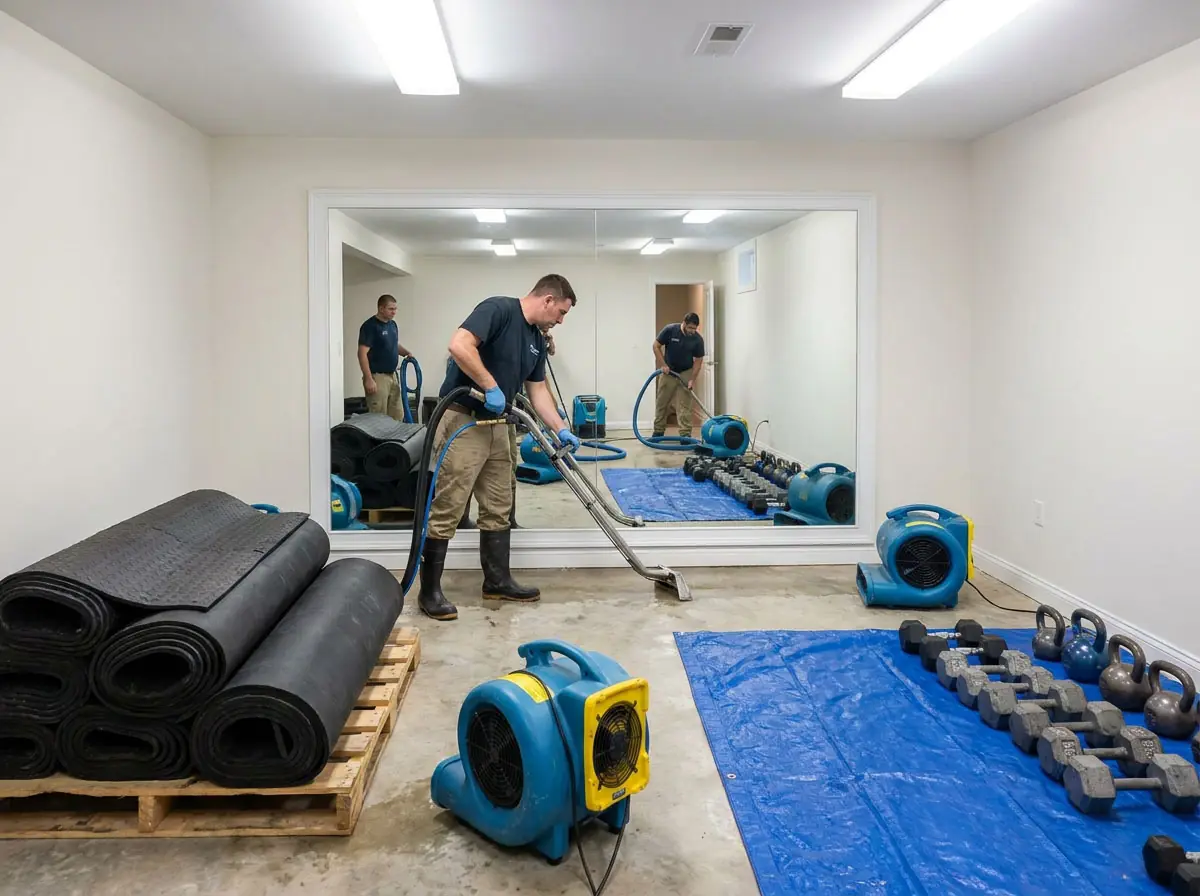
Consider the recent case of an Orlando homeowner in Winter Park who dealt with a slab leak. The initial crew arrived, set up a few carpet dryers, and walked away after three days. They told the owner the property was ready for carpet replacement, but they never checked the moisture content inside the concrete slab or the wooden subfloor.
Six weeks later, the homeowner noticed a strange, musty scent trailing from the hallway. By the time we were called in for a secondary assessment, the situation had spiraled into a full-blown microbial nightmare. Here is why that "quick fix" turned into a financial disaster:
- The crew failed to create a closed drying chamber to force dry air into the subfloor.
- They relied on "surface evaporation" rather than deep structural dehumidification.
- The high humidity trapped under the new padding created a perfect incubator for mold.
This failure was not a mistake; it was a symptom of laziness. When a contractor skips the moisture mapping process, they leave pockets of water that remain trapped indefinitely. Without industrial-grade low-grain refrigerant dehumidifiers working in a sealed environment, the water simply moves from the floor into the walls, effectively spreading the damage to areas that were previously untouched.
You cannot "dry out" a house by just blowing air around a room. If the moisture is not measured at the stud level, you are simply paying for a fancy fan setup while your home rots from the inside out. Always demand that your technician logs moisture readings in a daily drying report; if they cannot produce a document showing the wood is at an equilibrium moisture content, they are merely guessing at the safety of your home.
Verifying the Results: How to Demand Proof of Dryness Before Reconstruction Begins
Never take a contractor's word for it when they claim your home is ready for repairs. If they cannot hand you a physical moisture log, you are effectively signing up for future mold growth. You have every right to demand hard data before a single piece of drywall is reinstalled.
Professional restoration teams should provide daily monitoring reports that track moisture levels across the entire affected area. These reports must show a downward trend in saturation until they reach the equilibrium moisture content specific to Orlando's humid climate. If the numbers have not dropped to pre-loss levels, the job is not done.
Before you allow any reconstruction work, insist on seeing the following documentation:
- Daily moisture content readings for every affected structural component.
- Comparative psychrometric readings showing that the indoor air is actually drier than the building materials.
- A final sign-off document stating that moisture levels are within industry-standard safety margins.
If the company gets defensive or vague when you ask for these reports, that is a massive red flag. A reputable firm expects you to care about the structural health of your home. They will be proud to show you the dryness verification that proves they did the job right the first time.
Final Words: Protecting Your Property’s Longevity Through Rigorous Standards
Your home is likely your biggest financial asset. When water hits, you have to treat it like an emergency operation, not a quick cleanup.
Hiring a company that cuts corners is a gamble you cannot afford to take. If they aren't using industrial-grade sensors to verify the moisture content of your subfloor, they are guessing.
Never let a contractor pressure you into signing off on a job without seeing the final moisture logs. Real professionals provide data, not excuses.
If you want to ensure your property remains safe and mold-free, you must insist on rigorous documentation. A reputable team will be happy to show you their progress through our Structural Drying Services.
Key indicators of a job done right:
- The contractor provides daily moisture logs showing a downward trend.
- The team uses specialized equipment to measure deep within wall cavities, not just surface moisture.
- They explain the psychrometric readings to you, so you understand the environment is actually drying.
Do not settle for a surface-level fix that hides rot behind fresh paint. Demand the truth, verify the equipment, and protect your investment before it is too late.
People Also Ask
How long does structural drying typically take in Orlando?
The duration depends on the extent of the water intrusion and the specific materials affected. Professional drying generally takes between three to five days when using industrial grade dehumidification and air movers.Why is professional moisture mapping necessary after a flood?
Moisture mapping identifies hidden water trapped behind drywall and under flooring that the naked eye cannot detect. Without this step, structural materials remain damp, which leads to long term degradation of your property.What happens if water damaged materials are not dried properly?
Incomplete drying creates an environment ripe for mold growth and significant structural compromise. Over time, this results in expensive secondary damages like rot, warped framing, and poor indoor air quality.Is it safe to use rental fans to dry out water damage?
Hardware store fans only move air around and lack the dehumidification capacity required to actually extract moisture from building materials. Effective drying requires a specific balance of heat, airflow, and dehumidification to prevent permanent damage to your home.How do I know if my contractor is performing structural drying correctly?
You should demand documented moisture readings for both the affected areas and a control sample of dry materials in your home. A reputable restoration company will provide a drying log that proves the moisture content has returned to safe, pre loss levels before starting any reconstruction.Need Water Damage Restoration Services?
We provide rapid water damage restoration across Orlando and surrounding areas to dry your property and prevent further structural damage. Our emergency response teams stabilize your home or business quickly to restore a safe environment (32801, 32803, 32804, 32806, 32812).
Request Project Estimate