
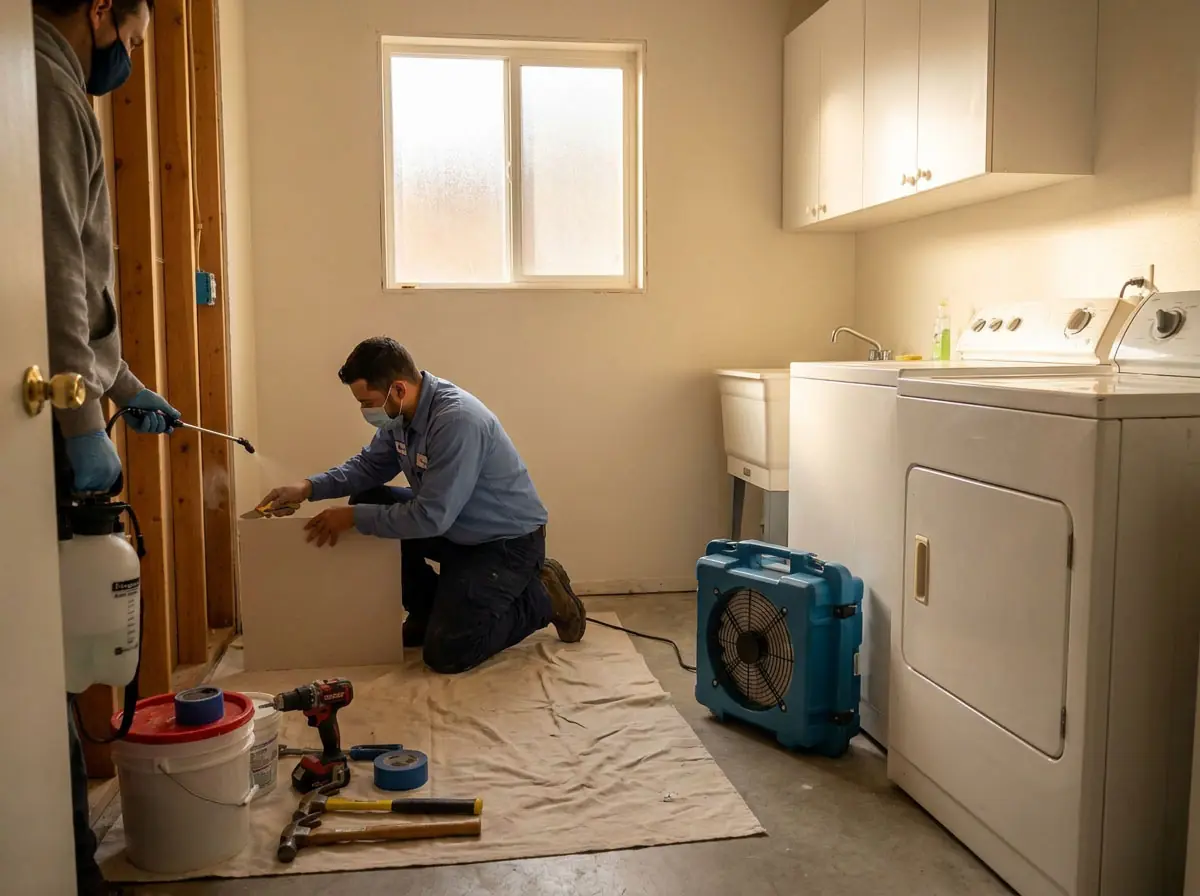


⚡ TL;DR: Smart Orlando homeowners protect their properties by using advanced detection tools and professional protocols to identify hidden moisture issues before mold growth causes extensive damage to their homes.
📋 What You’ll Learn
Living in Central Florida requires a proactive approach to property maintenance. This guide reveals how smart Orlando residents stay ahead of toxic mold growth despite our region’s persistent heat and humidity.
- Identify hidden moisture sources by using advanced thermal imaging and moisture mapping tools that detect trapped water behind your drywall before mold colonies have a chance to grow.
- Understand why standard remediation fails in our specific climate because typical drying techniques often ignore the unique structural challenges and high dew points found in Orlando homes today.
- Compare long-term cost benefits of early intervention versus waiting for major structural repairs, showing you exactly how much money and time you can save by acting very quickly.
- Follow professional certification protocols to ensure your home is truly mold-free after a cleanup, providing peace of mind through documented air quality testing and thorough site verification.
📖 Reading time: 8 min
✍️ Author expertise: Orlando water damage specialist with fifteen years of local restoration and mold remediation.
You wake up to that subtle, musty funk in your master bedroom, and suddenly your stomach drops. You know exactly what it is, and you also know that if you call the wrong person, you are about to lose thousands of dollars on half-baked repairs that ignore the real source of the rot.
Most folks in Orlando panic and grab the first name they see on a magnet, but the smart homeowners around here play a much different game. They treat a mold discovery like a tactical operation, not a nuisance to be covered up with a coat of paint.
If you want to stop the growth in its tracks and protect your home’s value before the damage spreads further, here is the exact process the pros use to stay one step ahead of the humidity.

The Florida Humidity Factor: Why Standard Remediation Fails in Central Florida
Orlando is a tropical pressure cooker. Our average annual humidity hovers near 75 percent, which means that any moisture trapped inside your walls stays there, feeding mold colonies around the clock.
When you hire a general contractor or a fly-by-night cleaner to handle a mold problem, they usually treat the symptoms instead of the climate. They wipe down the surface, spray some generic chemical, and walk away.
That is a massive mistake. In this climate, if you do not address the environmental moisture, the mold will be back in your drywall within a few short weeks.
Why Standard Methods Miss the Mark
Standard remediation often ignores the physics of our local environment. Here is why the typical approach falls short:
- It ignores the dew point inside your wall cavities.
- Surface cleaning leaves deep-rooted spores behind in the insulation.
- It fails to fix the structural humidity imbalance that caused the bloom in the first place.
You need a strategy that considers how Orlando air interacts with your home’s building materials. If you ignore the science of moisture migration, you are essentially paying for a temporary fix that costs you more in the long run.
Tactical Detection: Moving Beyond Visual Inspection to Thermal Imaging and Moisture Mapping
Most amateur mold remediators treat a house like a crime scene they only look at with the lights off. They walk in, sniff the air, see a dark patch on the drywall, and start tearing things apart at random.
Smart Orlando homeowners demand better because they know that visible mold is often just the tip of the iceberg. If you only fix what you see, the colony hiding inside your wall cavity will keep growing while you waste your hard-earned money on cosmetic patches.
To really win this fight, we use advanced detection tech that strips away the mystery of what is happening behind your baseboards:
- Thermal Imaging Cameras: These detect temperature fluctuations caused by moisture buildup, pinpointing hidden leaks before a single drop of water hits your floor.
- Moisture Mapping: We use specialized meters to trace the "path of the water," identifying the exact source point of the intrusion.
- Borescope Inspection: We slide a tiny camera into wall gaps to visually confirm if the interior structure is compromised without the need to demolish your entire living room.
This is about precision, not destruction. By identifying the exact saturation points, we stop the moisture source, which starves the mold and prevents it from ever coming back.
The Cost of Hesitation: A Comparative Table of Early Intervention vs. Major Structural Repair
Most Orlando homeowners think they are saving money by waiting or ignoring that faint smell. The truth is, mold never sleeps and it certainly does not get cheaper to remove the longer you wait.
A minor leak that costs a few hundred dollars to fix today can balloon into a multi-thousand-dollar nightmare once mold colonies have compromised your drywall, baseboards, and structural beams. Consider this breakdown of how costs spiral out of control when you choose to wait.
| Scenario | Estimated Cost | Repair Timeline |
|---|---|---|
| Early Professional Detection | $300 – $600 | 1 Day |
| Minor Mold Remediation | $1,500 – $3,000 | 2 – 3 Days |
| Structural Drywall Replacement | $4,000 – $8,000 | 1 Week |
| Full Home Decontamination | $10,000+ | 2+ Weeks |
When you delay, you are not just paying for surface cleaning. You are paying for extensive reconstruction and the health costs associated with poor indoor air quality.
Smart money moves are about mitigation, not reaction. If you let the humidity take hold, you are essentially opening your wallet to pay for:
- Full tear-outs of affected porous materials.
- Professional air scrubbing and antimicrobial treatment.
- Structural repairs to water-damaged subflooring.
- Increased insurance premiums due to major claim filings.
The math is simple: the sooner you catch the growth, the less you spend. Don't let a small patch of fuzzy growth turn into a total loss for your home equity.
Case Study: Eliminating Hidden Black Mold in an Orlando Historic District Bungalow
We recently took on a project involving a century old bungalow near Lake Eola. The owner had spent six months scrubbing walls with bleach, but the musty smell kept coming back with a vengeance.
Because these historic homes feature thick plaster and original wood lath, standard mold sprays are completely useless. The colony was not sitting on the surface; it was thriving inside the wall cavity, fueled by a slow plumbing leak that had been weeping for years.
Here is what we discovered once we moved past the guesswork:
- The humidity inside the walls was trapped by non breathable lead paint layers.
- The moisture had traveled behind the floor molding, creating a hidden highway for spores.
- The original insulation had turned into a wet sponge, feeding the black mold directly into the subfloor.
By using infrared cameras, we traced the heat signatures to a hairline fracture in an old supply line. We did not rip out the entire house to find it.
Instead, we performed a targeted surgical opening of the drywall. This saved the homeowner thousands in unnecessary demolition costs while ensuring we extracted every trace of the infected material.

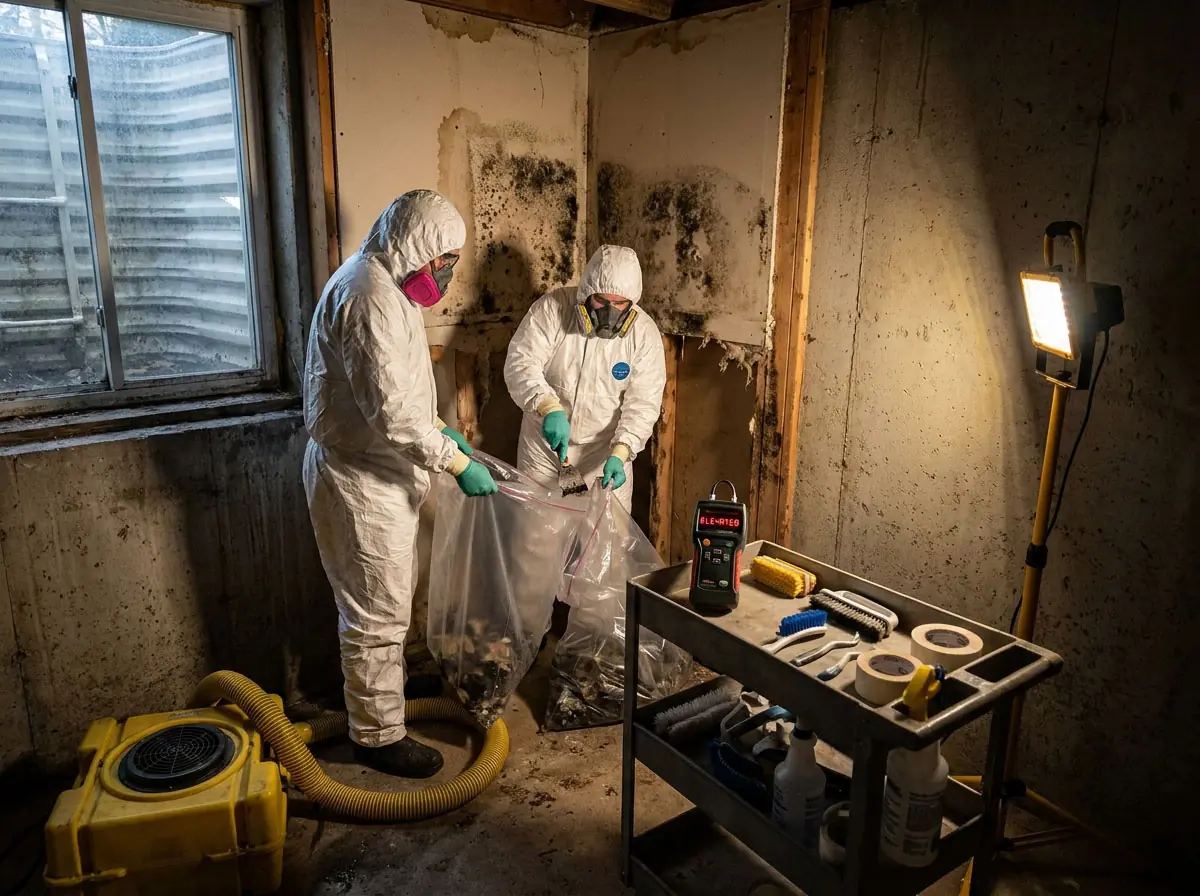
Strategic Containment: Protecting Your Indoor Air Quality During the Sampling Process
Amateur mold removal is a recipe for disaster in Florida. When someone starts ripping out drywall without setting up containment, they are essentially launching millions of toxic spores directly into your HVAC system and circulating them throughout your entire home.
Smart Orlando homeowners demand a sealed environment before a single tool hits the wall. This is a tactical necessity to keep your indoor air breathable while we identify the true extent of the colony.
Professional containment is not just a plastic sheet; it is a controlled zone designed to isolate the threat. We rely on a specific set of rules to keep your family safe:
- Negative Air Pressure: We place HEPA filtration units inside the zone to pull dust and spores inward, ensuring nothing escapes when a seal is broken.
- Airlock Access: Every entry and exit point is fitted with a multi-stage seal to prevent cross-contamination into your living room or bedrooms.
- Surface Protection: Floors and high-traffic pathways are covered with specialized membranes that handle the moisture and debris associated with active sampling.
If you skip this step, you are just moving the problem from one wall to your lungs. Air quality is the priority during the sampling phase, and we treat your home like a surgical suite to ensure that mold levels stay contained strictly within the affected area.
Professional Protocol: The Essential Steps to Certifying Your Home as Mold-Free
Getting rid of mold is one thing, but proving your home is actually healthy is another. Smart homeowners demand a certified clearance to ensure the air they breathe is safe and the property value is protected. Without a formal paper trail, you are just taking a contractor’s word for it, which is a dangerous gamble in our humid climate.
A professional protocol requires more than just a quick wipe down of the visible surfaces. It follows a rigorous sequence to ensure that spores are not simply being pushed around by fans or poor containment.
- Visual verification of successful remediation.
- HEPA vacuuming and deep cleaning of the surrounding area.
- Post-remediation air sampling conducted by a neutral third party.
- Issuance of a formal laboratory report and clearance certification.
Before you sign off on any project, insist on seeing the verification paperwork. This report serves as your shield if you ever decide to sell your house. It tells future buyers that you didn't just hide the problem; you handled it with professional precision.
Final Words
Waiting for visible signs of damage in an Orlando home is a losing game. The humidity here turns small leaks into expensive, structural nightmares faster than you can find a contractor.
You have to take the lead. By choosing a professional Mold Inspection immediately, you shift the odds back into your favor.
Think about the long-term impact on your property value and your family’s health. Taking action now prevents the kind of catastrophic rot that hollows out your walls and drains your bank account.
The Smart Homeowner Checklist
- Inspect your HVAC drip pans monthly during the summer months.
- Check crawl spaces and attic vents for stagnant airflow.
- Look for subtle changes in the texture of your drywall or baseboards.
- Schedule a professional assessment if you sense that damp, earthy odor lingering.
Smart locals do not guess. They rely on cold, hard data and thermal imaging to find the moisture hiding behind the scenes.
Stop playing the waiting game. Secure your home, protect your air quality, and keep your investment standing strong for years to come.
People Also Ask
How often should I get a mold inspection in Orlando?
Given our high humidity, local experts recommend an annual inspection for older homes or properties with a history of water leaks. If you notice a musty odor or visible moisture issues, schedule a professional assessment immediately to prevent rapid fungal growth.Does homeowners insurance cover mold inspection and removal?
Coverage depends on whether the mold growth resulted from a sudden, accidental water event covered by your policy. You should consult the EPA guide to understand how indoor environmental factors influence your claim eligibility and remediation needs.Why is thermal imaging used during mold inspections?
Thermal imaging detects temperature variations behind walls that often signify hidden moisture accumulation. This technology allows professionals to find the source of the problem without damaging your property's drywall or insulation.What are the signs of hidden mold growth in Florida homes?
Common indicators include persistent musty smells, peeling wallpaper, or unexplained respiratory issues among family members. Smart homeowners also look for visible signs of water staining or dampness on ceilings and baseboards after heavy rain events.Can I use a store bought mold test kit?
Over the counter test kits often provide inaccurate results or misleading data because they lack professional environmental context. A certified technician provides a comprehensive analysis that ensures your indoor air quality meets safety standards for your specific property type.Need Water Damage Restoration Services?
We provide rapid water damage restoration across Orlando and surrounding areas to dry your property and prevent further structural damage. Our emergency response teams stabilize your home or business quickly to restore a safe environment (32801, 32803, 32804, 32806, 32812).
Request Project Estimate