

⚡ TL;DR: This guide helps Joliet homeowners navigate the risks of sewage backup cleanup by highlighting common mistakes that compromise property safety, structural integrity, and your valid insurance coverage status.
📋 What You’ll Learn
Dealing with a sewage backup in Joliet is a stressful experience that requires immediate action. This guide outlines the critical mistakes to avoid to protect your health, property, and insurance coverage.
- Identify hidden health risks by understanding how Category 3 water exposure creates dangerous bacterial environments that require specialized equipment and professional gear to handle safely during the initial cleanup.
- Prevent permanent structural damage to your home by learning why DIY attempts often fail to remove contaminants effectively, leading to rotting floorboards and compromised foundations in your basement.
- Protect your insurance claim by avoiding specific errors during the mitigation process that could cause your provider to deny coverage, leaving you personally responsible for all restoration costs.
- Implement professional decontamination protocols that align with industry standards, ensuring your home is thoroughly sanitized and restored to a safe, livable condition after a severe sewage overflow event.
📖 Reading time: 7 min
✍️ Author expertise: Certified water damage restoration expert with fifteen years of sewage cleanup experience in Joliet.
You walk into your basement to grab a box of old photos, only to find the floor covered in a foul, dark sludge that smells like a nightmare. It is not just water; it is a biohazard crawling with bacteria that puts your family’s health on the line the second you step foot in the room.
Most homeowners in Joliet react on pure adrenaline, grabbing a mop or a shop vac to fix the mess before it gets worse. That instinct is exactly what turns a bad situation into a total catastrophe.
Before you touch a single drop of that waste, you need to know which common actions will permanently destroy your home and endanger your health. Here is how to keep your property safe and avoid the costly blunders most people make during a sewage crisis.

The Immediate Health Dangers of Category 3 Water
That sludge in your basement is officially classified as Category 3 water, or black water. It contains raw sewage, toxic pathogens, and heavy metals that can make you or your pets violently ill within minutes of contact.
When you breathe in the aerosolized particles rising from the mess, you are putting your respiratory system directly in the line of fire. These contaminants are not just dirty; they are infectious agents capable of causing severe gastrointestinal distress, skin infections, and long-term illness.
Here is what is lurking in that dark pool beneath your feet:
- E. coli and other fecal coliform bacteria that trigger rapid, severe infection.
- Parasites like Giardia or Cryptosporidium that survive in standing water for days.
- Harmful viruses that can enter your body through the smallest cut or mucous membrane.
- Toxic mold spores that begin colonizing your walls and baseboards the moment they touch moisture.
Do not underestimate the speed of this threat. The toxins do not stay in the basement; they quickly migrate through your HVAC system and permeate porous materials like drywall and carpet padding. Touching this water without industrial-grade protection is a gamble with your health that you are almost certain to lose.
Why DIY Cleanup Attempts Lead to Permanent Structural Decay
The biggest trap you can fall into is believing that a shop vac and a bucket of bleach will solve the problem. When you attempt a DIY cleanup, you are pushing microscopic contaminants deeper into the porous materials of your home. Drywall, floor joists, and subflooring act like giant sponges; they soak up sewage and trap it deep inside the wood fibers where surface cleaners simply cannot reach.
Once those materials are saturated, they become breeding grounds for mold and bacteria that eat away at your home from the inside out. You might think the floor looks clean after a few hours of scrubbing, but the structural integrity is already failing. You are essentially painting over a rotting wound.
The hidden cost of DIY errors
Without the proper industrial-grade equipment to measure moisture content and extract waste, the damage becomes permanent. You run into several irreversible issues:
- The wood begins to warp and buckle as moisture settles in the structural framing.
- Mold colonies establish roots inside your wall cavities within 24 to 48 hours.
- The smell of raw sewage becomes a permanent fixture of your home because you have missed the source of the contamination.
- Cross-contamination spreads throughout your HVAC system, pulling toxic particles into your bedrooms and kitchen.
Professional remediation involves specialized containment and drying systems that stop this decay in its tracks. Trying to handle this yourself is a gamble that puts your property's long-term value at risk. Do not settle for a surface-level fix when your foundation is at stake.
Critical Mistakes That Void Your Homeowners Insurance Policy
Most homeowners assume their insurance company will cover a sewage backup under any circumstance. However, insurance adjusters are trained to look for negligence, and your initial reaction to a leak often provides the evidence they need to deny a massive claim.
If you attempt a DIY cleanup, you are likely failing to document the damage properly before disturbing the area. Insurance policies usually require proof of the original condition, and once you start moving contaminated items, you lose the ability to verify the extent of the disaster.
Avoid these common insurance-killing blunders:
- Waiting more than 24-48 hours to report the incident, which allows mold to bloom and classifies your claim as neglected maintenance.
- Throwing away damaged furniture or structural materials before an adjuster has photographed them.
- Using improper cleaning agents that leave residue, which can cause permanent chemical damage to your subfloors.
- Failing to shut off the main water supply or the electricity in the basement, leading to further secondary damage.
Your policy is a legal contract, and you must act according to its specific mandates. By jumping in with a mop and a bucket, you often contaminate clean areas of your home, effectively turning a localized pipe failure into a whole house hazardous material event. Insurance adjusters will often label this gross negligence, leaving you to pay the entire restoration bill out of your own pocket.
Analyzing the Cost and Severity: A Comparative Breakdown Table
Most Joliet homeowners assume that cleaning a sewage backup is just like mopping up a spilled bucket of water. In reality, the financial consequences of a DIY blunder often dwarf the cost of hiring a professional crew right from the start.
| Scenario | Estimated Cleanup Cost | Risk Level | Long-term Property Impact |
|---|---|---|---|
| Immediate Professional Response | $2,500 – $5,000 | Low | Minimal structural damage |
| DIY Cleanup Attempt | $8,000 – $15,000+ | Extreme | High risk of black mold |
| Delayed Mitigation (48+ hours) | $10,000 – $20,000+ | Critical | Permanent structural decay |
| Insurance Denied Due to Neglect | Full Out-of-Pocket | Total Loss | Financial devastation |
When you attempt to clear Category 3 water on your own, you are essentially pushing pathogens deeper into your flooring and drywall. A simple shop vac cannot extract bacteria trapped inside porous subflooring or insulation.
Professional restoration involves high-grade biocides and specialized extraction equipment that residential tools simply lack. If you ignore these facts, you face a hidden chain reaction of expenses that goes far beyond the initial cleanup:
- Costly professional mold remediation for overlooked areas.
- Structural repairs to beams and studs rotting from moisture.
- Replacement of ruined personal belongings that cannot be sanitized.
- Potential medical bills from bacterial exposure.
Choosing the cheap route today creates a massive compounding interest of damage tomorrow. You save a few hundred dollars on labor, but you invite thousands in permanent destruction to your home investment.

Lessons from Restoring a Flooded Joliet Basement
We recently handled a project in a historic Joliet home where a main line blockage sent raw sewage backing up through the laundry room drain. The homeowner thought they could handle it with a bucket and some household bleach, but they ended up trapping moisture behind the finished drywall.
By the time we arrived, black mold had already colonized the insulation. The drywall acted like a sponge, wicking the contaminated liquid upward and creating a hidden structural hazard that the owner never saw coming.
Here are the common warning signs we see when homeowners attempt a half-hearted cleanup:
- Residual dampness trapped behind baseboards.
- A lingering, sour odor that bleach cannot mask.
- Soft or buckling floorboards near the point of entry.
- Discoloration on walls appearing days after the initial spill.
The biggest takeaway from this job was the speed at which pathogens penetrate porous materials. Even if the surface looks clean, the microscopic damage to wood framing and subflooring often requires professional industrial-grade sanitization to prevent long-term decay. Relying on shop vacs is not cleaning; it is simply moving the bacteria around your home and exposing your HVAC system to airborne toxins.
Professional Mitigation Steps for Total Decontamination
When sewage floods your Joliet home, the clock starts ticking immediately. You cannot simply wipe away the visible mess and call it a day. True decontamination requires a tactical strike on microscopic threats that hide inside your drywall and floor joists.
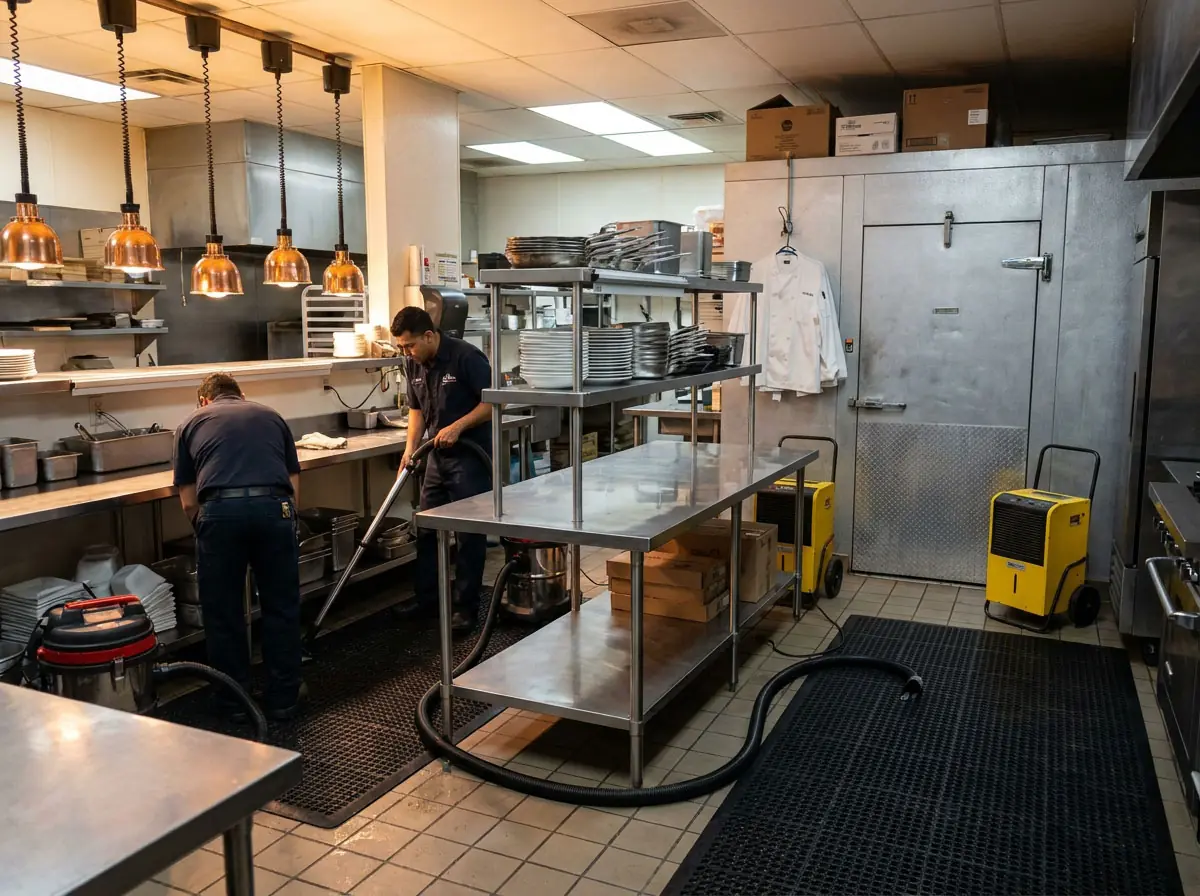
Professional crews start by isolating the affected area to stop cross-contamination. We use heavy-duty air scrubbers to trap airborne pathogens before they circulate through your HVAC system and into your bedrooms.
The Professional Decontamination Protocol
- Site Isolation: Sealing off the workspace with polyethylene barriers to protect the rest of your home.
- Extraction and Removal: Using industrial pumps to remove bulk sewage and disposing of porous materials like carpet or insulation that cannot be salvaged.
- Antimicrobial Application: Applying EPA-registered disinfectants that kill bacteria, viruses, and fungi on contact.
- Industrial Drying: Placing high-velocity air movers and dehumidifiers to force moisture out of the structural wood and concrete, preventing future mold colonies.
We do not guess when your home is safe. We use moisture meters and thermal imaging cameras to track hidden water deep inside your floorboards. If it is wet, it is a risk.
Once the area is sanitized, we perform a final clearance test. This ensures that the bacterial load has been reduced to safe, natural levels. Your home should be a sanctuary, not a petri dish, so we ensure the environment is fully restored before we pack up our gear.
Final Words
When sewage strikes your Joliet home, time is your worst enemy. Every hour you wait allows pathogens to sink deeper into your subfloor and wall studs, turning a manageable cleanup into a total structural loss.
You have to realize that this is not a chore you can handle with a bucket and some bleach. Professional Sewage Backup Cleanup is the only way to ensure your family isn't breathing in dangerous mold spores or harmful bacteria weeks after the water is gone.
If you take nothing else away from this guide, remember these three rules:
- Never use your household vacuum or carpet cleaner on sewage waste.
- Do not attempt to dry out the area with standard fans, which only circulate airborne toxins.
- Call in a certified team immediately to document the damage for your insurance claim.
Your home is likely your biggest investment. Protect that asset by making the smart call the moment you smell trouble. Trying to save a few dollars by doing it yourself often leads to thousands of dollars in hidden repair costs later.
Stay out of the contaminated space, shut off your main power if it is safe to do so, and wait for the experts to arrive. A proactive approach is the only way to get your life back to normal without a lasting disaster on your hands.
People Also Ask
Is sewage backup in a basement considered hazardous?
Yes, sewage water is classified as Category 3 water, which contains pathogenic agents including bacteria, viruses, and parasites. You should avoid all contact with this water to prevent serious illness or infection.Will homeowners insurance cover sewage backup in Joliet?
Standard homeowners insurance policies often exclude sewage damage unless you have a specific sewer backup endorsement added to your plan. You should consult the Insurance Information experts to review your policy details and verify your current coverage limits.Can I clean up a sewage backup myself?
Attempting a DIY cleanup is dangerous and rarely effective because sewage seeps into porous materials like drywall, carpet, and subflooring. Professional restoration teams use specialized equipment to ensure complete sanitization and prevent long term structural rot.How long does it take for mold to grow after a sewage leak?
Mold can begin to colonize within 24 to 48 hours when moisture and organic materials are present. Rapid professional intervention is critical to stop fungal growth and preserve the air quality in your home.Why does my Joliet home smell like sewage after a storm?
Heavy rainfall can overwhelm municipal sewer systems, causing backups or sewer gas to escape through floor drains or plumbing fixtures. If you notice a persistent odor, contact a restoration professional immediately to check for hidden contamination or potential pipe breaches.Need Water Damage Restoration Services?
We provide rapid water damage restoration for homes and businesses in Joliet and surrounding communities to prevent further property loss. Our response team acts immediately to extract water, dry structures, and restore your space to pre-loss condition (60431, 60432, 60433, 60435, 60436).
Request Your Estimate