


⚡ TL;DR: This guide provides homeowners in Fargo with essential strategies to address hardwood floor water damage, offering professional advice on mitigation, restoration, and effective prevention for our unique climate.
📋 What You’ll Learn
Dealing with hardwood water damage in Fargo requires immediate action to protect your home. This guide provides the essential steps to mitigate damage, restore your flooring, and prevent future moisture issues.
- Execute immediate drying steps to prevent water from migrating deeper into your subfloor while minimizing the risk of permanent warping or cupping for your existing hardwood planks.
- Utilize professional moisture mapping to identify hidden pockets of trapped water that could lead to mold growth or structural decay if left untreated by standard drying methods.
- Evaluate repair versus replacement by assessing the level of damage and moisture saturation so you can make an informed financial decision for your Fargo residential property floors.
- Implement winterization strategies to defend your hardwood against the unique challenges of North Dakota climate fluctuations, including extreme humidity shifts and freezing temperatures during our harsh winters.
📖 Reading time: 7 min
✍️ Author expertise: Fargo water damage restoration specialist with decades of field experience handling local floods.
You wake up to the sound of a slow, steady drip, only to find your beautiful hardwood floors soaking up water like a giant sponge. Your stomach drops because you know exactly what comes next: warping, rot, and a repair bill that could easily cost you a small fortune.
Fargo winters and unpredictable plumbing leaks don't care about the craftsmanship of your home. If you wait even a few hours to take action, you aren't just looking at minor surface stains, but a total loss of your floorboards.
The good news is that you can stop the destruction before the damage becomes permanent. Keep reading to discover the exact steps you need to take right now to save your floors and protect your investment.
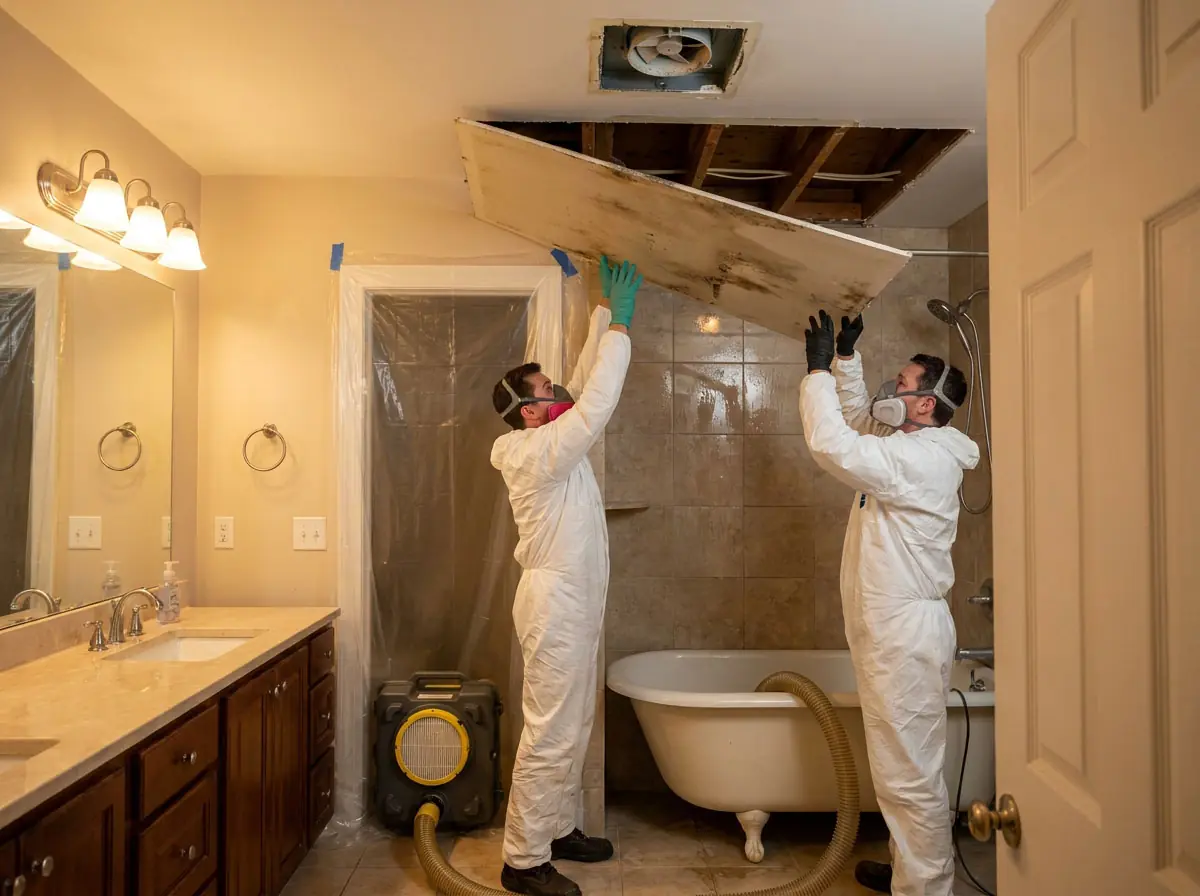
Immediate Mitigation Steps to Stop Water Migration
The moment you spot standing water, speed is your only friend. Wood is a porous material that acts like a straw; it pulls moisture deep into its fibers, leading to instant cupping and permanent buckling.
Your first move must be to cut off the source. If a pipe burst under the sink or an appliance failed, shut off the main water valve immediately. Do not worry about documenting the mess for insurance yet; focus entirely on stopping the flow.
Once the water stops, clear the area and start extracting the liquid. Use these steps to prevent further migration into your subfloor:
- Remove all furniture from the wet area to prevent rust stains or finish damage.
- Use a wet vac to pull up every drop of standing water from the surface.
- Avoid using heat sources like hair dryers, which can cause the wood to shrink too rapidly and crack.
- Open windows to encourage airflow, provided the outdoor humidity in Fargo isn't extreme.
Getting the standing water off the surface is only the preliminary stage. Water hides beneath boards and seeps into the subfloor, where it can sit for weeks and trigger mold growth long before you see the results on your finish.
If the floor feels soft or smells like mildew, the water has already migrated beneath the surface. At this stage, standard household tools will not suffice; you need industrial-grade extraction to save the wood from rot.
The Critical Role of Professional Moisture Mapping and Dehumidification
You cannot fix what you cannot measure. Moisture often hides beneath your hardwood planks, creeping into the subfloor where you cannot see it until the wood begins to buckle or mold takes root.
Professional moisture mapping uses specialized thermal imaging and deep-penetration sensors to find exactly where the water is hiding. This technology allows our team to pinpoint the wet zones so we do not waste time drying areas that are already safe.
Once we define the wet perimeter, we deploy commercial-grade dehumidification. This is not the same as the household unit you keep in your basement. We use high-capacity machines that pull water vapor directly out of the wood fibers and the surrounding air.
Why Standard Air Drying Fails
- Household fans simply push humid air around, which can actually trap moisture inside the wood grain.
- Evaporation rates must be carefully controlled to prevent the hardwood from cupping or splitting due to rapid moisture loss.
- Only professional equipment creates the specific environment needed to pull deep-seated dampness out of your subfloor without ruining the finish.
If you leave the moisture trapped, you are inviting hidden decay and long term structural failure. By trusting the experts to monitor the drying progress, you ensure that the humidity levels return to a state that is safe for your specific species of hardwood.

Assessing the Structural Integrity: When to Repair Versus Replace
Not every water-soaked floor is destined for the dumpster. Our goal is to determine if the subfloor has remained dry or if the moisture has compromised the structural foundation of your home.
If the boards are only cupping slightly, we can often draw out the moisture using specialized drying panels. However, if the wood has splintered, grown black mold, or the tongue and groove joints have fully separated, replacement is the only way to ensure your family's health and safety.
Signs Your Hardwood Needs Immediate Replacement
- The wood shows visible signs of black mold or fungal growth.
- The subfloor feels soft or spongy when you walk across it.
- Individual boards have cracked, splintered, or detached completely from the underlayment.
- The finish has bubbled or delaminated across a large percentage of the room.
We perform a thorough inspection by drilling microscopic test holes to measure moisture deep within the wood fibers. If the reading stays above 16 percent for an extended period, the structural integrity is likely compromised beyond repair.
Do not gamble with the long-term health of your home. Choosing to sand and refinish a floor that is internally rotting is a temporary fix that will cost you more money when the rot eventually spreads to your joists.
Fargo Residential Restoration: A Case Study in Hardwood Recovery
Last spring, a homeowner in the Oak Grove neighborhood experienced a catastrophic dishwasher supply line failure. By the time they realized the kitchen was flooded, the premium white oak floors had already begun to cup and buckle.
They called us immediately, and we deployed our moisture extraction equipment within ninety minutes. Our team focused on three specific tactical priorities:
- Removing standing water from the subfloor layers.
- Setting up high-velocity air movers to force airflow beneath the boards.
- Monitoring the grain moisture content with industrial-grade sensors until it matched the pre-loss baseline.
Because we caught the saturation early, we avoided the need for a full floor replacement. By balancing the humidity levels in the room over seventy-two hours, the wood fibers retracted into their original shape. The homeowner saved thousands of dollars, avoiding a major demolition that would have kept their kitchen out of commission for weeks.
This success proves that time is your greatest enemy when dealing with Fargo basement or kitchen leaks. If you notice signs of pooling or cupping, do not wait for the wood to dry on its own. Act now to salvage the integrity of your home.
Comparative Cost Breakdown Table for Floor Restoration Scenarios
When you stare at warped planks, the big question is always the same: can I save this floor or is it time for a total teardown? Costs shift wildly based on the depth of the saturation and how long the water sat before you called for help.
| Scenario | Scope of Work | Estimated Cost Range |
|---|---|---|
| Minor Surface Spill | Dehumidification and Buffing | $500 - $1,200 |
| Localized Warping | Sectional Board Replacement | $1,500 - $3,500 |
| Moderate Saturation | Sand, Refinish, and Seal | $3,000 - $6,000 |
| Extensive Decay | Full Subfloor and Floor Replacement | $8,000+ |
The numbers listed above are estimates designed to give you a baseline for what a Fargo professional restoration looks like. Keep in mind that waiting even twenty four hours often moves your situation from a simple drying job into a full replacement project.
Hidden expenses frequently pop up during the teardown phase that aren't obvious at first glance. These factors can influence your final bill:
- Mold remediation if moisture has been trapped for more than two days.
- The cost of pulling up and disposing of damaged tongue and groove planks.
- Leveling the subfloor after the wood has swollen and buckled.
- Matching existing stain colors to ensure the room doesn't look like a patchwork quilt.
Think of professional restoration as an investment in your home equity rather than just a repair bill. If you catch the water early, you save the cost of brand new flooring, which is almost always more expensive than the specialized drying services we provide.
Preventing Future Water Damage in North Dakota Climates
Living in Fargo means dealing with aggressive freeze and thaw cycles that put your home under constant pressure. When temperatures plummet, your pipes become ticking time bombs, and the spring thaw can turn your foundation into a entry point for unwanted moisture.
You need to be proactive to avoid another disaster. Taking these specific steps today can save you from costly repairs down the road:
- Insulate all exposed pipes in your basement or crawl space using foam sleeves.
- Install a smart leak detection system that alerts your phone the moment water touches the floor.
- Clear your gutters and downspouts every autumn to ensure melting snow flows away from your home exterior.
- Check your basement sump pump at least twice a year to ensure it is not stuck or burned out.
Wood is a living material that reacts to the extreme humidity swings typical of our region. Maintaining a consistent indoor environment is the best defense against cupping and warping boards.
Invest in a high quality dehumidifier for your lower levels. Keeping your relative humidity between 35 and 50 percent will keep your hardwood stable even when the Fargo air outside is acting wild.
Final Words
When water strikes your hardwood, the clock is your biggest enemy. Every minute you delay is a direct attack on your home equity.
If you suspect moisture is trapped beneath your boards, do not gamble with the structural integrity of your property. Our team specializes in Hardwood Floor Water Damage restoration, and we have seen exactly how fast things fall apart in our local climate.
What you need to keep in mind:
- Standing water is a ticking time bomb for your subfloor.
- Drying surface moisture is never enough to prevent hidden mold growth.
- Professional grade equipment pulls moisture out of tight spaces that fans just cannot reach.
Don't wait for the wood to start cupping or splitting before you make the call. The difference between a simple drying service and a total floor replacement is often just a matter of hours.
Pick up the phone and get an expert on site today. Protecting your home is our business, and we are ready to move fast so you don't have to stress about the long term consequences.
People Also Ask
How soon should I call for professional help after a water leak on my hardwood floors?
You should contact a restoration professional immediately, as hardwood floors can begin to warp or cup within hours of water exposure. Rapid intervention is essential to prevent permanent damage and limit the scope of the repair.Can hardwood floors be saved after being soaked by water?
Many hardwood floors can be saved if professional extraction and specialized drying equipment are deployed quickly. Experts utilize high velocity air movers and commercial dehumidifiers to draw moisture out of the wood grain before mold growth begins. According to the EPA guidelines, controlling moisture is the most important factor in preventing mold issues in homes.Why do my hardwood floors cup after a water damage event?
Cupping occurs when the bottom of the floorboards absorbs more moisture than the top, causing the edges to swell and rise. This is a clear indicator that moisture has migrated beneath the boards, requiring professional moisture mapping to identify the extent of the damage.Is professional dehumidification necessary for hardwood floor restoration?
Yes, relying on room fans or open windows is rarely enough to remove moisture trapped beneath the subfloor. Professional dehumidification creates a controlled environment that safely extracts water from the wood, which is necessary to prevent long term structural deterioration.What are the signs that my floors need replacement instead of repair?
Replacement is typically necessary if the wood has developed rot, severe splintering, or signs of mold contamination that cannot be safely remediated. A professional assessment will determine if the floor has lost its structural integrity or if it can be successfully sanded and refinished to its original state.Need Water Damage Restoration Services?
We provide rapid water damage restoration to secure your property and mitigate structural loss in Fargo and surrounding communities (58102, 58103, 58104, 58078). Our team responds immediately to extract water and dry your space to restore a safe, stable environment.
Request Price Estimate