
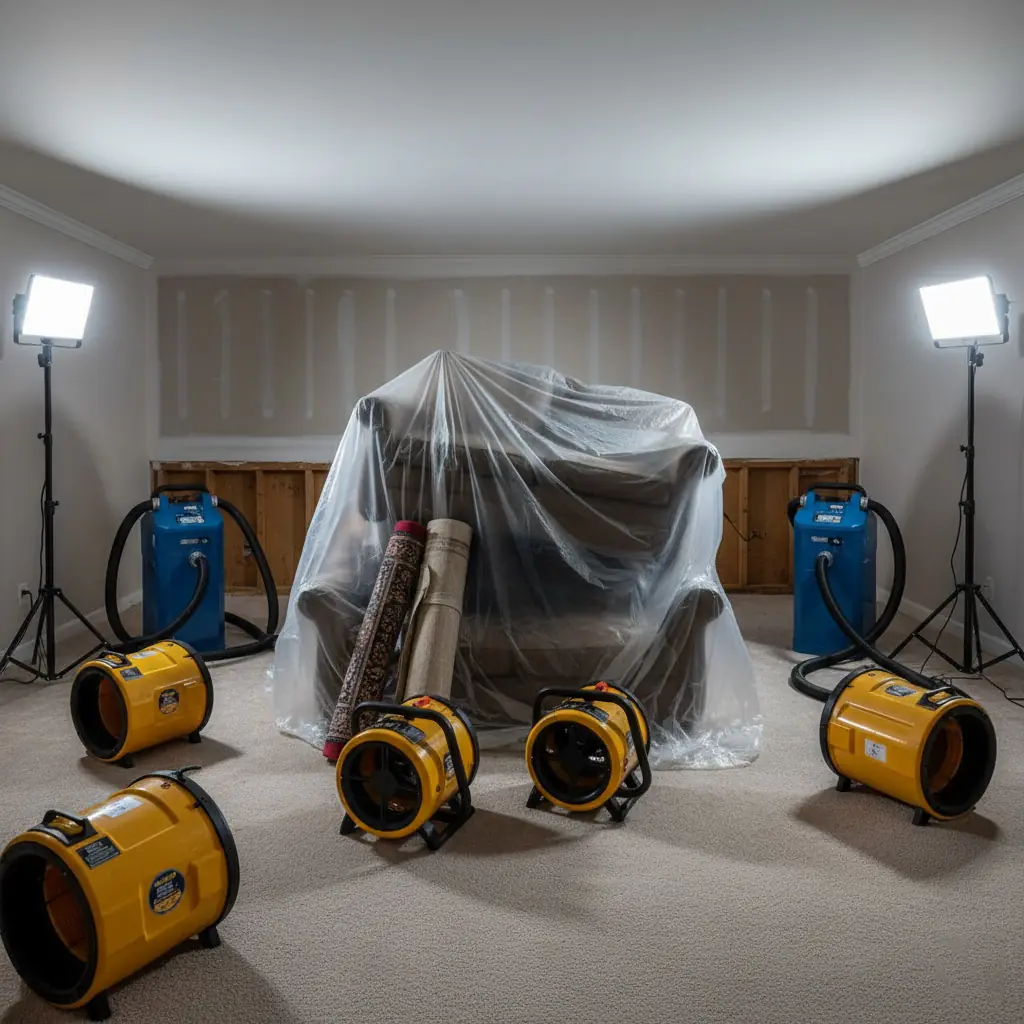


⚡ TL;DR: Smart homeowners in Elgin protect their properties by choosing professional mold remediation techniques that address hidden moisture issues rather than relying on ineffective cleaning methods like using bleach.
📋 What You’ll Learn
In this guide, we explore the specialized strategies Elgin homeowners use to permanently eliminate mold. Learn how to address local humidity challenges and protect your property from recurring fungal growth issues.
- Identify hidden moisture sources by learning where Elgin homes typically trap condensation and why standard cleaning products fail to stop deep, persistent mold colonies from returning after treatment.
- Follow professional restoration steps to understand the exact industrial protocols experts use to safely contain, remove, and prevent the spread of mold spores throughout your Fox River home.
- Evaluate DIY versus professional risks by reviewing our comparison table that highlights why professional remediation is often necessary to avoid long term structural damage and severe health concerns.
- Implement lasting prevention strategies designed specifically for our local climate, ensuring your basement and living areas remain dry, safe, and mold free during our humid Illinois summer months.
📖 Reading time: 8 min
✍️ Author expertise: Local Elgin restoration specialist with fifteen years of experience remediating flood damaged properties.
You wake up to that unmistakable, musty stench clinging to your curtains, and suddenly your Elgin home feels like a ticking time bomb. Most homeowners panic, scrub the walls with bleach, and pray the spores don't come back next week.
That is exactly how you lose the battle against mold.
Smart locals in the Fox River Valley know that surface cleaning is a sucker's game that ignores the real problem rotting behind your drywall. If you want to stop the growth for good rather than just masking the smell, here is how the pros actually tackle the job.
Keep reading to see the specific remediation secrets that keep Elgin houses mold-free for the long haul.

Why Bleach Fails: The Science Behind Persistent Mold Growth
Here is the hard truth your hardware store clerk won't tell you: Bleach does not kill mold on porous surfaces. It is a chemical illusion that makes you feel like you won, while the root system of the mold stays protected deep inside your building materials.
Bleach is mostly water. When you spray it on drywall, wood, or insulation, the chlorine stays on the surface while the water soaks in. You are essentially feeding the mold, giving it the exact moisture it needs to sprout back even angrier than before.
Think of it like mowing your lawn. You cut the top off, but the roots remain underground, waiting for the next rain. Effective mold removal is about killing the roots, not just bleaching the leaves.
The Science of Surface Tension
Mold spores are designed to survive harsh conditions. Their cell walls are resistant to standard household cleaners. When you apply bleach, a few things happen that actually work against you:
- The mold perceives the chemical attack as a threat and releases millions of spores into your air.
- The water component penetrates deep into the porous material, which actually accelerates further growth behind the wall.
- You are left with a discolored surface that looks clean, but the toxic mycotoxins remain active and dangerous.
Stop wasting your time with a spray bottle and a rag. If you can see the mold, you are only looking at the tip of the iceberg. True remediation requires specialized equipment to address the entire moisture profile of the room, not just the visible stain.
Detecting Hidden Colonies: Where Elgin Homes Hide Moisture
Most Elgin homeowners make a critical error by only looking where the mold is visible. If you see fuzz on your drywall, that is merely the tip of the iceberg.
The real damage usually hides inside wall cavities, under floorboards, or behind heavy appliances. These dark, damp spaces provide the perfect environment for spores to colonize and spread silently.
To find these sneaky invaders, you have to play detective. We look for the source of the water, not just the stain on the surface.
Common Moisture Traps in Elgin Properties
- Leaking pipes behind vanity cabinets in bathrooms.
- Condensation buildup inside HVAC ductwork.
- Water seepage in basement corners near the foundation.
- Poor ventilation in attic crawl spaces causing condensation on rafters.
- Gaps in window seals that allow rain to penetrate the exterior trim.
We use thermal imaging cameras and moisture meters to pinpoint these problem areas. These tools allow us to "see" through your walls and identify the hidden pockets where moisture accumulates before the mold actually starts to bloom.
If your home has high humidity or recent water exposure, do not wait for the smell to take over. Once you identify these moisture sources, you can stop the colony from expanding its territory across your entire property.

The Professional Remediation Process: A Step-by-Step Restoration Protocol
Real mold remediation is not about spraying a chemical and walking away. It is a precise, surgical operation designed to stop spores from migrating into your HVAC system and infecting the rest of your house.
The process starts with rigorous containment to isolate the contaminated area from your living space. We use negative air pressure machines to ensure that when we disturb the mold, those microscopic killers are pulled outside rather than pushed into your bedroom or kitchen.
The Essential Phases of Restoration
Once the perimeter is secure, the heavy lifting begins. We do not just wipe surfaces; we remove the source of the infestation entirely.
- Source Identification: Finding the water leak or moisture intrusion that allowed the colony to thrive in the first place.
- Containment: Setting up physical barriers and HEPA filtration to maintain high indoor air quality during the cleanup.
- Removal: Excavating mold-impacted materials like porous drywall, insulation, or carpet that cannot be safely cleaned.
- Cleaning: Utilizing specialized antimicrobial agents on structural wood and framing members to kill remaining roots.
- Verification: Testing the environment to confirm that spore counts are back to healthy, baseline levels before we pack up our tools.
Ignoring these steps is exactly why your DIY projects fail. If you leave behind even a small patch of mold, it will recolonize the moment the humidity spikes during an Elgin summer.
Professional remediation is the only way to ensure your property remains a safe, dry environment for your family. By following this scientific protocol, we eliminate the threat at the root so you can stop worrying about that musty smell coming back.
Real-World Results: A Case Study of a Flood-Damaged Elgin Basement
Consider a typical ranch-style home in the Highland neighborhood. After heavy rains caused the Fox River to swell, a basement foundation crack became an entry point for groundwater. The homeowner initially tried industrial fans and store-bought cleaners, but the musty odor only grew stronger as the week went on.
By the time our technicians arrived, the humidity levels behind the finished walls had hit critical mass. We discovered an active colony stretching across the base plates of the wall studs, effectively turning the basement into a mold factory. Here is how our professional restoration protocol compared to the DIY attempt that failed:
- Moisture mapping: We pinpointed the exact path of water intrusion that the homeowner missed.
- Containment: Our team used physical barriers to prevent cross-contamination to the upper floors.
- HEPA filtration: We scrubbed the air to capture spores that become airborne during removal.
- Antimicrobial treatment: Unlike bleach, our solutions penetrate porous materials to kill roots at the cellular level.
The transformation was night and day. We removed the ruined drywall, treated the structural wood with professional-grade encapsulates, and installed a permanent dehumidification system. The homeowner no longer has to worry about health risks for their family or the rapid depreciation of their property value during a future sale.

Professional vs. DIY Removal: A Comparative Table of Risks and Efficacy
If you think a sponge and a bucket of bleach will solve your mold problem, you are setting yourself up for failure. DIY methods often spread microscopic spores into the air, turning a small patch of fuzz into a whole home contamination issue. Professionals use containment barriers and industrial grade HEPA filtration to ensure the rest of your house stays safe while they work.
| Feature | DIY Methods | Professional Remediation |
|---|---|---|
| Mold Containment | None (spores spread) | Full negative air pressure |
| Root Cause Fix | Rarely addresses moisture | Complete moisture audit |
| PPE Requirements | Usually inadequate | Full hazmat gear |
| Cleaning Agent | Bleach (surface only) | EPA registered biocides |
| Long term Results | High risk of regrowth | Guaranteed safety |
When you handle mold yourself, you are only seeing the tip of the iceberg. What you perceive as a clean wall is often hiding a massive colony inside the wall cavity or behind your baseboards. Experts rely on thermal imaging cameras to track the moisture source that is feeding the growth, which is something you just cannot buy at a hardware store.
Most Elgin homeowners realize too late that they have kicked up a storm of toxins. By the time they call us, the furnace has already cycled those spores into the bedrooms and the attic. Here is the bottom line on why you should step back:
- Cross contamination: DIY scrubbing sends spores airborne into your HVAC vents.
- Toxic exposure: Bleach does not kill the root structure of mold on porous surfaces.
- Hidden damage: You risk missing structural rot until the drywall starts to crumble.
Strategies for Long-Term Prevention in the Fox River Climate
The Fox River climate brings heavy humidity that acts like a constant fuel source for mold spores. If you want to stop growth before it begins, you have to control your indoor environment, not just your surfaces.
Most Elgin homeowners leave their basement windows open during humid summer days, which is a massive mistake. That moist air hits your cool concrete foundation and turns into condensation instantly, creating the perfect nursery for mold colonies.
Essential Climate Control Tactics
- Keep your indoor relative humidity between 30 and 50 percent using a high capacity dehumidifier.
- Install bathroom exhaust fans that vent all the way to the exterior of the house, not just into your attic.
- Check your gutters and downspouts every spring to ensure water dumps at least six feet away from your foundation.
- Inspect your home’s vapor barrier in the crawlspace to confirm there are no tears letting ground moisture seep upward.
Monitoring is your best defense against expensive repairs later down the road. If you find a wet spot or a leak, do not wait for the smell to appear before taking action.
A small patch of damp drywall can turn into a structural disaster in under 48 hours. By staying proactive with your moisture management, you keep your home dry and save your wallet from the pain of full-scale professional remediation.
Final Words
Mold does not care how hard you scrub or how much money you spend on store bought chemicals. It cares about moisture, organic food sources, and poor ventilation; ignore these three pillars and you are just throwing money away.
If you suspect your Elgin home is harboring a secret colony, do not wait for the air quality to plummet. Ignoring the problem today turns a simple surface patch into a structural nightmare tomorrow.
We see the same patterns every week in the Fox River area. Families try to fix it themselves, fail to address the underlying water intrusion, and end up dealing with toxic secondary damage that costs ten times more to fix.
Don't fall into the trap of thinking a fresh coat of paint or a jug of bleach solves the issue. You need a systematic, scientific approach to truly reclaim your living space.
If you are ready to stop the cycle and protect your property value, our team is ready to help. You can explore our professional Mold Remediation protocols to see exactly how we bring a home back to safe, healthy standards.
Three rules for a mold-free home:
- Control the humidity: Keep your indoor levels between 30% and 50% year-round.
- Fix the leaks fast: Even a tiny pinhole leak in a basement pipe creates a feeding ground for spores.
- Ventilation is key: Always use your exhaust fans in bathrooms and kitchens during and after every shower or meal.
People Also Ask
Is mold remediation required by law for Elgin homeowners?
While local building codes emphasize safety, there is no specific law requiring homeowners to hire professionals for mold. However, most insurance policies require documented proof of professional remediation to cover structural damage claims.How do I know if the mold in my home is toxic?
Visual inspection cannot determine if a mold colony is toxic because all indoor mold should be considered a potential health risk. The federal agency responsible for environmental protection advises that you should remove any mold growth regardless of the species.Does homeowners insurance cover mold remediation in Elgin?
Coverage depends entirely on the source of the moisture that caused the growth. If the mold resulted from a sudden and accidental pipe burst, your policy might cover it, but long term seepage is usually excluded.How much does professional mold removal cost?
Costs vary based on the square footage of the affected area and the type of material contaminated. It is best to schedule a professional inspection to receive an accurate quote rather than relying on generalized pricing estimates.Why does mold keep returning after I clean it?
Mold returns because the underlying moisture source has not been corrected or the spores were not fully neutralized. Smart locals address the humidity or water intrusion first to prevent new colonies from establishing themselves in the damp air of the Fox River Valley.Need Water Damage Restoration Services?
We provide rapid water damage restoration to stabilize your property and prevent further structural issues in Elgin and surrounding communities (60120, 60123, 60124, 60177). Our team arrives quickly to extract water and complete the drying process, ensuring your home or business is restored to a safe condition.
Request Project Estimate