


⚡ TL;DR: This guide explains essential burst pipe cleanup procedures in Colorado Springs, helping homeowners manage immediate damage while highlighting the technical advantages of hiring experienced restoration professionals for repairs.
📋 What You’ll Learn
When a pipe bursts in your Colorado Springs home, the first hour dictates your recovery. This guide reveals professional secrets for mitigating water damage while avoiding costly long-term structural hazards.
- Master emergency mitigation techniques that allow you to stop the flow of water immediately, minimizing the spread of moisture through your floors and drywall before expert help arrives.
- Detect hidden moisture traps early by identifying the specific areas where water settles, preventing toxic mold growth and expensive secondary damage that often ruins Colorado Springs homes undetected.
- Utilize professional drying strategies that move beyond simple fans, employing industrial dehumidification methods to extract deep-seated moisture from your home’s wooden structure and subfloor framing effectively and safely.
- Navigate complex insurance claims by documenting your property damage with the precision required by adjusters, ensuring you receive the maximum payout allowed under your Colorado homeowners insurance policy.
📖 Reading time: 8 min
✍️ Author expertise: Certified restoration lead managing burst pipe emergencies across Colorado Springs for ten years.
It starts with a dull thud behind your drywall, followed by the sound of rushing water that shouldn't be there. Before you can reach the main shutoff valve, your flooring is already warping and your valuables are sitting in a soaking, expensive mess.
Most homeowners panic and reach for a mop, which is exactly the wrong move. The restoration industry has a set of unspoken rules that separate those who save their homes from those who end up gutting their entire living room months later.
If you want to stop a disaster from becoming a total financial wreck, you need to know what the pros are doing before they even knock on your front door. Keep reading to discover the specific steps that keep your home from falling apart after a pipe bursts.
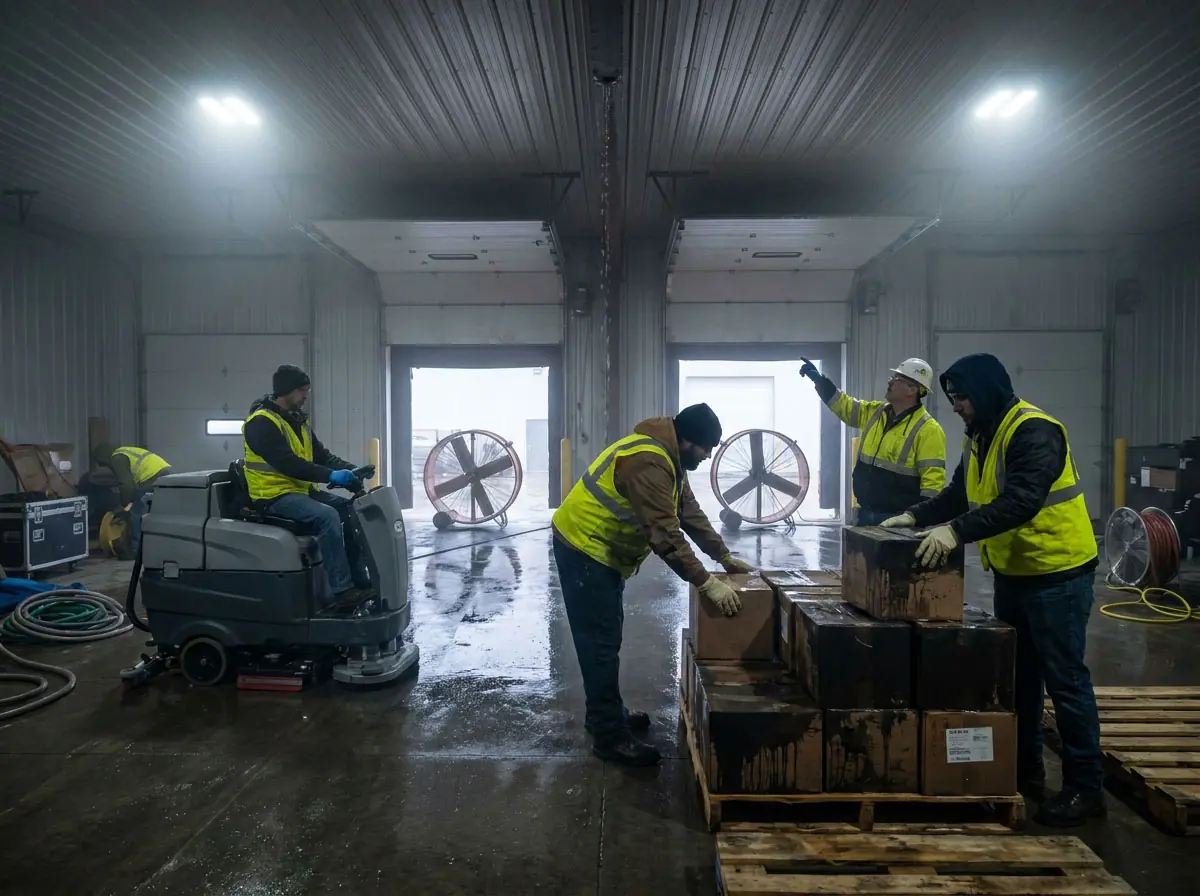
Immediate Mitigation Tactics: Stopping the Damage Before the Pros Arrive
The moment you hear that rushing water, your primary goal is to stop the flow. Run to your main water shutoff valve and crank it clockwise until the sound stops completely.
If the shutoff is rusted or unreachable, drain your pipes by turning on every faucet in the house. This forces the remaining water in the lines to exit through the drains rather than continuing to pour into your walls.
Once the water is off, your next move is to control the spread of moisture. You are in a race against the clock, as saturated materials act like sponges that expand and lose structural integrity within hours.
The "Pro" Checklist for First Responders
- Kill the power to the affected area at the breaker box to avoid electrical shocks.
- Move your electronics and porous furniture to a dry room immediately.
- Punch a small hole in the ceiling if you see it sagging, as trapped water creates a heavy collapse risk.
- Use a wet vac to pull up standing water on hard surfaces, but do not touch the carpet padding yet.
Many homeowners make the mistake of using standard household fans to blow air across wet carpet. This is a rookie move that actually pushes airborne contaminants deep into the house and makes the humidity levels worse.
Instead, open windows if the Colorado Springs weather is dry. If it is raining or snowing outside, leave the windows closed and focus on clearing the room of personal belongings so the restoration crew has a clean path to start their work.
The Hidden Dangers: Why Your Drywall and Flooring Are Ticking Time Bombs
Most homeowners assume that if the floor looks dry to the touch, the emergency has passed. This is a dangerous misconception that costs thousands in secondary damage.
Water doesn't just sit on the surface of your Colorado Springs home. It behaves like a sponge, migrating into wall cavities, wicking up drywall, and seeping into the subfloor beneath your luxury vinyl or hardwood planks.
Once moisture is trapped inside these building materials, it creates an environment where toxic mold colonies begin to thrive in as little as 24 to 48 hours. By the time you see the dark spots on your baseboards, the structural integrity of your wall studs is already compromised.
Why Common Building Materials Fail
Standard construction materials are not designed to survive a flood. Here is how they turn into a liability:
- Drywall: It acts like a wick, pulling moisture upward far beyond the point of contact. Once it gets wet, it loses structural strength and begins to crumble.
- Hardwood Flooring: Wood reacts to humidity by expanding and cupping. Even if it feels dry on top, the moisture trapped underneath rots the subfloor.
- Insulation: Fiberglass batt insulation holds water like a magnet. It will stay damp for weeks if not mechanically removed, becoming a breeding ground for bacteria.
Ignoring these hidden reservoirs is how a simple burst pipe turns into a total home renovation. If you cannot see behind the wall, you simply do not know what is growing there. Professionals use moisture meters and thermal imaging to find these pockets, while an amateur just paints over the problem and hopes for the best.
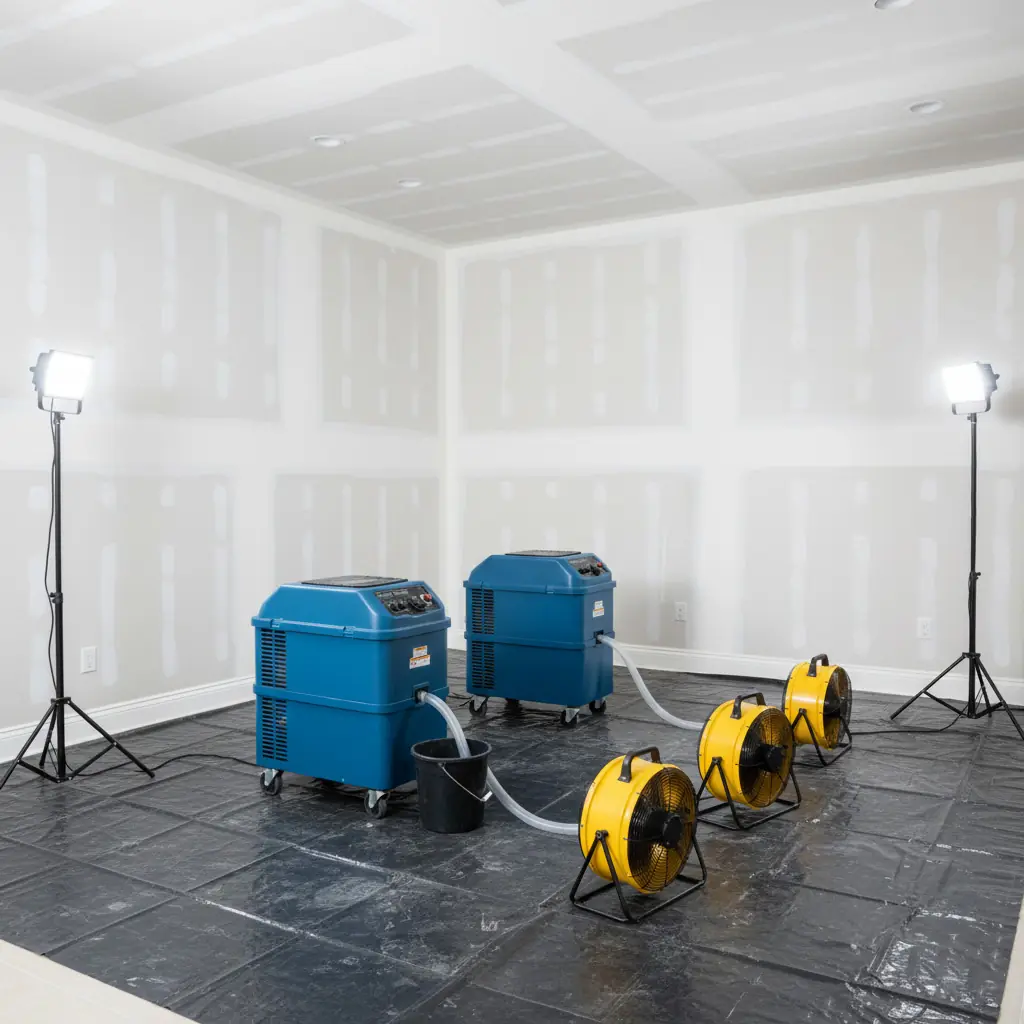
Drying Secrets: How Professionals Use Structural Dehumidification to Prevent Mold
Most people think a floor fan and an open window will do the trick after a pipe burst. They are dead wrong. Moisture hides inside wall cavities, under baseboards, and deep within the subfloor where air movement cannot reach. If you leave that trapped water alone, you are essentially inviting mold to host a permanent colony in your living room.
Professional restoration teams operate differently by using structural dehumidification. Instead of just blowing air around, we create a sealed environment that forces moisture out of building materials. We use specialized low grain refrigerant dehumidifiers that pull water vapor directly from the air, keeping the humidity levels low enough to make mold growth impossible.
The Science Behind Professional Drying
It is not just about heat. It is about vapor pressure and moisture migration. We manipulate the conditions inside your Colorado Springs home to draw water out of porous materials like drywall and wood studs. Here is what we monitor to ensure your home is actually dry:
- Specific Humidity Levels: We track grains per pound to ensure the air is truly dry, not just warm.
- Moisture Content Readings: We use penetrating and non-penetrating moisture meters to find water hiding behind finished surfaces.
- Airflow Patterns: We set up air movers in specific configurations to create a vortex that accelerates evaporation from soaked materials.
If you fail to get the moisture content back to equilibrium with the environment, your drywall will remain a sponge. This leads to cupping floors, peeling paint, and the tell-tale musty smell that signals a professional remediation bill you really do not want to pay. Trust the physics of drying, not just the feeling of a dry floor.
A Comparative Table: Professional Restoration vs. DIY Cleanup Costs and Risks
Homeowners often think grabbing a few fans and a rental dehumidifier is enough to solve a burst pipe. Let me be blunt: that is a massive mistake. You aren't just dealing with standing water; you are fighting moisture trapped inside your wall cavities, floor joists, and insulation that your eyes cannot see.
| Factor | DIY Cleanup | Professional Restoration |
|---|---|---|
| Water Extraction | Surface only | Sub-floor and cavity deep |
| Mold Prevention | Low success rate | Antimicrobial treatment |
| Insurance Claims | Often denied | Full documentation provided |
| Speed of Drying | Days or weeks | 24 to 48 hours |
| Long Term Risk | High (Rot/Mold) | Minimal |
When you handle the cleanup yourself, you are banking on luck. Most people leave moisture behind, which creates a breeding ground for mold that can ruin your indoor air quality within 72 hours. You are essentially paying for a future headache.
Pros, on the other hand, use specialized equipment like air movers and industrial grade desiccant dehumidifiers. We monitor the moisture content of your building materials daily. We do not guess; we measure.
The Real Costs of Cutting Corners
- Material Waste: If you don't dry it right, you have to tear it out later. That means new drywall, new floors, and new trim.
- Health Hazards: DIY attempts rarely address bacteria from pipe bursts, especially if it was a sewage line or a gray water leak.
- Insurance Rejection: Carriers love to deny claims where the homeowner failed to mitigate damage properly or botched the cleanup process.
Professional restoration is an investment in your home's longevity. It prevents the structural decay that turns a minor leak into a total gut job. Don't risk your equity on a mop and a prayer.

Anatomy of a Rescue: A Colorado Springs Burst Pipe Case Study
Last winter, a homeowner in the Rockrimmon area woke up to a catastrophic pipe failure in their basement. The copper line had split due to a sudden cold snap, sending water through the ceiling and soaking the entire home office.
Instead of just wiping the surface, our team arrived and treated the space like a surgical site. We focused on these core actions to prevent long term structural rot:
- Targeted moisture mapping to track exactly how far the water traveled inside the wall cavities.
- Controlled demolition of only the saturated, non salvageable drywall, preventing unnecessary repair bills.
- Deployment of specialized industrial air movers placed at precise angles to circulate air behind heavy furniture and baseboards.
The speed of our response was the only reason we saved the expensive hardwood floors from permanent warping. Time is your biggest enemy when water is involved. If you wait even twenty four hours, the risk of mold growth triples and the material damage becomes much harder to reverse.
By using moisture meters and thermal imaging cameras, we found pockets of water hiding in the subfloor that were completely invisible to the naked eye. This is the difference between a quick dry out and a six month project involving mold remediation specialists. Don't settle for surface drying when the real threat is hidden beneath your feet.
Navigating the Insurance Claims Process: Documenting for Maximum Recovery
Most homeowners lose money because they assume the insurance adjuster is on their side. The truth is, your adjuster works for the company; their job is to keep costs low, not to make you whole.
If you fail to document the extent of the damage immediately, you are essentially throwing away your payout. Every second counts, and your smartphone is your best friend during this crisis.
Essential Documentation Checklist
Before you toss a single soggy carpet scrap, start creating your paper trail. If you do not have proof of the damage, the insurance company will likely deny your claim or undervalue your losses.
- Take high-resolution photos and videos of the standing water before moving anything.
- Record the source of the leak, such as the broken pipe or the failed plumbing connection.
- Keep a detailed log of every conversation with your insurance agent, including dates and names.
- Save all damaged items in a staging area for inspection rather than throwing them in the trash immediately.
Your goal is to provide a complete visual narrative of the disaster. If you hire a professional restoration crew in Colorado Springs, ask them to provide a moisture map and a certified report.
These professional documents act as an objective third-party verification of the water intrusion. Insurance companies find it much harder to fight a professional report than your personal account of the event.
Final Words
When water is tearing through your home, you are playing a high-stakes game against the clock. Every hour that moisture sits inside your walls, your repair bill climbs and the chance of toxic mold growth skyrockets.
Don't sit around waiting for the problem to resolve itself. If you are dealing with a flood, check out our expert Burst Pipe Cleanup page to see exactly how we pull your property back from the brink.
The Real Choice You Face
You can spend your weekend fighting with a shop vac while moisture hides in your floor joists, or you can bring in the team that treats your house like their own. A DIY effort usually ends in a tear-out, whereas a professional response keeps your structural integrity intact.
- Stop the water at the main line immediately.
- Document every detail for your insurance adjuster.
- Call in the pros before the rot sets in.
Remember that the professionals you hire are not just cleaning up a mess. They are stopping a secondary disaster before it ruins your investment. Act fast, act smart, and keep your home dry.
People Also Ask
How much does burst pipe cleanup cost in Colorado Springs?
The cost of cleanup varies based on the amount of water and the materials affected. Most homeowners insurance policies cover these events, but you should review your coverage to understand your specific deductible and limits.Is it safe to stay in my home after a pipe bursts?
Staying in a home with water damage can be dangerous due to electrical hazards and potential slip and fall risks. You should also be aware that excess moisture encourages mold growth, which can impact your respiratory health if left untreated for more than 48 hours.How do professionals dry out a home faster than DIY methods?
Pros use high capacity dehumidifiers and industrial air movers to force moisture out of building materials. This structural drying process is significantly faster than using household fans, which only circulate humid air and often fail to reach hidden water pockets.Does homeowners insurance cover burst pipes in Colorado Springs?
Most standard homeowners policies cover water damage caused by sudden and accidental pipe bursts. However, they typically exclude damage caused by long term neglect or lack of maintenance, so documentation of the event is crucial for a successful claim.How long does it take for mold to grow after a pipe burst?
Mold can begin to colonize within 24 to 48 hours if the affected area is not properly dried. Acting quickly to extract standing water is the single most effective way to prevent costly long term remediation.Need Water Damage Restoration Services?
We provide rapid water damage restoration and structural drying services to restore your property in Colorado Springs and the surrounding areas (80903, 80907, 80918, 80920). Our team stabilizes your home immediately to minimize damage and ensure a swift return to a safe environment.
Request Price Estimate