
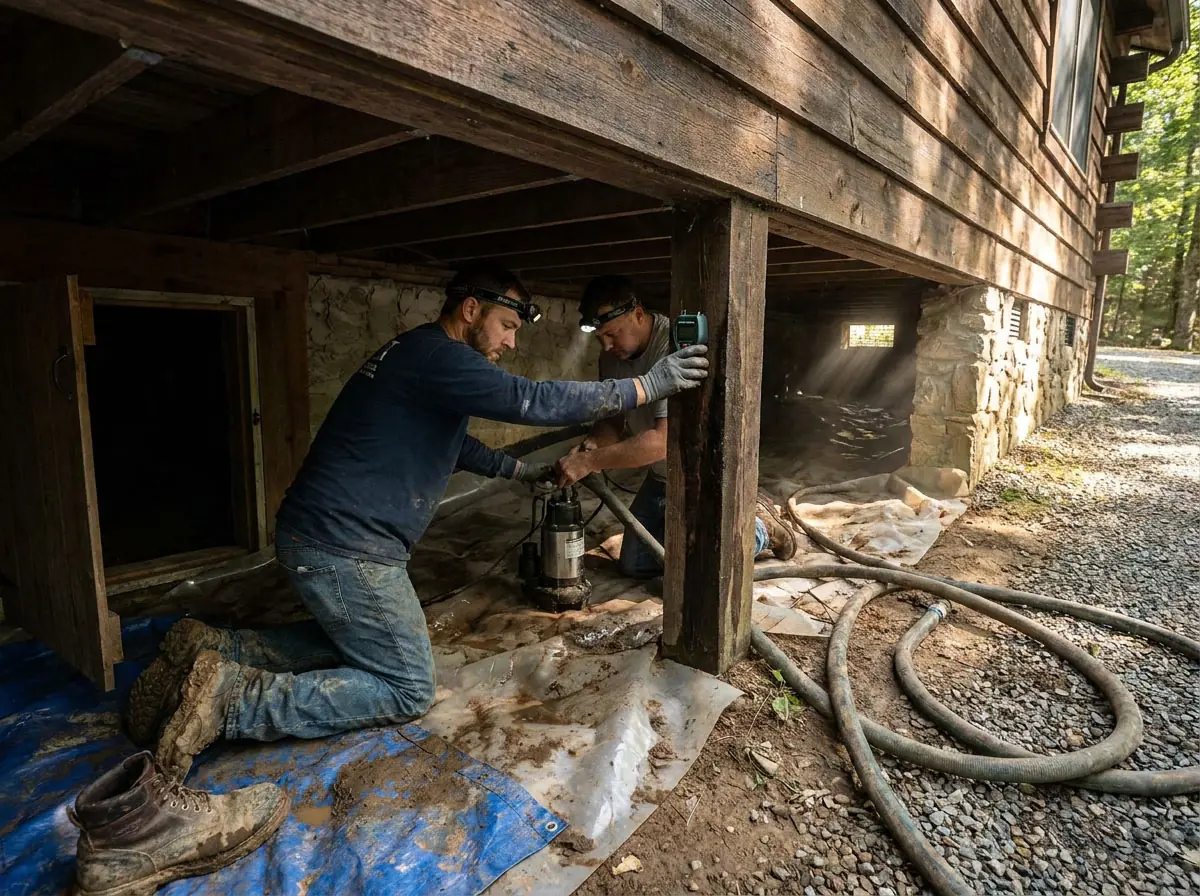


⚡ TL;DR: Despite the dry climate of Colorado Springs, this guide explains why professional black mold removal is essential for your safety and outlines effective steps for permanent remediation.
📋 What You’ll Learn
Living in Colorado Springs requires understanding unique moisture challenges that invite toxic mold growth. This guide clears up misconceptions about local mold risks and provides professional insights for keeping your home safe.
- Understand local mold risks by learning why our dry high altitude climate does not protect your property from dangerous Stachybotrys outbreaks or hidden water damage in your basement.
- Recognize health warning signs associated with toxic mold exposure to ensure your family remains safe from the respiratory issues and allergic reactions caused by persistent fungal colony growth.
- Master professional remediation steps by reviewing the official protocols used by experts to safely contain, remove, and prevent the recurrence of black mold throughout your residential property.
- Avoid ineffective cleaning methods including the common mistake of using household bleach, which fails to penetrate porous surfaces and can actually make toxic mold problems significantly worse.
- Review real case studies to see how local homeowners in areas like Broadmoor successfully eliminated extensive mold infestations while managing remediation costs through strategic and effective mitigation planning.
📖 Reading time: 8 min
✍️ Author expertise: Certified water damage restoration expert with fifteen years remediating Colorado Springs residential properties.
You wake up with a congested chest, a nagging headache, and a suspicious musty odor clinging to the air in your basement. You start tearing back the drywall, only to see a patch of dark, velvet-like growth staring back at you.
That is not just dirt. That is black mold, and in the unique climate of Colorado Springs, it is a ticking time bomb for your health and your property value.
Most homeowners make one fatal mistake the moment they spot it, inadvertently turning a small cleanup job into a massive financial headache. Before you grab a spray bottle of bleach or call an overpriced contractor, you need to understand the real risks and the specific rules for mold remediation in our region.
Let’s pull back the curtain on how to handle this correctly so you can protect your lungs and your wallet from further damage.

Why Colorado Springs’ Dry Climate Doesn’t Make You Immune to Mold
Many residents believe our high altitude and semi-arid conditions act as a natural shield against fungal growth. They assume that if it is not raining, their home is safe from moisture-loving invaders.
This is a dangerous misconception. While Colorado Springs stays relatively dry, indoor environments create their own microclimates that have nothing to do with the weather outside.
Mold does not need a tropical rainforest to thrive; it only needs a small, persistent source of water and a food source. In our area, those sources are often hidden in plain sight:
- Leaking pipes behind bathroom vanities or inside kitchen cabinetry.
- Condensation buildup in poorly ventilated basement corners.
- Humidity spikes trapped by modern, airtight window seals.
- Roof leaks that go unnoticed until insulation becomes saturated.
Once moisture settles into drywall, wood studs, or carpet padding, it provides the perfect breeding ground for spores. The lack of outside humidity keeps the air dry, but it fails to dry out the interior of your walls.
In fact, this dryness can actually trap mold spores inside your home longer because there is less natural ventilation to dilute the air. If you ignore a leak, you are essentially providing a private oasis for mold in an otherwise dry desert.
The Health Hazards of Stachybotrys Chartarum and How It Affects Your Family
Most people hear the words toxic mold and think of a minor allergy. The truth is far more sinister when you are dealing with Stachybotrys chartarum, often called the black mold.
This organism produces potent chemicals called mycotoxins. These microscopic toxins do not just sit on your walls; they become airborne, infiltrating the very air your family breathes every single day.
Exposure is not a joke. Once these toxins enter your system, they can trigger a cascade of health issues that often go misdiagnosed by local doctors.
Common Symptoms of Mold Toxicity
- Chronic fatigue that refuses to go away with sleep.
- Persistent respiratory distress, including coughing and wheezing.
- Unexplained skin rashes or constant eye irritation.
- Difficulty concentrating, often referred to as brain fog.
- Severe, recurring headaches that spike when you are at home.
Ignoring these signs can lead to long term inflammation in your lungs and immune system. Because this mold thrives on high cellulose materials like drywall and ceiling tiles, it often hides inside your walls, silently churning out spores while you sleep.
If you or your children notice these symptoms only when you are inside the house, you are likely living with a biological hazard. Do not wait for a medical emergency to take action, because the longer those colonies grow, the more toxic load they deposit into your home environment.

Professional Mold Remediation Protocols
Most people think a quick wipe-down with a rag solves the problem. They are wrong. Real mold remediation is a surgical operation, not a janitorial task.
We follow strict industry standards to ensure that toxic spores do not migrate to other parts of your home. If you skip these steps, you are simply planting seeds for the next outbreak.
The Essential Phases of Removal
Professional remediation is a multi-step process designed to stop the spread and remove the root cause. Here is what happens behind the containment barriers:
- Site Assessment: We use moisture meters and thermal imaging to find hidden water sources behind your walls.
- Containment: We seal off the affected zone using negative air pressure. This prevents microscopic spores from drifting into your bedroom or kitchen.
- HEPA Filtration: High-efficiency particulate air scrubbers run constantly to trap spores floating in the air.
- Removal and Cleaning: Porous materials like drywall or insulation are removed safely. We then treat structural wood with antimicrobial agents.
- Verification: We perform a final inspection to confirm that air quality meets safe, habitable levels.
If the mold is extensive, the affected materials are handled as hazardous waste. Trying to bag up moldy drywall yourself is like shaking a bag of flour inside your living room; it spreads the contamination everywhere.
We prioritize mechanical removal over chemical masking. By physically removing the colony, we strip away the food source the mold needs to survive. This is the only way to ensure your Colorado Springs home is truly safe for your family again.
Why Common Household Bleach Fails to Eradicate Toxic Mold Colonies
Most homeowners assume that a bottle of household bleach is the ultimate weapon against toxic mold. They scrub the surface, see the black stain vanish, and assume the threat is dead. Unfortunately, this is a dangerous misconception that often masks a much deeper problem.
Bleach is a water-based solution. When you apply it to porous materials like drywall, wood studs, or carpet, the water component seeps into the material, while the chlorine stays on the surface. You end up feeding the deep-seated root structure, known as hyphae, while only killing the visible top layer. This is why the mold almost always grows back with a vengeance within weeks.
The Science Behind the Failure
- Surface treatment only: Bleach cannot penetrate porous surfaces to reach the mold roots.
- Chemical makeup: The water base provides the exact hydration that dormant mold colonies crave.
- Incomplete eradication: You are simply bleaching the color out of the mold, leaving the toxins intact.
Relying on bleach gives you a false sense of security while the mold continues to compromise the structural integrity of your home. If you are dealing with Stachybotrys, you need professional-grade surfactants and encapsulation products that actually kill the colony at the source. Stopping the cycle of growth requires removing the contaminated material, not just wiping it down with household cleaners.

Case Study: Eliminating Extensive Basement Mold in a Broadmoor Property
We recently took on a project in a historic Broadmoor home where the owner assumed the dry Colorado air kept their lower level safe. They were wrong. A hidden pipe leak behind the finished basement walls had been feeding a massive colony of Stachybotrys for months, invisible to the naked eye until the drywall started to crumble.
The situation was severe enough that simply scrubbing the surface would have triggered a massive release of spores throughout the entire HVAC system. We had to implement a strict containment protocol to stop the spread. Here is how we handled the restoration process:
- Site Isolation: We used heavy-duty polyethylene barriers and negative air pressure to lock the basement away from the rest of the home.
- Debris Removal: Every piece of porous material, including mold-infested drywall and water-damaged insulation, was bagged and sealed before leaving the room.
- Advanced HEPA Scrubbing: We ran industrial-grade air scrubbers for forty-eight hours to capture microscopic spores that were floating in the air.
- Structural Drying: We deployed high-velocity dehumidifiers to pull moisture out of the floor joists and concrete foundation, starving any remaining mold of its life source.
The homeowner thought they could patch the wall and paint over the problem. Had they attempted a DIY fix without these precautions, they would have turned their ventilation system into a spore distribution network. By the time we finished, the basement passed a third-party air quality clearance test with flying colors; the air inside that Broadmoor property was cleaner than the air outside.
Essential Cost Factors and Mitigation Strategies: An Informative Comparison Table
When you face a mold issue, money often becomes the primary concern. You need to know what you are paying for before a single worker sets foot in your house.
Professional remediation is not a one-size-fits-all service. Prices fluctuate based on the square footage of the infestation, the structural materials involved, and the complexity of the containment zones needed to keep your home safe.
| Factor | Impact on Total Cost |
|---|---|
| Mold Surface Area | Higher square footage equals more labor |
| Material Type | Porous (drywall) vs. Non-porous (concrete) |
| Containment Needs | Air scrubbing and physical sealing requirements |
| Moisture Source | Repairing leaks to prevent future growth |
| Access Difficulty | Crawl spaces and tight attics add complexity |
The most effective strategy to keep costs low is early intervention. If you wait, the spores spread to your HVAC system and carpet, turning a local treatment into a whole house project.
Beyond the immediate invoice, consider these long term mitigation steps:
- Inspect your basement for foundation cracks that allow humidity to seep in.
- Install a high quality dehumidifier to keep air moisture below 50 percent.
- Check your downspouts to ensure they drain at least six feet away from your foundation.
- Schedule annual professional inspections if your property is prone to dampness.
Think of these costs as an investment in your home health. Ignoring the problem today almost always results in a much larger repair bill tomorrow when you finally decide to sell or address the damage.
Final Words
You now have the cold, hard facts about what is growing behind your baseboards. The worst thing you can do is ignore it or try to scrub it away with household chemicals that only feed the colony.
When you see black mold, you are seeing a warning sign from your home that moisture control has failed. If you want a permanent solution, stop playing amateur chemist and bring in the pros who have the right gear to contain the spores.
Expert Black Mold Removal isn't about just cleaning up the visible mess. It is about identifying the source of the leak, drying the structure, and ensuring your air quality returns to a healthy state for your family.
Three Golden Rules for Mold Defense
- Never disturb a moldy area without professional containment, as you will just spread toxic spores into your HVAC system.
- Fix the moisture problem immediately, whether it is a leaking pipe or high basement humidity.
- Trust local experts who know the specific, dry, high altitude conditions we face here in the Springs.
Leaving mold untreated is a bet against your own health. You are not just paying for remediation; you are buying back your peace of mind and protecting the integrity of your property.
Do not wait for the symptoms of exposure to kick in. Reach out, get a professional assessment, and handle this once and for all.
People Also Ask
How can I identify black mold in my Colorado Springs home?
Black mold, or Stachybotrys, often appears as a slimy or powdery dark green or black growth on damp surfaces. If you notice a persistent musty odor or unexplained health symptoms in your household, it is wise to schedule a professional inspection.Is it safe to clean black mold using bleach?
Bleach is ineffective at killing mold on porous materials like drywall or wood because it only clears the surface while the roots remain active. The EPA guidelines suggest that cleaning porous surfaces is often unsuccessful, making professional removal the safer choice.Does homeowners insurance cover mold removal in Colorado Springs?
Insurance coverage for mold remediation typically depends on the underlying cause of the moisture issue. If the mold growth resulted from a sudden, accidental water leak covered by your policy, your provider may help with the remediation costs.How long does professional mold remediation take?
The duration of the remediation process depends on the size of the affected area and the extent of the damage. Most professional projects in residential properties are completed within a few days once containment and removal protocols are established.Why does my basement have mold despite the dry Colorado climate?
Even in a semi arid climate, poor ventilation or hidden plumbing leaks can create the perfect environment for mold to thrive. Basements are particularly vulnerable due to condensation buildup and lack of natural airflow in lower levels.Need Water Damage Restoration Services?
We provide rapid water damage restoration and structural drying services to restore your property in Colorado Springs and the surrounding areas (80903, 80907, 80918, 80920). Our team stabilizes your home immediately to minimize damage and ensure a swift return to a safe environment.
Request Price Estimate