


⚡ TL;DR: If you experience a burst pipe in Clovis, follow these immediate safety and documentation steps to minimize water damage before you contact a professional for full restoration services.
📋 What You’ll Learn
Discover the critical steps you must take immediately after a pipe bursts in your Clovis home to minimize water damage, protect your property, and successfully navigate the insurance claim process effectively.
- Stop the water flow instantly by locating your home main shutoff valve to prevent further flooding and mitigate extensive structural damage across your flooring, walls, and personal belongings.
- Prioritize your personal safety first by identifying electrical hazards near standing water and learning how to safely secure your electronics before our professional restoration team arrives to assist.
- Document everything for insurance claims with a strategic approach to capturing photos and videos of the damage, which ensures a smoother recovery process with your local providers.
- Identify hidden moisture risks early through expert tips that help you recognize why professional mitigation is necessary beyond basic plumbing repairs to prevent long term mold growth.
📖 Reading time: 7 min
✍️ Author expertise: Local water damage restoration specialist with decades of field experience in Clovis, California.
You walk into your kitchen to grab a glass of water, but instead of silence, you hear a violent, rhythmic hissing coming from behind the wall. Within seconds, your baseboards are soaking up gallons of water, and the panic sets in as you realize your home is becoming an indoor swimming pool.
Most homeowners in Clovis freeze in this exact moment, wasting precious minutes searching for a contractor while their hardwood floors warp and their drywall turns into a sponge. Every second you wait while water pools around your outlets is costing you thousands in preventable structural damage.
You don't need a panicked reaction right now, you need a tactical plan of action to stop the bleeding before the restoration bill spirals out of control. Here is exactly what you must do the second you find a leak to save your property from a total loss.

Shut Off Your Main Water Valve and Contain the Flow
Your first move is the most important: stop the water source immediately. Locate your main water shut-off valve, which is typically found near the street, inside your garage, or tucked away in a utility closet.
If you have a gate valve, turn the handle clockwise until it is tight. If your home uses a ball valve, turn the handle a quarter turn so it sits perpendicular to the pipe.
Once the water is off, open the lowest faucet in your house to drain any remaining pressure from the lines. This simple trick prevents more water from leaking out of the burst pipe while you prepare to clear the area.
Proactive Containment Tips
- Grab every bucket, mop, and towel you can find to soak up standing water.
- Use heavy plastic sheets or garbage bags to create a barrier between wet floors and your furniture legs.
- Avoid using a shop vac unless you are certain there is no standing water near live electrical outlets.
Time is your worst enemy when pipes burst in the Clovis heat. Stopping the flow is the difference between a minor cleanup job and a full-scale home reconstruction project.
Safeguarding Your Electronics and Preventing Electrical Hazards
Water and electricity are a lethal combination. If a pipe bursts near your breaker panel, wall outlets, or power strips, you are staring down the barrel of a potential fire or a life-threatening shock.
Your first instinct might be to reach for that charging phone or unplug a lamp near the puddle, but stop immediately. If you feel even a slight tingle when touching a wall or appliance, stay away from the area entirely.
Immediate Electrical Safety Protocol
- Do not walk through standing water if you suspect an electrical short.
- Locate your main breaker panel and flip the master switch to OFF if you can safely reach it without stepping into the water.
- Unplug mobile devices and small appliances only if the plugs are completely dry and you are standing on a perfectly bone-dry surface.
If the water has already reached your outlets or floor-level electronics, do not take chances. Leave the power on for the restoration team to handle, or call your utility provider to shut off the main supply to the house.
Remember, a fried television or a damaged computer is a fixable financial loss. Your personal safety is not. Keep your family, your pets, and yourself away from any room where the water has touched an active electrical outlet.
Essential Documentation for Your Insurance Claim Process
Before you even think about tossing that waterlogged carpet into the dumpster, grab your smartphone. Your insurance adjuster needs visual proof of the destruction, not just a verbal description of how bad things got.
Take high-resolution photos and videos of the standing water, the source of the pipe burst, and any personal belongings that were hit by the spray. Capture the damage from multiple angles to ensure the adjuster sees the full scale of the mess.
Here is what your documentation file should include to protect your payout:
- Clear photos of the burst pipe and the initial point of entry.
- Wide shots showing the extent of water saturation on floors and walls.
- Close-ups of damaged valuables, furniture, and electronics.
- A detailed written log of exactly when the incident started and what time you shut off the water.
- Receipts for any temporary emergency repairs or supplies you purchased, like tarps or shop vacs.
Don't wait for the restoration crew to arrive before you start documenting. If you clean up the evidence before the insurance company assesses the site, you could be leaving thousands of dollars on the table. Treat your phone like a crime scene camera; the more detail you provide now, the smoother your claim process will move forward later.
Checklist Table: A Categorized Inventory of Items to Move and Protect
When water begins to migrate across your floors, your primary goal is to save the items that hold the highest value or the most significant sentimental meaning. Speed is your only ally here, so work in a logical path starting from the point of the leak and moving outward.
| Category | Items to Prioritize | Action |
|---|---|---|
| Electronics | Laptops, Tablets, Power Cords | Elevate to high tables |
| Valuables | Jewelry, Cash, Passports | Move to a dry, safe room |
| Furniture | Rug corners, Wood-legged chairs | Place foil or plastic under legs |
| Personal | Photo albums, Documents | Store in sealed plastic bins |
Focus your attention on moisture-sensitive belongings that sit directly on the floor. Wood furniture legs act like sponges and will wick moisture into the finish, causing permanent staining or swelling.
If you have time, place small pieces of aluminum foil or plastic wrap under the base of sofas and heavy cabinets. This simple barrier prevents the wood from absorbing the standing water, saving you from replacing expensive heirloom furniture.
What to Move Immediately
Do not wait for the water to reach your belongings before you act. Clear the floor space as quickly as possible using this quick-reference list:
- Move all area rugs to a dry surface to prevent mold growth on the underside.
- Unplug all cords and move charging bricks away from wet zones.
- Relocate cardboard boxes, as they disintegrate and ruin the contents inside.
- Lift drapery or curtains so they do not touch the damp floor or baseboards.
If an item is too heavy to move, get it off the floor. Use plastic containers, bricks, or even thick books to create a gap between your furniture and the saturated carpet or tile.

Lessons from a Clovis Home: A Case Study on Rapid Burst Pipe Mitigation
Last winter, a family in the Loma Vista neighborhood experienced a nightmare scenario when a pipe burst in their upstairs laundry room at 2:00 AM. Instead of waiting for a plumber to arrive and handle the mess, the homeowner remembered a few key tactics to limit the damage immediately.
Because they acted fast to shut off the main water valve and moved their electronics to a dry area, they saved their high-end home office equipment. By the time our crew arrived, the water was contained, which allowed us to focus on drying the structure rather than dealing with catastrophic electrical failures or ruined hardwood floors.
This situation shows exactly why your reaction time is the biggest factor in your total repair costs. Here is a breakdown of what happened compared to a standard homeowner reaction:
- The Fast Action Approach: Homeowner cuts water at the main, uses shop vacs, and opens windows. Result: minor drywall repair and carpet cleaning.
- The Wait and See Approach: Homeowner waits for a plumber. Result: mold remediation, subfloor replacement, and thousands in extra costs.
The lesson here is simple: do not wait for the pros to handle the first ten minutes of an emergency. When you control the flow of water, you keep the problem confined to one room instead of letting it seep into your foundation and framing. Those few minutes of decisive movement saved this family nearly $8,000 in secondary restoration work.
Why Professional Water Restoration is Critical Beyond Basic Plumbing Repairs
Most homeowners assume that once the plumber patches the pipe, the crisis is finished. That is a dangerous mistake. A plumber is trained to stop the flow of water, but they are not equipped to handle the hidden moisture trapped inside your walls, subfloors, and insulation.
When water sits in your structure, it creates a breeding ground for toxic mold within 24 to 48 hours. If you leave that moisture behind, you are effectively setting a ticking time bomb for your health and the structural integrity of your property.
The Hidden Risks of DIY Drying
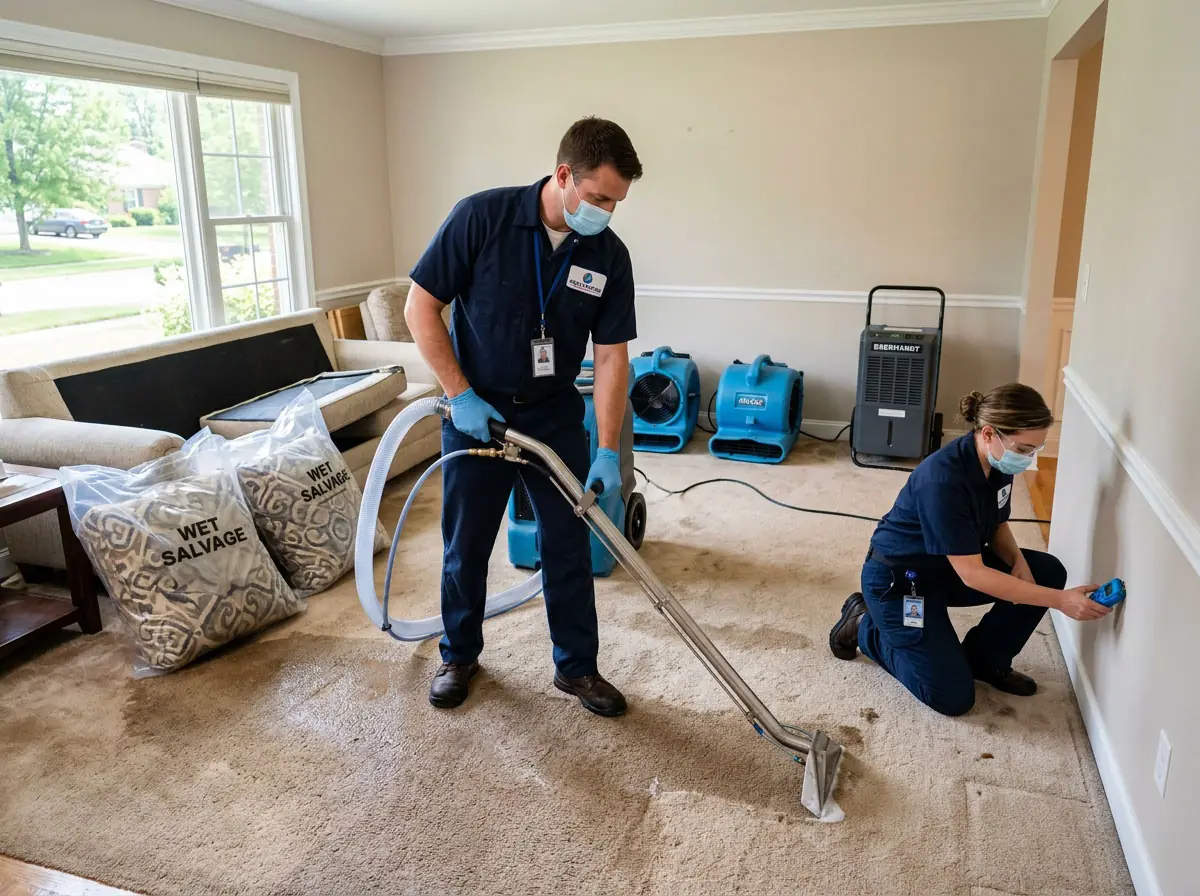
Professional restoration goes far beyond using a shop vac or a few fans. Our team uses industrial grade equipment to track moisture in places you cannot see with the naked eye. We focus on specific steps that standard repairs ignore:
- Extraction of standing water from carpet padding and deep crevices.
- Setting up commercial dehumidifiers to pull moisture from deep within structural lumber.
- Using moisture meters to ensure your home is biologically safe before repairs start.
- Sanitizing the area to prevent dangerous bacteria from spreading through your HVAC system.
If you skip these steps, you will likely find yourself paying for expensive mold remediation or wood rot repairs just a few months down the road. Don't trade a short term fix for long term financial ruin. We bring the tools and the technical training to ensure your Clovis home stays dry, safe, and mold free for years to come.
Final Words
When water is wrecking your home, time is your worst enemy. Every moment spent watching the water spread is a moment your equity drains away into the foundation.
You need to act with surgical precision, turn off that valve, and protect your valuables immediately. If you have already managed the emergency, your next move must be professional Burst Pipe Cleanup to ensure moisture doesn't turn into toxic mold behind your walls.
Think of it this way: a plumber stops the water, but a restoration expert saves the home. Professional crews bring industrial drying equipment that you simply cannot rent at a local hardware store.
Why Speed Defines Your Recovery
Lingering moisture is a silent thief. It hides in floor joists and insulation where it can rot your home from the inside out long after the pipe is patched.
- Don't wait for insurance adjusters to tell you when to dry your home.
- Document everything with high-quality photos before moving a single item.
- Trust experts who understand the specific humidity levels of the Clovis climate.
Do not gamble with the structural integrity of your property. Take control of the chaos now, mitigate the damage with these steps, and get the pros on-site to handle the heavy lifting before the damage becomes permanent.
People Also Ask
How do I shut off the main water supply in my home?
Locate your main shut off valve, which is typically found near the perimeter of your home or inside the garage. Turn the handle clockwise until it is perpendicular to the pipe to stop the flow of water immediately.What should I do if my home has standing water from a burst pipe?
Prioritize your safety by turning off the electricity at the breaker panel before entering the room. You can learn more about protecting your home from flood hazards by reviewing guidelines from federal agencies.Will my insurance cover the cost of burst pipe cleanup?
Most standard homeowners insurance policies cover sudden and accidental water damage caused by a burst pipe. However, you must document the damage thoroughly and contact your provider as soon as possible to initiate the claims process.How long does it take for mold to grow after a pipe burst?
Mold can begin to colonize damp surfaces within 24 to 48 hours of water exposure. It is crucial to engage professional restoration services to ensure the area is dried completely and treated to prevent long term fungal growth.Why do I need a restoration company after the plumber fixes the pipe?
While a plumber is trained to stop the leak, a restoration company is equipped to mitigate secondary damage like structural rot and hidden moisture. Professional extraction and industrial grade dehumidification are required to return your home to a pre loss condition.Need Water Damage Restoration Services?
We provide rapid water damage restoration and structural drying services to restore your property in Clovis and the surrounding areas (93611, 93612, 93613, 93619). Our team arrives quickly to mitigate damage and return your home or business to a safe, pre-loss condition.
Request Price Estimate