


⚡ TL;DR: This informative guide explains how Yuma residents can handle sewage backup cleanup safely, minimize health risks from wastewater, and work with professionals to restore a clean, sanitary home.
📋 What You’ll Learn
Dealing with a sewage backup in Yuma requires swift and precise action to protect your property. This guide outlines how to handle contamination effectively while safeguarding your family’s long-term health.
- Understand Yuma’s unique environmental risks by learning how our extreme desert heat accelerates bacterial growth and creates an urgent need for immediate professional intervention after a wastewater leak.
- Take essential containment steps today to prevent the spread of raw sewage through your home, reducing cross-contamination risks while you wait for a local recovery team to arrive.
- Identify hidden health hazards quickly by recognizing the dangerous pathogens found in household wastewater and understanding why standard household cleaners are insufficient for total decontamination of surfaces.
- Follow professional remediation protocols exactly to ensure your property is cleaned, disinfected, and restored to safety standards, preventing mold growth or structural issues after the initial mess clears.
- Prepare for potential restoration costs by reviewing our service table and field case studies, which provide homeowners with realistic expectations for local cleanup prices and recovery timelines here.
📖 Reading time: 8 min
✍️ Author expertise: Yuma water damage expert with ten years of field experience handling local sewage disasters.
You wake up to a stench so foul it hits you like a physical wall before you even leave your bedroom. That sickening gurgle coming from your bathroom drain isn't just a plumbing glitch; it is a high-stakes emergency threatening the health of everyone under your roof.
In the blistering heat of Yuma, raw sewage doesn't just sit there. It breeds dangerous bacteria and toxic pathogens at an alarming rate, turning your sanctuary into a biohazard zone within minutes.
Most homeowners assume they can scrub it away with a mop and some bleach, but that is a dangerous gamble with your family's safety. Getting this wrong can have permanent consequences for your home and your health.
Here is exactly how to stop the spread and reclaim your house before the damage becomes irreversible.

Why Yuma’s Extreme Climate Accelerates Sewage Contamination
Yuma is famous for its record-breaking sunshine, but that relentless heat creates a massive problem when a sewage backup occurs. Wastewater contains organic matter that acts like fuel for microbial growth. In a typical climate, you might have a small window to react, but here, the internal temperature of your home often provides the perfect incubator for disaster.
High indoor temperatures mean that bacteria, viruses, and parasites multiply at a frantic pace. Instead of hours, you are dealing with minutes before the contamination reaches critical mass. The heat acts as a catalyst, accelerating the release of aerosolized pathogens into your living space.
Consider the specific environmental factors that turn a pipe clog into a health crisis:
- Thermal Acceleration: Heat increases the metabolic rate of bacteria, causing them to spread faster than in cooler climates.
- Aerosolization: Warm air currents within your HVAC system carry odor particles and microscopic spores throughout every room.
- Structural Humidity: High ambient heat creates a greenhouse effect in your crawl spaces or slab foundations, trapping moisture and encouraging rapid mold colonization.
Don't fall for the trap of thinking you can just open a window to fix the smell. The heat is actively forcing the toxic vapor into your drywall, carpets, and ventilation systems. In Yuma, ignoring a sewage backup for even a few hours significantly increases the risk of permanent structural damage and long-term health complications.
Immediate Actions to Minimize Exposure and Contain the Spread
When sewage hits your floorboards, your primary goal is containment. Every second you wait, contaminated water wicks into porous materials like drywall, carpet, and baseboards.
First, cut the power to the affected area at the main breaker if there is standing water near electrical outlets. Then, shut off your main water valve to prevent further pressure from pushing more waste into your living space.
Here is your checklist for immediate risk reduction:
- Clear the house of children and pets instantly.
- Wear personal protective gear if you must touch anything, including rubber boots, heavy-duty gloves, and a mask.
- Block the path of the spill using towels or sandbags to keep it from spreading into clean rooms.
- Keep windows open for air circulation, but avoid using central HVAC systems as they can suck bacteria into your ducts and blow it throughout the entire home.
Do not attempt to dry the area with fans or a shop vacuum. You will only aerosolize the bacteria, spreading microscopic waste particles into the air you breathe. Keep the area sealed and wait for a professional team to arrive with specialized negative air machines and industrial disinfectants.
Health Hazards: Identifying the Pathogens Lurking in Wastewater
When raw sewage infiltrates your Yuma home, you are not just dealing with a mess; you are facing a biological nightmare. Wastewater is a cocktail of human waste, chemical runoff, and decaying organic matter that serves as a breeding ground for invisible threats.
In our high desert heat, these microorganisms multiply at a terrifying speed. If you breathe these particles or touch contaminated surfaces, you risk severe illness. Here are the most common pathogens you are likely to encounter:
- E. coli and Salmonella: Bacteria that cause violent gastrointestinal distress, severe dehydration, and fever.
- Rotavirus and Norovirus: Highly contagious viruses that can lead to rapid onset vomiting and diarrhea.
- Giardia and Cryptosporidium: Parasites that invade the digestive tract and can cause long-term health complications.
- Tetanus and Hepatitis A: Serious infections that can be transmitted through direct contact with contaminated materials or open wounds.
These contaminants do not stay localized. They become airborne as the moisture evaporates, settling into your HVAC ducts, soft furniture, and drywall. This turns your entire home into an incubator for disease.
Do not be fooled by clear water or the absence of a visible stain. If the sewer system has backed up, the area is officially a Category 3 loss. This means the water is grossly unsanitary and poses a direct threat of severe sickness or death upon contact. Please, stay out of the affected rooms and leave the heavy lifting to the professionals.
Critical Step-by-Step Breakdown of Professional Remediation Procedures
Professional restoration is not just about cleaning up the mess you see. It is a precise, scientific process designed to stop invisible threats from taking hold in your walls and floorboards.
When our crews arrive, we follow a strict protocol to ensure your home returns to a safe, habitable condition. We treat this with the same intensity as a medical operation because your family's health depends on it.
The Professional Restoration Sequence
- Containment and PPE: We isolate the affected area with heavy-duty plastic barriers to prevent airborne particles from spreading to clean rooms. Our team wears full-body hazardous material suits and respirators for total protection.
- Extraction and Disposal: Using high-powered industrial pumps, we remove the standing waste immediately. Porous materials like carpet, padding, and drywall that have absorbed the contaminants must be discarded, as they cannot be fully sanitized.
- Deep Sanitization: We apply medical-grade antimicrobial solutions to all exposed surfaces. This step is non-negotiable for killing bacteria like E. coli and salmonella that thrive in Yuma's heat.
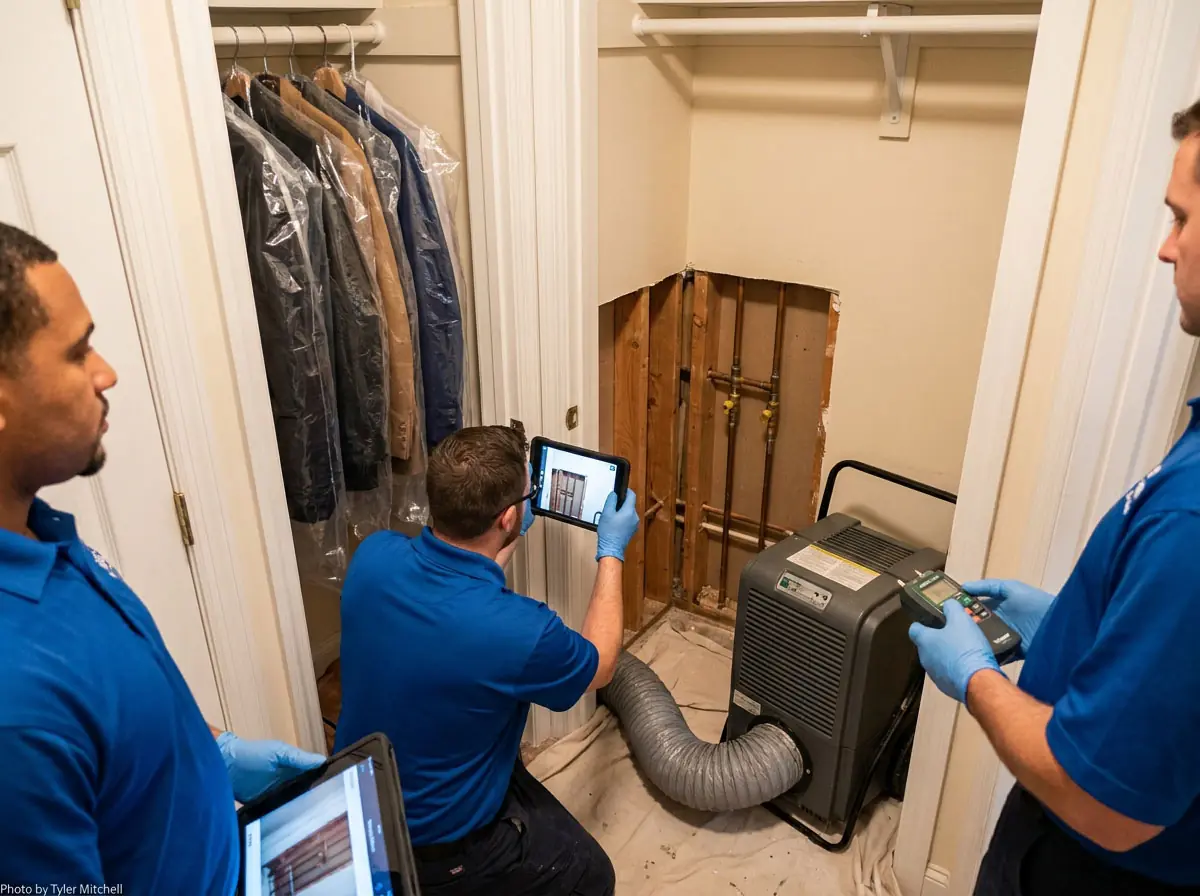
- Industrial Dehumidification: We place high-capacity air movers and dehumidifiers throughout the home. This dries out the structure to prevent mold from blooming in the damp aftermath.
- Verification: We utilize moisture meters and air quality testing to prove the environment is restored to a safe standard. We do not stop until the numbers prove your home is clean.
Do not be fooled by a surface clean. Pathogens can linger in porous materials even after the smell dissipates. Our goal is to return your home to a pre-loss condition that is biologically sound.

Lessons from Residential Recovery in Yuma
We recently handled a crisis in a residential area near the Colorado River where a main sewer line failure flooded an entire finished basement. By the time our team arrived, the extreme Yuma heat had turned the humidity in the home into an incubator for black mold and aggressive bacterial colonies.
The homeowner had attempted to dry the area with standard household fans, which only served to aerosolize toxic pathogens throughout the HVAC system. This common mistake turned a localized plumbing issue into a whole house contamination event that required advanced air scrubbing and duct decontamination.
Here are the primary lessons learned from this specific residential recovery effort:
- Running standard fans in a sewage-contaminated area spreads microscopic waste particles into the air.
- Porous materials like carpet pads and drywall insulation become permanent biohazard anchors once saturated with wastewater.
- Humidity control is just as important as physical extraction in the high-heat climate of the desert.
- Professional antimicrobial treatments are non-negotiable for ensuring the home is safe for children and pets to occupy again.
Acting fast matters, but acting with the correct equipment matters more. Our crews had to perform a full tear-out of all porous materials within the first twelve hours to prevent the structure from being condemned. When dealing with sewer water, there is no such thing as a partial fix; you either sanitize the environment completely, or you stay exposed to the risk of infection.
Essential Sanitation and Restoration Service Cost Table for Homeowners
When you are staring down a sewage disaster, your first question is usually, "What is this going to cost?" While every home in Yuma presents a unique set of circumstances, professional remediation is not a place to look for bargain basement pricing. You are paying for specialized equipment, industrial-grade disinfectants, and the critical peace of mind that your home is actually safe to breathe in again.
| Service Category | Estimated Cost Range |
|---|---|
| Initial Site Inspection & Assessment | $200 - $400 |
| Extraction & Bulk Sewage Removal | $500 - $1,500 |
| Industrial Sanitization & Deodorization | $400 - $1,200 |
| Structural Drying & Dehumidification | $600 - $2,000 |
| Full Remediation (Average Incident) | $2,500 - $7,000+ |
Understand that these figures shift based on the extent of the saturation and how long the sewage sat before a crew arrived. If the wastewater has penetrated your subfloor or drywall, the price tag naturally increases because those materials must be removed and discarded, not just cleaned. Do not get lured in by companies quoting suspiciously low flat rates over the phone; they often leave out the costs for hazardous waste disposal or complete structural drying.
Your insurance policy often covers a portion of these costs, but you must act fast. Documentation is the secret to a smooth claim process. Here is what you should track to help keep costs transparent:
- Photos of the initial spill before you touched anything.
- Itemized lists of all damaged personal belongings.
- Records of the exact time the incident was discovered.
- Detailed receipts from your certified restoration team.
Securing Your Home Against Future Backups
Stopping a sewage disaster once is enough. You never want to walk into that nightmare again, especially considering how quickly Yuma’s heat turns a small leak into a major health crisis.
Preventative maintenance is significantly cheaper than calling in a team for Sewage Backup Cleanup after your floors are ruined. If you want to keep your pipes flowing and your home safe, you must treat your plumbing system like the vital organ it is.
Follow these preventative rules to protect your property:
- Never treat your toilet like a trash can. Paper towels, wet wipes, and feminine products are absolute death sentences for your sewer lines.
- Install a backwater prevention valve on your main sewer line. This simple mechanical device acts as a gatekeeper, allowing waste to flow out but preventing it from rushing back into your home during a clog.
- Schedule a professional video camera inspection every two years. Roots from desert trees love to infiltrate pipes, and catching these intrusions early prevents a catastrophic rupture.
- Keep an eye on your cleanout cap. If it is damaged or missing, replace it immediately to stop groundwater from entering your system during heavy monsoon rains.
If you notice your sinks gurgling or the water level in your toilet rising slowly, do not wait for it to fix itself. These are early warning signs of a downstream blockage that is begging for professional attention.
Take charge of your home's integrity now. A little bit of vigilance today buys you years of peace of mind tomorrow.
People Also Ask
Is sewage backup covered by homeowners insurance in Yuma?
Most standard homeowners insurance policies do not cover sewage backups unless you have added a specific water backup endorsement. You should review your policy documents carefully or contact your insurance agent to confirm if your coverage includes this specialized protection.What are the primary health risks of sewage exposure?
Sewage contains harmful bacteria, viruses, and parasites that can cause severe gastrointestinal illnesses and skin infections. According to the Centers for Disease Control and Prevention, exposure to raw sewage requires immediate professional cleanup to ensure the area is properly disinfected and safe for your family.How quickly does sewage damage become a structural issue?
Sewage contains high levels of moisture and organic matter that trigger rapid mold growth and material degradation within 24 to 48 hours. If left untreated, the contaminants will soak into porous surfaces like drywall, insulation, and flooring, often requiring complete removal rather than simple cleaning.Can I clean up a sewage backup myself?
It is highly recommended that you avoid cleaning a sewage spill yourself due to the high risk of pathogen exposure and the complexity of proper sanitation. Professionals use specialized equipment and medical grade disinfectants to ensure the environment is safe, as standard household cleaners are usually ineffective against sewage borne bacteria.Why does the Yuma heat make sewage backups more dangerous?
The extreme desert heat in Yuma accelerates the growth of bacteria and the release of foul odors in standing wastewater. High temperatures can cause contaminants to aerosolize faster, which increases the risk of inhaling harmful particles throughout your home.Need Water Damage Restoration Services?
We provide rapid emergency response to restore your property and prevent further damage across Yuma and surrounding areas (85364, 85365, 85367). Our team minimizes your downtime by extracting water and drying your space quickly to return your home to a pre-loss condition.
Request Price Estimate