


⚡ TL;DR: This guide helps Warren homeowners understand the complexities of mold remediation by covering professional containment methods, moisture source identification, and essential strategies for protecting property from persistent fungal growth.
📋 What You’ll Learn
Dealing with stubborn mold in your Warren home requires more than just a quick scrub. Discover essential professional techniques to eliminate fungal growth and secure your property against recurring moisture issues.
- Understand why bleach fails to kill deep-rooted mold colonies and learn the industry-standard remediation methods that truly ensure long-term safety for your family and your home structure.
- Identify hidden moisture sources specific to our local Michigan climate so you can stop water intrusion at the source before mold has the chance to spread further.
- Compare DIY versus professional methods using our detailed breakdown to decide when a quick cleanup is enough and when expert containment and high-grade air filtration are required.
- Apply advanced safety techniques such as negative air pressure and HEPA filtration, which protect your living space from airborne spores during the remediation process for complete peace of mind.
📖 Reading time: 7 min
✍️ Author expertise: Warren-based restoration expert with over a decade of hands-on mold remediation field experience.
You wake up to a faint, earthy smell in your Warren home and suddenly realize it is not just the humidity outside. That hidden colony of mold behind your drywall is quietly eating away at your property value and your family's health while you go about your day.
Most homeowners assume a quick scrub with bleach is enough to handle the problem, but that is exactly how you invite the mold to grow back stronger. Dealing with moisture issues in Michigan requires more than just common sense, and missing a single step can lead to a massive financial nightmare.
I have spent years cleaning up DIY disasters where well-meaning people made their living spaces worse by ignoring the physics of spore growth. Stop wasting your money on temporary fixes and look at the five critical secrets you need to know to permanently clear the air in your house.

Why Bleach Fails to Eradicate Deep-Rooted Mold Colonies
Here is the hard truth your local hardware store clerk won't tell you: bleach is a surface-level cleaner, not a mold killer. When you spray bleach on porous surfaces like drywall, wood studs, or insulation, the chlorine stays on the surface while the water component soaks deep into the material.
That extra moisture acts like a gift to the mold roots, which are already buried deep within the fibers. You might see the black spots fade for a few days, but the hyphae, or the root system of the fungus, remain alive and well beneath the surface.
Think of it like mowing a lawn; you cut the grass short, but the roots are still thriving underground. Eventually, the mold comes back thicker and more aggressive than before.
The Real Danger of Bleach
Using bleach on mold-infested porous materials creates a false sense of security. You are essentially feeding the colony while scrubbing away the evidence of its existence.
- Bleach is chemically ineffective at penetrating porous building materials.
- The water content in bleach promotes further fungal growth in wood and paper.
- Scrubbing mold releases millions of microscopic spores into the air of your Warren home, which you then inhale.
- It leaves behind a toxic residue that does nothing to neutralize the actual allergens.
If you want to kill mold, you need professional-grade antimicrobial agents designed to penetrate deep into the substrate. Stop treating the symptoms and start killing the organism at the source, otherwise, you are just throwing your hard-earned money down the drain.
Mapping the Moisture Sources Unique to Warren’s Seasonal Climate
Warren experiences a brutal cycle of extreme shifts, from sweltering, humid summers to freezing winters that wreak havoc on home foundations. When your HVAC system fights to cool the house during a humid July, condensation often gathers in places you never think to check, such as behind baseboards or inside wall cavities.
If your home is older, those seasonal temperature swings cause building materials to expand and contract, creating microscopic cracks. These tiny gaps serve as an open door for moisture to creep into your structural framing, providing the perfect hydration for dormant mold spores to thrive.
You must keep an eye on these common culprits that local Warren homeowners often overlook:
- Window Sills: Poor seals allow exterior humidity to meet cold interior glass, creating constant condensation.
- Attic Ventilation: During winter, warm air leaking from your living space hits the cold roof deck, leading to frost buildup that melts and drips into your insulation.
- Crawl Spaces: High water tables in Macomb County frequently push dampness up through the floor, turning your subfloor into a mold buffet.
The secret is identifying these hotspots before they manifest as visible rot or a musty odor. You are not just fighting a leak; you are fighting the physics of the Michigan climate that wants to turn your walls into a wet sponge.

A Professional Comparison Table: DIY Remediation vs. Expert Containment
Most homeowners grab a spray bottle and a rag, thinking they have won the war against mold. In reality, they are often just poking the bear. When you scrub mold yourself, you release millions of microscopic spores into your home's air supply, which then settle in your carpet, your vents, and your upholstery.
| Feature | DIY Approach | Professional Remediation |
|---|---|---|
| Spore Control | None; spreads contamination | HEPA air scrubbing |
| Structural Integrity | Surface cleaning only | Moisture source extraction |
| Safety Gear | Standard mask | Full PPE and respirators |
| Long-term Results | High recurrence risk | Certified clearance testing |
A professional team uses containment barriers to seal off the affected room before any work begins. We treat the structure as an operating room, ensuring that not a single spore escapes into your living space. DIY attempts lack this critical isolation layer.
Consider the difference in the tools required to get the job done right:
- Professional moisture meters that detect water inside wall cavities.
- Industrial grade antimicrobial agents that penetrate porous surfaces.
- Commercial dehumidifiers that pull water directly from the studs.
You might save money on the front end by doing it yourself, but you pay for it later in recurrent mold cycles and compromised indoor air quality. If you do not stop the water at the source and remove the mold at the molecular level, you are essentially paying for a problem that never truly leaves your house.
The Science of Negative Air Pressure and HEPA Filtration
When you disturb mold, you essentially pull the trigger on a biological weapon. Standard vacuums or fans just launch millions of microscopic spores into the air, allowing them to settle in your HVAC system or adjacent rooms.
Professional remediation relies on negative air pressure to stop this migration dead in its tracks. By creating a vacuum inside the contaminated zone, we ensure that air flows only into the containment area and never escapes to the rest of your home.
This process is the only way to lock down the hazard while we perform the work. Without this specialized setup, you are just moving the problem from one wall to the next.
The Role of HEPA Technology
Once the air is pulled from the room, it must pass through High Efficiency Particulate Air (HEPA) filtration units. These machines are not your average hardware store air purifiers.
They are clinical grade tools that trap particles as small as 0.3 microns. To put that in perspective, this covers nearly all mold spores, bacteria, and dust mites that carry allergens.
- The air is scrubbed clean before being exhausted outside or back into the room.
- HEPA filters act as a physical barrier that spores cannot penetrate.
- This creates a controlled environment where we can safely remove damaged materials.
Relying on open windows or box fans in a Warren basement is a dangerous mistake. You need a dedicated air exchange system that forces the environment to be cleaned, not just moved around.
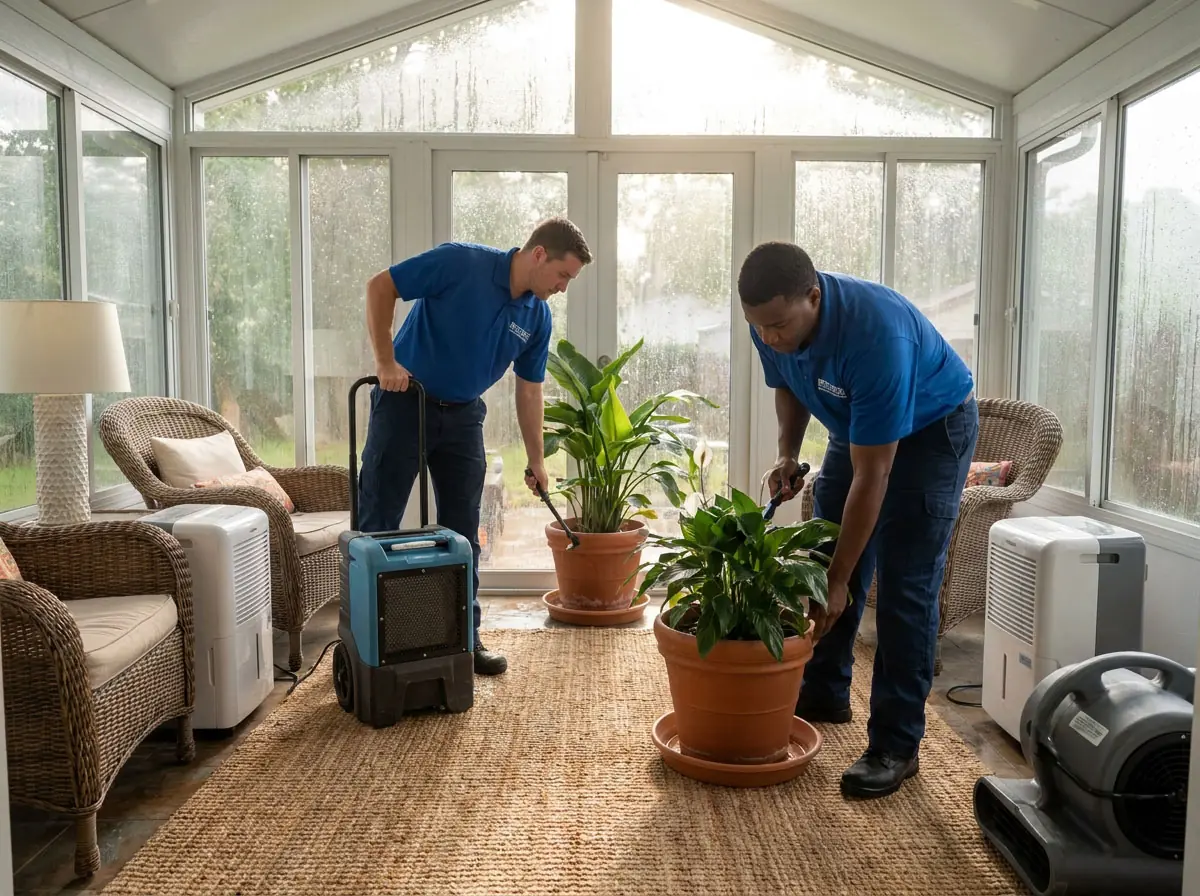
Evidence from the Field: Restoring a Flood-Damaged Basement in Warren
Last spring, I walked into a Warren basement that looked like a science experiment gone wrong. A simple pipe burst had left the drywall soaked for weeks, turning the subfloor into a breeding ground for toxic mold.
The homeowner had spent hundreds of dollars on store-bought sprays, but the smell only got worse. By the time my crew arrived, the mold had migrated into the wall cavities and was actively shedding spores every time the furnace kicked on.
We had to tear out the compromised material to save the foundation. Here is what we found during the gutting process:
- The insulation acted like a sponge, holding water long after the surface felt dry.
- The wooden wall studs were covered in black, fuzzy clusters that went three inches deep.
- Air ducts had circulated spores throughout the entire upper level of the home.
Fixing this was not just about wiping down walls; it was a total structural decontamination. We used industrial dehumidifiers to drop the moisture levels, followed by specialized antimicrobial treatments to kill the root systems before they could recover.
If you have had a basement flood in this area, do not assume it is clean just because it looks dry. Mold hides in the dark, damp corners where air does not flow. Ignoring these hidden colonies will eventually cost you your health and your property value.
Safeguarding Your Property’s Future with Long-Term Moisture Control
Stopping mold today is a win, but keeping it out for good is how you protect your net worth. Moisture is the fuel that keeps the engine of fungal growth running in Michigan homes, so your primary goal is to turn off that supply permanently.
You need to audit your home for common water traps that Warren homeowners often ignore. Most of these issues are small, cheap fixes that prevent thousands of dollars in repair bills down the line.
Proactive Steps for a Dry Home
- Check your gutters and downspouts to ensure they drain at least six feet away from your foundation.
- Install a high-quality dehumidifier in your basement to maintain humidity levels strictly below 50 percent.
- Inspect all plumbing pipes under sinks for tiny, slow leaks that create damp spots behind cabinets.
- Replace aging weather stripping on windows and doors to stop condensation from pooling on sills.
Do not wait for a heavy rainstorm to see if your basement holds up. If you see signs of dampness, fix the structural grading around your property so that water runs away from your walls instead of toward them.
Regular maintenance acts like an insurance policy for your air quality. By keeping your crawl spaces ventilated and your foundation dry, you make your home a place where mold simply cannot survive or take root.
Final Words
You now have the blueprints to stop mold in its tracks, but information is worthless without action. The longer you wait, the deeper those roots sink into your studs and subflooring.
If you are tired of playing guessing games with your indoor air quality, professional Mold Remediation is your only real safety net. Do not gamble with your home's structural integrity or your family’s lungs.
Here is your checklist for staying ahead of the decay:
- Inspect your basement every time we get a heavy Michigan rainstorm.
- Keep your relative humidity levels below 50 percent at all times.
- Never paint over a suspicious stain until you have confirmed it is dry and sanitized.
- Call an expert immediately if the smell persists after you have cleaned the surface.
Treat your property like the investment it is. You are the only person who can stop the growth before it becomes a total loss.
People Also Ask
How can I tell if my Warren home has a hidden mold problem?
Look for persistent musty odors or visible water stains on walls and ceilings after heavy rain. If you notice health symptoms like sneezing or coughing that improve when you leave the house, professional testing is recommended.Is it safe to clean moldy drywall myself?
Small patches of surface mold may be cleaned by homeowners, but porous materials like drywall often harbor roots that regular cleaning cannot reach. Improper removal can spread spores throughout your home, so it is often safer to consult the EPA guidelines regarding remediation.Why does mold keep coming back after I scrub it?
Mold returns because the underlying moisture source has not been addressed, allowing new spores to colonize the area. Unless you eliminate the humidity or water leak, cleaning the surface is only a temporary fix.What should I do if my basement floods in Warren?
Extract standing water immediately and utilize high capacity dehumidifiers to dry the area within 48 hours. Quick action is critical to preventing mold growth in the porous building materials found in most local basements.Does homeowners insurance cover mold remediation in Michigan?
Coverage depends on your specific policy and whether the mold resulted from a sudden, accidental water event like a burst pipe. Insurance typically excludes mold damage caused by long term neglect or gradual seepage.Need Water Damage Restoration Services?
We provide rapid water damage restoration for residential and commercial properties in Warren and the surrounding communities to stabilize your building and prevent further structural issues. Our team arrives quickly to extract water and begin the drying process to restore your property to its pre-loss condition (48089, 48091, 48092, 48093).
Request Accurate Quote