


⚡ TL;DR: Springfield residents can learn how to manage crawl space water removal through professional extraction, proper decontamination, and effective long term moisture control strategies to protect their home foundations.
📋 What You’ll Learn
Discover how to effectively manage crawl space flooding in Springfield, Illinois. This guide provides essential insights into local soil conditions, moisture extraction, and long-term prevention strategies to protect your home foundation.
- Identify local flooding causes by understanding how Springfield’s unique regional soil composition and seasonal weather patterns contribute to recurring moisture problems and standing water beneath your residential property.
- Implement immediate emergency steps to safely mitigate water damage, prevent mold growth, and protect your home structure while waiting for professional extraction services to arrive at your site.
- Navigate professional extraction procedures by learning exactly how certified experts identify hidden moisture, pump out deep standing water, and fully decontaminate your crawl space after a flood.
- Compare effective prevention strategies to determine the best long-term solutions, such as vapor barriers and sump pump installations, that keep your Springfield crawl space dry throughout the year.
📖 Reading time: 7 min
✍️ Author expertise: Springfield restoration specialist with ten years of field experience handling local water damage.
You crawl under your house to grab a storage bin and realize you are standing in a swamp. That damp, musty smell you noticed in the living room wasn't just old carpet; it was the warning sign of a hidden crisis beneath your feet.
Standing water in your Springfield home is not a problem that solves itself, and waiting for it to dry out is a fast track to toxic mold growth and rotting floor joists. Your foundation is the skeleton of your home, and right now, it is being eaten away from the inside out.
Fixing this mess requires more than just a shop vac and a prayer. Here is what you need to know to stop the damage before your property value disappears into the mud.

Why Springfield’s Soil and Weather Patterns Cause Crawl Space Flooding
Springfield sits on a unique geological foundation that works against your crawl space. Much of our local soil is heavy, clay-rich dirt that holds onto moisture like a sponge instead of letting it drain away.
When heavy Illinois rain hits, this clay swells and traps water against your foundation walls. If your perimeter drainage isn't perfect, that water has nowhere to go but directly into your crawl space.
Beyond the soil, our erratic weather patterns create a perfect storm for homeowners. We experience rapid temperature swings that cause humidity levels to spike inside closed-off areas.
The Local Factors Creating Your Basement Swamp
Several specific environmental triggers contribute to the flooding issues we see across Sangamon County:
- High Water Tables: Seasonal rain raises the water table, forcing moisture upward through your crawl space floor.
- Poor Lot Grading: Many Springfield homes have settled over time, creating low spots that direct roof runoff straight toward the foundation.
- Severe Storm Seasons: Intense spring downpours quickly exceed the capacity of aging gutter systems and downspouts.
When these elements combine, your crawl space becomes a breeding ground for structural decay. The moisture doesn't just sit there; it wicks into your wooden supports, slowly turning solid lumber into soft, fungal-infested pulp.
Immediate Steps to Protect Your Home After Discovering Standing Water
Your first instinct might be to jump in and start pumping water, but stop. Before you touch anything, prioritize electrical safety. If there is standing water near your furnace, water heater, or any exposed wiring, shut off the power to the crawl space at your main breaker panel.
Do not enter a flooded crawl space if you suspect the water has contacted electrical outlets or appliances. Electricity and water are a lethal mix, and you should call a certified professional in Springfield immediately if the water level is rising or if you cannot see the ground clearly.
Once you are sure the area is safe, take these quick actions to prevent the damage from spreading:
- Document everything with photos for your insurance claim; do this from the crawl space entry point.
- Remove any wet storage items that are not permanently installed, but wear protective gear like rubber boots and gloves.
- Open foundation vents if the outdoor weather is dry to encourage airflow, but keep them closed if it is raining.
- Clear away leaves, debris, or mulch that are piled against your home exterior to stop more water from seeping inside.
Time is your worst enemy right now. Mold can begin to colonize damp wood in as little as 24 to 48 hours. By acting fast and removing saturated materials, you stop the moisture from wicking up into your subfloor and insulating materials.
What to avoid while waiting for help
Many homeowners make the mistake of using standard household fans to dry out the area. While this feels helpful, it often just pushes airborne mold spores from the crawl space into the main living areas of your house. Keep your internal doors closed and leave the heavy-duty dehumidification to experts who use commercial-grade equipment.
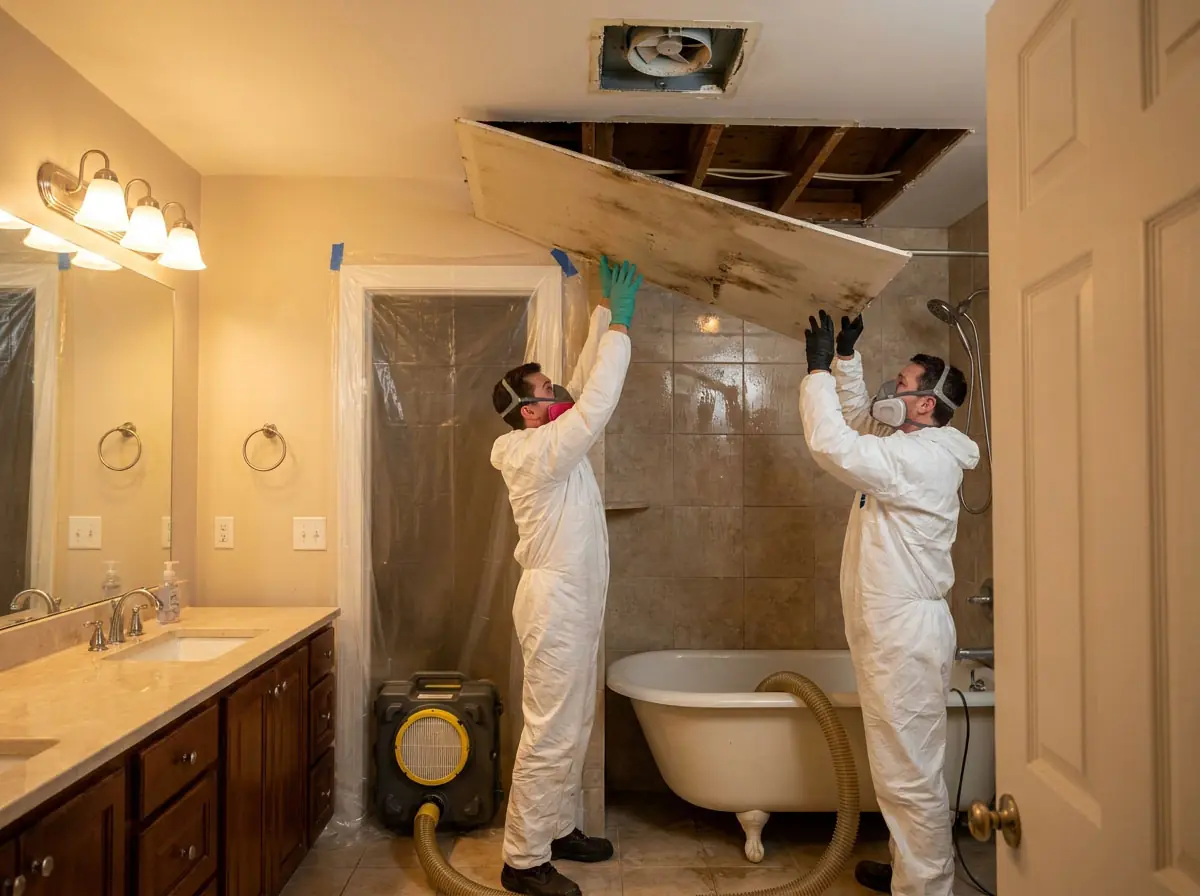
Professional Extraction and Decontamination Procedures
When professional restoration crews arrive at your Springfield property, they skip the guesswork and move straight to industrial-grade gear. We start by deploying high-capacity submersible pumps to move large volumes of standing water out of your crawl space and away from your foundation.
Once the bulk water is gone, we don't just leave the rest to evaporate. Residual moisture is the silent killer, so we follow a strict protocol to ensure your home remains sound:
- Extraction of saturated insulation and debris that acts as a sponge for contaminants.
- Application of EPA-registered antimicrobial agents to kill mold spores on contact.
- Deployment of commercial-strength dehumidifiers to pull moisture out of the floor joists and subflooring.
- Advanced air scrubbing to trap airborne particles and eliminate that persistent musty smell.
We treat the crawl space like a surgical site. If you leave organic materials like wet insulation or wood debris behind, you are simply leaving a snack for future mold colonies. Our team scrubs the area clean to ensure that once we leave, the environment is structurally stable and sanitary for your family living just a few feet above.
Essential Service Options: A Comparison Table for Effective Moisture Control
When you are staring down a flooded crawl space, you need to know exactly which tools will win the fight against moisture. Not every solution fits every basement, and picking the wrong one is just throwing good money after bad.
| Service Option | Best Use Case | Primary Benefit |
|---|---|---|
| Industrial Extraction | Standing water removal | Immediate flood mitigation |
| Industrial Dehumidifier | High humidity levels | Prevents secondary mold growth |
| Vapor Barrier Install | Ground moisture seepage | Seals off earth emissions |
| Sump Pump System | Recurring water intrusion | Automated water discharge |
Most homes in Springfield suffer from wicking moisture that rises through the dirt floor. If you skip the vapor barrier, you are essentially leaving a wet sponge beneath your floorboards, no matter how much water you pump out.
You have to look at the big picture. Here are the services that provide the most long-term value for your crawl space:
- Professional Extraction: This removes the bulk water immediately. It stops the clock on wood rot before it spreads to your structural beams.
- Mold Remediation: If your space smells like a locker room, you need specialized treatments to kill spores at the root.
- Encapsulation: This turns your crawl space into a clean, dry zone. It keeps your HVAC system running better and keeps your energy bills in check.
Don't fall for the quick fix of just tossing in a cheap dehumidifier from a hardware store. Those units will burn out in a week when faced with real crawl space moisture, and you will be back to square one before the next storm hits.

Restoring Structural Integrity After Long-Term Water Damage: A Springfield Case Study
We recently assisted a homeowner on the west side of Springfield who had lived with a damp crawl space for over two years. They assumed the moisture was normal for a home built in the seventies; however, the reality was a silent collapse of their internal support system.
When our team arrived, the floor joists had lost nearly forty percent of their load-bearing capacity. The wood felt spongy to the touch, and the central girder had begun to sag, causing visible cracks in the drywall throughout the main floor.
This is what happens when wood rot goes unchecked:
- The cellular structure of the lumber breaks down completely.
- Metal fasteners and joist hangers begin to corrode and lose their grip.
- The entire floor plane shifts, creating unlevel surfaces and sticking doors.
- Structural instability forces an expensive replacement of the subfloor and primary framing.
Restoring this property required a precise approach rather than a simple patch job. We started by installing temporary shoring jacks to stabilize the house before we removed a single piece of rotted timber.
After we dried the area using industrial-grade dehumidifiers, we replaced the compromised joists with pressure-treated lumber designed to resist future fungal growth. We then sealed the perimeter to ensure that the ground moisture never again found a path into the structural bones of the home.
Long-Term Prevention Strategies to Keep Your Crawl Space Dry Year-Round
Stopping water once is a win, but keeping it out for good is a lifestyle. Springfield soil is notorious for holding moisture, which means you must force the water to go somewhere else before it reaches your foundation.
You should prioritize the exterior first. If your gutters dump rain right next to the house, you are essentially watering your crawl space on purpose.
Essential Defense Tactics
- Extend your downspouts at least six feet away from your foundation walls.
- Grade your soil so that it slopes away from the house, preventing pooling water near the crawl space vents.
- Install a professional-grade sump pump system with a battery backup, because heavy Illinois storms often knock out the power when you need protection most.
After you secure the exterior, focus on the interior environment. A high-quality vapor barrier is the difference between a dry subfloor and a rotted disaster area. This thick plastic liner seals the dirt floor, preventing ground moisture from rising into your wooden joists.
Pair that barrier with a dedicated, crawl space specific dehumidifier. Unlike the portable units you use in your basement, these machines are built to run 24/7 in tight, damp conditions. They automatically drain the moisture away, keeping the relative humidity below the threshold where mold spores begin to thrive.
Final Words
You have seen the ugly reality of what happens when moisture takes over the base of your Springfield property. This is not a project you can ignore or shove onto next weekend's to do list.
Every hour your joists sit in moisture, the repair bill grows by an order of magnitude. If you want to stop the rot, you must prioritize professional Crawl Space Water Removal services immediately.
Do not gamble with the structural integrity of your home. When your foundation fails, the cost to repair it will dwarf the cost of a simple extraction and waterproofing job today.
Your Immediate Action Plan
Take control of your home right now before the mold spreads to your main living areas. Follow these steps to ensure you get the job done right:
- Inspect your crawl space entry points for signs of standing moisture every month.
- Call a specialist the moment you spot damp insulation or a musty odor.
- Install a heavy duty sump pump if your area is prone to heavy rainfall.
- Seal your foundation vents to stop humid Springfield air from turning your crawl space into a greenhouse.
You have a choice to make today. You can either be the homeowner who catches this early and saves thousands, or the one who waits until the floorboards start to sag.
Call us today to schedule your assessment. A dry crawl space is the only way to protect your investment and ensure your family breathes easy for years to come.
People Also Ask
How much does crawl space water removal cost in Springfield?
The cost of water removal varies based on the volume of standing water, the presence of mold, and the size of your crawl space. Most professional companies provide a personalized quote after a thorough on site inspection of your property.Why is standing water in a crawl space dangerous?
Standing water creates a breeding ground for mold and pests that can compromise your home environment and indoor air quality. According to the EPA, managing moisture levels is the most critical step in preventing long term structural decay.Does homeowners insurance cover crawl space flooding?
Coverage depends on whether the water source is sudden and accidental, such as a burst pipe, or due to external factors like groundwater seepage. You should review your specific policy documents or contact your agent to understand if your claim qualifies under your current plan.How can I tell if my crawl space has water damage?
Common signs include a musty odor inside your home, sagging floors, or high humidity levels that cause condensation on floor joists. If you notice these issues, it is important to inspect your crawl space immediately to prevent further damage.How often should crawl space inspections occur in Springfield?
Homeowners should inspect their crawl spaces at least twice a year, especially during the spring thaw and after heavy rainfall. Regular monitoring helps catch small leaks early before they turn into costly foundation repairs.Need Water Damage Restoration Services?
We provide rapid water damage restoration across Springfield and the surrounding communities to restore your property to its original condition. Our team delivers immediate emergency response to mitigate damage and secure your home or business (62701, 62702, 62703, 62704, 62711).
Request Price Estimate