


⚡ TL;DR: If your home in South Fulton experiences hardwood floor water damage, this guide provides essential steps for immediate moisture control, professional assessment, and long term preventative maintenance strategies.
📋 What You’ll Learn
Discover how to protect your beautiful South Fulton hardwood floors from Georgia’s humid climate and unexpected water damage through immediate intervention, professional drying techniques, and effective long term moisture management strategies.
- Execute immediate triage steps to stop moisture expansion in its tracks before structural wood damage becomes irreversible and requires a full replacement of your home flooring system.
- Identify hidden moisture pockets that dwell beneath your surface boards to ensure that subfloors and joists are properly treated instead of just drying the visible top layer.
- Evaluate salvage versus replacement by utilizing industry standards to determine if your specific hardwood planks can be restored or if the damage warrants a complete floor removal.
- Implement professional drying protocols using the same step by step remediation techniques we use daily to stabilize historic South Fulton residences against warping, cupping, and wood rot.
📖 Reading time: 8 min
✍️ Author expertise: South Fulton water restoration specialist with fifteen years of hands on hardwood recovery experience.
You wake up to the sound of water dripping, rush into the living room, and realize your beautiful hardwood floors are already cupping and buckling under a puddle of standing water. That sinking feeling in your gut isn't just panic, it is the realization that your most expensive investment is actively rotting away right before your eyes.
Most homeowners in South Fulton think a quick mop and a fan are enough to stop the rot, but they are dead wrong. The truth is that water hides deep within the subfloor and the tongue and groove joints long after the surface looks dry, setting the stage for mold and permanent structural failure.
You do not have to watch your home lose its value because of a single plumbing leak or a sudden storm. Here is exactly how to stop the damage in its tracks and potentially rescue your floors before you are forced to pay for a full replacement.

The Immediate Triage: Essential Steps to Mitigate Moisture Expansion
When standing water hits your hardwood, the clock starts ticking instantly. You have a very narrow window to prevent the wood from absorbing enough moisture to swell, buckle, or warp beyond repair.
Do not wait for a professional to arrive before taking these critical steps. Every minute counts when you are dealing with organic materials like oak or pine.
- Cut off the water supply immediately to stop the flow.
- Use a wet vac or towels to remove all visible surface puddles.
- Clear the area of furniture, rugs, and decor to expose the entire wet surface to airflow.
- Turn on your HVAC system to maintain a stable, dry environment.
Your main goal here is moisture migration control. Water acts like a magnet to the dry parts of your flooring, pulling itself into the wood fibers through capillary action.
Do not attempt to use heavy heaters or hair dryers on the wood. Rapid, forced heat will cause the surface to dry while trapping moisture inside the board, leading to severe internal cracking and irreversible structural damage.
Why Surface Drying Fails Your Subfloor and Joists
Here is the brutal truth: a box fan blowing over your hardwood floors is nothing more than a cosmetic fix. While you might dry the finish, you are ignoring the lethal moisture trapped beneath the planks.
Wood acts like a sponge. When water hits your floor, it travels through the seams and straight into the subfloor and joists below. Because these areas have no airflow, that trapped water creates a perfect breeding ground for mold and dry rot.
If you ignore what is happening underneath, you will face these consequences:
- The subfloor loses its structural integrity and begins to sag.
- Mold spores migrate from the damp wood into your home's air supply.
- The tongue and groove joints warp, causing permanent gaps that no amount of sanding can fix.
- The moisture eventually weakens the joists, compromising the literal foundation of your home.
Relying on surface drying is like putting a band-aid on a broken bone. You need to pull moisture out from the bottom up, or you will be looking at a total floor replacement in a few months when the rot finally breaks through the surface.

Professional Assessment: Differentiating Between Salvageable Wood and Total Loss
Most homeowners assume that if a floor is cupping, it is ruined. That is not always the case, but you need a trained eye to tell the difference between temporary moisture absorption and permanent structural decay.
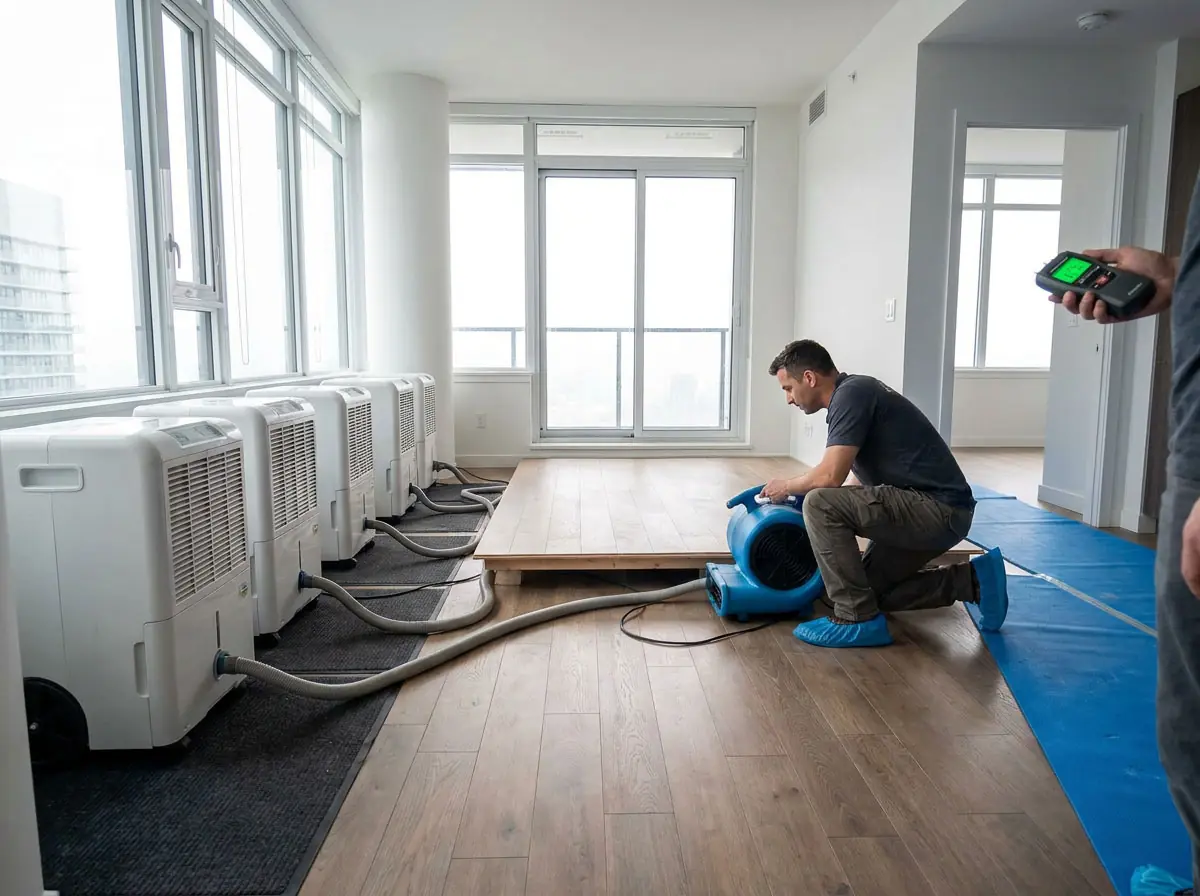
Our technicians use professional-grade moisture meters to map the saturation levels of your floorboards, subfloor, and joists. We do not guess; we measure.
Key Indicators for Salvage
- The boards show minor cupping but remain firmly attached to the subfloor.
- The moisture content remains within a range that can be reversed through controlled dehumidification.
- There is no sign of active microbial growth or mold colonies on the underside of the planks.
- The structural integrity of the tongue and groove system remains intact.
If the wood has started to crown, crack, or if the finish has delaminated, the chances of a successful rescue drop significantly. Water damage in South Fulton homes often hides in the gaps between boards; if we find that the moisture has penetrated the organic layers of the wood fibers, replacement becomes the only logical path to prevent long term rot.
Strategic Remediation: A Step-by-Step Table Breakdown of Industry-Standard Drying Protocols
When water strikes your hardwood, you cannot afford to guess. We use a precise sequence of technical steps to pull moisture out of the grain before permanent warping sets in.
| Stage | Action | Goal |
|---|---|---|
| Extraction | Industrial grade pumps | Remove standing water |
| Equilibrium | Dehumidification | Stabilize room air |
| Infiltration | Air injection systems | Dry the subfloor |
| Monitoring | Moisture mapping | Confirm wood dryness |
The first priority is always moisture extraction. We deploy heavy-duty vacuums to pull water from the tongue and groove joints. If you leave water there, the wood will swell and pop right off your joists.
Next, we set up high-pressure air injectors. These devices force warm, dry air into the gaps between your floorboards. It is the only way to reach the dampness hiding beneath the surface layer.
The Science of Controlled Drying
We monitor the moisture content of your wood daily using non-invasive meters. We compare these numbers to an unaffected part of your home to ensure we are actually making progress.
If we stop too soon, the floor will warp again once the humidity rises. We keep the equipment running until the wood reaches a state of structural stability. Here is why this professional protocol beats a household fan every time:
- It forces air beneath the floorboards where rot starts.
- It regulates humidity to prevent mold spores from taking root.
- It prevents the wood from drying too fast, which can cause cracking.

Lessons from the Field: How We Saved a Historic South Fulton Home’s Original Oak Flooring
Last month, we were called to a classic South Fulton bungalow where a pipe burst in the wall, soaking the original 1940s white oak flooring. The homeowner was told by three different contractors that the wood was ruined and needed a complete tear out. We disagreed, knowing that the dense, old growth timber had a fighting chance if we acted with surgical precision.
Instead of pulling up the boards, we set up high-pressure drying mats that pulled moisture directly out through the grain. We monitored the moisture content daily, slowly bringing the humidity down to ensure the wood didn't crack from drying too quickly. By the end of the week, the cupping had subsided, and the wood returned to its flat, natural state.
Key Success Indicators for Saving Historic Wood
- Density Check: Old growth oak is far less porous than modern flooring, making it more resistant to deep saturation.
- Extraction Timing: We arrived within four hours of the initial soak, which prevented the water from reaching the subfloor glue.
- Controlled Drying: We used dehumidifiers to mimic a slow, natural evaporation process rather than forcing heat on the material.
Saving a floor like this is not just about equipment; it is about patience and testing. If we had rushed the process, the boards would have splintered. Because we tracked the moisture levels against the interior ambient air, we preserved a piece of local history that the owner thought was gone forever.
Preventing Future Catastrophe: Moisture Barriers and Humidity Control for Georgia Homes
South Fulton humidity is relentless, and it acts like a silent enemy to your hardwood investment. When the air stays thick with moisture, your floors act like sponges, absorbing vapor even when there isn't a direct leak.
You must stop this cycle before it starts. Installing a vapor barrier in your crawlspace is the single most effective way to separate your flooring from the damp Georgia soil.
Without these defenses, your home stays trapped in a cycle of expansion and contraction that eventually ruins the wood grain. Here are the specific steps to lock out excess moisture:
- Maintain indoor relative humidity between 35% and 55% using a quality dehumidifier.
- Install a high-grade polyethylene moisture barrier across your entire crawlspace floor.
- Ensure your gutters are cleared regularly to prevent roof runoff from pooling near your foundation walls.
- Use smart sensors in high-risk areas like under the kitchen sink or near your dishwasher to catch leaks before they saturate the subfloor.
If you have an older home, inspect the ventilation around the perimeter of your foundation. Proper airflow stops stale, wet air from getting trapped beneath your floorboards, which prevents the warping and cupping we see so often in local properties.
Final Words
Your hardwood floors are the heart of your South Fulton home, but they are also incredibly sensitive to the humid Georgia climate and sudden moisture intrusion. Acting fast isn't just a suggestion; it is the difference between a simple repair and a total floor replacement that could cost you thousands.
If you suspect hidden moisture or see the first signs of cupping, do not wait for the wood to warp beyond repair. Check our Hardwood Floor Water Damage page to understand the professional drying techniques required to stop the clock on rot and mold growth.
Remember these core principles when disaster strikes your property:
- Stop the water source immediately to prevent further saturation.
- Extract standing water using professional-grade suction before it seeps into the subfloor.
- Monitor humidity levels constantly to stabilize the environment during the drying phase.
You have worked hard to build a beautiful living space, so don't let a hidden leak steal that equity. Keep a keen eye on your baseboards and joints, and bring in help the moment you notice changes in the texture or height of your floorboards. Quick action saves money, property value, and your peace of mind.
People Also Ask
Can hardwood floors be repaired after water damage?
Many hardwood floors can be restored if the moisture is addressed quickly by professionals. We utilize specialized drying equipment to pull moisture from deep within the wood fibers before permanent warping or microbial growth occurs.How long does it take for hardwood floors to warp from water?
Visible signs of cupping or crowning can begin within twenty four to forty eight hours of exposure to standing water. The EPA guidelines suggest that acting within this window is critical to preventing mold. Prompt intervention is essential to saving your subfloor from long term decay.Does homeowners insurance cover water damaged floors in South Fulton?
Coverage typically depends on the source of the water and your specific policy details. Generally, sudden and accidental water damage is covered, while damage resulting from long term neglect or maintenance issues may be excluded.Why are my hardwood floors buckling after a leak?
Buckling happens when wood absorbs excess moisture, expands, and exerts pressure on the surrounding boards. This process forces the flooring to lift away from the subfloor and creates a significant structural hazard that requires professional extraction.Should I use a dehumidifier to dry water damaged floors?
While a household dehumidifier can help with surface humidity, it lacks the power to pull moisture out of hardwood subfloors and joists. Professional grade drying systems are necessary to remove deep moisture and prevent the permanent structural failure of your flooring.Need Water Damage Restoration Services?
We provide rapid emergency water extraction and structural drying to restore your property in South Fulton and surrounding communities. Our team arrives quickly to mitigate damage and return your home to a safe condition (30349, 30331, 30213, 30268).
Request Price Estimate