


⚡ TL;DR: This helpful guide explains how Sioux Falls residents can effectively manage mold remediation by identifying moisture sources, choosing professional services, and implementing strategies to prevent future structural issues.
📋 What You’ll Learn
Discover how to effectively manage fungal growth in Sioux Falls properties by understanding the unique environmental challenges and professional techniques required to keep your local home safe and completely mold free.
- Identify hidden moisture sources fast by learning how South Dakota climate patterns interact with your home foundation to create the perfect conditions for dangerous and persistent mold colonies.
- Evaluate DIY cleanup risks thoroughly to understand why common household cleaning products often fail to remove root spores and can actually increase toxic mold spread throughout your living space.
- Follow professional remediation steps clearly using our comprehensive phase breakdown that explains exactly how experts contain, remove, and sanitize affected areas to protect your family from respiratory hazards.
- Implement long term prevention strategies that help you maintain ideal humidity levels and structural integrity to ensure your Sioux Falls property remains resistant to future mold outbreaks every season.
📖 Reading time: 7 min
✍️ Author expertise: Certified water damage restoration expert with fifteen years of remediation experience in Sioux Falls.
You wake up, walk into your basement, and catch that unmistakable, earthy smell. That faint scent isn't just an annoyance; it is a signal that invisible spores are already colonizing your drywall and flooring.
Most Sioux Falls homeowners make the mistake of grabbing a spray bottle of bleach and hoping for the best. That strategy is like trying to put out a forest fire with a garden hose, and it usually guarantees the problem will come back twice as aggressive.
The smartest people in town know that mold is a structural predator that feeds on neglect. Here is exactly how to stop the spread before your home becomes a health liability for your family.

Why DIY Mold Cleaning Often Backfires in the South Dakota Climate
South Dakota weather is a double-edged sword for your home. We deal with bitter winters followed by humid summers, creating a perpetual cycle of condensation behind your walls.
When you spot mold and reach for the bleach, you are actually feeding the colony. Bleach contains high water content, which acts as a biological stimulant for mold roots embedded deep within porous surfaces like drywall or wood studs.
The surface might look cleaner for a few days, but the internal structure remains compromised. You are essentially watering the weeds while cutting off the tops.
The Real Risks of DIY Remediation
Attempting to scrub mold without industrial-grade containment puts your entire family at risk. Improper handling releases millions of spores into your HVAC system, spreading the contamination to every room in the house.
- Incomplete removal: Household cleaners cannot kill roots buried in building materials.
- Spore dispersal: Dry scrubbing or vacuuming sends toxic particles into your indoor air.
- False sense of security: You might stop the smell, but the underlying moisture source continues to rot your foundation.
- Lack of PPE: Standard masks do not filter out mycotoxins that can trigger severe respiratory issues.
Professional remediation is not about "cleaning." It is about controlled extraction and decontamination. If the humidity levels in your Sioux Falls basement are not professionally managed, the mold will return within weeks regardless of how much elbow grease you apply.
Identifying the Hidden Sources of Moisture in Your Sioux Falls Property
Mold does not grow because you are a messy housekeeper; it grows because your home is providing a constant water supply. In the Sioux Falls climate, our drastic temperature swings cause severe condensation issues within wall cavities and crawl spaces.
If you only scrub the visible surface, the colony survives deep inside your building materials. You have to hunt down the source, or the mold will simply bloom again the moment the humidity spikes.
Common Moisture Culprits
Most local property owners overlook these silent killers. Check these areas immediately to see if your home is secretly fueling a fungal colony:
- Leaking plumbing lines hidden behind finished basement walls.
- Improperly vented clothes dryers pumping moisture directly into floor joists.
- Cracks in the foundation that allow groundwater to seep through during spring thaws.
- Gutters that dump rainwater too close to the siding or foundation perimeter.
- High humidity levels in bathrooms lacking functional exhaust fans.
Do not wait for a musty scent to become a permanent fixture in your living room. Take a flashlight into your basement, check the corners near your window wells, and look for discoloration or bubbling paint on your drywall. These visual cues are your home telling you that moisture is trapped behind the scenes, creating a perfect ecosystem for mold to thrive.

A Professional Breakdown of the Remediation Process
Most folks think mold removal is just scrubbing the walls, but that is a dangerous misunderstanding of how fungal growth operates. In our Sioux Falls climate, you need a battle plan that addresses the root cause rather than just the surface growth.
| Phase | Primary Goal |
|---|---|
| Assessment | Locating moisture sources |
| Containment | Stopping spore migration |
| Filtration | Cleaning the air supply |
| Removal | Eliminating contaminated items |
| Sanitation | Applying antimicrobial agents |
| Restoration | Rebuilding to pre-loss state |
We start with containment. This keeps spores from drifting into your kitchen or bedrooms while we work on the basement. We use negative air pressure to trap particles, ensuring the rest of your home stays safe.
Key Execution Steps
Once the area is isolated, the real work begins. We focus on source removal rather than just cleaning.
- HEPA vacuuming all surfaces to capture loose spores.
- Removing porous materials like drywall or insulation that are beyond rescue.
- Deep scrubbing of non-porous surfaces with specialized solutions.
- Constant humidity monitoring to verify the environment is dry.
It is not enough to look clean. We use moisture meters to confirm the structure is bone-dry before we even think about putting up new drywall. If you skip this, you are just inviting the mold to return the moment the humidity spikes again.
Health Hazards and Structural Risks: When to Evacuate Your Home
Mold is not just a cosmetic issue for your basement walls. When left to fester, certain toxic strains release mycotoxins into your indoor air supply that trigger respiratory distress, chronic headaches, and severe allergic reactions.
If you or your family members start feeling worse the moment you walk through the front door, the situation has moved past a simple cleaning project. You are dealing with an active biological hazard that requires immediate professional intervention.
Warning Signs You Should Not Ignore
You need to clear the property and call in experts if you notice these specific red flags:
- Visible black or dark green growth covering more than ten square feet of surface area.
- Consistent health complaints like persistent coughing, skin rashes, or unexplained fatigue.
- Water damage that has impacted the structural wood or insulation behind your finished walls.
- A musty, damp odor that lingers even after you have tried to ventilate the area.
Ignoring these symptoms can lead to long-term health complications and significant structural decay. Mold acts like a silent eater, slowly consuming the drywall, subfloors, and wood framing that hold your home together.
Once the mold reaches the interior of your wall cavities, it becomes nearly impossible to remove with home remedies. If you see signs of buckling drywall or warped flooring, the structural integrity of your property is likely already under attack.
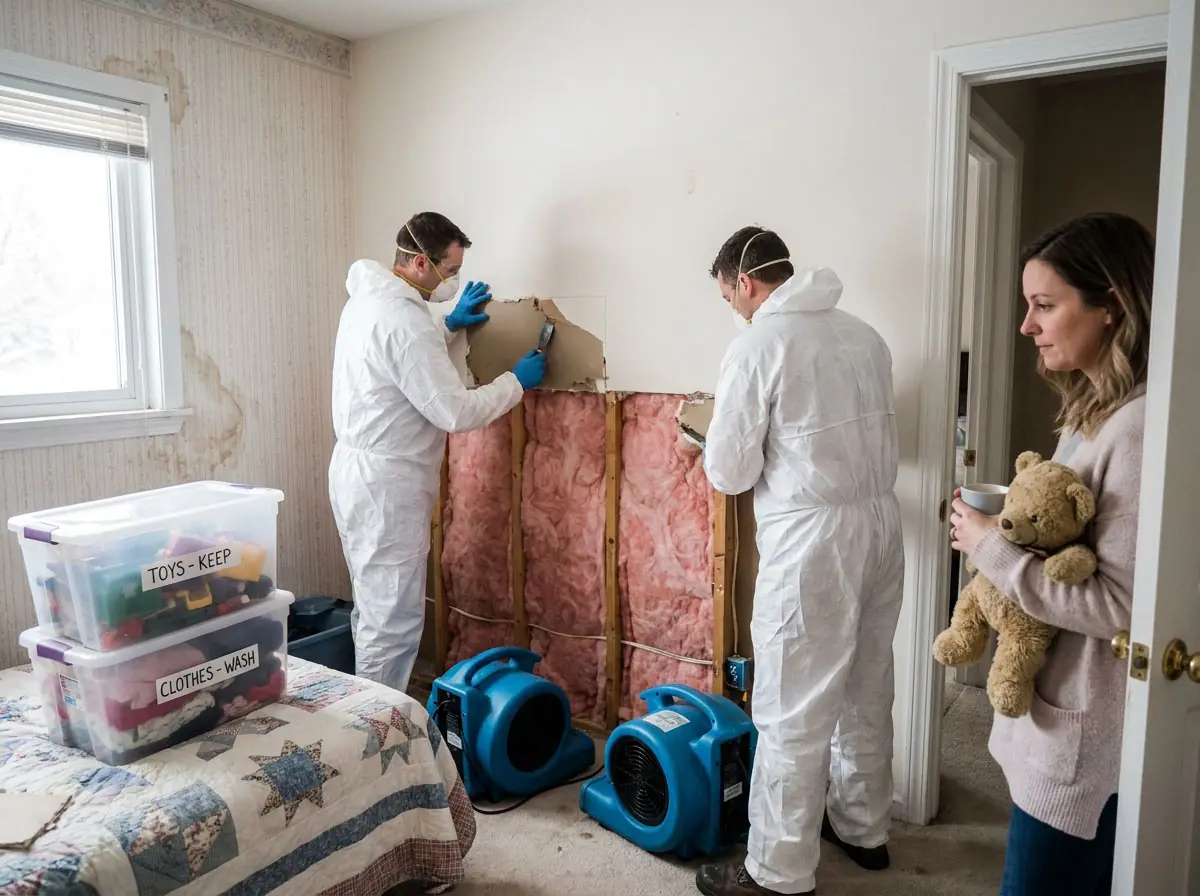
Real-World Results: A Basement Restoration Case Study in Sioux Falls
Last winter, a homeowner in the near-west side of Sioux Falls called us after finding a dark, fuzzy patch behind their basement wet bar. The heavy snowfall had caused a slow, steady leak in the foundation that remained undetected for weeks.
By the time we arrived, the mold had burrowed deep into the drywall, turning a simple weekend project into a structural nightmare. We didn't just spray and wipe; we performed a full-scale containment to ensure no spores drifted into the main living areas.
The results were immediate and drastic. After the professional remediation, air quality tests proved the home was safe again for the family and their pets. Here is a breakdown of the specific markers we tracked throughout the job:
- Phase One: Isolation of the basement using heavy-duty plastic barriers.
- Phase Two: Controlled removal of all compromised building materials.
- Phase Three: Application of specialized biocides to kill lingering root systems.
- Phase Four: Final HEPA air scrubbing to clear the atmosphere.
This case taught the homeowner a valuable lesson about the danger of hidden moisture. They opted to install a high-capacity sump pump and a commercial-grade dehumidifier, which keeps the basement bone-dry even during our humid South Dakota summers.
Essential Strategies for Preventing Future Mold Growth After Cleanup
You have spent your hard-earned money to clear the mold, so do not let it creep back in. Sioux Falls weather is a roller coaster of humidity and extreme temperature shifts, creating the perfect playground for moisture buildup in your foundation.
The secret to keeping your property mold free is managing the indoor environment before the spores start their engine. If you do not control the humidity levels, you are essentially inviting the mold back to stay.
Proactive Maintenance Steps
- Keep indoor humidity levels between 30 percent and 50 percent to starve mold of the moisture it requires.
- Install a high-quality dehumidifier in your basement and empty it regularly or set up a direct drain line.
- Inspect your home exterior for leaky gutters or downspouts that dump water too close to your foundation walls.
- Ensure your dryer vents and bathroom fans actually push air outside rather than dumping warm, damp air into your attic or crawlspace.
Fixing leaks is only half the battle; you must also prioritize proper airflow throughout your rooms. Stagnant air is the silent killer of home health because it allows moisture to settle on cold surfaces where condensation quickly forms.
Pull furniture a few inches away from exterior walls to allow air to circulate behind your belongings. This simple adjustment prevents damp pockets from forming and gives you a clear line of sight to spot early warning signs of water intrusion before they become a disaster.
Final Words
Waiting for mold to disappear on its own is a gamble you will lose every time. The South Dakota humidity cycles ensure that dormant spores find new life the moment your back is turned.
When you see the first signs of discoloration or smell that telltale musk, the clock starts ticking. Professional Mold Remediation is the only way to kill the colony at the root rather than just wiping the surface clean.
Your home is likely your biggest investment, so do not let a fungus dictate its future value. Taking decisive action today protects your property from long-term structural decay.
Protect Your Investment Now
If you suspect an issue, stop guessing and start acting. Our team uses industrial-grade tools to verify the moisture levels and stop the spread before it claims more square footage.
Consider these immediate actions to keep your home safe:
- Check your basement corners for dampness every month.
- Ensure your gutters are clear to prevent water backup near the foundation.
- Keep your indoor humidity levels below 50 percent at all times.
Ignoring the problem does not make it go away. It just makes the eventual repair bill significantly higher.
People Also Ask
Is professional mold remediation necessary for small patches?
While small areas of surface mold might seem manageable, hidden colonies often spread behind drywall. Professionals use specialized equipment to ensure the root cause is addressed, which prevents the spores from returning shortly after cleaning.How do I know if my home in Sioux Falls has a mold problem?
Look for persistent musty odors, visible dark spots on walls, or signs of water staining near basement foundations. If you or your family members notice sudden respiratory issues, you should consult the EPA guidelines to understand potential exposure risks.Does homeowners insurance cover mold removal in South Dakota?
Coverage depends on whether the mold growth resulted from a sudden and accidental water event, such as a burst pipe. Most standard policies exclude mold caused by long term neglect or gradual seepage, so it is important to review your specific documentation.What is the typical timeline for mold remediation in a residential property?
The duration varies based on the size of the affected area and the extent of the water damage. A standard professional cleanup typically takes between three to seven days, including containment, removal, and air purification phases.Can I stay in my home during the mold remediation process?
In many cases, residents can remain in the home as long as the work area is properly sealed with negative air pressure. If the mold contamination is extensive or involves high levels of toxins, your restoration team may recommend temporary relocation for your safety.Need Water Damage Restoration Services?
We provide rapid water damage extraction and structural drying services to restore your property in Sioux Falls and surrounding communities. Our emergency teams respond quickly to mitigate damage and return your home or business to a safe, dry condition (57103, 57104, 57105, 57106, 57110).
Request Custom Estimate