


⚡ TL;DR: This guide helps Simi Valley homeowners address hardwood floor water damage by outlining effective emergency steps, professional drying techniques, and essential sanitization methods to protect your flooring investment.
📋 What You’ll Learn
Discover how to protect your beautiful hardwood floors after water exposure in Simi Valley. This guide provides actionable steps to mitigate damage, prevent long-term warping, and restore your home investment.
- Take immediate emergency action within the first twenty-four hours to remove standing water, minimize moisture absorption, and stop the irreversible warping process that ruins expensive hardwood flooring.
- Detect hidden moisture threats beneath your floors by learning the subtle warning signs of saturation, ensuring you address trapped water before it leads to structural wood rot.
- Compare DIY versus professional techniques to understand why industrial dehumidification and specialized drying science are often required to save boards from permanent cupping or buckling damage.
- Implement effective mold prevention protocols that sanitize your subfloor and wood planks, ensuring your Simi Valley residence remains a healthy, safe, and clean environment for your family.
📖 Reading time: 7 min
✍️ Author expertise: Certified water damage technician serving Simi Valley with extensive field restoration experience.
You wake up to the sound of a slow drip, walk into your living room, and find your beautiful hardwood floors cupping and buckling right before your eyes. That sinking feeling in your gut isn't just panic; it is the realization that your biggest home investment is literally warping away.
Most homeowners make the mistake of grabbing a hair dryer or waiting for the wood to just air dry on its own. If you follow that route, you are essentially signing a death warrant for your floorboards and inviting toxic mold to set up shop underneath.
The good news is that if you act with precision in the first few hours, you can often stop the destruction in its tracks and save your floors from the scrap heap. Here is exactly how to stop the water damage from spreading and protect your property before the damage becomes permanent.

Immediate Emergency Steps: The First 24 Hours to Prevent Irreversible Warping
Speed is your best friend when water hits your hardwood. You must stop the flow immediately, whether it is a burst pipe or a leaking appliance, by shutting off the main water valve to your home.
Once the source is killed, get the standing water off the surface fast. Do not leave a single puddle for the wood to soak up like a sponge.
Grab a shop vacuum and start sucking up every drop of visible moisture. Use towels to mop up the remaining sheen on the boards until the surface is completely dry to the touch.
Critical Actions to Take Right Now
- Clear the area of furniture immediately. Wet wood is soft wood, and heavy chairs will leave permanent indentations.
- Pull up any area rugs. These traps moisture and act as a damp compress that accelerates rot.
- Open windows and doors if the Simi Valley climate allows. Air circulation is your first line of defense against warping.
Avoid the temptation to crank your central heating system to its max. Rapid drying causes the wood to contract too quickly, which leads to cracks and splintering that look worse than the water damage itself.
Instead, use fans to move air across the floor surface to assist evaporation. If you own a dehumidifier, place it in the room and set it to the lowest humidity level to pull moisture from the air.
Identifying the Hidden Signs of Moisture Trapped Beneath Your Subfloor
Water is a sneaky thief. Even when the surface of your hardwood looks dry, moisture often hides in the shadows of your subfloor, eating away at the structural integrity of your home. You might think you dodged a bullet because the boards look flat, but the hidden saturation acts like a slow-motion wrecking ball.
Check these red flags to see if you have a silent water crisis brewing under your feet:
- Musty or sour odors that seem to rise directly from the floor seams.
- Squeaky or loose floorboards that were perfectly quiet last week.
- Dark, discolored spots appearing near baseboards or corners.
- A subtle, spongy sensation when you walk across certain sections of the room.
- Sudden nail pops where the flooring is pushing against the subfloor fasteners.
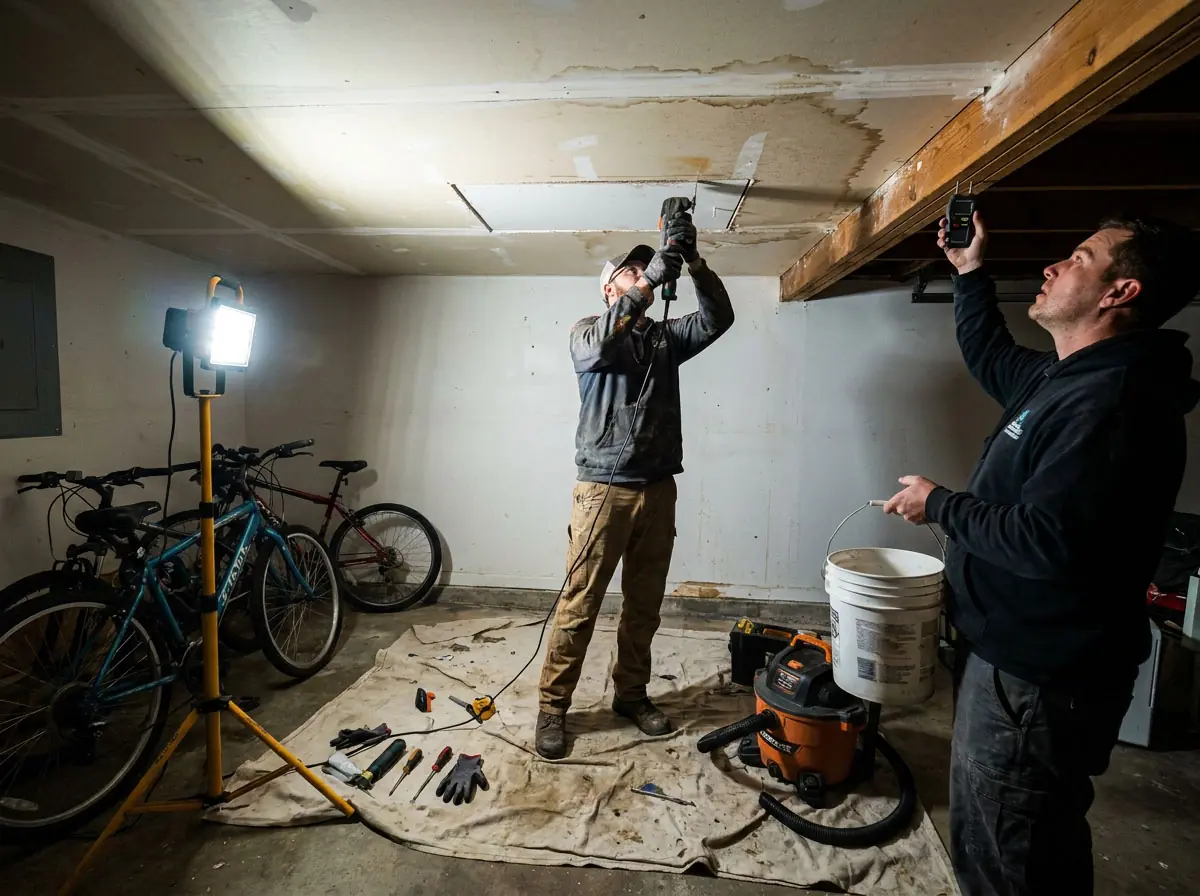
If you notice these shifts, do not wait for the wood to turn black. Moisture trapped beneath the surface leads to rapid fungal growth and permanent decay. Professional moisture meters are the only way to confirm what is happening in the dark spaces beneath your finish. If you suspect an issue, get an inspection before the damage migrates to your subfloor and joists.
Professional Restoration Techniques vs. DIY Mistakes: A Comparison Table
When water strikes your hardwood, your first instinct might be to grab a handful of towels or a heater. This is a common trap that turns a fixable mess into a total loss.
Professional restoration relies on physics, not just surface-level drying. We use industrial grade equipment to draw moisture out from beneath the boards without burning the wood fibers.
| Action | DIY Approach | Professional Method |
|---|---|---|
| Water Removal | Mopping and fans | Truck mounted extraction |
| Drying Logic | Heat and evaporation | LGR dehumidification |
| Subfloor Check | Ignoring hidden moisture | Moisture mapping sensors |
| Mold Control | Standard household spray | EPA registered sanitizers |
| Monitoring | Guesswork by sight | Scientific moisture logs |
Why Amateur Efforts Often Fail
Most DIY fixes ignore the hidden moisture trapped between the wood and the subfloor. Surface drying is useless if the underside of the board remains wet.
If you seal off the top of the wood while moisture remains underneath, you create a perfect incubator for mold. The wood will eventually rot from the bottom up, forcing a complete replacement of your flooring.
The Professional Advantage
Our team utilizes specialized moisture sensors to track exactly where water has migrated. We target the source of the humidity to ensure the entire structure returns to equilibrium.
- We use high pressure injection systems to force dry air under the floorboards.
- We monitor progress daily with non-invasive moisture meters to ensure no spots are missed.
- Our process prevents the wood from becoming permanently warped or structurally compromised.
Restoring Cupped and Buckled Boards: Industrial Dehumidification and Drying Science
When your hardwood starts to cup or buckle, you are witnessing the physical reaction of wood cells expanding as they drink up excess moisture. Relying on simple fans or open windows in our Simi Valley climate is a losing battle because the moisture is trapped both within the wood and in the subfloor underneath.
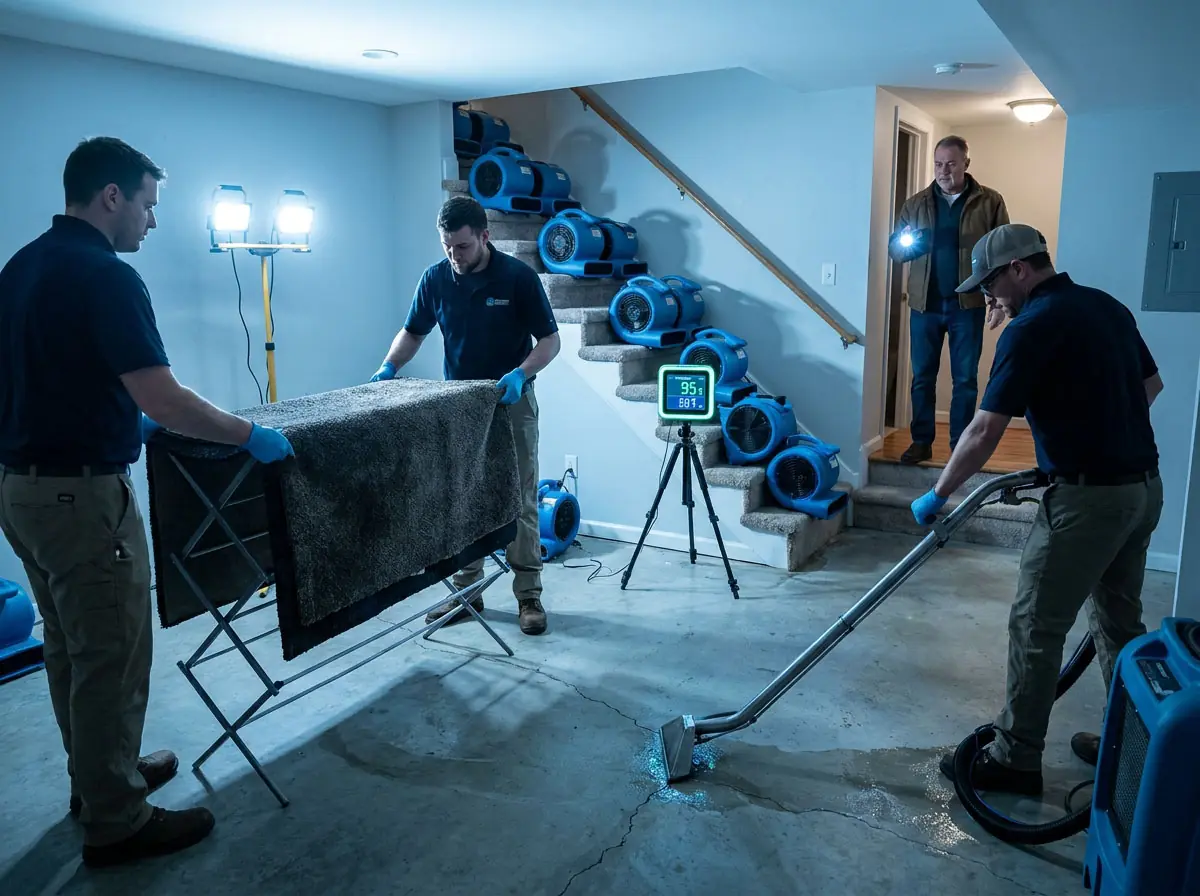
We use industrial grade drying systems to force the wood back into its original shape. By controlling the exact moisture content of the air and the floor simultaneously, we pull water molecules out of the wood fibers without forcing the material to crack or splinter.
Our approach targets the root cause rather than just the visible surface warp:
- High-velocity air movers create a focused path of evaporation across the floor surface.
- Commercial dehumidifiers pull moisture out of the air, creating a dry environment that forces the wood to release its retained water.
- Specialized moisture meters track progress daily to ensure the wood reaches the exact equilibrium needed to lock the boards back into place.
The goal is to reverse the process slowly. If you dry the wood too fast, the boards will shatter or split, leading to costly replacements instead of simple repairs. Our precision drying methods keep the natural tension of the wood intact, allowing the boards to settle back into their original position once the moisture content drops to normal levels.
From Saturated to Restored: A Simi Valley Hardwood Salvage Case Study
Last month, we received a frantic call from a homeowner in the Wood Ranch area after a supply line burst in their kitchen. By the time our team arrived, the engineered oak flooring had already begun to crown, creating visible ridges that felt like a speed bump underfoot.
Instead of ripping out the entire floor, we immediately deployed our industrial-grade drying systems to reverse the moisture migration. We focused on three core phases to save the investment:
- Moisture Mapping: Using thermal imaging to locate water pockets hiding under the boards.
- Extraction: Using high-pressure vacuum panels to pull moisture out from beneath the tongue and groove.
- Climate Control: Maintaining specific humidity levels to allow the wood to contract back into its original shape without cracking.
The results were clear: within seventy-two hours, the boards returned to their flat, level state. We saved the client over fifteen thousand dollars in total floor replacement costs by acting fast. This is the difference between guessing and using proven restoration science to get your home back to normal.
Mold Prevention and Sanitization Procedures for Water-Damaged Hardwood
When moisture seeps into the wood grain, it creates a prime breeding ground for fungal growth. You might think the surface looks clean, but mold spores love the dark, humid pockets trapped beneath your floorboards and against the subfloor.
If you ignore this, the air quality in your Simi Valley home will suffer, leading to respiratory issues and long term structural rot. You must act fast to sanitize the area before the colony takes hold.
Key Steps to Stop Microbial Growth
- Remove any remaining standing water immediately using a wet-dry vacuum.
- Apply EPA-registered antimicrobial solutions specifically designed for hardwood to kill spores on contact.
- Ensure the room is properly ventilated to lower the humidity levels quickly.
- Avoid using heavy bleach solutions, as these can permanently discolor your wood finish and leave moisture behind.
Professional sanitization is not just about wiping the floor; it is about reaching the hidden contamination. Our team uses specialized equipment to inject treatments into gaps between boards where mold hides.
If the smell of mildew is already present, the mold has likely already started its work. Do not wait for visible black spots to appear before calling for help, as by then, the damage has often moved deep into your property structure.
Final Words
Time is the silent enemy when your hardwood starts taking on water. Every hour you wait allows moisture to penetrate deeper into the wood fibers, leading to structural instability that even the best contractors cannot reverse.
When you spot the first ripple in your finish, do not hesitate. Dealing with Hardwood Floor Water Damage requires a swift, technical approach that goes far beyond a simple mop and bucket.
Protecting Your Investment
If you want to ensure your floors look as good as the day they were installed, keep these rules in mind:
- Disconnect sources: Shut off water lines immediately to stop the flow.
- Document everything: Take clear photos for your insurance claim before moving furniture.
- Call in the pros: Industrial drying equipment is the only way to pull deep moisture out of the subfloor.
You have worked hard for your home, and your floors deserve more than a quick fix. By taking the right steps now, you protect your property value and keep your living space safe from hidden mold growth.
People Also Ask
Can hardwood floors be saved after being soaked in water?
Yes, hardwood floors can often be restored if addressed within the first 24 to 48 hours. Professional intervention using industrial drying equipment is necessary to prevent permanent warping and structural decay.How do I know if moisture is trapped under my hardwood floors?
Look for signs like cupping at the board edges, dark discoloration, or a musty odor emanating from the floor. You may also notice the floorboards feeling soft or loose when you walk across them.What is the most effective way to dry water damaged wood?
The most effective method involves utilizing industrial dehumidifiers and specialized air movers to pull moisture out of the wood and the subfloor. According to the EPA guidelines, controlling indoor humidity is critical to preventing long term structural damage and mold growth.How long does it take for mold to grow on wet wood floors?
Mold can begin to colonize on organic materials like wood within 24 to 48 hours of water exposure. Immediate professional sanitization is required to stop spores from spreading throughout your Simi Valley home.Why should I hire a professional for hardwood floor restoration in Simi Valley?
Professional restoration teams use moisture mapping technology to ensure water has not reached the subfloor where it can cause hidden rot. DIY drying attempts often leave residual moisture, which frequently leads to costly secondary damage or full floor replacement.Need Water Damage Restoration Services?
We provide rapid water damage restoration and structural drying services to restore your property in Simi Valley and surrounding areas (93062, 93063, 93065, 93094, 91301). Our team arrives quickly to mitigate damage and return your home or business to its pre-loss condition.
Request Price Estimate