


⚡ TL;DR: This guide helps Scottsdale homeowners navigate burst pipe cleanup by highlighting common mistakes to avoid and explaining why professional assistance is essential for maintaining your property and health.
📋 What You’ll Learn
Handling a burst pipe in your Scottsdale home requires swift, informed action to prevent long-term property damage. This guide outlines critical steps and common pitfalls to ensure your recovery is successful.
- Stop water damage immediately by learning the correct technique for locating and closing your main water valve to prevent further flooding throughout your Scottsdale residence during an emergency.
- Avoid dangerous DIY errors that often lead to hidden moisture pockets, structural rot, or the rapid growth of toxic mold, which can compromise your health and home air quality.
- Protect your valuable belongings using professional salvage techniques designed to preserve furniture, electronics, and documents that are frequently lost to improper drying methods after a pipe bursts open.
- Vet restoration professionals properly by asking the right questions, ensuring you hire a qualified contractor who understands local building codes and the specific challenges of the Arizona climate.
📖 Reading time: 7 min
✍️ Author expertise: Certified restoration professional with decades of hands-on water damage mitigation experience in Scottsdale.
You wake up to the sound of rushing water, only to find your Scottsdale home turning into an indoor swimming pool. That sickening feeling in your gut is real, but the panic you feel right now is your worst enemy.
Most homeowners lose thousands of dollars simply because they rush into the wrong actions during those first critical minutes. Making a single amateur mistake can turn a manageable plumbing mishap into a permanent mold infestation or structural nightmare.
If you want to protect your property and your wallet, you need to know exactly what not to do before the water stops flowing. Keep reading to discover the common traps you must avoid to keep your home from becoming a total loss.
Immediate Actions: Why Turning Off the Main Water Valve is Your Priority
The moment you realize a pipe has burst, your instinct will be to grab towels or call a plumber. Stop right there. Your absolute first priority is to kill the water supply at the main valve.
Every second that water continues to spray, you are losing money and adding structural risk to your home. If you don't stop the flow, you aren't just dealing with a leak; you are inviting a catastrophic flood into your living space.
Locating your main water shutoff valve is not a drill. In many Scottsdale homes, this is located near the garage or the perimeter wall facing the street. If you do not know where yours is, find it today before an emergency forces you to hunt for it blindly.
Steps to take before the professionals arrive:
- Locate the main shutoff valve, which is usually a gate valve or a ball valve.
- Turn the handle clockwise until it stops to completely seal the line.
- Open your lowest faucets to drain the pressure remaining in the pipes.
- Switch off the electricity to the affected area if the water is near any outlets or appliances.
Once the water is off, the clock resets. You have effectively stopped the hemorrhaging of your home. Now, you have the breathing room required to assess the situation without causing further damage to your flooring or drywall.
Hazards of DIY Cleanup: Common Errors That Lead to Toxic Mold Growth
Most Scottsdale homeowners assume that a quick mop job or a few box fans will fix a burst pipe. This is a dangerous misconception that often ends in a massive repair bill.
Water doesn't just sit on the surface; it wicks into baseboards, seeps under flooring, and hides inside wall cavities. When you leave moisture trapped behind your drywall, you are essentially building a luxury resort for toxic mold to thrive.
Mold spores require only 24 to 48 hours to begin colonizing a damp environment. If you fail to remove the water with industrial-grade equipment, you will likely be dealing with structural rot and respiratory issues within a week.
Critical Errors to Avoid
Attempting to handle a major flood alone often leads to these amateur mistakes:
- Using standard household vacuums that can cause electrical shocks when touching standing water.
- Leaving wet carpet padding in place, which acts as a sponge for bacteria and mold growth.
- Ignoring hidden moisture behind cabinets or baseboards that causes wood to warp and decay.
- Relying on residential dehumidifiers that lack the power to pull moisture from deep inside structural materials.
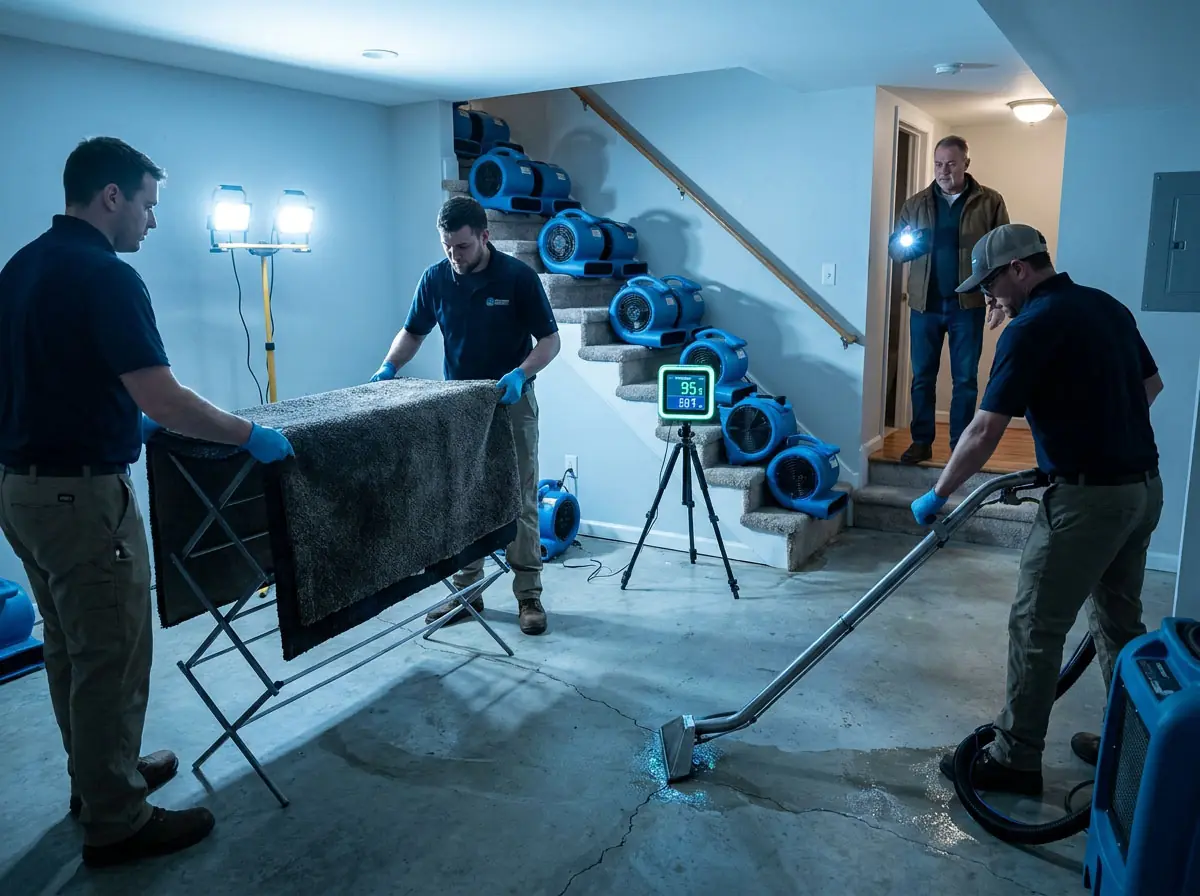
Professional restoration teams use moisture mapping technology to identify exactly where water has traveled. You cannot see through walls with your naked eye, but a specialist can detect the precise points where rot will start if not dried correctly.

The Hidden Cost of Dampness: A Comparison Table of Damage Mitigation vs. Long-Term Restoration
Most Scottsdale homeowners think they are saving cash by grabbing a few towels and a shop vac, but they are actually inviting a financial catastrophe. When water seeps into your drywall, insulation, and framing, the damage is already compounding by the hour.
Professional mitigation happens fast to stop the bleeding, while restoration becomes a massive, expensive project once mold takes hold. Look at how quickly a small pipe burst can spiral into a bank-breaking event.
| Action Taken | Immediate Cost | Long-Term Cost | Result |
|---|---|---|---|
| Pro Mitigation (Day 1) | $$ | $ | Minimal disruption |
| DIY Cleanup (Delayed) | $ | $$$$$ | Mold remediation |
| Ignoring dampness | $0 | $$$$$$+ | Structural rebuild |
If you miss the first forty-eight hours, you move from simple drying to toxic mold remediation. This is where your wallet really starts to bleed.
Why Speed Changes the Math
Once moisture penetrates the subfloor or drywall, standard drying equipment often fails to reach the trapped pockets of humidity. You might think the surface looks dry, but the hidden moisture continues to feed microbial growth behind your walls.
- Professional-grade dehumidifiers extract gallons of moisture daily.
- DIY floor fans only circulate existing bacteria and mold spores.
- Professional moisture mapping detects hidden water before rot sets in.
When you hire experts immediately, you pay for professional intervention that saves the structure itself. If you wait, you end up paying for demolition, mold testing, and complete reconstruction of the damaged zones.
Protecting Your Valuables: Salvage Techniques for Scottsdale Homeowners
When water starts pooling across your Scottsdale floors, the adrenaline spike makes you want to save everything at once. Resist that urge. Moving soaked items through dry areas of your home often spreads contaminated water and increases the total area of damage.
Focus your energy on items that are not yet saturated. If a piece of furniture is sitting in water, lift it only if you can place it directly onto a dry surface or a non-porous material like plastic sheeting.
Priority Steps for Your Belongings
- Move paper documents, photographs, and books to a dry, low-humidity environment immediately.
- Wipe down wooden furniture to remove standing water, but do not rub, as this can force moisture deeper into the grain.
- Place aluminum foil squares or plastic blocks under the legs of heavy sofas or cabinets to prevent water from wicking upward into the fabric.
- Hang curtains and draperies over a dry rod to prevent color bleeding and staining on your carpets.
Avoid the common trap of using household fans to dry out your belongings. In the dry Scottsdale climate, people assume airflow is the cure, but fans merely push airborne mold spores onto surfaces that are currently clean.
Instead, focus on removing standing water with a shop vacuum or by mopping. Keep the area ventilated by opening windows if the exterior humidity is low, but leave the heavy-duty structural drying to professional equipment designed to prevent secondary damage to your walls and floors.

From Flood to Dry: Case Study of a Burst Pipe Incident in a Gainey Ranch Property
Consider a recent job we handled at a luxury residence in Gainey Ranch. The homeowner returned from a weekend trip to find a pipe had burst behind a wall, soaking the high-end hardwood floors and custom cabinetry.
Instead of calling for professional extraction immediately, the owner spent hours using a shop vac and fans. This approach pushed moisture deep into the subfloor, trapping water in areas where air could not reach.
By the time we arrived, the drywall was already showing signs of saturation. We had to perform an emergency intervention to save the structural integrity of the home. Here is a breakdown of what that recovery process actually looks like:
- Phase 1: Rapid moisture mapping with infrared cameras.
- Phase 2: Targeted removal of baseboards to vent wall cavities.
- Phase 3: Industrial dehumidification to prevent toxic mold spikes.
- Phase 4: Controlled drying of hardwood to prevent warping.
This case serves as a warning for every homeowner in Scottsdale. Speed is not enough if your method is wrong. Using household box fans on wet carpet often does nothing but circulate damp air, which actually accelerates mold growth behind your walls.
The Gainey Ranch property was saved, but the repair costs doubled because the moisture had settled into the foundation. If they had called us the second they saw the water, we could have contained the spill in under two hours. Don’t let your property become another cautionary tale.
Essential Questions to Ask Before Hiring a Water Damage Restoration Contractor
When your home is soaked, your judgment is clouded by stress. Many contractors will rush to your door, but not all of them have the specific expertise required for the intense heat and humidity challenges we face here in Scottsdale.
You need to vet them immediately to ensure they do not leave hidden moisture behind. Ask these direct questions before you sign any authorization forms:
- Are you IICRC certified, and can you show me your active credentials?
- How quickly can your team be on site with industrial-grade dehumidifiers and air movers?
- Will you provide a detailed, itemized estimate before starting any demolition or drying work?
- Do you work directly with my insurance carrier to handle the claims documentation?
A reputable professional will never dodge these questions. If a company seems pushy or refuses to provide written documentation of their license and insurance, show them the door.
You are the one paying for the work, whether out of pocket or through your policy, so protect your rights as a homeowner. A true expert focuses on the science of drying, not just sucking up standing water with a shop vac.
Protecting Your Scottsdale Home’s Integrity
Your home is likely your biggest investment, and a sudden pipe failure is a direct attack on its value. Leaving water to sit for even an extra hour is a gamble that rarely pays off.
The structural bones of your property are surprisingly porous. Once moisture settles into your drywall, flooring, and framing, the damage accelerates faster than most people realize.
To keep your home standing strong, focus on these non-negotiable rules:
- Act immediately. Delays are the primary cause of secondary water damage.
- Document everything. Take photos of the pipe and the affected zones before you start any Burst Pipe Cleanup efforts.
- Prioritize professional air movement. Renting industrial dehumidifiers is rarely enough if the moisture is trapped behind baseboards or inside wall cavities.
Professional restoration teams do more than just mop up the mess. They use thermal imaging and moisture mapping to ensure no hidden pockets of water remain behind your walls.
If you miss these hidden spots, the wood will start to rot from the inside out. You end up paying for a full-scale renovation later because you chose to cut corners during the initial drying phase.
Think about the long game. A few hundred dollars spent on professional extraction today will save you thousands in future mold remediation and structural repairs.
People Also Ask
How soon after a burst pipe should I call for help in Scottsdale?
You should contact a professional restoration service immediately after stopping the water flow to prevent secondary damage. Rapid response is crucial to stop the growth of toxic mold, which can begin developing in as little as 24 to 48 hours.Is DIY cleanup recommended for burst pipe incidents?
Attempting to clean up water damage yourself often leads to incomplete drying and hidden moisture, which can compromise your home structure. According to the Environmental Protection Agency, professional assessment is necessary to ensure all porous materials are properly sanitized or removed to prevent long term hazards.Does homeowners insurance cover burst pipe restoration in Scottsdale?
Most standard homeowners insurance policies in Arizona cover sudden and accidental water damage from a burst pipe. However, you should review your specific policy for exclusions related to pipe maintenance or gradual leakage, as these may not be covered.What are the first steps to take when a pipe bursts in my home?
The most important step is to locate and turn off your home main water shutoff valve to stop the source of the flooding. Once the water is off, safely disconnect electricity in affected areas and call a certified restoration team to begin professional extraction.How can I identify hidden water damage after a pipe bursts?
Look for signs like discolored walls, warping floorboards, or a musty odor that persists even after surfaces feel dry to the touch. Professional technicians use specialized thermal imaging and moisture meters to detect water trapped behind drywall or under flooring.Need Water Damage Restoration Services?
We provide rapid emergency water extraction and structural drying throughout Scottsdale and surrounding communities to restore your property quickly. Our teams are available for immediate deployment to mitigate damage and return your home to a pre-loss condition (85250, 85251, 85255, 85258, 85260).
Request Price Estimate