


⚡ TL;DR: To prevent costly basement water damage in Peoria, homeowners should address drainage issues early, document all property loss properly, and seek professional help for effective structural restoration.
📋 What You’ll Learn
Protecting your Peoria home requires more than just a sump pump. In this guide, learn how to identify hidden moisture risks and prevent costly structural damage caused by Illinois weather patterns.
- Identify early warning signs so you can spot subtle humidity shifts and seepage patterns before they develop into severe, expensive structural issues that compromise your home foundation integrity.
- Evaluate exterior drainage needs to ensure water is channeled away from your property properly, rather than relying solely on indoor dehumidifiers that fail to address the actual moisture source.
- Implement professional drying techniques to stop microbial growth in its tracks and protect your building materials from long term degradation after a significant basement flooding or leak event.
- Navigate insurance documentation requirements by following a systematic approach to recording damage, which ensures you have the necessary evidence to secure a fair claim for restoration services.
- Determine when to hire pros by weighing the risks of DIY remediation against the safety benefits of professional intervention for complex, mold prone, or severe water damage situations.
📖 Reading time: 7 min
✍️ Author expertise: Peoria restoration expert with two decades of experience repairing flooded Central Illinois basements.
You head downstairs to grab a holiday decoration or a box of old photos, only to plant your feet in a cold, damp mess. That sinking feeling in your gut isn't just about the ruined carpet; it is the realization that your home's foundation is currently under siege by Peoria’s unpredictable groundwater.
Most homeowners react with panic, grabbing a shop vac and hoping for the best, but that is exactly how you turn a minor seepage issue into a five-figure disaster. Quick fixes usually mask the root problem while mold spores begin their silent, destructive takeover behind your drywall.
I have seen the same avoidable errors burn through local bank accounts for years, and it is time to set the record straight. Before you touch another bucket or ignore that damp patch on the wall, read through these five critical mistakes that every Peoria homeowner needs to stop making today.
Ignoring Early Warning Signs and Humidity Shifts
The biggest lie homeowners tell themselves is that a basement only needs attention when there is standing water. In truth, your home sends out distress signals long before the carpet starts squishing under your boots.
That faint, musty scent in the air or the slight discoloration on your baseboards is not just an aesthetic bother. It is a major red flag that your basement's moisture levels have crossed the threshold into dangerous territory.
Watch for these subtle indicators that your foundation is struggling:
- The smell of damp earth or mildew when you first open the basement door.
- Efflorescence, which looks like a white, chalky powder forming on concrete walls.
- Condensation collecting on cold water pipes or metal appliances during humid summer months.
- Doors that stick or windows that become suddenly hard to operate near the basement level.
When you ignore these shifts, you are essentially giving mold a free pass to colonize your drywall and floor joists. Moisture in a closed space does not simply disappear on its own; it moves into your materials, settles in, and begins a slow cycle of structural decay.
Do not wait for a heavy rainstorm to force your hand. If the humidity feels off, the moisture is already winning the battle against your home.
Relying on Dehumidifiers Instead of Addressing Exterior Drainage
Placing a dehumidifier in a damp Peoria basement is like putting a band-aid on a broken leg. Sure, it pulls some moisture from the air, but it does absolutely nothing to stop the hydrostatic pressure pushing water through your foundation walls.
When you ignore the outside of your home, you are letting the real culprit run wild. Soil saturation from our local rain cycles will always win against a small electric machine. If the water has a way to get in, it will keep coming, no matter how much you dry the air.
You need to stop the intrusion at the source before you worry about the internal climate. Focus on these exterior factors to keep your basement dry for good:
- Extend your downspouts at least six feet away from the foundation perimeter.
- Ensure the soil grade slopes away from your home to prevent pooling water.
- Clean your gutters regularly so overflow does not soak the ground right next to your walls.
- Install or repair a professional drainage tile system to redirect groundwater before it touches your concrete.
If you keep relying solely on internal drying equipment, you are just masking the symptoms. Moisture will continue to settle into your floor joists and studs, creating a playground for rot and structural degradation. Real protection starts at the dirt level, not the electrical outlet.

Improperly Drying Materials to Prevent Microbial Growth
Most homeowners assume that if a surface feels dry to the touch, the job is finished. That is a dangerous misconception that often leads to thousands of dollars in hidden repair costs.
Moisture loves to hide behind drywall, inside wall cavities, and beneath finished flooring. If you fail to remove that trapped water, you are essentially providing a nursery for mold and bacteria to thrive.
Think of it like a ticking time bomb. You might not see the spores today, but in a week or two, that musty smell will become impossible to ignore.
How to Detect Hidden Moisture
Professional restoration teams use thermal imaging and moisture meters to map out the saturation levels in your home. You cannot see these pockets with the naked eye, and fans alone will never reach them.
If you leave these materials damp, the structural integrity of your home will eventually pay the price. You must act fast, or you risk turning a manageable cleanup into a full-scale toxic remediation project.
- Remove baseboards to allow air circulation behind the drywall.
- Pull up wet carpet pads immediately, as they act like sponges for bacteria.
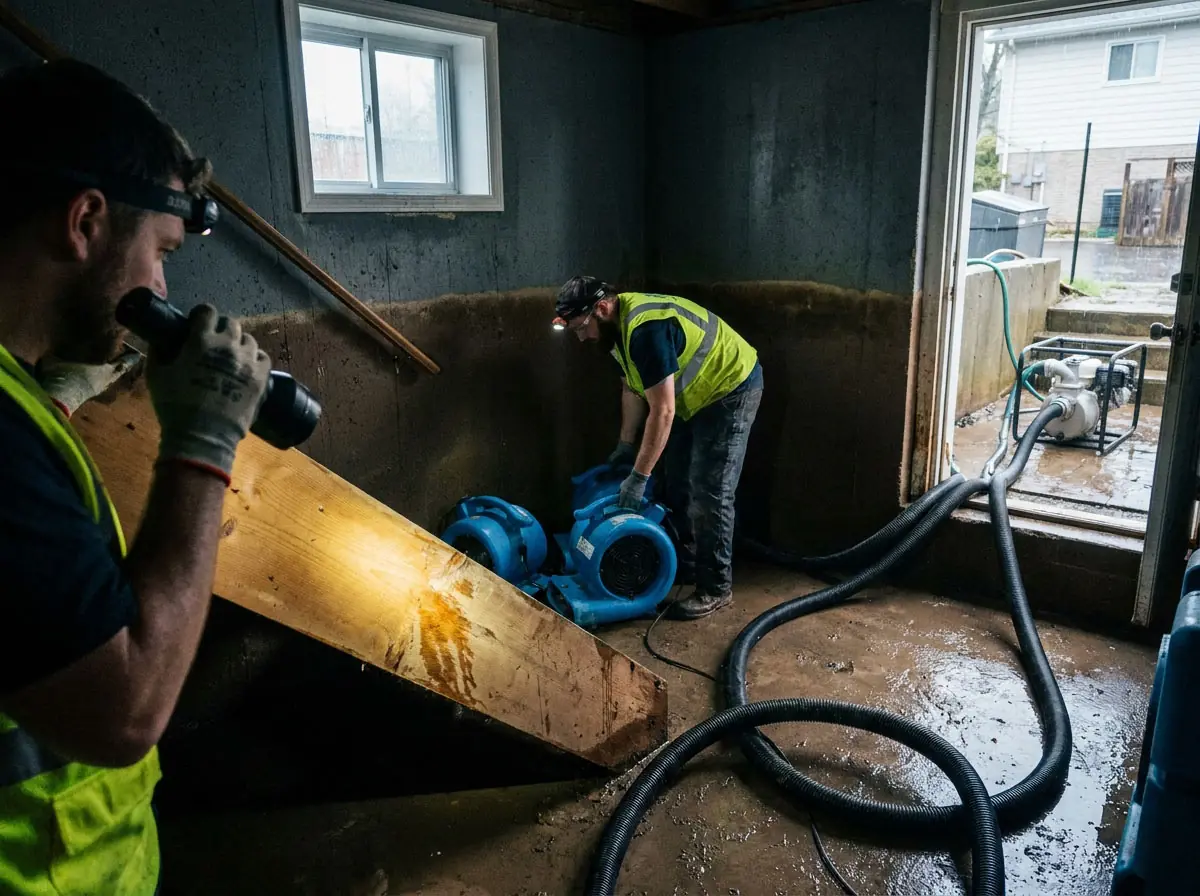
- Use commercial-grade air movers to circulate air against the affected wall surfaces.
- Monitor humidity levels to ensure the drying process is actually working.
Stop trying to dry out your basement with a standard household fan and an open window. That approach simply moves the moisture around without extracting it from the porous materials where mold grows fastest.
The DIY Remediation Table: Evaluating Risks vs. Professional Intervention
There is a dangerous myth that a shop vac and some box fans are all you need to save a flooded basement. In reality, DIY drying often leaves moisture trapped inside wall cavities and subflooring, which is the perfect recipe for toxic mold growth.
Professional restoration companies use industrial grade moisture meters and heavy duty air movers to reach hidden water that your eyes cannot see. Before you decide to go it alone, look at the cold, hard facts regarding what you can handle and where you are likely to fail.
| Scenario | DIY Approach | Professional Intervention |
|---|---|---|
| Minor Carpet Dampness | Wet vac and fans | Anti microbial treatment |
| Wall Cavity Seepage | Surface wiping | Tear out and drying |
| Sewage Backups | Bleach and soap | Biohazard containment |
| Structural Saturation | Space heaters | Dehumidification system |
Attempting to handle severe water damage yourself often leads to secondary issues that cost three times as much to repair later. Hidden mold thrives in the dark, damp spaces behind your drywall, and standard household cleaners will not kill the spores at the root.
Consider these critical dangers when weighing your options:
- Electrical shorts from water reaching wall outlets.
- Structural weakening of wood joists due to rot.
- Respiratory hazards from breathing in disturbed mold spores.
- Loss of insurance coverage if damage is improperly documented or mitigated.
If the water has touched your drywall or carpet, it is already too late for DIY methods. You need specialized thermal imaging and professional grade equipment to ensure the structure is actually dry, rather than just feeling dry to the touch.

Failing to Document Damage for Insurance Claims
Most homeowners lose thousands of dollars simply because they treat their insurance adjuster like a detective who already knows the whole story. They assume the wet carpet and the stained baseboards speak for themselves, but in the world of property claims, if it is not documented, it did not happen. Failing to create a paper trail immediately after discovering water damage turns a straightforward reimbursement into a long, drawn-out battle with your provider.
Start your documentation the moment you step into the basement. Before you move a single box or begin the cleanup, you need to capture the full scale of the destruction.
- Take wide-angle photos of the entire room to show the extent of the flooding.
- Record close-up shots of damaged personal items, including serial numbers if possible.
- Keep a log of every conversation you have with your insurance agent, including dates and names.
- Save all receipts for emergency repairs or equipment rentals, as these are often reimbursable.
Adjusters look for reasons to deny or minimize your claim, and a lack of visual evidence is their favorite loophole. You must prove that the water source was sudden and accidental rather than a result of long-term neglect. Documenting the damage correctly is your best leverage to ensure your policy actually covers the cost of getting your home back to its original state.
From Seepage to Stability: A Peoria Basement Restoration Case Study
Last spring, a homeowner in the North Peoria area reached out after discovering a steady, rhythmic seepage along the corner of their basement foundation. They had initially tried to hide the moisture with fresh paint, which trapped the water and caused the drywall to bubble within three weeks. When our team arrived, we found that the issue wasn't just a cracked wall; it was a failing exterior drainage system that had been neglected for years.
We implemented a multi-stage recovery process to turn the tide. By regrading the soil around the foundation and installing a high-capacity sump pump system, we stopped the intrusion at its source. We then treated the subfloor for microbial growth to ensure the basement was not just dry, but safe for the family to use again.
Lessons from the Field
This case serves as a perfect example of why external site work is the only permanent solution for central Illinois homes. We often see homeowners obsess over interior sealants, but the real battle is won in the dirt outside.
- Regrading is king: We pushed the soil away from the foundation at a steep angle to force water to travel away from the house.
- Gutter maintenance: We discovered their downspouts were dumping water directly against the footer. Extending these pipes ten feet out proved to be a massive game changer.
- Foundation sealants: Once the water stopped entering, we used a heavy-duty waterproof coating to reinforce the interior walls against residual humidity.
The transition from a damp, unusable storage space to a dry, stable foundation wasn't magic. It was the result of identifying the specific failure points that plague Peoria homes during our heavy rain seasons. By addressing the exterior drainage first, we saved the homeowner from a complete wall replacement that would have cost double the amount of their initial service.
Protecting Your Home’s Foundation for the Long Haul
Your basement is the literal anchor of your property. When you ignore the small leaks or the faint scent of mildew, you are essentially gambling with the structural integrity of your entire home.
Taking a proactive stance is the only way to avoid the massive repair bills that plague so many Peoria homeowners. Consistent maintenance is far cheaper than a total foundation overhaul.
Three Pillars of Basement Longevity
- Inspect your gutters and downspouts every spring to ensure water is channeled away from your concrete slab.
- Keep your window wells clear of debris, leaves, and soil buildup that can trap moisture against your foundation walls.
- Monitor your indoor humidity levels closely; if your space remains damp, it is time to check for deeper issues related to Basement Water Damage.
Do not wait for a heavy thunderstorm to reveal the vulnerabilities in your basement. By the time you see actual pooling water, the damage to your foundation might already be significant.
Stay ahead of the groundwater by keeping your exterior perimeter dry and your interior air circulating. A dry, healthy basement keeps your home's value high and your stress levels low for many years to come.
People Also Ask
Does homeowners insurance cover basement water damage in Peoria?
Most standard homeowners insurance policies cover sudden and accidental water damage, such as a burst pipe. However, damage caused by surface water, floods, or sewer backups often requires a separate policy or specific endorsement.What are the signs of hidden water damage in a basement?
Look for musty odors, peeling paint, or damp drywall that feels soft to the touch. You may also notice visible efflorescence, which is a white, powdery substance on foundation walls indicating moisture migration.How do I prevent basement flooding during heavy rain?
Ensure your gutters are clear of debris and downspouts are extended at least six feet away from your foundation. You should also verify that the soil grade around your home slopes away from the walls to direct rainwater elsewhere. For more guidance on home maintenance and moisture control, visit the EPA website for helpful resources.Is DIY basement water cleanup safe?
Attempting to clean up large volumes of water yourself can be hazardous due to electrical risks and potential bacterial contamination. If the water source is contaminated or if mold growth is already present, it is safest to hire professional remediation services.How fast does mold grow after basement flooding?
Mold can begin to colonize damp surfaces within 24 to 48 hours of water exposure. It is critical to initiate professional drying procedures immediately to prevent widespread microbial growth in your basement.Need Water Damage Restoration Services?
We provide rapid emergency water damage restoration to restore your property and prevent further structural damage throughout Peoria and surrounding communities (61602, 61603, 61604, 61606, 61614). Our team arrives quickly to extract water and dry your space, returning your home or business to a safe, pre-loss condition.
Request Your Estimate