

⚡ TL;DR: Professional structural drying services in Orem help you eliminate trapped moisture effectively, preventing hidden mold growth and protecting the long term integrity of your property from water damage.
📋 What You’ll Learn
Discover the critical steps needed to protect your Orem property from hidden moisture. This guide covers professional drying techniques that prevent mold growth and preserve the structural integrity of your home.
- Identify hidden moisture risks early by learning how water travels behind drywall and subflooring, often remaining invisible until significant mold colonies have already formed in your living space.
- Compare professional tools versus household fans to see why industrial-grade dehumidifiers and air movers are necessary for removing deep moisture that common retail equipment simply cannot reach effectively.
- Master the art of moisture mapping through a detailed look at the specialized detection instruments our technicians use to pinpoint water pockets within your home’s hidden wall cavities.
- Implement long term prevention strategies by following expert advice on safeguarding your property against secondary water damage and maintaining a dry environment throughout the changing Orem seasons.
📖 Reading time: 7 min
✍️ Author expertise: Certified Orem water restoration specialist with over a decade of field drying experience.
You might think your floor is dry just because the carpet doesn't squish under your feet, but that is exactly how black mold takes root in your Orem home. Moisture has a nasty habit of hiding deep inside your drywall and floor joists, quietly turning your property into a breeding ground for toxic spores.
Most homeowners assume a few fans and a dehumidifier solve the problem, yet they are often left with a structural disaster months later. If you want to stop mold before it starts, you need to understand the science of deep structural drying.
Here is how to ensure your property is actually dry, not just surface clean.
The Deceptive Nature of Moisture Behind Orem Walls
Moisture is a master of disguise in your home. While you focus on the wet carpet or the puddle on your tile, water is busy wicking upward through your baseboards and into the wall cavity.
Drywall acts like a sponge, soaking up water and holding it against the wooden studs hidden behind your paint. Even if the surface feels dry to the touch, the interior remains a damp, dark environment.
This is the ideal recipe for microbial growth. Within forty-eight hours, mold can begin to colonize those hidden spaces without you ever seeing a single spot on your wall.
Common Traps for Orem Homeowners
- Water travels behind baseboards, settling into the subfloor.
- Insulation inside your walls traps humidity, preventing natural evaporation.
- Vapor barriers in modern construction often lock moisture inside the frame rather than letting it escape.
You cannot rely on your eyes to tell you the house is safe. If you have had a pipe burst or a roof leak, that water has almost certainly migrated to areas you cannot see.
Professional intervention is the only way to verify that the structure is truly stable. Waiting for physical signs like warped wood or a musty odor means the contamination is already well underway.
Why Household Fans and Dehumidifiers Fall Short
Here is the hard truth about water damage: your box fan is just moving wet air around, and your portable dehumidifier is nothing more than a toy against serious saturation. When water seeps into your Orem home, it follows gravity and capillary action into the cavities of your wall studs, subfloors, and insulation.
Household equipment lacks the static pressure required to force moisture out of these dense materials. Using these basic tools often traps humidity inside wall cavities, creating a perfect, humid sauna that accelerates mold growth behind your fresh coat of paint.
The Danger of False Surface Drying
You might feel the carpet surface and assume you are in the clear, but that is a dangerous illusion. Moisture trapped in structural materials needs to be pulled out through controlled evaporation and dehumidification cycles that exceed the capacity of consumer-grade hardware.
If you rely on home equipment, you are likely missing these critical zones:
- The space between your drywall and the exterior sheathing.
- The underside of subflooring where moisture wicks into joists.
- The dense, compressed insulation layers inside wall voids.
- The foundation slab interface where concrete holds water like a sponge.
Real structural drying requires industrial equipment that monitors the grains per pound of moisture in the air. Without the right gear, you are essentially watching your house rot from the inside out while hoping for the best.

Professional Methods for Industrial-Grade Structural Drying
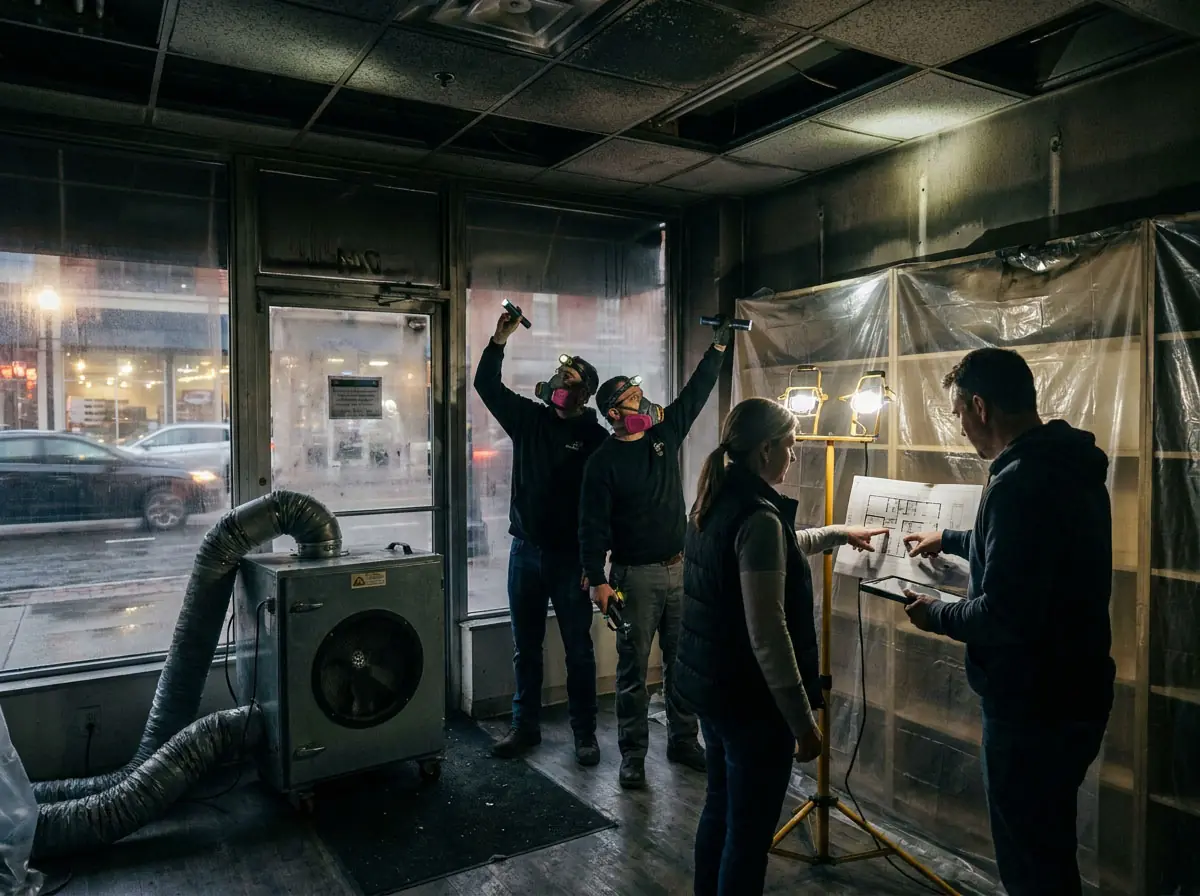
When moisture creeps behind your baseboards in Orem, simple evaporation is not enough. You need industrial-grade extraction to pull water out of porous materials before mold spores become active. Our team uses high-pressure air movers that push dry air at specific angles to force moisture out of hidden pockets within wall cavities and insulation.
This process is about precision, not just speed. We create a controlled environment where the relative humidity is dropped so low that materials are forced to release their trapped water. Relying on basic hardware store gear usually leaves the center of your studs damp, which creates a perfect incubation chamber for mold.
The Core Components of Professional Drying
- Low-Grain Refrigerant (LGR) Dehumidifiers: These remove significantly more water than standard consumer units, even in dry mountain climates.
- High-Velocity Air Movers: Strategically placed units to promote rapid surface and sub-surface evaporation.
- Injection Drying Systems: Specialized panels that blow air directly into wall voids to dry studs and sheathing from the inside out.
We monitor the drying progress continuously until the materials reach their equilibrium moisture content. If we stop too soon, the residual water will migrate, often causing warped floorboards or paint bubbles weeks after the initial leak. By maintaining this strict standard, we ensure that your property is truly restored and not just visually dry.
Moisture Mapping: A Table of Common Detection Tools and Techniques
Professional restoration isn't a guessing game. If you can't measure the moisture, you cannot manage the damage. We use specific tools to track water migration through building materials that appear dry to the naked eye.
| Detection Tool | Primary Function | Target Material |
|---|---|---|
| Non-Penetrating Meter | Detects subsurface moisture | Drywall, Wood, Tile |
| Penetrating Probe | Measures exact saturation | Baseboards, Subflooring |
| Thermal Imaging | Visualizes cold spots | Wall Cavities, Ceilings |
| Hygrometer | Monitors air humidity | Ambient Room Environment |
Thermal cameras are particularly crucial for Orem homes. They allow our technicians to see temperature differentials that indicate trapped water behind your walls without tearing them apart.
We combine these visual readouts with moisture meters to create a comprehensive map of your home. This process ensures we don't just dry the middle of the room, but target the specific pockets where mold likes to hide.
Why Precision Matters for Your Property
You need a targeted approach to stop secondary damage before it costs you thousands. By quantifying the moisture content, we know exactly when a structure has reached its dry standard.
- Pinpointing hidden leaks behind insulation.
- Monitoring daily drying progress via digital logs.
- Validating that materials are safe to prevent fungal growth.
Most homeowners lose money because they stop the drying process too soon. These tools provide the objective proof that your home is actually ready for reconstruction.

Lessons from Orem Property Restoration
I recently walked into a beautiful home near Orem Center Street that looked perfectly fine to the naked eye. The owner had experienced a pipe burst behind the kitchen vanity and thought a week of running a box fan solved the issue. When we pulled back the baseboards, we found a thriving colony of mold clinging to the insulation and the backside of the drywall.
The moisture had wicked upward through the wooden studs like a straw. Because the air was stagnant behind the cabinets, the material stayed damp for weeks after the surface felt dry to the touch. This is exactly how small plumbing leaks transform into expensive structural headaches.
When we took on the project, our team had to apply aggressive drying protocols to save the framing. We learned a few critical things from this site that every Orem homeowner should keep in mind:
- Surface drying is not the same as structural drying.
- Water travels through paths of least resistance, often inside wall cavities.
- Leaving damp drywall in place guarantees mold growth.
- Professional moisture sensors detect what your hands cannot feel.
We had to remove two feet of drywall throughout the entire kitchen perimeter to reach the damp timber. By installing industrial-grade dehumidifiers and high-velocity air movers, we forced the trapped moisture out of the studs before sealing the area. The homeowner saved thousands by acting before the rot moved into the flooring joists.
Protecting Your Long-Term Investment Against Secondary Water Damage
Your Orem home is likely the biggest financial asset you own. When water intrudes, the real enemy is not the puddle on the floor; it is the secondary damage that follows when moisture lingers inside your walls.
Left unchecked, trapped water warps your framing lumber, causes subfloors to buckle, and creates the perfect damp environment for mold colonies to thrive. You might not see these issues today, but they are eating away at your property value while you sleep.
The Hidden Costs of Waiting
Acting fast prevents a manageable repair from turning into a total structural renovation. To protect your investment, keep these priorities in mind:
- Inspect your home foundation for new cracks after heavy rain or pipe leaks.
- Monitor your indoor humidity levels, keeping them below 50 percent to discourage mold growth.
- Check basement corners and crawl spaces regularly for any sign of a musty odor.
When you ignore the science of drying, you are essentially gambling with your home's longevity. Professional structural drying stops the cycle of rot before it compromises your home's integrity, saving you thousands in future remediation costs and ensuring your space remains a safe, healthy environment for your family.
Final Words on Safeguarding Your Home’s Integrity
Your home in Orem is likely your biggest financial asset. Letting trapped moisture fester is like watching your bank account slowly drain away.
You cannot rely on luck when it comes to water damage. The secret to keeping your property value intact lies in professional Structural Drying Services that reach where your eyes cannot see.
Consider these essential rules for long term peace of mind:
- Inspect your plumbing connections under sinks and behind appliances every quarter.
- Ensure your crawl space remains ventilated and free of debris.
- Keep an ear out for damp or musty odors in closets or basement areas.
If you suspect water intrusion, time is your enemy. Waiting even forty-eight hours can turn a minor leak into a costly structural nightmare.
Do not wait for the drywall to bulge or the paint to peel. Reach out to experts who measure moisture levels with precision instruments rather than guesswork.
By acting fast and calling in specialists, you keep your family safe and your home strong. Protecting your investment today is the only way to avoid the massive repair bills that come with ignoring hidden rot.
People Also Ask
How long does it take for mold to grow after water damage?
Mold can begin to colonize within 24 to 48 hours of initial exposure to moisture. If structural materials remain damp, fungal growth will rapidly spread behind drywall and inside wall cavities.Can I dry my home in Orem without professional equipment?
While household fans can dry surface areas, they often fail to address moisture trapped deep within building materials. Professional industrial dehumidifiers and air movers are required to achieve the low humidity levels necessary to prevent long term structural damage.What is structural drying and why is it important?
Structural drying is the systematic process of removing excess moisture from building materials like studs, joists, and subfloors. Proper drying prevents the onset of secondary damage and ensures your home meets safety standards defined by the EPA.How do professionals detect moisture inside walls?
Restoration experts use non invasive tools such as thermal imaging cameras and professional moisture meters. These devices identify temperature differentials and moisture content levels without the need for destructive demolition.Does insurance cover professional structural drying services?
Most standard homeowners insurance policies cover water damage mitigation and professional drying if the cause is a sudden or accidental pipe burst. It is essential to document the damage immediately and contact your provider to discuss your specific coverage limits.Need Water Damage Restoration Services?
We provide rapid water damage restoration and structural drying to return your home to a pre-loss condition. Our team delivers immediate mitigation throughout Orem and surrounding communities (84057, 84058, 84097, 84042).
Request Custom Quote