


⚡ TL;DR: This comprehensive guide teaches Omaha homeowners how to address hardwood floor water damage through prompt mitigation, professional drying techniques, and effective strategies for preventing long term structural decay.
📋 What You’ll Learn
Discover how to protect your beautiful hardwood floors from Omaha’s unpredictable climate and sudden pipe leaks. We provide essential strategies to minimize moisture damage and preserve your home's long-term flooring value.
- Identify immediate mitigation steps that help you stop water seepage quickly before moisture penetrates deep into your floorboards and causes permanent warping or expensive structural decay to occur.
- Analyze the science of saturation to understand why simple DIY fan efforts often fail to reach deep moisture pockets while professional industrial equipment ensures a complete, thorough drying process.
- Compare restoration costs and timelines using our helpful breakdown of moisture mitigation expenses, allowing you to make informed financial decisions when faced with sudden water damage in your home.
- Prevent future mold growth by learning the specific techniques required to protect your sensitive subfloor layers, ensuring that your hardwood investment remains healthy, stable, and safe for years.
📖 Reading time: 7 min
✍️ Author expertise: Omaha water damage restoration specialist with decades of hands on local flood recovery experience.
You wake up to the sound of a slow drip in your living room and realize your beautiful hardwood floors are soaking up water like a sponge. That sinking feeling in your gut is real because you know exactly how fast warped boards and black mold can destroy the investment you made in your Omaha home.
Water does not wait for a convenient time to strike, and your floors certainly aren't going to dry themselves before the damage becomes permanent. Time is your greatest enemy when moisture seeps into the wood grain, but acting with the right information can be the difference between a simple repair and a total floor replacement.
Most homeowners make costly mistakes in the first few hours that seal the fate of their flooring. Keep reading to see how you can stop the rot and save your hardwood before the damage spreads further.

Immediate Mitigation Steps to Stop Seepage
The second you spot water pooling on your hardwood, you must stop the source immediately. Whether it is a burst pipe or an overflowing appliance, shut off the main water valve at once to keep more liquid from hitting the floorboards.
Every minute the wood sits in water, it acts like a wick. It pulls moisture deep into the grain and down toward your subfloor, setting the stage for permanent warping and structural ruin.
Once the water is off, follow these rapid response steps to limit the carnage:
- Clear the area of furniture immediately, especially anything with metal legs that will leave rust stains on damp wood.
- Use a wet-dry vac to pull up standing water, but do not walk on the saturated boards more than necessary.
- Wipe the surface dry with clean towels to prevent moisture from settling into the seams and gaps.
- Remove any wet rugs or carpet pads that are trapping water against the wood finish.
Do not wait for a professional to arrive before clearing the bulk of the water. Quick physical removal of the surface liquid provides the critical window needed to save your investment from needing a full replacement.
The Science of Wood Saturation and Structural Decay
Wood is a hygroscopic material, which means it constantly exchanges moisture with its environment. When your Omaha home suffers a leak, those boards don't just sit there; they actively pull water into their cellular structure through a process called capillary action.
As the wood fibers absorb water, they swell. This internal pressure causes cupping, crowning, and irreversible warping. If this moisture isn't pulled out fast, the cellular walls break down, leading to structural rot that ruins your floor from the inside out.
You need to understand exactly what happens to your subfloor and joists while you are waiting for help. Here is the rapid progression of damage:
- 0-24 Hours: Surface saturation begins and moisture moves into the tongue and groove joints.
- 24-48 Hours: Swelling begins and finish peeling may occur as moisture reaches the subfloor.
- 48+ Hours: Microbial growth starts to feed on the organic material within the damp wood fibers.
- 72+ Hours: Permanent structural deformation settles in, and the risk of mold colonization becomes critical.
When moisture sits in the subfloor, it creates a hidden trap. Your hardwood might look dry on the surface after a few days, but the dampness remains underneath, creating the perfect conditions for rot to eat away at your home's foundation. This isn't just about appearance; it is about the structural integrity of your property.

Professional Drying Techniques vs. DIY Fan Efforts
Most homeowners assume that aiming a few box fans at a wet floor will get the job done. While air movement helps surface evaporation, it does nothing for the moisture trapped deep within the wood pores or the subfloor beneath your planks.
Relying on residential fans often pushes moisture further into the joints, causing the wood to cup or buckle permanently. Without industrial-grade equipment, you are essentially watching your floor warp in slow motion.
Professional restoration companies use specific gear designed to force moisture out of dense materials:
- Injectidry systems that draw moisture directly out of the wood grain through specialized mats.
- Industrial dehumidifiers that pull gallons of water vapor from the air to maintain the low humidity levels required for drying.
- High-velocity air movers positioned to circulate air across the floor surface without forcing water deeper into the gaps.
- Non-invasive moisture meters to track the drying progress in every single board, ensuring no hidden pockets of water remain.
When you hire professionals, you are paying for precision and speed. We do not just dry the top; we dry the entire structural assembly to prevent the rot that leads to expensive floor replacements.
If you leave water to sit while hoping for a breeze to fix it, you will likely end up with permanent wood damage. Real drying is a science of moisture content management that simple household fans cannot achieve.
Comparative Table of Moisture Mitigation Costs and Timelines
When your floors are drowning, you need to weigh the cost of a quick fix against the long term drain of a full replacement. Understanding how different intervention levels hit your wallet is key to making the right choice before rot settles in deep.
| Action Level | Estimated Timeline | Cost Impact | Risk Level |
|---|---|---|---|
| DIY Fan Drying | 3 to 7 Days | Low | Extreme |
| Professional Dehumidification | 2 to 4 Days | Moderate | Low |
| Hardwood Refinishing | 1 to 2 Weeks | High | Minimal |
| Full Floor Replacement | 3+ Weeks | Very High | None |
Most homeowners assume a few store bought fans will dry out the subfloor, but that is a dangerous myth. DIY methods often trap moisture underneath the boards, creating a perfect environment for black mold and structural wood decay.
Professional restoration shifts the physics of the room in your favor. By using commercial grade dehumidifiers and specialized floor mats, pros pull moisture out of the grain without warping your boards. You might pay more upfront, but you avoid the massive expense of tearing out your home's foundation later.
Why Professional Speed Matters
- Dehumidification draws water out from below the wood surface.
- Monitoring moisture levels prevents long term buckling.
- Expert care saves you from hidden subfloor rot costs.
Omaha Restoration Case Study: Rescuing an Antique Oak Floor
Last winter, a homeowner in the Dundee neighborhood faced a plumbing failure that flooded their 1940s antique oak floors. The water had been pooling for nearly six hours before discovery, leaving the wood cupped and dangerously saturated.
Most contractors would have ripped out the entire floor, citing the age of the wood as a lost cause. Instead, our team deployed a precision drying system that focused on extracting moisture from beneath the planks without tearing up the original boards.
The Restoration Process
We bypassed standard dehumidifiers to implement a targeted injection system. This method pulls moisture directly through the wood grain while maintaining the structural integrity of the antique tongue and groove joints.
- Phase 1: Initial extraction of standing water and surface moisture removal.
- Phase 2: Installation of panel drying mats to focus heat and airflow directly into the wood pores.
- Phase 3: Constant moisture mapping to ensure the subfloor reached equilibrium before sealing.
Within four days, the floors had flattened completely and returned to their original moisture content. By avoiding a full replacement, the homeowner preserved the character and value of their historic Omaha property while saving thousands in material costs.
Preventing Long-Term Mold Growth and Subfloor Damage
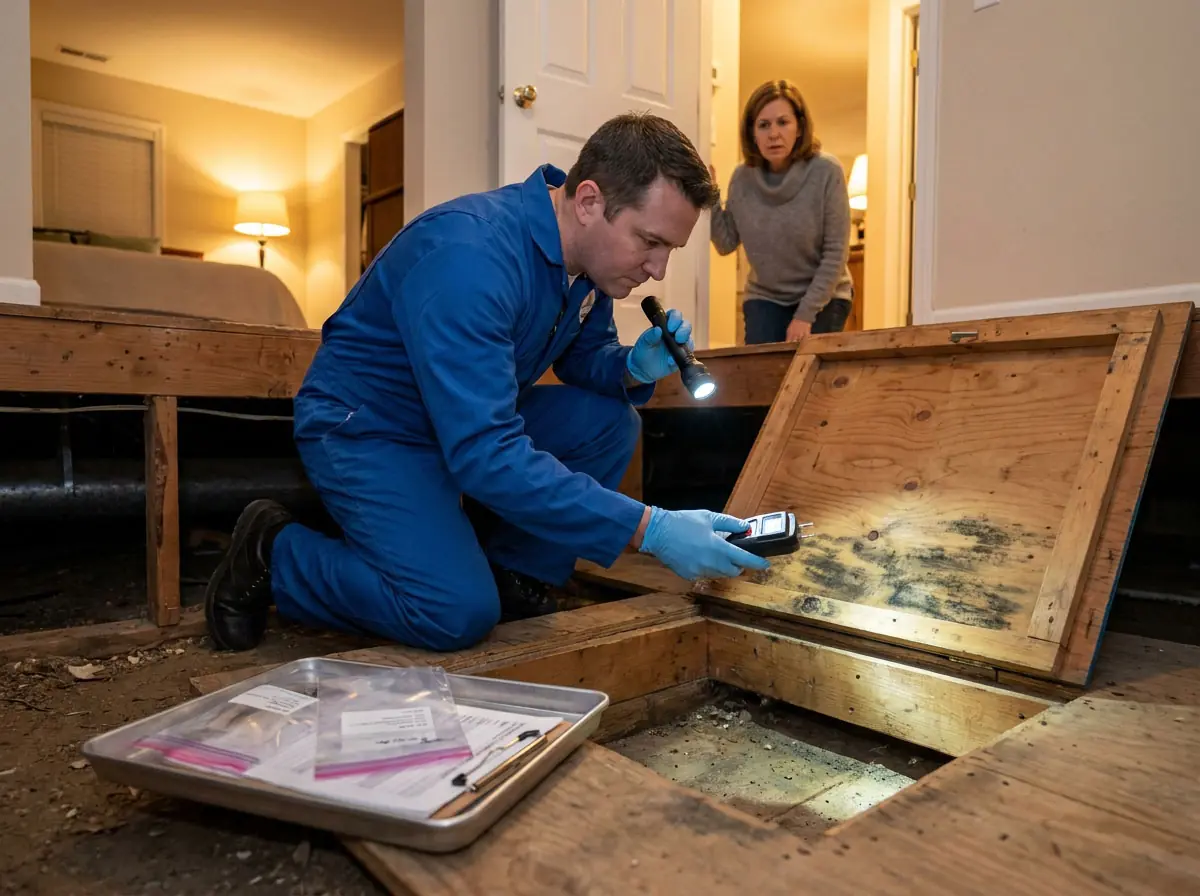
When water sits on or beneath your hardwood, it does not just affect the surface boards. The moisture creates a hidden breeding ground for mold colonies that can sprout within 48 to 72 hours. Once these spores take root in your subfloor, they compromise the structural integrity of your entire home foundation, leading to foul odors and potential health hazards for your family.
The biggest mistake homeowners make is assuming the floor is dry because the top feels moisture-free. You must address the space underneath the wood to stop rot from spreading. If you ignore the subfloor, you are essentially burying a ticking time bomb under your feet that will eventually cost you thousands in structural repairs.
Critical Steps for Subfloor Protection
- Remove baseboards to allow air circulation behind walls.
- Use professional-grade moisture meters to verify the subfloor is actually dry.
- Treat the area with antimicrobial agents to kill lingering spores.
- Ensure adequate ventilation in your crawlspace or basement.
Do not wait for the smell of mildew to tell you there is a problem. By the time you notice an odor, the mold has likely already burrowed deep into the wood fibers and the foundation below. Taking immediate action to dry the subfloor is the only way to avoid a full-scale demolition of your flooring investment.
Final Words
When your floors are drowning, hesitation is your biggest opponent. The difference between a restored heirloom and a pile of rotted wood often comes down to the decisions you make in the first sixty minutes after the spill.
If you suspect the moisture has already penetrated the finish, stop reading and start calling. Our team specializes in Hardwood Floor Water Damage remediation throughout the Omaha area, and we have the specialized drying equipment to pull moisture out from deep within the wood grain.
Before you commit to a DIY patch job, remember that hidden water is a ticking time bomb. Most homeowners fail to address these three critical areas:
- The invisible moisture trapped between the wood planks and the subfloor.
- The microbial growth that begins to thrive within 24 to 48 hours.
- The structural compromise of the joists underneath your living space.
We see the aftermath of store bought dehumidifiers and box fans every single day. Don’t let a minor plumbing mishap turn into a total renovation project. Your home is your most valuable asset, and those original hardwood floors are worth fighting for.
Reach out to us for a professional assessment the second you see warping or cupping. We provide the technical expertise to dry your floors properly so you never have to worry about rot or mold returning to haunt your home.
People Also Ask
Can hardwood floors be saved after water damage?
Yes, hardwood floors can often be restored if professional drying begins within 24 to 48 hours. Quick action prevents warping, cupping, and permanent structural damage to the wood fibers.How do I know if there is mold under my hardwood floors?
Common signs include a persistent musty odor, visible dark staining, or floorboards that feel soft and spongy underfoot. The EPA guidelines offer comprehensive information on identifying and managing indoor air quality issues related to moisture.Should I use a dehumidifier for wet hardwood floors?
While a dehumidifier helps lower ambient humidity, it is usually insufficient for drying water trapped beneath the surface of hardwood boards. Professional-grade equipment, such as floor drying mats and industrial air movers, is necessary to extract deep moisture effectively.Why are my Omaha hardwood floors cupping after a leak?
Cupping occurs when the underside of the floorboard absorbs more moisture than the top, causing the edges to swell and rise. This is a clear indicator of subfloor saturation that requires professional assessment to avoid long term damage.How long does it take for wet wood floors to dry?
Professional drying typically takes anywhere from three days to two weeks depending on the level of saturation and the type of wood. Using industrial technology is the most efficient way to ensure the material reaches a safe moisture content level before refinishing.Need Water Damage Restoration Services?
We provide rapid emergency water extraction and structural drying to restore your property in Omaha and surrounding areas (68102, 68106, 68114, 68124, 68130). Our team arrives quickly to mitigate damage and secure your home or business after water intrusion.
Request Price Estimate