


⚡ TL;DR: This guide provides homeowners in Olathe with essential steps for managing hardwood floor water damage, helping you decide when professional restoration is necessary to protect your valuable investment.
📋 What You’ll Learn
Discover how to protect your home from the devastating effects of hardwood floor water damage in Olathe, Kansas, by learning professional mitigation techniques that can save your investment from permanent ruin.
- Execute immediate damage control steps to prevent further saturation by learning exactly what to do during the critical first hour after a pipe burst or localized flood happens.
- Detect hidden moisture beneath surfaces by using advanced industry tools and assessment methods that professional restoration teams rely on to prevent mold growth and long term structural flooring failure.
- Restore cupped or buckled wood planks through proven professional techniques that carefully reverse warping and save your historic or modern hardwood floors from requiring a full and costly replacement.
- Analyze repair versus replacement costs using our comprehensive guide to help you make an informed financial decision when evaluating the severity of the damage to your home floors.
📖 Reading time: 8 min
✍️ Author expertise: Olathe water damage specialist with years of hands on restoration experience in local homes.
You wake up to the sound of water dripping, sprint to the living room, and find your beautiful hardwood floors cupping and buckling under a puddle of shame. That sinking feeling in your gut isn't just panic; it is the realization that your biggest home investment is literally rotting away before your eyes.
Most Olathe homeowners make the mistake of waiting for the boards to dry out on their own, hoping for a miracle that never comes. By the time you notice the dark stains or the warped edges, the moisture has already set up a permanent residence deep within your subfloor.
You have a very narrow window to stop the structural rot and save your expensive finish before you are forced to pay for a full replacement. Keep reading to discover the exact steps you must take right now to stop the damage in its tracks and protect your property value.

Immediate Mitigation Steps: The First Hour After Discovery
The first sixty minutes after a water intrusion are the difference between a simple repair and a total floor replacement. Your goal is to stop the spread of moisture before it migrates into the subfloor and joists.
Grab your gear and execute these steps immediately:
- Shut off the water source at the main valve to stop the flow.
- Use a wet vac or towels to remove standing water from the surface.
- Remove any furniture or rugs resting on the wet area to allow airflow.
- Turn on your HVAC system or portable fans to begin the drying process.
Avoid the temptation to use a heater or a hair dryer on the wood. Rapid heat causes the wood fibers to shrink too quickly, which forces the boards to crack or splinter beyond repair.
Instead, focus on extraction. The more water you pull out of the surface right now, the less chance you have of the wood absorbing enough moisture to warp permanently.
If the water source is contaminated, like a toilet overflow or sewage backup, do not touch the water. Call a professional team immediately, as you are dealing with a biohazard that poses a significant health risk to your family.
Moisture Assessment: How Professionals Track Hidden Saturation
You cannot fix what you cannot see. Just because the surface of your hardwood looks dry does not mean the moisture has vanished, as water loves to hide beneath the planks and inside the subfloor.
Our pros at Olathe restoration services use advanced moisture meters and thermal imaging cameras to identify exactly where the saturation is hiding. These tools allow us to pinpoint the affected zones without ripping up your entire floor unnecessarily.
Think of these tools as a digital X-ray for your home. We check for several critical red flags that your eyes will likely miss:
- Moisture content in the hardwood planks themselves.
- Water trapped between the floor boards and the subfloor.
- Humidity spikes inside the wall cavities near the spill.
- Saturation levels within the wooden joists beneath your feet.
If you skip this step, you are simply leaving a ticking time bomb under your floorboards. Trapped water will eventually warp your floor, crack your finish, and fuel a mold colony that can spread to your HVAC system. We don't guess when it comes to your property; we measure until the numbers hit a safe range.
Critical Restoration Techniques for Cupping and Buckling
When you see your floors begin to rise at the seams, you are witnessing cupping, which occurs as wood absorbs moisture and swells. Left untreated, this pressure leads to buckling, where the planks actually pull away from the subfloor entirely. You cannot simply blast a fan on these boards and expect them to lay flat again.
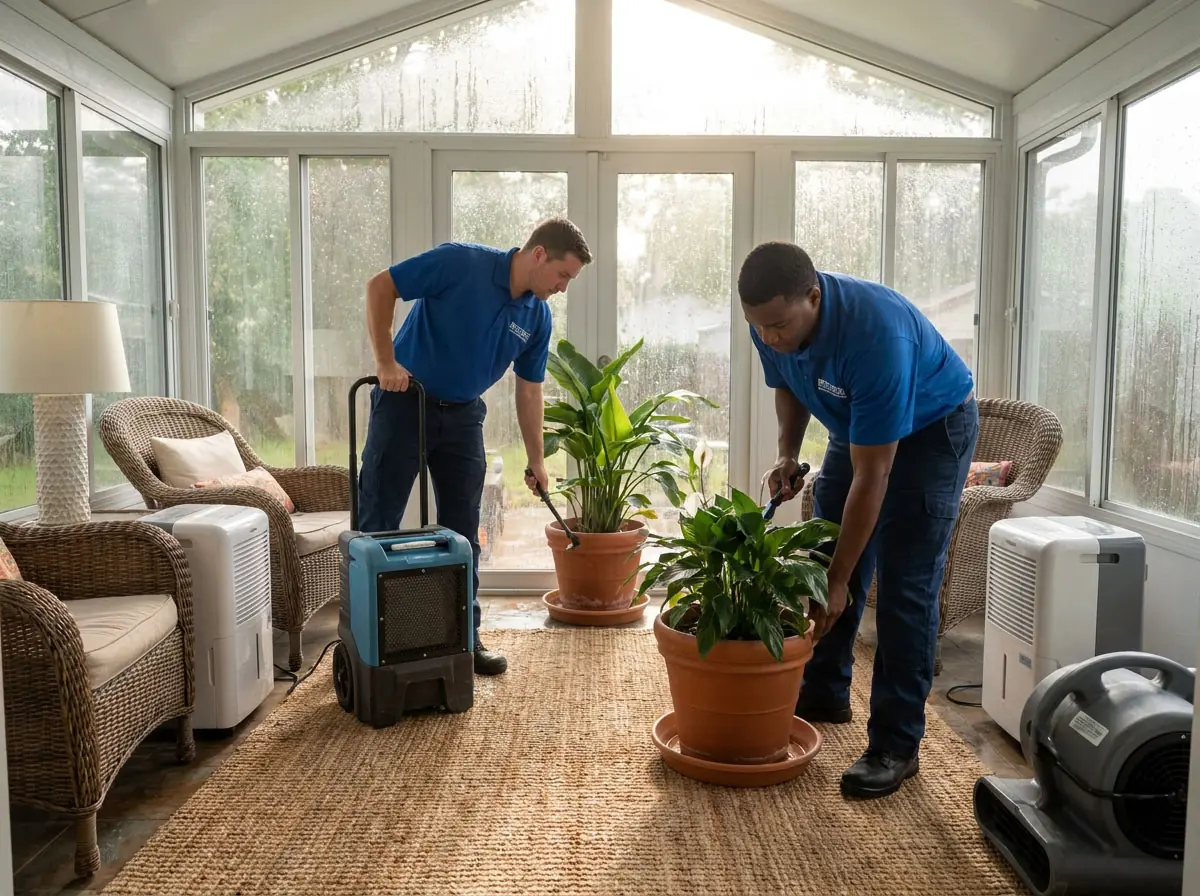
Our team relies on a specialized process called aggressive drying to pull moisture from the deep fibers of the wood. We use industrial-grade dehumidifiers and targeted airflow systems that force moisture out without causing the wood to crack or splinter. If we act fast enough, we can often reverse the warping before it becomes permanent structural damage.
The Core Restoration Steps
- Moisture Mapping: We identify exactly how deep the water has penetrated using non-invasive thermal imaging.
- Extraction: Specialized vacuum panels are placed directly on the floor to pull trapped vapor out of the wood cells.
- Equilibrium Recovery: We gradually bring the wood back to its natural moisture content to ensure the boards settle without new gaps appearing.
Trying to sand down cupped boards before they are bone-dry is a rookie mistake that guarantees future failure. Patience is your biggest asset here. By allowing the wood to reach its natural equilibrium, we preserve the integrity of your finish and ensure your investment remains solid for years to come.
Olathe Restoration Case Study: Rescuing Historic Oak Floors After a Burst Pipe
Last winter, a homeowner in the historic streets of Olathe faced a disaster when a supply line burst inside a kitchen wall. The water migrated under the baseboards, soaking the original 1940s white oak flooring across the entire main floor.
The owner initially tried to soak up the water with towels and fans. However, the boards began to lift within 48 hours. When our team arrived, the humidity levels under the floorboards were near saturation. We had to move fast to avoid a total teardown.
The Strategy for Preservation
We implemented a specialized drying plan to save the authentic wood rather than ripping it out for cheap laminate. Our approach focused on three critical phases:
- Injecting high-velocity, warm air directly into the floor system using a specialty drying mat system.
- Monitoring moisture content daily with non-invasive sensors to track progress deep inside the subfloor.
- Applying a controlled tensioning technique to help the wood lay flat as it released trapped moisture.
Because we caught the issue early, the floors slowly returned to their original position over the course of seven days. By avoiding aggressive heat, we prevented the wood from splitting or shattering. The owner saved thousands in replacement costs, and the original charm of their Olathe home remained completely intact.
Repair vs. Replace: A Comprehensive Comparison Table for Decision Making
Deciding between a restoration and a total overhaul is the biggest financial gamble you will face after a leak. Many Olathe contractors push for a full replacement because it is more profitable, but often, the original wood can be saved if caught early enough.
| Condition | Recommendation | Cost Impact |
|---|---|---|
| Minor cupping (edges only) | Sand and Refinish | Low to Moderate |
| Black mold or fungal growth | Immediate Replacement | High |
| Subfloor saturation | Remove and Replace | Very High |
| Loose boards or squeaking | Repair and Re-fasten | Low |
If you see cupping that spans the entire room, do not rush to call the flooring store just yet. Professional moisture mapping can tell us if the wood has reached its point of no return or if it is just holding surface humidity.
A smart homeowner looks at the subfloor condition before signing a contract. If the wood underneath is still solid and dry, save your wallet and stick with a restoration. If the structural integrity is compromised by rot, replacing the boards is the only way to avoid long-term structural collapse.
Key Factors That Tip the Scale
- Depth of moisture: Deep saturation usually demands a full rip-out.
- Wood species: Expensive exotics or historic oak are almost always worth the restoration cost.
- Age of floor: Thin veneers on engineered wood often fail after one water event, whereas solid hardwoods can be sanded multiple times.
Stop looking for a quick fix and start looking at the facts. Your floor might just need the right drying equipment and a master refinisher to look brand new again.
Why DIY Drying Methods Often Lead to Toxic Mold Growth
You might think a box fan and a dehumidifier from the hardware store are enough to dry your floors. In reality, these tools only address the surface moisture while leaving the dangerous stuff trapped underneath.
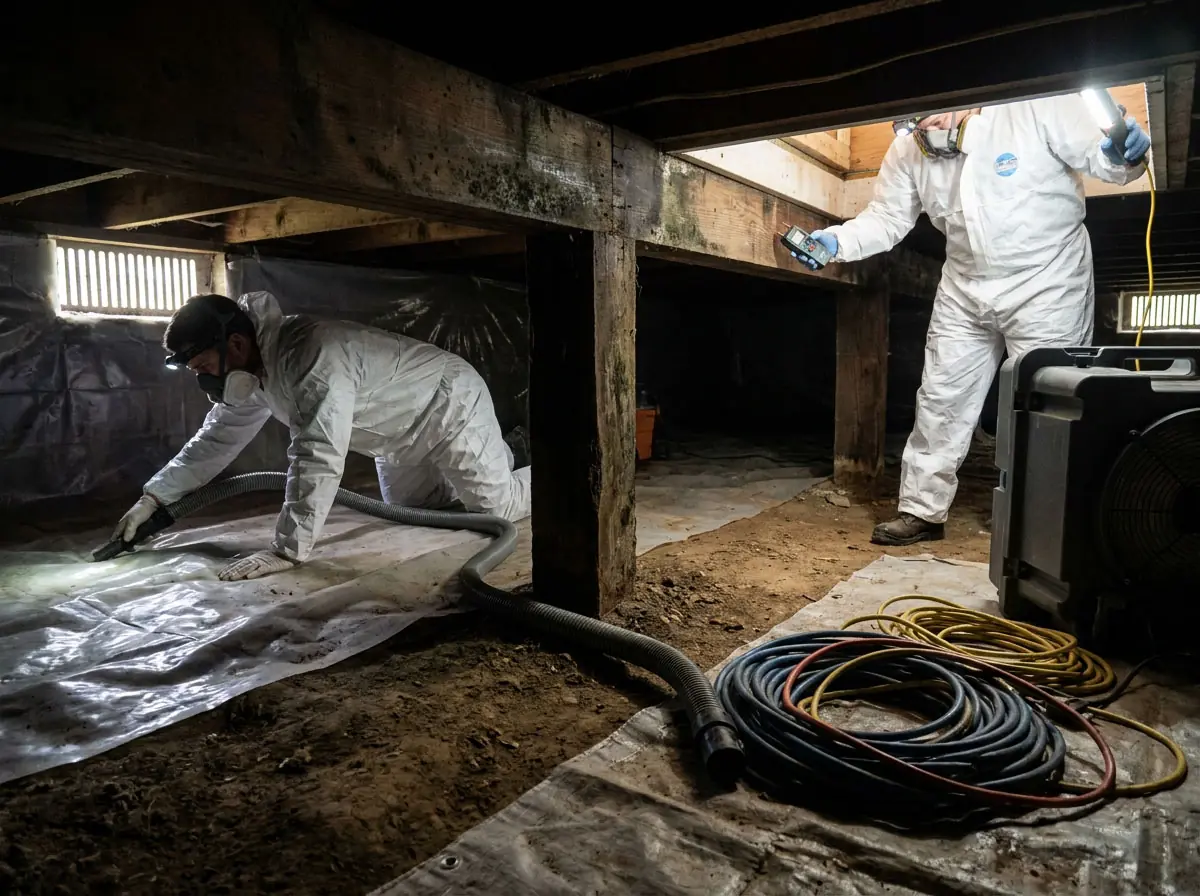
When you ignore the moisture locked inside the subfloor, you are essentially building a private sauna for mold colonies. Once those spores take root, they spread through the wood grain like wildfire, creating a toxic health hazard that hides just out of sight.
The Hidden Dangers of Amateur Drying
Relying on household fans often makes the problem worse. Moving air across a wet floor can actually force moisture deeper into the gaps between your boards or push it into the wall cavities. Here is why your DIY attempt might be backfiring:
- Surface drying traps humidity beneath the planks, which accelerates wood rot.
- Standard fans do not have the power to draw water out of the subfloor.
- Mold growth often begins within 24 to 48 hours of saturation.
- Household equipment cannot verify the exact moisture content of the wood.
Professionals use industrial-grade desiccant dehumidifiers and high-pressure drying mats that pull moisture out from the bottom up. By trying to dry it yourself, you often leave the foundation damp long enough for mold to become a permanent fixture. Don't gamble with your family's health or the integrity of your home for the sake of a quick fix.
Protecting Your Hardwood Investment for the Long Term
Your hardwood floors are not just a design choice; they represent a significant portion of your home equity. Once you have managed a crisis, the focus must shift to maintenance that stops future Hardwood Floor Water Damage before it starts.
Most damage happens behind the scenes where you cannot see it. Regular inspections are your first line of defense against long term decay.
Proactive Maintenance Strategies
Adopt these simple habits to keep your timber stable and beautiful for decades:
- Check your plumbing connections under sinks and behind refrigerators twice a year.
- Ensure your gutters are clear so water drains away from your foundation instead of seeping inward.
- Use high-quality floor mats at every exterior door to catch moisture before it hits your finish.
- Monitor your indoor humidity levels during the wild Kansas seasonal swings.
Consider installing a smart leak detection system near your water heater or laundry room. These inexpensive sensors send an alert to your phone the second they detect a single drop of stray water.
Stopping a disaster at the source is infinitely cheaper than calling a restoration crew at three in the morning. When you keep your subfloor dry and your humidity stable, your wood stays flat, tight, and incredibly valuable.
People Also Ask
Can hardwood floors be repaired after water damage?
Yes, many hardwood floors can be restored if the water damage is addressed immediately by professionals. Using specialized drying equipment helps remove moisture from deep within the wood fibers to prevent permanent warping.How long does it take for mold to grow on wet hardwood floors?
Mold can begin to colonize damp materials in as little as 24 to 48 hours if moisture is not properly extracted. Following environmental protection guidelines is crucial to stopping spore growth before it impacts your indoor air quality.Is it cheaper to refinish or replace water damaged flooring?
Refinishing is typically more cost effective if the subfloor remains intact and the wood has not suffered extensive rot or structural warping. Professionals will evaluate the level of cupping or buckling to determine if the material can be saved or if total replacement is necessary.What are the signs that my hardwood floors have water damage?
Common indicators include visible cupping at the edges of boards, crowning in the center, or a noticeable squeaking sound when you walk across the floor. You might also detect a musty odor, which often signals that moisture has trapped beneath the surface.Should I use a dehumidifier to dry my Olathe hardwood floors?
While a standard household dehumidifier can help with surface moisture, it is rarely enough to draw water out of saturated floorboards and subflooring. You need industrial grade drying equipment to reach the hidden pockets of moisture that cause long term damage.Need Water Damage Restoration Services?
We provide rapid water damage restoration and structural drying services to restore your property in Olathe and surrounding communities (66061, 66062, 66213, 66215). Our team arrives immediately to mitigate damage and return your home or business to a safe, dry condition.
Request Custom Estimate