


⚡ TL;DR: This guide provides Newport Beach homeowners with essential strategies for crawl space water removal, effective damage mitigation techniques, and professional solutions to protect coastal properties from moisture issues.
📋 What You’ll Learn
Protect your Newport Beach property from coastal moisture issues by learning the professional methods required to effectively extract water, remediate humidity, and restore the structural integrity of your home's crawl space.
- Identify specific flooding causes common to local Newport Beach soil and coastal topography to ensure you address the root source of water intrusion rather than just the visible symptoms.
- Implement immediate mitigation steps to safely stabilize your home environment and minimize long term damage to floor joists and insulation before our professional restoration team arrives on your property.
- Select effective extraction methods tailored for coastal homes by reviewing our detailed comparison of remediation services, equipment types, and average costs for local property owners in the area.
- Apply structural restoration strategies specifically designed for our humid climate to successfully dehumidify your crawl space and prevent future mold growth, rot, and potential foundation settlement issues.
📖 Reading time: 8 min
✍️ Author expertise: Newport Beach restoration specialist with extensive field experience managing coastal water damage repair projects.
You bought a home in Newport Beach for the lifestyle, not to host a private swamp underneath your living room floor. Most homeowners ignore that dark, damp space until the smell of mold creeps up through the floorboards or the wood starts to rot.
Water sitting in your crawl space is a ticking time bomb for your foundation and your health. If you are noticing soft spots in your flooring or high humidity inside your home, the clock is already running.
Ignoring this moisture will cost you thousands in structural repairs and ruined insulation. Here is exactly what you need to know to get that water out and keep your home solid.

Identifying the Specific Causes of Crawl Space Flooding in Newport Beach Homes
Newport Beach homes face unique threats that don't apply to inland properties. Our coastal proximity means high water tables and salty air that eats away at protective coatings, leaving your subfloor vulnerable.
The primary culprit is often poor drainage during our seasonal king tides or heavy winter rains. When the ground becomes saturated, the water has nowhere to go but into the lowest point of your property, which is usually your crawl space.
Common Sources of Intrusion
- Broken irrigation lines hidden beneath your foundation that leak silently for months.
- Foundation cracks that allow groundwater to seep through during high tide cycles.
- Inadequate vapor barriers that trap condensation from the humid ocean air.
- Faulty grading around the perimeter that directs roof runoff directly toward the crawl space vents.
You might think a little moisture is normal for a beach house, but that is a dangerous myth. Standing water creates a petri dish for mold spores to travel upward through your HVAC ducts.
This hidden decay damages your wooden floor joists and eventually compromises the integrity of your entire home. If you suspect an issue, you must inspect the drainage pathways immediately before the wood begins to soften or warp.
Immediate Steps to Mitigate Damage Before Professional Help Arrives
When you discover standing water under your Newport Beach home, time is your worst enemy. Your priority is to stop the water source without endangering yourself, so shut off the main water valve if you suspect a plumbing leak. If the water is rising due to external coastal flooding or heavy rain, stay out of the crawl space entirely to avoid electrical shock from submerged wires or pumps.
Once you confirm the area is safe to approach from the outside, take these quick actions to stop the spread of moisture:
- Move any portable storage items or cardboard boxes away from the wet zone to prevent mold spores from feeding on the paper.
- Clear away debris like leaves or trash from exterior foundation vents that might be blocking natural airflow.
- Use a wet-dry vacuum only if the standing water is minimal and you have a safe, dry path to move the unit.
Do not try to clear large volumes of water yourself if the foundation walls look unstable. The structural integrity of your home is worth more than the cost of a emergency service call. Safety comes first; if you smell sewage or notice sparking near the crawl space, get out immediately and call for expert intervention.
Professional Extraction Methods for Complete Moisture Removal
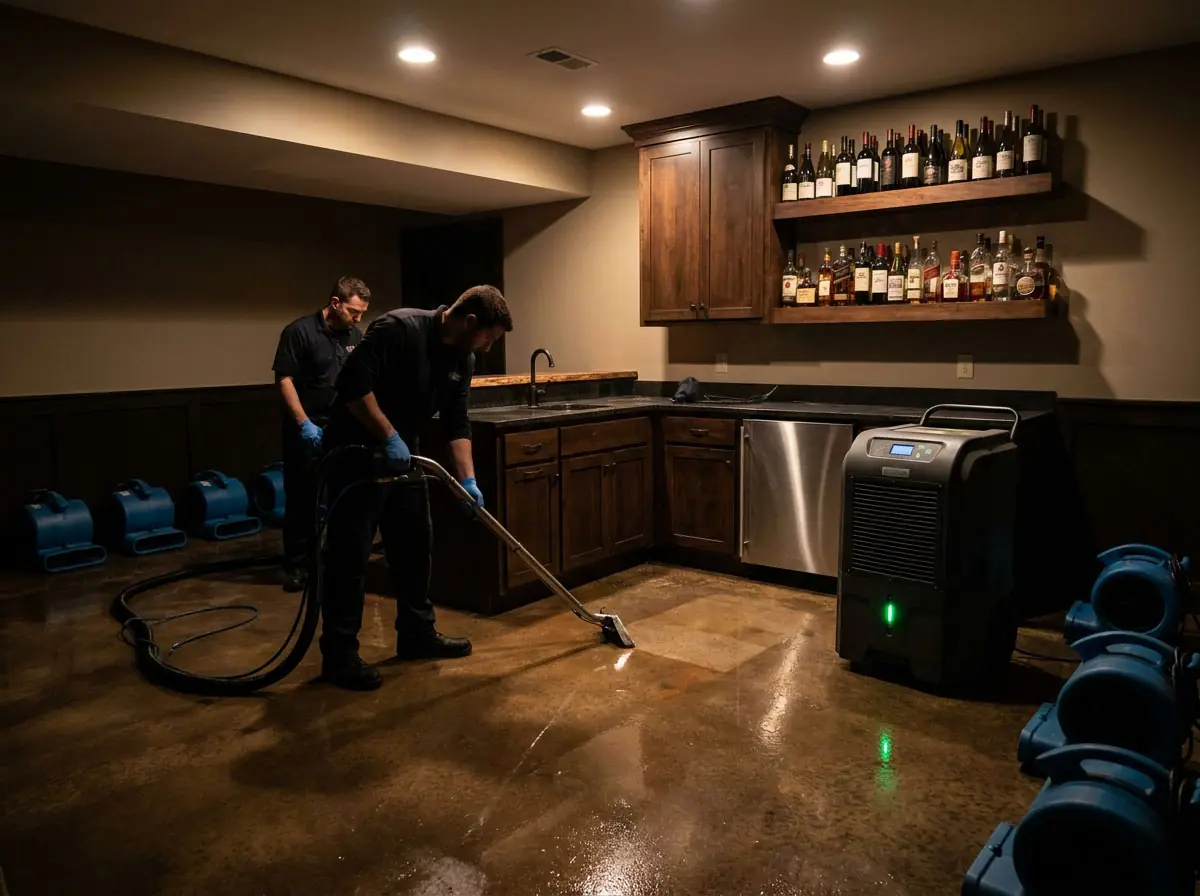
When standing water invades your crawl space, store-bought wet-dry vacuums simply won't cut it. You need industrial-grade equipment to reach the hidden pockets of moisture that threaten to compromise your home's integrity.
Our technicians deploy high-powered, truck-mounted extraction systems designed to pull liquid out of tight, cramped areas. This process prevents the water from seeping further into the joists and subflooring of your Newport Beach property.
The Extraction Process Explained
We rely on a systematic approach to ensure your space is bone-dry before we move on to restoration. Here is how our professional extraction protocol works:
- Submersible Pumping: If there is significant standing water, we use heavy-duty submersible pumps to move the bulk of the liquid outside.
- High-Velocity Extraction: We utilize specialized suction wands that fit between floor joists to pull moisture from soil, vapor barriers, and insulation.
- Sanitization Treatment: Because crawl space water is often contaminated with sewage or debris, we apply hospital-grade biocides to prevent mold colonies from taking root.
Removing the water is only the first half of the battle. We must then address the residual capillary moisture that stays trapped inside porous materials like wood and concrete.
Without deep-level extraction, your home remains vulnerable to secondary damage. We prioritize speed and precision to protect your investment from long-term structural decay.
A Comparison of Moisture Remediation Costs and Service Options
When you discover standing water under your Newport Beach home, the price tag depends entirely on how long the water has been sitting. Minor seepage might only require a simple pump out, while a major flood involves structural drying and insulation replacement. You need to understand the breakdown of these costs so you can make a smart financial decision for your property.
| Service Type | Estimated Cost Range | Typical Timeline |
|---|---|---|
| Basic Water Extraction | $500 - $1,200 | 1-2 Days |
| Full Dehumidification Package | $1,500 - $3,500 | 3-5 Days |
| Insulation Removal & Disposal | $2,000 - $4,500 | 2-4 Days |
| Mold Remediation & Sanitization | $2,500 - $6,000+ | 5-7 Days |
Do not wait for a formal quote before realizing that hidden moisture destroys value every single hour. Professional extraction services typically include a thorough inspection to identify if the water came from a burst pipe or groundwater intrusion. You pay for the expertise required to dry out the joists and subflooring before the rot sets in.
Service options generally fall into these three categories to keep your home safe:
- Emergency Extraction: High capacity pumps to remove standing water immediately.
- Structural Drying: Industrial grade dehumidifiers that pull moisture from wood and concrete.
- Sanitization: Removing contaminated insulation and applying antimicrobial agents to prevent mold growth.
Choosing the right plan means looking at the long term health of your foundation rather than just the immediate bill. If you opt for a cheap fix today, you will likely pay double when the mold returns in six months. Invest in a complete dry out to protect your investment for years to come.

Structural Restoration and Dehumidification Strategies for Coastal Properties
Newport Beach properties face a unique threat from salt air and high groundwater tables. Once we pump out the standing water, the real work begins because saturated wood beams and damp insulation are breeding grounds for mold. We rely on industrial-grade dehumidification to force moisture out of the microscopic pores in your floor joists and subflooring.
Without aggressive drying, the structural integrity of your home remains in jeopardy. We implement a multi-stage approach to restore your crawl space to a dry, healthy state:
- HEPA air scrubbing to remove airborne mold spores and contaminants.
- Installation of high-capacity vapor barriers to seal out rising dampness from the soil.
- Strategic placement of professional desiccant dehumidifiers that operate even in high-humidity coastal climates.
- Structural sanitization to kill bacteria left behind by floodwater or sewage intrusion.
Ignoring the hidden moisture in your joists leads to wood rot and termite attraction, which turns a small water issue into a massive renovation project. We use moisture meters to track the drying progress in real-time, ensuring we hit the specific target levels required to stop decay. When the wood reaches a safe moisture content, we can then safely replace damaged insulation and restore your home to its original, solid condition.
Successfully Resolving Severe Drainage Issues in a Balboa Island Residence
We recently handled a crisis at a historic cottage on Balboa Island where the homeowners were fighting a losing battle against the high water table. Every high tide pushed brackish water through the foundation vents, turning their crawl space into a saltwater lagoon that was rapidly rotting the subflooring.
The situation was dire because the moisture had reached the electrical subpanels and began compromising the structural integrity of the wooden piers. The owners had tried using consumer-grade sump pumps, but the volume of incoming water quickly burned out their equipment. We had to move fast to stop the decay before the mold spores migrated into the main living areas.
Our team implemented a three-phase recovery plan that transformed a recurring disaster into a dry, stable environment. We focused on permanent solutions rather than temporary fixes:
- Engineered an interior perimeter drain system to capture intruding water before it could pool.
- Installed a high-capacity, sealed-sump basin with dual-pump redundancy.
- Encapsulated the entire crawl space using a heavy-duty vapor barrier to block rising soil moisture.
By sealing the space completely, we stopped the humidity from rising through the floorboards. The air quality in the home improved within forty-eight hours, and the persistent damp, earthy odor vanished entirely. Now, even during the highest tides of the season, the crawl space remains bone-dry and protected.
Final Words
Waiting for the water to dry on its own is a massive gamble that you will lose. Newport Beach homes are particularly vulnerable to salt air and high water tables, which makes professional intervention mandatory.
Ignoring the problem is effectively setting fire to your home equity. If you suspect moisture buildup, take action before the wood rot spreads to your main floor joists.
Protecting Your Investment
Your goal is to stop the cycle of recurring moisture before it compromises your home value. Regular inspections are the only way to catch leaks early. If you need a reliable team to handle the heavy lifting, explore our Crawl Space Water Removal services to get your home back in order.
Consider these preventative measures to keep your subfloor dry for years to come:
- Install a high-capacity sump pump if your lot sits below the street grade.
- Replace torn vapor barriers immediately to stop moisture migration.
- Keep your downspouts extended at least six feet away from the foundation walls.
- Seal every entry point to block humidity from pulling in ocean air.
Do not let a minor puddle transform into a structural disaster. Getting the moisture out now saves your wallet from the massive repair bills that come with foundation failure later.
People Also Ask
How much does crawl space water removal cost in Newport Beach?
The cost of water removal varies depending on the volume of standing water, the presence of mold, and the complexity of the drainage issues. Most property owners can expect to pay based on the total square footage and the intensity of the extraction equipment required for the job.Why is my Newport Beach crawl space constantly damp?
Coastal properties often experience high humidity and shallow water tables that lead to moisture intrusion beneath the home. According to the EPA guidelines, moisture control is the most important factor in preventing structural rot and poor indoor air quality.Is crawl space flooding covered by homeowners insurance in California?
Coverage depends on the specific cause of the flooding, such as a burst pipe versus gradual seepage or rising groundwater. You should review your policy carefully and document all damage immediately to assist with your claims process.Can I fix crawl space water issues myself?
While you can clear minor debris, professional equipment is necessary to ensure complete moisture extraction and structural drying. Improper removal often leads to trapped humidity, which can result in long term wood rot and harmful mold growth.How do I prevent future water buildup under my house?
Preventative measures include installing a high quality sump pump, improving exterior grading, and sealing foundation vents. Maintaining a proper vapor barrier is also essential for protecting your Newport Beach home from the unique challenges of a coastal climate.Need Water Damage Restoration Services?
We provide rapid water damage extraction and structural drying to restore your Newport Beach property immediately. Our team arrives quickly to stop secondary damage and return your home or business to pre-loss condition (92660, 92661, 92662, 92663).
Request Custom Estimate