


⚡ TL;DR: This guide helps homeowners identify the sources of ceiling water damage in Newport Beach, providing practical steps to manage repairs and protect your property from coastal moisture issues.
📋 What You’ll Learn
Discover how to navigate ceiling water damage in your Newport Beach home by mastering proven identification techniques that prevent structural decay and costly repairs caused by our unique coastal environment.
- Identify hidden leak sources effectively by analyzing specific moisture patterns, discoloration indicators, and common saltwater corrosion issues that frequently impact properties located throughout the Newport Beach coastline.
- Follow a structured investigation process to trace water pathways behind your drywall, allowing you to locate the origin of the infiltration before it causes significant secondary damage.
- Utilize our comprehensive inspection checklist to rapidly assess your ceiling for warning signs, ensuring you catch potential pipe leaks or storm water breaches during their earliest stages.
- Implement professional mitigation strategies to protect your home from long term structural wood rot and dangerous mold growth that often follows persistent water leaks in coastal climates.
📖 Reading time: 8 min
✍️ Author expertise: Newport Beach restoration specialist with two decades of local disaster recovery field experience.
You wake up to the sound of a slow, rhythmic drip echoing through your Newport Beach home, only to find a sickening yellow stain blooming across your ceiling. It is the kind of discovery that ruins your morning and threatens the structural integrity of your biggest investment.
Most homeowners panic and start hacking away at their drywall, but that is a quick way to turn a manageable repair into a massive restoration bill. You need to stop guessing and start hunting for the actual culprit before the water travels further into your joists.
Finding the source of a leak requires a detective mindset and a bit of local knowledge about our coastal climate. Here is how you can pinpoint exactly where that moisture is coming from and stop the damage before it spreads.

The Anatomy of a Ceiling Leak: Assessing Moisture Patterns and Color Indicators
Before you grab a ladder, look at the shape of the stain. Water is a master at playing hide and seek; it rarely drips directly beneath the source. Instead, it travels along joists, wires, and pipes until it finds a low point to gather.
A perfectly circular spot often points to a concentrated, slow drip from a plumbing fixture or a condensation issue. If you see a long, jagged streak stretching across your drywall, the water is likely tracking down a wooden beam or a piece of cabling from several feet away.
Pay close attention to the hue of the blemish, as it reveals the age and nature of the liquid. Use this color guide to identify the severity:
- Bright Yellow or Tea Colored: This usually indicates water filtering through wood or insulation. It is a sign of a recent leak that is actively soaking into your structure.
- Dark Brown or Black: This is a red flag for long term moisture. You are likely dealing with deep saturation and a high risk of hidden mold colonization.
- White, Chalky Crust: This is often efflorescence. It happens when water dissolves minerals in your building materials and leaves them behind as it evaporates.
Check for sagging drywall or bulging paint around the edges of the stain. If the surface feels spongy to the touch, the saturation is severe. At this stage, the water has compromised the structural integrity of the material, and you need to act before a ceiling collapse occurs.
Common Newport Beach Culprits: From Salt Air Corrosion to Coastal Storm Infiltration
Living in Newport Beach brings the beauty of the Pacific, but it also subjects your home to aggressive salt air. This constant salinity acts like a slow-moving wrecking ball for your home’s metal components, especially plumbing fittings hidden behind your walls.
Over time, this corrosive air eats through copper pipes and flashing, creating pinhole leaks that bleed moisture into your ceiling long before you see a single drip. It is not always an old plumbing disaster; sometimes, it is just the relentless chemistry of our coastal climate.
Beyond the pipes, our seasonal storms and high humidity play a massive role in ceiling distress. When the winter rains hit our coastal bluffs, even a tiny crack in your exterior stucco or a misaligned roof tile allows water to travel horizontally across your ceiling joists.
It can enter through an upstairs window frame or a ventilation port and travel several feet before it finally pools and saturates the drywall. This is exactly why the spot on your ceiling rarely sits directly under the actual breach in your roof or wall.
Typical Newport Beach Leak Sources
- Salt-corroded copper pipe joints inside wall cavities.
- Failed flashing around chimneys or skylights due to ocean air exposure.
- Leaking second-story balcony drains that have trapped sand and debris.
- Wind-driven rain infiltrating poorly sealed window frames during heavy coastal storms.
- Condensation buildup from HVAC ducts running through uninsulated attic spaces.
Step-by-Step Investigation: Tracing Water Pathways Behind Your Drywall
Most people make the mistake of assuming the leak is located exactly where the stain appears. Water is a master of deception; it travels along pipes, joists, and electrical wiring before finally soaking through your ceiling plaster.
To find the real entry point, start by clearing the area above the drip if you have attic access. Look for glistening trails or salt deposits that indicate a long term, slow intrusion rather than a sudden burst.
Probing the Path of Least Resistance
If you cannot enter the attic, you must track the movement of the water by evaluating the local geography of your home. Follow these steps to map the migration of the moisture:
- Inspect the plumbing stacks and vents located directly above the damp patch.
- Check for sagging insulation, which acts like a sponge and often holds the key to the moisture origin.
- Look for rusted nail heads near the ceiling joists, as these often bleed rust colored streaks when moisture is present.
- Use a non invasive moisture meter to test the drywall in a grid pattern moving away from the stain.
Water always follows gravity, but it also clings to surfaces through surface tension. If you see a wet spot on the ceiling, search the area directly above it for any gaps in the flashing or roof penetrations. In Newport Beach homes, coastal winds often drive rain underneath shingles or into improperly sealed HVAC roof curbs.
Essential Warning Signs and Inspection Checklist Table for Rapid Leak Identification
Most Newport Beach homeowners wait until water is actively dripping to take action. By then, the damage is already deep inside your structural framework. You must learn to spot the silent red flags before they evolve into a full blown emergency.
| Indicator | Likely Source | Urgency Level |
|---|---|---|
| Yellowish ring stain | Slow pipe joint leak | Moderate |
| Musty, damp odor | Hidden mold colonization | High |
| Bubbling ceiling paint | Active roof infiltration | Extreme |
| Sagging drywall | Pooling water above | Immediate |
| Rusted nail heads | Condensation or attic leak | Moderate |
Look closely at your ceiling during different times of the day. Natural light from your windows can reveal subtle texture changes or ripples that vanish under artificial lighting. If you find a spot that feels soft or spongy to the touch, do not ignore it. That is a primary indicator that the moisture has already compromised the drywall integrity.
Use this quick inspection checklist to conduct your own investigation. If you check off more than two of these, it is time to call in the professionals before your ceiling collapses.
- Check for dark brown or black spots near light fixtures or ceiling fans.
- Inspect your attic space for damp insulation or white salt deposits on wood beams.
- Listen for faint hissing sounds that indicate high pressure pinhole leaks.
- Check the exterior fascia boards for gaps that let coastal moisture inside.
- Look for peeling wallpaper or trim that has pulled away from the wall.

Mitigating Hidden Pipe Corrosion in a Balboa Peninsula Property
We recently handled a challenging case in a classic Balboa Peninsula bungalow where the homeowner noticed a recurring damp spot on the ceiling. It appeared after every high tide, which led the owner to assume a roof leak caused by coastal spray.
Upon closer inspection, we discovered the issue had nothing to do with the roof. Instead, pinhole leaks in copper plumbing were being accelerated by the harsh salt air creeping into the wall cavities.
The moisture had traveled horizontally along a joist, creating a confusing trail that misled the owner for weeks. By the time we opened the ceiling, the wood was already showing early signs of surface decay.
Key Findings from the Investigation
Our team identified three specific factors that allowed this hidden damage to persist:
- The coastal salt air reacted with microscopic cracks in the aging pipes.
- Water followed the path of least resistance along electrical wiring, far from the actual leak source.
- Slow evaporation in our humid climate kept the drywall damp, preventing the telltale crusty mineral buildup usually seen with leaks.
If you suspect your pipes are failing, do not wait for the ceiling to sag or cave in. Catching corrosion in its early stages saves thousands in potential floor and subfloor repairs.
Professional Mitigation Strategies to Prevent Structural Wood Rot and Mold Growth
Once you locate the leak, your immediate goal is to halt the moisture cycle before it turns into a structural catastrophe. Water in a Newport Beach ceiling rarely stays put; it migrates along joists and settles in insulation, creating a perfect petri dish for toxic mold.
You need to act with surgical precision to save your property value. If you leave damp, porous materials inside your walls, the wood starts to rot and the drywall becomes a breeding ground for spores within forty eight hours.
Recommended Mitigation Steps
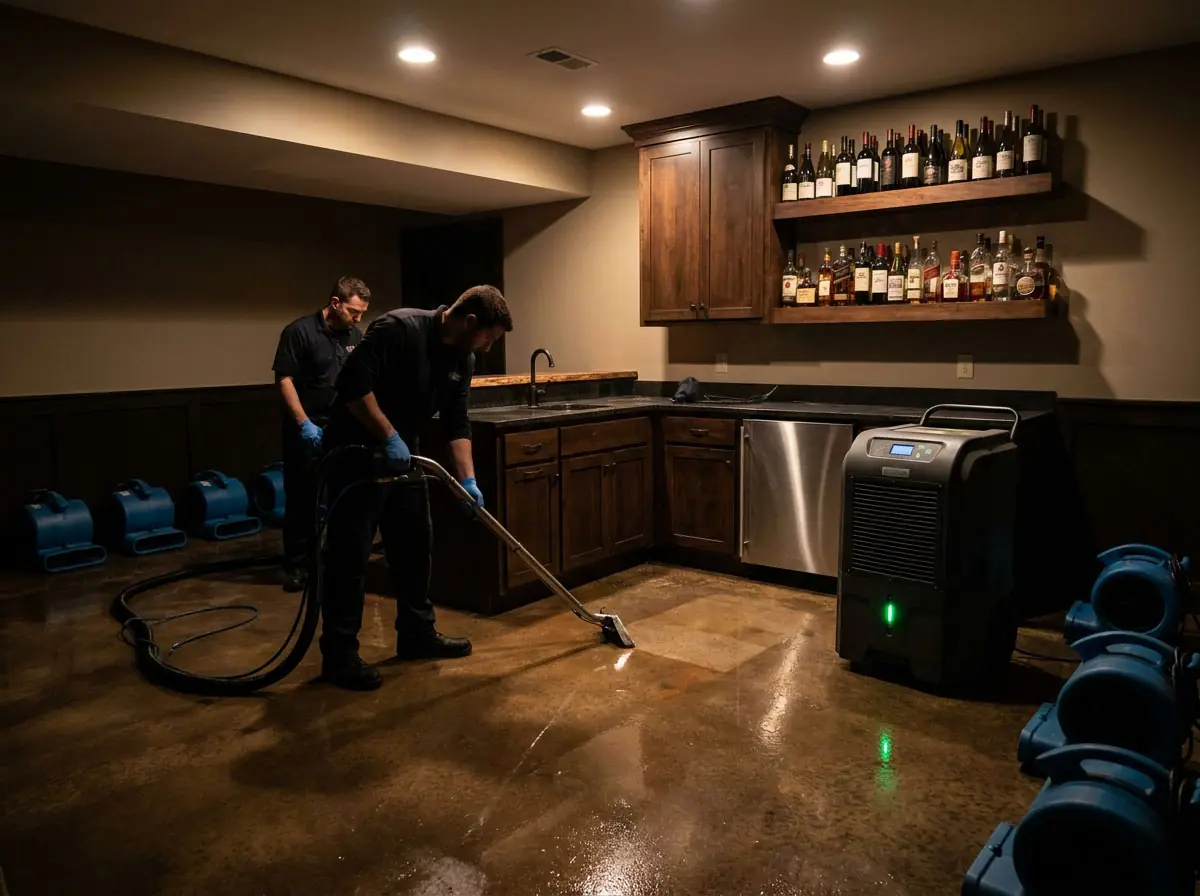
- Extract standing water immediately using a shop vacuum or professional water extraction equipment.
- Remove saturated insulation from the ceiling cavity, as it will never dry out properly on its own.
- Apply professional grade antimicrobial treatments to joists and studs to kill dormant mold spores.
- Set up high velocity air movers and dehumidifiers to force evaporation inside the wall structure.
Professional restoration crews use thermal imaging cameras to track hidden moisture that your eyes cannot see. By drying the building materials behind the surface, we stop the chemical breakdown of wood fibers that leads to sagging ceilings and structural failure.
Ignoring these professional methods often leads to recurring damage and expensive secondary repairs later. It is far cheaper to properly dehumidify the area now than it is to replace entire structural beams after the wood has crumbled.
Final Words
Water does not play fair in a coastal town like Newport Beach. If you ignore that wet spot today, you are practically inviting rot and black mold to make themselves at home in your drywall by next week.
Most people try to patch the ceiling and hope for the best, but that is a dangerous gamble. If you do not resolve the root cause, the water will simply move to a new location, leaving you with even deeper structural headaches.
When in doubt, it is always better to bring in the pros who deal with Ceiling Water Damage Repair every single day. We have the moisture meters and thermal imaging tools to find the hidden leaks that the human eye simply cannot see.
Protecting Your Investment
Your home is likely your biggest asset, so do not let a minor drip turn into a total disaster. Catching the moisture early saves you thousands in reconstruction costs and keeps your indoor air quality safe for your family.
- Inspect your attic after every heavy rainstorm.
- Check your roof flashing for salt air degradation.
- Call a specialist the moment you spot a yellow ring.
Stop stressing over the drip and get it fixed right the first time. Time is your biggest enemy when it comes to water damage, so act now to keep your Newport Beach property solid and dry.
People Also Ask
How can I tell if ceiling water damage is from a roof leak or a plumbing issue?
Roof leaks typically appear during or shortly after rain and may show moisture patterns that track from the exterior wall inward. Plumbing leaks often occur at any time, frequently leaving concentrated, circular stains that may feel warm to the touch if the water source is from a hot water line.What are the common causes of ceiling water damage in Newport Beach homes?
Coastal properties frequently suffer from salt air corrosion that weakens pipes and exterior seals over time. Additionally, heavy coastal storm surges and intense rain events can overwhelm older roofing systems, leading to water infiltration into the attic space.Is ceiling water damage dangerous to my family's health?
Yes, trapped moisture behind drywall becomes a breeding ground for harmful fungal growth in less than 48 hours. Proper mold remediation is essential to ensure your indoor air quality remains safe and breathable.How do I stop a ceiling leak before help arrives?
If you can safely access the area, place a bucket underneath the drip and use a screwdriver to poke a small hole in the center of the blistered paint to release pooled water. This helps prevent the ceiling material from collapsing under the weight of the trapped liquid.Should I document ceiling water damage for my insurance company?
Yes, take clear, date-stamped photographs of the affected ceiling area and any damaged personal belongings before starting any cleanup. Providing detailed documentation is critical for streamlining your claim process and ensuring your insurance provider understands the full scope of the repair needs.Need Water Damage Restoration Services?
We provide rapid water damage extraction and structural drying to restore your Newport Beach property immediately. Our team arrives quickly to stop secondary damage and return your home or business to pre-loss condition (92660, 92661, 92662, 92663).
Request Custom Estimate