


⚡ TL;DR: This guide reveals how professional mold remediation in Miami Gardens prevents recurring infestations by addressing hidden moisture sources, using proper engineering controls, and protecting your indoor air quality.
📋 What You’ll Learn
Tackling mold in Miami Gardens requires specific strategies due to our unique tropical climate. This guide reveals professional secrets for identifying, containing, and permanently removing mold growth from your South Florida property.
- Understand why bleach often fails because household cleaners frequently feed mold colonies instead of killing them, causing the infestation to spread deeper into porous drywall and wood surfaces.
- Detect hidden moisture behind walls by learning how to trace leaks caused by Florida humidity and plumbing failures that create the perfect breeding ground for toxic mold growth.
- Master advanced containment techniques used by remediation experts, including the use of negative air pressure and specialized sealing to prevent microscopic spores from contaminating the rest of your home.
- Protect your family and air quality by implementing professional strategies to sanitize your HVAC system, ensuring that mold spores are not continuously circulated through your property after the cleanup.
📖 Reading time: 8 min
✍️ Author expertise: Certified water damage professional with a decade of mold remediation experience in Miami Gardens.
You wake up in your Miami Gardens home, breathe in, and immediately feel that unmistakable, musty heaviness in your lungs. You try to scrub away the dark spots on the wall, but they keep coming back, growing like an unwanted guest that refuses to leave.
Most homeowners assume a little bleach and elbow grease will solve the problem. They are wrong, and that mistake is costing them thousands in property damage and long-term health issues.
There is a specific playbook that mold remediation companies use to keep you dependent on their services while keeping the real solutions behind a curtain of industry jargon. I am pulling that curtain back to show you exactly how to kill the growth for good, starting with the hidden truths most contractors hope you never discover.
Keep reading to uncover the specific steps you need to take before that infestation spreads into your air ducts and settles deep into your drywall.

The Bleach Myth: Why Household Cleaners Fuel Mold Growth
Here is the cold, hard truth: bleach does not kill mold on porous surfaces. When you spray bleach on drywall, wood, or carpet, the chlorine sits on the surface while the water content soaks deep into the material.
You might think you won because the mold disappears for a few days. In reality, you just fed the colony the exact moisture it needed to sink its roots deeper into your home.
The mold goes dormant for a moment, but the moisture guarantees a stronger, more aggressive return. This is the biggest mistake Miami Gardens homeowners make, and it is exactly how small surface stains turn into a full property gut job.
Why Bleach Fails You Every Time
- Bleach is a water based solution, providing hydration to hungry mold spores.
- The chemical structure of bleach prevents it from penetrating porous materials like drywall or studs.
- The dead mold remains on the surface, still containing toxic mycotoxins that trigger allergies and respiratory distress.
- You are essentially misting your walls with the primary ingredient mold uses to replicate.
Stop reaching for the household cleaners if you actually want to solve the problem. If you cannot see behind the drywall or under the floorboards, you are just painting over a disaster waiting to happen.
True remediation is not about scrubbing; it is about removing the source of moisture and eliminating the colony at the molecular level. Anything less is just a temporary cosmetic fix that compromises your family's health.
Detecting Hidden Moisture Pathways in South Florida Properties
In the humid climate of Miami Gardens, water is rarely where you see it. Mold doesn't just sit on the surface; it thrives behind your baseboards and inside wall cavities, fed by microscopic leaks that go unnoticed for months.
Pros know that if you have mold, you have a moisture source that is likely hidden from the naked eye. We don't just look at the wall, we look for the trail.
Common Moisture Culprits
- Pin-hole leaks in copper plumbing hidden within interior walls.
- Condensation buildup caused by improperly insulated HVAC ducts in attics.
- Vapor drive from concrete slabs soaking up ground moisture during heavy rainy seasons.
- Poorly sealed window frames that allow humid air to penetrate the drywall perimeter.
To find these killers, we use specialized equipment like thermal imaging cameras and moisture meters that detect density changes behind your paint. If your drywall feels cold to the touch or shows a slight discoloration that spreads during storms, you are already looking at a failed containment of your home's integrity.
Stop chasing the spots on your wall and start hunting the leak that created them. If you treat the mold without drying the structure, you are just feeding the colony a fresh supply of water to help it spread faster.

Professional Remediation vs. The DIY Disaster: A Comparative Table for Decision Making
Most Miami Gardens homeowners try the DIY route to save a few bucks, but they end up paying a heavy price. Mold spores are microscopic and aggressive; if you disturb them without proper containment, you are essentially spreading the infection across your entire living room. You are not just cleaning a surface, you are waging a tactical war against a biological threat that wants to colonize your drywall.
| Feature | DIY Approach | Professional Remediation |
|---|---|---|
| Containment | None | Full Negative Air Pressure |
| Equipment | Household Sponge/Bleach | HEPA Vacuums & Industrial Dehumidifiers |
| Mold Roots | Surface Cleaning Only | Deep Extraction & Material Removal |
| Safety | Masking Tape & Hope | Full PPE & Biohazard Protocols |
| Guarantee | None | Clearance Testing & Warranty |
The difference comes down to science, not elbow grease. When we step in, we use industrial-grade air scrubbers that filter the air 300 times better than your home AC system ever could. We treat the root cause, identifying exactly where the moisture intrusion is hiding, rather than just scrubbing the symptom off the wall.
Why Your Weekend Project Might Cost You More
If you choose to tackle the job yourself, consider these hidden dangers that typically derail the project:
- You lack the specialized moisture meters to track how far the colony has spread behind your baseboards.
- Standard household cleaners actually feed mold colonies because they contain water, which mold craves to stay alive.
- Cross-contamination happens in seconds as spores hitch a ride on your clothes or circulate through your open bedroom doors.
Professional service is an insurance policy for your lungs. Stop wasting your energy on spray bottles and start thinking about the long-term integrity of your property structure.
Case Study: Eradicating a Black Mold Colony in a Miami Gardens Townhome
We recently handled a call from a townhome owner in Miami Gardens who thought they had a simple surface stain in the utility closet. What they actually had was a massive colony of Stachybotrys, or toxic black mold, thriving behind the drywall because of a pinhole leak in a supply line that had gone unnoticed for months.
The owner tried store bought sprays for weeks. By the time they called us, the mold had sent hyphae deep into the porous materials of the wall studs, meaning the entire closet assembly had to be gutted to stop the spread.
Once we arrived, our team followed a strict containment protocol to ensure the spores did not migrate to the bedrooms:
- We sealed the entire zone with 6 mil fire retardant plastic sheeting.
- HEPA filtered air scrubbers were activated to create negative air pressure.
- Our technicians used moisture meters to map the exact migration path of the water.
- The contaminated drywall was bagged and removed using sealed disposal methods.
The results were immediate and drastic. After the source was cut out and the remaining studs were treated with a professional grade encapsulant, the musty odor vanished within twenty four hours. It was not just about wiping the wall clean; it was about treating the root cause of the moisture to ensure the colony could never return.
Engineering Controls: How Pros Seal and Negative-Pressure Your Space
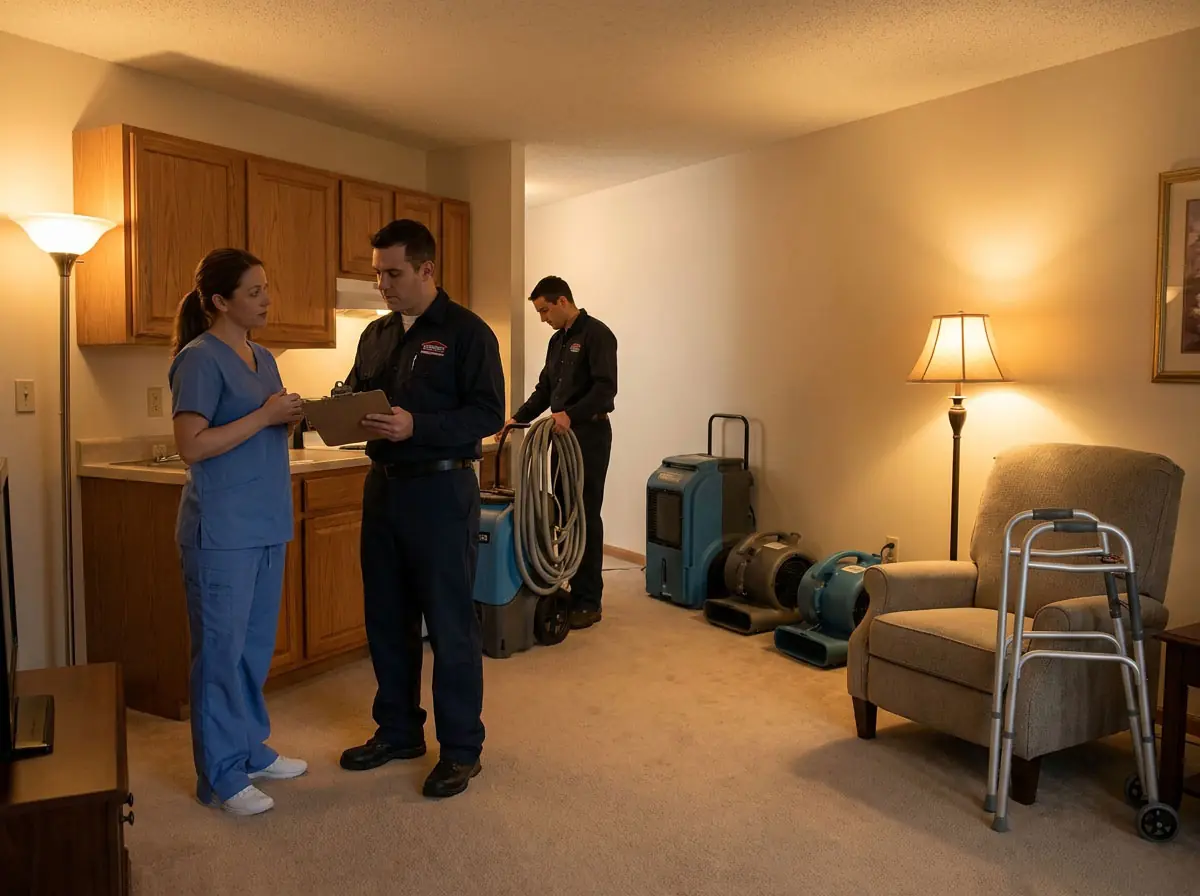
When an amateur walks into a moldy room with a spray bottle, they usually end up blasting spores into the air. This turns a contained problem into a house-wide health crisis. Professionals approach this differently by establishing what we call containment, a physical barrier that prevents cross-contamination between the infected zone and the rest of your home.
We use heavy-duty polyethylene sheeting to seal off the affected areas completely. Then, we set up industrial-grade HEPA-filtered air scrubbers to create negative air pressure. By exhausting the air outside, we ensure that air only flows into the work zone and never leaks out into your living room or bedrooms.
The Critical Tools of Containment
If you see a crew show up without these tools, tell them to leave immediately. You are essentially paying them to spread the mold deeper into your belongings. The goal of engineering controls is to trap the enemy in a box before we even touch the drywall.
- Negative Air Machines: These create a vacuum effect that keeps spores trapped inside the containment zone.
- Airlock Chambers: These double-door setups allow technicians to enter and exit without releasing pressurized air.
- Polyethylene Barriers: Thick plastic sheeting that seals off vents, doorways, and open floor plans.
- HEPA Filtration: The only filter fine enough to catch microscopic mold spores before they circulate through your HVAC system.
Most homeowners have no idea that their own HVAC system is the biggest culprit in moving mold around. When we set up negative pressure, we physically block your supply and return vents within the work area. This simple step stops your AC unit from becoming a high-speed delivery system for toxic spores throughout your entire Miami Gardens residence.
The Invisible Risk: Protecting Your HVAC System and Indoor Air Quality
Your HVAC system is essentially the lungs of your Miami Gardens home. When mold takes root near your air handler, the blower fan acts like a high-speed distributor, launching microscopic spores into every bedroom and closet in your property.
Most homeowners change their filters and think they are safe. That is a dangerous game to play when you are dealing with active colonies.
If you suspect the mold has hit your ducts, your air quality is compromised. The spores are not just sitting there; they are circulating in the air you and your family breathe 24/7.
Signs Your Air System is Contaminated
You need to look past the surface level if you want to stop this invasion. Here are the red flags that your HVAC system is actively spreading trouble:
- A consistent musty smell that flares up the moment your AC kicks on.
- Visible fuzzy growth on the intake vents or the return air grille.
- Respiratory irritation or unexplained sneezing fits that stop when you leave the house.
- Higher than normal humidity readings inside the home despite the AC running constantly.
Do not wait for a professional to tell you that your air ducts are a graveyard for spores. Once mold enters the ductwork, it feeds on dust and settles into the insulation lining the interior walls of your vents.
Standard professional cleaning is not enough if the mold has colonized the actual materials inside the unit. You need targeted antimicrobial treatment and, in some cases, a full replacement of contaminated fiberglass duct board to ensure the air you breathe is actually clean.
Final Words
Mold is not just an aesthetic blemish on your Miami Gardens property. It is a biological organism that thrives on humidity and structural negligence.
If you have already spent your weekends scrubbing walls with bleach, you are likely part of the problem. You are feeding the spores moisture and giving them a reason to dig deeper into your building materials.
Real Mold Remediation requires a scientific approach, not a trip to the local hardware store for cleaning supplies. You need to identify the moisture source, starve the colony, and ensure your indoor air quality is safe to breathe.
The Reality Check
Before you commit to another round of DIY scrubbing, consider the actual cost of your health and property value. Professional intervention might seem like an upfront expense, but it stops the cycle of regrowth that drains your wallet.
Consider these essential truths for your home:
- Bleach never kills mold on porous surfaces like wood or drywall.
- Humidity control is just as vital as physical removal.
- Ignoring a small patch today creates a massive structural liability for next year.
Do not wait until the musty scent becomes a permanent fixture in your living room. Take control of your environment and stop letting an invisible invader dictate the safety of your home.
People Also Ask
Is bleach effective for killing mold on porous surfaces?
Bleach is generally ineffective for mold remediation on porous materials like drywall or wood because it only kills surface mold while leaving the roots intact. This often leads to rapid regrowth, as the water content in bleach can actually feed the mold colonies deeper within the material.Why is Miami Gardens prone to indoor mold growth?
The high humidity levels in South Florida create a constant moisture source that allows mold to thrive in hidden areas. When humidity interacts with poor ventilation or structural water damage, it becomes the perfect environment for spores to colonize quickly.How do I know if I have a hidden mold infestation?
Common indicators include a persistent musty odor, visible staining on walls, or unexplained respiratory issues for family members. You can learn more about identifying these risks by visiting the EPA website for guidance on indoor air quality.Can I safely remove mold colonies on my own?
Small patches of mold on hard, non porous surfaces might be manageable with proper protective gear and HEPA filtration. However, large colonies or mold caused by sewage or hidden water damage require professional remediation to prevent the spread of spores throughout your home.What is the benefit of using negative air pressure?
Pros use negative air pressure to ensure that mold spores and contaminated dust are trapped within the work area. By sealing off the space and exhausting air outside through HEPA filters, they prevent cross contamination into the clean parts of your property.Need Water Damage Restoration Services?
We provide rapid water damage restoration to stabilize your property and prevent further structural issues in Miami Gardens and surrounding areas (33054, 33055, 33056, 33169). Our team arrives quickly to extract water and initiate immediate drying to restore your home or business.
Request Price Estimate