


⚡ TL;DR: This guide provides essential steps for effective flood damage restoration in Melbourne, offering homeowners practical advice on safety, asset protection, and insurance documentation to support property recovery efforts.
📋 What You’ll Learn
Navigating flood recovery in Melbourne requires swift and decisive action. This essential roadmap provides homeowners with the expert knowledge needed to safely mitigate water damage and restore property value effectively.
- Prioritize your personal safety protocols by identifying immediate electrical and structural hazards before entering flooded areas to prevent life-threatening accidents during the initial stages of your home cleanup.
- Master the critical 24-hour response to prevent secondary mold growth and structural decay by utilizing professional drying techniques that save your building materials from long-term moisture saturation damage.
- Categorize your personal assets correctly using our specialized salvage guide to distinguish between restorable belongings and hazardous items that pose serious health risks to your family after flooding.
- Simplify your insurance claims process by learning how to document damage and communicate with adjusters to ensure you receive the maximum coverage available for your restoration project.
📖 Reading time: 7 min
✍️ Author expertise: Certified restoration specialist managing residential flood recovery projects across Melbourne, Florida for years.
The sky turns a bruised shade of purple, the gutters overflow in seconds, and suddenly, your living room carpet is turning into a swamp. In Melbourne, we know the weather doesn't ask for permission before it decides to wreck your property.
Most homeowners freeze when the water starts rising because they have no idea what to do first. Panic is expensive, and waiting even a few hours can turn a simple cleanup into a total demolition job.
You need a battle plan that stops the rot and saves your valuables before the mold takes root. Let’s break down exactly how to protect your home and reclaim your space before the damage becomes permanent.

Immediate Safety Protocols Before You Touch a Single Drop
Your instinct will be to start grabbing wet towels or moving furniture the second you see water. Stop right there. Your safety matters more than your floorboards.
Water and electricity are a lethal combination. Before you even think about wading through a room, look for these danger signs:
- Check your breaker box if you can reach it without stepping into a puddle. If your main panel is dry, flip the power off to the affected areas.
- If the water has reached your electrical outlets or if your fuse box is submerged, do not enter the room. Call a professional or your utility provider immediately.
- Watch out for hanging wires or damaged appliances sitting in the water. One wrong step can lead to a fatal shock.
Once you have secured the power, keep an eye on the water quality. If that water came from an overflowing toilet or a backed-up sewer line, it is highly toxic.
Do not attempt to clean up raw sewage yourself. Exposure to bacteria, viruses, and pathogens poses a massive risk to your health. Put on rubber boots and heavy-duty gloves if you must move, but keep your skin covered and stay clear until help arrives.
Protecting Your Physical Well-being
Slips and falls are the most common injuries during a home flood. Wet tile, hardwood, or carpet acts like a skating rink.
Move slowly and stay on dry surfaces whenever possible. If you must walk through a flooded space, test the stability of the floor with a sturdy tool before putting your full weight down.
If you have children or pets, get them out of the house to a dry location immediately. The stress of the situation can make it easy to miss a hidden hazard, so prioritize clearing the house before you start any assessment.
The Critical 24-Hour Window: Steps to Mitigate Secondary Damage
You have exactly 24 hours before your home stops being a wet house and starts becoming a toxic disaster zone. Once water seeps into your drywall, floors, and sub-flooring, microbial growth begins to colonize almost immediately. The goal here is rapid extraction and climate control to stop the clock on structural rot.
Start by removing as much standing water as humanly possible. If the power is still on and it is safe to enter, use a wet-dry vac to pull water out of carpets and off hard surfaces. Every gallon of water you move now is a massive victory against future mold remediation costs.
Immediate Actions to Stop the Spread
- Get your most valuable items off the floor and onto high shelving or tables.
- Open windows and doors if the outside humidity is lower than the interior levels.
- Deploy commercial grade dehumidifiers and fans to force evaporation across saturated surfaces.
- Remove damp area rugs and curtains, as these act like giant sponges that trap moisture against your floor.
Do not wait for your insurance adjuster to show up before you start the drying process. Most policies actually require you to mitigate damage to prevent further loss. Document every single action you take with high resolution photos and keep a detailed log of the items you discard.

Understanding Water Contamination Levels and Required Restoration Approaches
Not all water is created equal. If you think a leaky roof and a backed-up sewer line require the same cleanup approach, you are setting yourself up for a massive health disaster. Professional restoration teams classify water into three distinct categories based on how toxic the liquid is.
| Category | Water Source | Risk Level | Action Needed |
|---|---|---|---|
| Category 1 | Clean supply lines | Low | Dry and sanitize |
| Category 2 | Dishwashers/sinks | Moderate | Disinfect and extract |
| Category 3 | Sewage/floodwater | High/Pathogenic | Professional hazmat removal |
Category 1: Clean Water
This comes from broken pipes or supply lines that haven't hit the floor yet. You can usually save materials here if you act fast. Speed is your best friend; get fans running and dehumidifiers set to high immediately.
Category 2: Grey Water
This contains detergents or microorganisms that can make you sick. It usually stems from appliance overflows or toilet bowls that are clean but flushed. You need heavy-duty disinfection because the porous materials like carpet padding are likely ruined.
Category 3: Black Water
This is the nightmare scenario. It includes sewage, river flooding, or water that has sat for more than 48 hours. It is teeming with bacteria, viruses, and toxic sludge. Do not touch this yourself; stay away from the area until a team in protective gear has secured the space.
Salvaging Your Belongings: How to Categorize and Protect Your Assets
When your home turns into a lake, your brain might tell you to save everything at once. That is a mistake; you need to triage your possessions like a combat medic. If an item has been sitting in floodwater for more than a few hours, it might already be a total loss.
Focus your limited energy on high-value items and sentimental objects that haven't absorbed heavy moisture yet. Get them to a dry, ventilated area immediately or move them to a different floor.
Before you dive into the cleanup, look at this triage list to decide what stays and what goes:
- Non-porous items: Metal, glass, and hard plastic can usually be cleaned and disinfected.
- Semi-porous items: Finished wood or sealed furniture might be saved if you act fast and dry them correctly.
- Porous items: Carpet, mattresses, particle board, and upholstery act like sponges. If they touch gray or black water, toss them immediately to stop mold growth.
- Valuables: Family photos, documents, and keepsakes should be placed in plastic bins or professional freezer-grade bags until they can be dried by a specialist.
Do not wait for a professional to tell you that sodden drywall is ruined. If it is soaked through, pull it out. Prioritize saving your structural integrity over saving a cheap rug that will only ever smell like mildew.
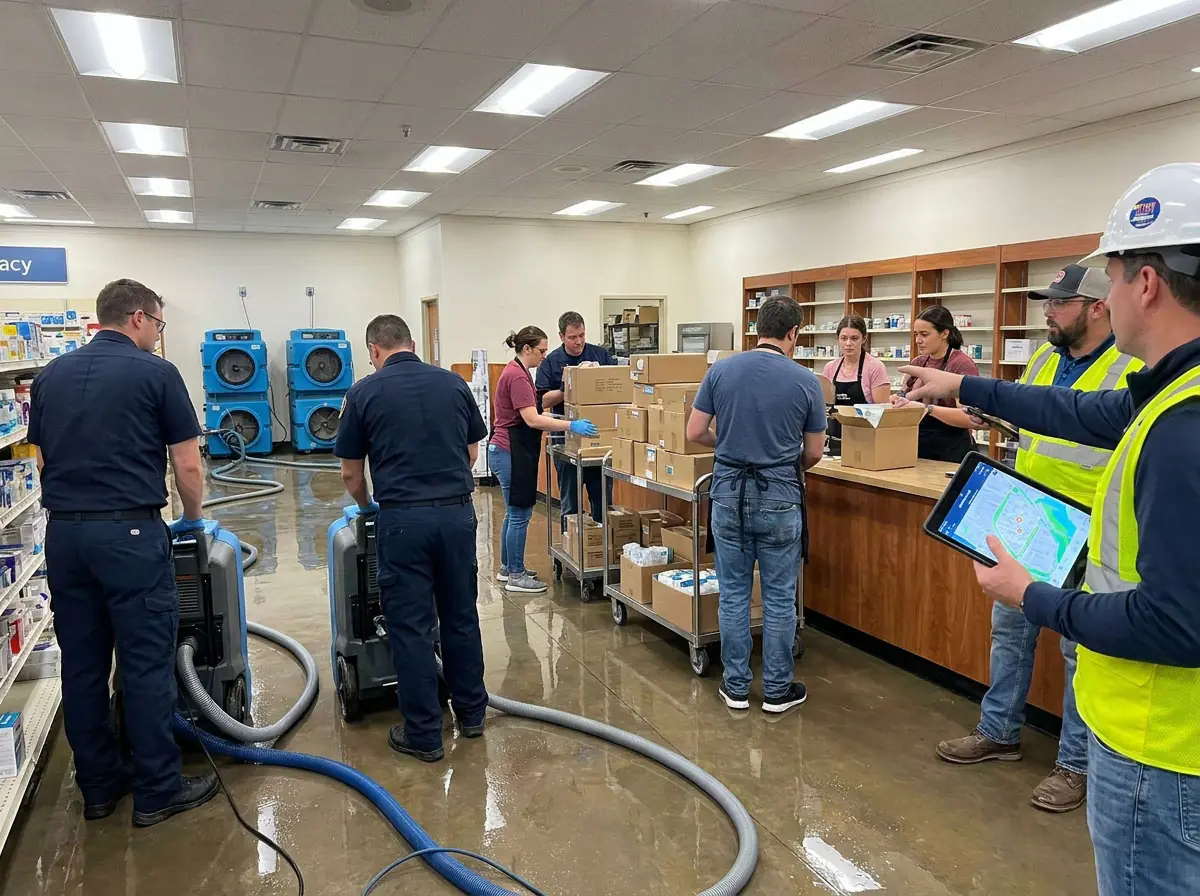
From Saturated to Restored: A Melbourne Home Success Story
Last summer, a severe storm surge hit a residence near the Indian River Lagoon, leaving the first floor under three inches of murky water. The homeowners did not wait for the sun to come out; they acted with precision by cutting the power and calling in a professional restoration crew immediately.
By treating the property as a tactical site rather than a disaster zone, they were able to save the original hardwood floors. Our team arrived within sixty minutes to deploy industrial-grade dehumidifiers and air scrubbers, effectively pulling the moisture out of the subfloor before warping occurred.
Key Success Factors in the Operation:
- Immediate extraction of standing water using high-volume pumps.
- Application of antimicrobial treatments to prevent rapid mold growth.
- Strategic removal of baseboards to ventilate wall cavities.
- Continuous moisture monitoring until structural materials reached equilibrium.
This home went from a waterlogged mess back to a dry, safe living environment in less than four days. Because the owners understood that time is their greatest enemy, they avoided the massive expense of replacing entire walls and custom cabinetry. It proves that a fast, aggressive response is the only way to beat the clock when Melbourne weather turns against you.
Navigating Insurance Claims and Documentation for Maximum Coverage
Your insurance company is not your friend, and they certainly are not looking out for your wallet. If you do not have rock solid proof of the destruction, you are leaving thousands of dollars on the table for them to keep.
Start by documenting every single square inch of the damage before you throw away a single soaked item. Use your smartphone to capture high resolution video, panning slowly across the room while narrating exactly what you see.
Keep these critical tips in mind to protect your claim:
- Take photos of the source of the water if it is safe to do so.
- Save all receipts for emergency repairs, hotel stays, or equipment rentals.
- Keep a detailed log of every phone call with your insurance agent, including the date, time, and the representative's name.
- Do not sign any "full release" documents from contractors until you are absolutely certain the work is finished to your satisfaction.
Many homeowners make the mistake of cleaning up too quickly, effectively erasing the evidence of the severity. You must show the adjuster the full scope of the water intrusion, including baseboard rot, warped flooring, and any hidden moisture pockets behind the drywall.
If you fail to provide adequate proof, you will be fighting a losing battle against a denied claim. Stay vigilant, stay organized, and keep your documentation in a secure, digital cloud folder where it cannot be destroyed by the very flood you are reporting.
Final Words
When the storm passes, your home stays vulnerable. The decisions you make during the first few hours dictate whether you face a quick drying process or a months-long construction nightmare.
Do not wait for the water to soak into your foundation. Contact professional teams specializing in Flood Damage Restoration the moment you notice the tide rising.
Here is your immediate checklist for post-flood survival:
- Turn off the main electricity at the breaker panel if you can reach it safely.
- Prioritize photos of every single impacted area for your insurance adjusters.
- Move your irreplaceable documents and heirlooms to a dry, elevated location immediately.
- Stay out of flooded rooms if the water might be touching electrical outlets or frayed cords.
Your property is more than just timber and drywall. It is your sanctuary, and it deserves a rapid, professional response to stop the decay before it spreads.
Keep our contact information saved in your phone for the next time the skies open up over Melbourne. We have the industrial-grade equipment needed to extract deep water and ensure your home is truly safe to inhabit again.
People Also Ask
What is the first step to take after flood damage occurs in my home?
Your immediate priority is safety, so turn off the electricity and gas supply before entering any standing water. Avoid touching electrical outlets or appliances if they are wet to prevent serious injury.How quickly does mold grow after water damage?
Mold can begin to colonize within 24 to 48 hours once moisture is present in your indoor environment. You should consult the EPA guidelines to understand how to properly address damp conditions before fungal growth compromises your air quality.Does homeowners insurance cover flood damage in Melbourne, FL?
Standard homeowners insurance policies typically exclude flood damage, meaning you often need a separate policy through the National Flood Insurance Program. You should review your specific policy declarations page to determine what types of water intrusion are covered under your plan.Is it safe to clean up flood water myself?
You can only safely clean up water if it originates from a clean source, like a supply line leak, and the area is small. If the water is from a storm or sewage backup, it is considered hazardous and requires professional restoration equipment to protect your health.What items should I prioritize salvaging after a flood?
Focus on saving irreplaceable items like legal documents, family photos, and sentimental heirlooms first. Once those are secure, move furniture and porous materials to a dry location to prevent further absorption and potential bacterial growth.Need Water Damage Restoration Services?
We provide rapid water damage restoration to restore your property in Melbourne and the surrounding Space Coast communities (32901, 32904, 32935, 32940). Our team stops moisture damage immediately to secure your home or business and prevent further loss.
Request Service Estimate