


⚡ TL;DR: Professional structural drying services in McAllen help homeowners combat high humidity levels, effectively preventing long term water damage through precise moisture removal techniques and expert restoration equipment usage.
📋 What You’ll Learn
Understanding structural drying is essential for McAllen residents facing high humidity. This guide explains why specialized professional intervention is necessary to preserve your property and prevent long-term moisture damage effectively.
- Master the physics of moisture by learning how humidity levels unique to the Rio Grande Valley impact building materials and why natural airflow cannot reach trapped water pockets.
- Explore professional drying techniques including industrial-grade dehumidification and high-velocity air movement that work together to extract moisture from floorboards, drywall, and structural studs deep within your home.
- Compare DIY methods versus restoration by seeing the data behind moisture detection tools that prove why professional drying prevents the hidden secondary damage of mold and structural rot.
- Analyze the true financial cost of ignoring water intrusion by reviewing real-world case studies showing how immediate professional action saves homeowners thousands in future repairs and insurance claims.
📖 Reading time: 8 min
✍️ Author expertise: McAllen water restoration expert with ten years of hands-on structural drying field experience.
Most homeowners in McAllen think that if the carpet is dry to the touch, the flood is over. They couldn't be more wrong.
Hidden moisture trapped inside your walls and subflooring acts like a slow-motion wrecking ball, feeding mold colonies and rotting your home from the inside out. By the time you actually smell the rot or see the walls buckle, the damage is already expensive, dangerous, and deep.
Structural drying isn't just an optional cleaning step; it is the only way to stop a disaster from claiming your property's value. Here is exactly what is happening behind your drywall right now and why waiting even one extra hour is a mistake you cannot afford to make.
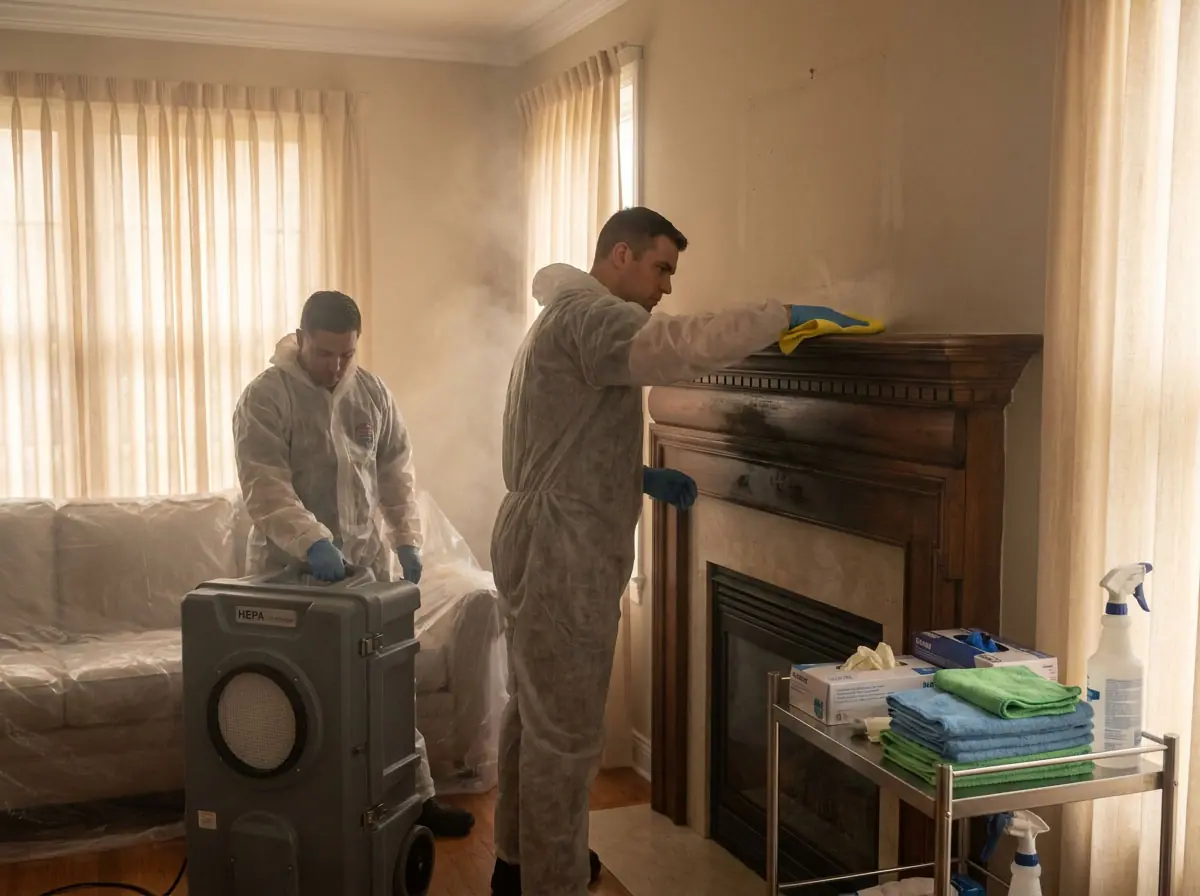
The Hidden Physics of Moisture Migration in South Texas Homes
When water strikes your McAllen home, it does not just sit on the surface. Physics dictates that moisture always seeks equilibrium, meaning it travels from wet areas to dry areas through porous building materials.
Your drywall, insulation, and wooden studs are essentially giant sponges. They pull liquid deep into their structure long before you notice any visible staining on your floors.
Think of your home as a complex system of conduits. Once water infiltrates the frame, it moves through the path of least resistance, causing several silent problems:
- Moisture wicks upward into wall cavities through capillary action, defying gravity.
- Vapor pressure pushes humidity into closed spaces like closets or crawl spaces.
- Water settles at the base of wall plates, where it sits against the foundation and starts the process of decay.
You cannot simply wipe away what you cannot see. While you are busy cleaning the visible puddles, moisture is actively migrating toward your home's structural heart. This is hygroscopic absorption, and it is exactly why your property needs professional intervention immediately.
Why McAllen’s Humidity Levels Make Natural Drying Impossible
Here is the hard truth about living in the Rio Grande Valley: our outdoor air is a wet sponge waiting to soak your home. McAllen consistently experiences high relative humidity levels, which creates a vapor pressure equilibrium that works against you. When your indoor materials are wet, they naturally try to release moisture into the air; however, because our local air is already saturated, it simply cannot hold any more water.
You cannot just open a window or flip on a ceiling fan to fix a water disaster here. Instead of drying out your property, standard airflow often pulls more moisture into your home from the outside. You end up feeding the exact environment that mold spores crave to bloom.
When you rely on natural evaporation in this climate, you are essentially asking your home to dry itself while swimming in a pool. It is a mathematical impossibility. Professional structural drying uses commercial grade equipment to force the humidity levels down, effectively stripping the air of moisture so that your walls and flooring have nowhere else to send their trapped water. Without this active dehumidification, your building materials will simply remain wet until they rot or crumble.
The Real Risks of Ignoring Our Climate
- Constant Moisture Exchange: The air outside will constantly pump water into your carpets and drywall through osmosis.
- Microbial Breeding Grounds: High humidity levels ensure that mold colonies can establish themselves in as little as 24 to 48 hours.
- Condensation Traps: As outside temperatures shift, moisture condenses on cool surfaces behind your baseboards where you cannot see it.
- Compromised Structural Integrity: Wood studs and subfloors swell and lose their load-bearing capacity when they stay saturated for too long.

Professional Structural Drying Techniques
Professional drying goes far beyond running a box fan in the living room. Our team deploys scientific drying protocols that rely on the principles of psychrometry, which is the study of air properties and how they interact with moisture.
We first establish a controlled environment where we manipulate temperature and humidity to force water out of your building materials. By creating a low-pressure environment, we turn trapped liquid into vapor, which our high-capacity dehumidifiers then pull directly out of the air.
The Four Pillars of the Process
Our technicians use a specific sequence to ensure no moisture is left behind to fuel mold growth:
- Moisture Mapping: We use thermal imaging and penetrating moisture meters to locate the exact perimeter of the water intrusion.
- Extraction: We use industrial-grade vacuums to remove bulk water from carpeting, padding, and crevices before evaporation begins.
- Dehumidification: We place LGR (Low Grain Refrigerant) dehumidifiers that act like giant sponges to grab airborne moisture.
- Air Movement: We use specialized high-velocity air movers to scrub the surface of wet materials, speeding up the rate of evaporation.
Every single step is tracked with daily logs. We monitor the moisture content of your studs, baseboards, and drywall to ensure they return to their dry standard before we ever clear a job site.
A Comparative Table of Moisture Detection Methods vs. DIY Drying
Most folks assume a few box fans and an open window will solve a water mess. This is a dangerous gamble that ignores the invisible saturation hiding inside your studs and insulation. Relying on your sense of touch or a visual inspection is like trying to diagnose a broken bone with a magnifying glass; you are missing the real problem underneath the surface.
| Feature | DIY Drying Methods | Professional Structural Drying |
|---|---|---|
| Moisture Detection | Visual Inspection / Touch | Thermal Imaging / Moisture Meters |
| Airflow Control | Standard Box Fans | Industrial LGR Dehumidifiers |
| Targeted Drying | None (Surface only) | Deep Wall Cavity Injection |
| Mold Prevention | Low (Ignores hidden areas) | High (Monitored Psychrometry) |
| Documentation | None | Certified Reports for Insurance |
Professionals don't guess. We use moisture mapping to trace exactly where water has traveled through your home. While you are drying the floor, the water has already migrated into the wall cavities, creating a perfect climate for mold to start growing within 24 to 48 hours.
If you choose the DIY route, you are only addressing the symptoms while the root cause continues to fester. Consider the difference in the tools we bring to your door:
- Moisture Meters: We penetrate the drywall to measure the exact percentage of water content deep inside the materials.
- Thermal Imaging Cameras: These devices reveal temperature differences in your walls, effectively showing us the path of the water that your eyes cannot see.
- Industrial Grade Dehumidifiers: Unlike the small units you buy at a retail store, these machines pull gallons of moisture out of the air and structure, effectively forcing the building materials to release their trapped water.
Do not let a "dry" surface fool you into a false sense of security. Ignoring the hidden pockets of moisture will result in warped flooring, buckled drywall, and costly structural rot that usually leads to a much larger insurance claim down the road.

Real-World Restoration: A McAllen Case Study on Secondary Damage Prevention
We recently handled a call from a North McAllen homeowner who had a minor pipe burst under their kitchen sink. They mopped up the surface water, placed a few fans, and thought they beat the clock.
Within seventy-two hours, they noticed a faint, earthy scent creeping up through the floorboards. By the time our team arrived, the moisture had traveled through the porous subflooring and into the baseboards of the adjacent living room.
What they missed was the silent migration of vapor. Because the ambient air in South Texas is saturated with humidity, those store-bought fans were only circulating wet, heavy air instead of extracting it.
Here is what happens when you treat structural drying as a DIY chore versus a professional operation:
- Professional drying uses industrial dehumidifiers to drop the grain depression, essentially sucking the water out of the wood.
- DIY efforts often push moisture deeper into the wall cavity, trapping it behind the paint and primer.
- Secondary damage appears as warped floorboards, microbial growth, and rusted metal fasteners within a few days.
In this specific case, we had to perform a controlled demolition to prevent the mold from spreading to the HVAC ductwork. If the homeowner had called us immediately after the initial leak, we could have used injection drying systems to save the kitchen cabinetry entirely.
Instead of a simple drying job, they ended up paying for cabinet removal and flooring replacement. Don't wait for the smell of rot to take action. Professional assessment is the only barrier between a minor plumbing mishap and a total restoration nightmare.
The True Financial Cost of Neglecting Professional Dehumidification
Most homeowners mistakenly view professional drying as an optional expense. They decide to grab a box fan, open a few windows, and hope for the best.
This is a massive financial trap. By the time you notice visible mold growth or warped floorboards, the cost of repair has often tripled or quadrupled compared to the initial price of professional extraction.
Think about the replacement costs for these hidden items that succumb to moisture:
- Engineered hardwood and laminate flooring replacements.
- Electrical rewiring due to corroded junction boxes inside wet walls.
- Professional mold remediation services and air quality testing.
- Custom cabinetry and baseboard tear-outs.
When you ignore moisture, you are essentially letting a destructive process compound your losses. The difference between a simple drying job and a total room renovation is often just a matter of twenty-four hours.
Insurance companies know this reality better than anyone. Many policies include clauses that deny coverage for secondary damage caused by neglect or failure to mitigate water intrusion promptly.
If you choose to DIY the drying process, you might save a few hundred dollars today. However, you are almost guaranteed to write a check for thousands of dollars in structural repairs later this year.
Final Words
Your home in McAllen is a high-stakes investment, but it is currently under attack by the invisible weight of trapped water. Once moisture migrates into your baseboards and framing, it refuses to leave on its own.
Waiting for the air to just dry out is a gamble that puts your entire property at risk. You are not just fighting a spill; you are fighting the physics of South Texas humidity.
If you suspect water damage, you need to act before secondary destruction takes root. Professional intervention is the only way to ensure your property remains a safe, dry environment for your family.
Why Professional Action Matters
Our Structural Drying Services are designed to pull moisture from deep within materials that you cannot reach. We do not just dry the surface; we restore the integrity of your home.
Consider these critical reasons to skip the DIY approach:
- Surface drying traps mold behind your drywall.
- Improper techniques lead to warped floors and permanent structural rot.
- Professional sensors track moisture content in real time to guarantee completion.
- Insurance claims are much easier to handle with verified drying documentation.
Stop rolling the dice with your biggest asset. Reach out to our expert team today to secure your home against the long term damage of hidden moisture.
People Also Ask
How long does the structural drying process take after water damage?
The duration depends on the extent of saturation and building materials, typically lasting between three to five days. Professional drying ensures that materials reach their equilibrium moisture content to prevent long term structural degradation.Why is natural air drying ineffective for water damage in McAllen?
High ambient humidity in South Texas prevents moisture from evaporating into the air, causing water to remain trapped in porous materials. This environment promotes rapid mold growth, which is why the EPA recommends professional intervention within 24 to 48 hours.What is secondary water damage in a home?
Secondary damage occurs when moisture trapped in walls or flooring migrates to unaffected areas of the home. This often results in warped wood, peeling paint, and toxic microbial growth that spreads if the initial water source is not professionally dried.Can I dry out a flooded room with just fans and a dehumidifier?
Residential equipment often lacks the airflow and dehumidification capacity required to penetrate deep into subfloors and wall cavities. Professional structural drying utilizes specialized thermal imaging and industrial grade equipment to ensure hidden moisture is completely eliminated.How do professionals detect moisture behind walls?
Restoration experts use non-invasive moisture meters and infrared cameras to locate water pockets without causing unnecessary demolition. These tools allow technicians to verify that the structure is thoroughly dried from the inside out, ensuring complete restoration of your property.Need Water Damage Restoration Services?
We provide rapid water damage restoration to secure your property and prevent further structural issues throughout McAllen and surrounding communities (78501, 78503, 78504, 78572). Our team arrives quickly to extract water and dry your home to return your space to a safe, pre-loss condition.
Request Custom Estimate