
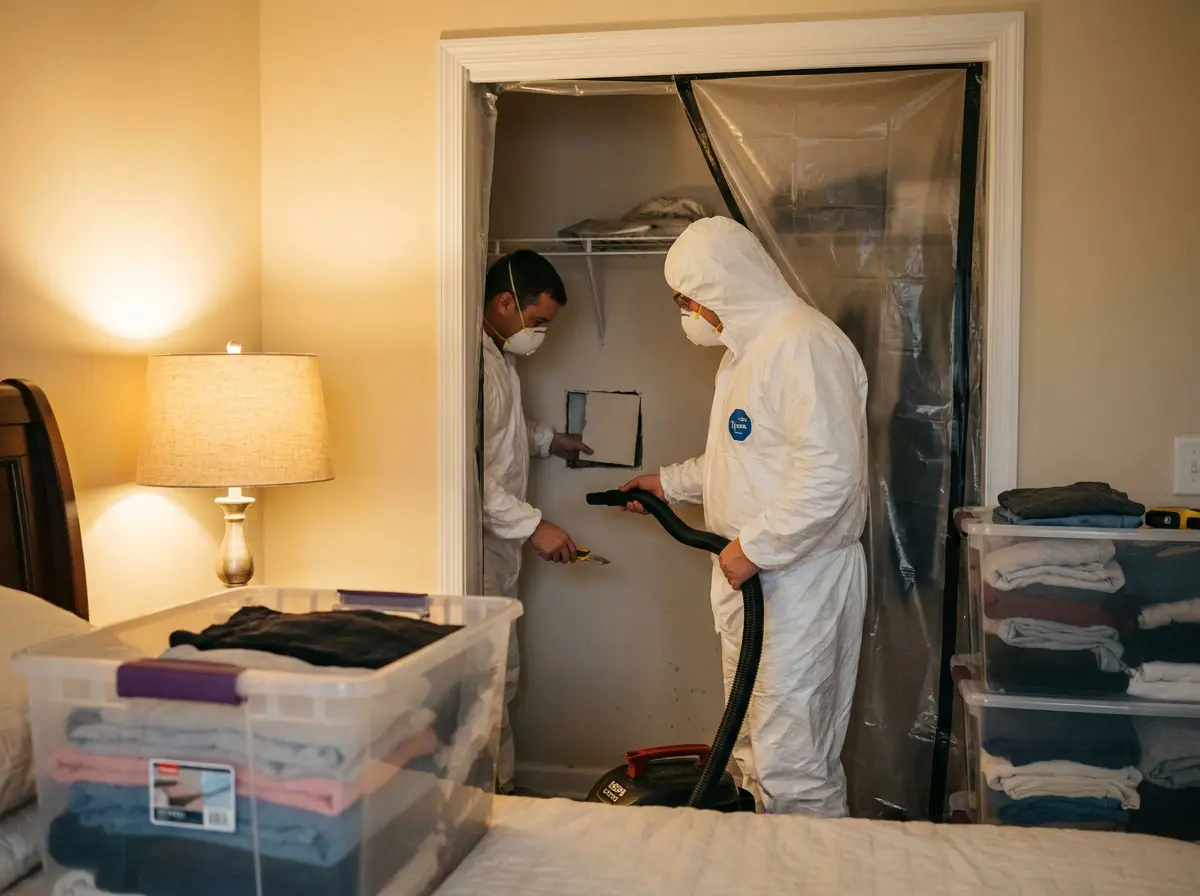


⚡ TL;DR: This guide helps Livonia homeowners manage hardwood floor water damage by explaining effective mitigation steps, the dangers of improper drying tools, and the benefits of professional restoration services.
📋 What You’ll Learn
Facing water damage on your hardwood floors in Livonia requires swift and informed action. This guide provides expert strategies to save your surfaces, prevent mold growth, and restore your home effectively.
- Execute immediate mitigation steps to halt the spread of moisture across your living space before the wood fibers absorb enough water to cause permanent warping or cupping damage.
- Avoid damaging DIY pitfalls by understanding why common tools like hair dryers or space heaters often lead to further surface cracking, discoloration, and structural failure of your boards.
- Compare professional drying techniques against standard household methods to see why advanced moisture extraction tools are necessary to safely protect your investment from long term rot issues.
- Detect hidden structural damage lurking beneath your floorboards by learning how to spot early warning signs of moisture trapped in your subfloor that threaten your home integrity.
- Follow an expert restoration timeline tailored for Livonia residents that outlines every critical phase from the initial cleanup to final sanding and finishing of your hardwood surfaces.
📖 Reading time: 7 min
✍️ Author expertise: Certified water damage restoration technician with years of field experience in Livonia, Michigan.
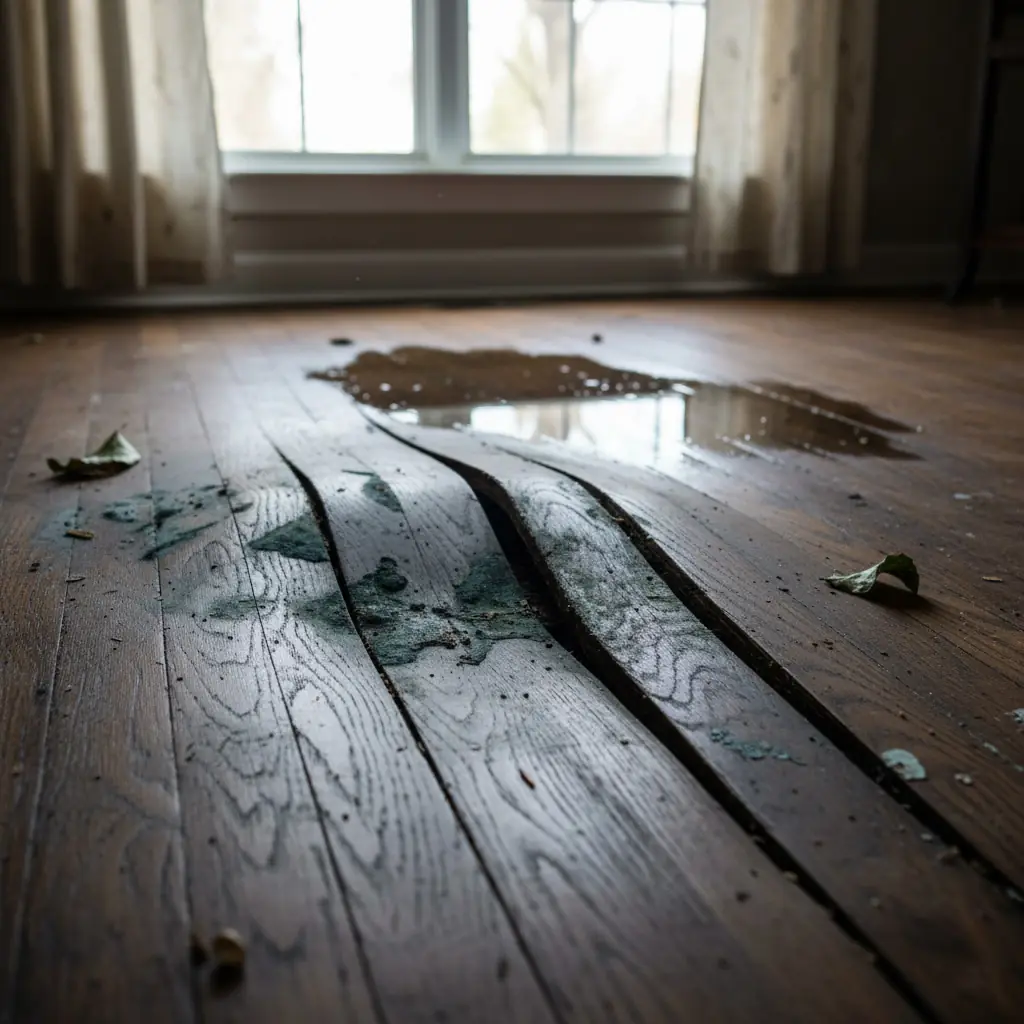
You wake up in your Livonia home to the sound of a slow, rhythmic drip, only to walk into your living room and find your beautiful hardwood floors buckling like a miniature mountain range. It is the kind of sinking feeling that hits your stomach immediately because you know exactly how expensive that floor was to install.
Most homeowners panic and start grabbing towels or space heaters, but those amateur moves often make the situation worse by warping the wood beyond repair. If you want to keep your floors from turning into firewood, you need a precise strategy rather than a desperate reaction.
Here is exactly how you handle water damage on your hardwood floors the smart way so you can save your investment before the rot sets in.

Immediate Mitigation Steps to Stop the Moisture Spread
The clock is ticking the moment water hits your hardwood. Wood is porous, meaning it acts like a sponge, soaking up liquid and swelling until the boards pop or cup.
Your first move must be stopping the water source. If it is a burst pipe or a leaking appliance, shut off the main water valve immediately.
Once the flow stops, switch into containment mode. You need to pull out as much standing water as possible before it seeps into the subfloor.
- Use a wet-dry vacuum to suck up every drop of surface water.
- Grab towels to blot the area rather than wiping, which can push moisture deeper into the gaps.
- Clear all furniture off the affected area to prevent rust stains or mold growth underneath.
Do not wait for a professional to arrive before you act. The faster you remove the standing water, the lower your chances of needing a full floor replacement.
Pro tip: Keep the room well ventilated if possible, but keep the temperature stable. Radical shifts in heat can cause the wood to dry too quickly and crack permanently.
Why Space Heaters and Hairdryers Sabotage Your Floors
When you see your hardwood buckling, the urge to blast it with a space heater or a hairdryer is powerful. You think you are drying the surface, but you are actually cooking the wood fibers. Heat forces moisture to evaporate too quickly, causing the boards to shrink, crack, and permanently lose their structural integrity.
Think of wood like a sponge; if you bake it while it is saturated, the edges curl and splinter. Instead of fixing the mess, you are essentially ruining the grain and turning a salvageable floor into a pile of expensive scrap. Local Livonia homeowners often make this mistake because they focus on the surface, ignoring the water trapped deep beneath the planks.
Here is why these amateur heating methods fail:
- Rapid heat causes wood to shrink unevenly, leading to permanent gaps.
- Blow dryers cannot reach the moisture trapped in the subfloor.
- Heat speeds up the growth of mold and mildew within the wood grain.
- Extreme temperature fluctuations cause finish layers to bubble and peel away.
Professional restoration is about controlled moisture removal, not aggressive heating. Our team uses specialized equipment to pull humidity out slowly and safely. When you opt for a DIY hairdryer approach, you skip the science and head straight for a full-floor replacement bill.
Professional Drying Techniques vs. DIY Methods: A Comparative Table
When your floors start cupping, your instinct is to fix it fast. Most homeowners resort to household tools that do more harm than good, while experts use industrial-grade science to pull moisture from the subfloor.
| Feature | DIY Methods | Professional Restoration |
|---|---|---|
| Drying Speed | Very slow | Rapid/Controlled |
| Moisture Detection | Surface sight only | Deep-scan sensors |
| Floor Integrity | High risk of cracking | Preserves structural wood |
| Mold Prevention | Often insufficient | Antimicrobial treatment |
The primary difference comes down to air movement and moisture extraction. Professionals bring in heavy-duty dehumidifiers and inject air into the floor gaps to dry the wood from the bottom up.
Amateurs usually rely on fans that just move humid air around the room. This does nothing to reach the trapped water sitting in your joists or the subfloor, which is exactly where mold spores love to hide and thrive.
Why Precision Matters
If you miss even a small percentage of moisture, the wood will eventually rot or warp permanently. Our team uses specific moisture meters to ensure your home is actually dry, not just dry to the touch.
- Controlled heat levels to avoid rapid shrinking.
- Industrial air movers placed at specific angles.
- Real time monitoring of relative humidity.
Don't gamble with your floors by guessing the moisture levels. It is a one-way ticket to a much larger, more expensive repair bill down the road.
Livonia Home Restoration: A Case Study in Hardwood Recovery
Last winter, a homeowner near Greenmead Historical Park called us after a supply line burst in their kitchen. The hardwood in the adjoining hallway was cupping and dark stains were already appearing at the seams.
Most people would have ripped the boards out immediately, but our team took a measured approach. By using moisture mapping technology, we found the water had traveled further under the baseboards than the owner realized.
We saved that floor by focusing on these specific steps:
- Controlled thermal drying to pull moisture out of the wood fibers slowly.
- Injecting dehumidification systems into the subfloor through tiny, inconspicuous gaps.
- Monitoring the wood equilibrium moisture content daily until it matched the surrounding environment.
Because we caught the hidden saturation early, the homeowner avoided a total floor replacement. The wood settled back into its original shape without cracking or splintering once the moisture levels hit the target range.

Identifying Hidden Damage Beneath the Surface Boards
The biggest mistake most homeowners make is assuming that if the surface looks dry, the floor is safe. Wood acts like a sponge, drawing moisture deep into the subfloor and the floor joists long before you see physical signs of warping.
When water settles beneath your hardwood, it creates a hidden ecosystem for mold and structural decay. If you ignore what is happening under your feet, you are likely looking at an expensive floor replacement months down the road rather than a simple restoration.
You need to watch for these specific warning signs that indicate the damage has already moved below the surface:
- A persistent, musty odor that refuses to go away even after the room is dry.
- Soft or spongy spots when you walk across specific sections of the floor.
- Darkening of the wood grain which signals moisture absorption deep in the fibers.
- Visible signs of mold growth starting along the baseboards or inside nearby wall cavities.
Professional restoration teams use moisture mapping technology to look exactly where the naked eye cannot. We check for saturated plywood subflooring and trapped humidity inside the floor cavity. Without this depth of inspection, you are just masking the problem while the rot does its work underneath.
Essential Restoration Timeline for Livonia Homeowners
When your hardwood floors suffer water damage, time is your biggest enemy. You cannot wait for the wood to simply dry out on its own, because mold spores begin their destructive work within the first 24 to 48 hours.
A professional restoration process follows a strict sequence to prevent permanent structural warping. Here is how the recovery process typically unfolds for our Livonia clients:
- 0-24 Hours: Emergency extraction of standing water and moisture mapping.
- 24-72 Hours: Installation of industrial dehumidifiers and specialized air movers.
- Day 3-7: Daily monitoring of moisture content in both the flooring and the subfloor.
- Day 7-14: Final evaluation for refinishing or board replacement once equilibrium is reached.
Do not be fooled by the surface appearing dry. Wood acts like a sponge, drawing water deep into the grain and the subfloor beneath.
If you pull the drying equipment too early, you risk trapped moisture that causes hidden mold growth. Stick to the professional timeline to ensure your floors return to their original strength and beauty without hidden decay lurking underneath.
Final Words
Your floors are not just wood planks; they are the foundation of your home's aesthetic and value. When water strikes, you are essentially in a race against time, moisture, and structural decay.
Waiting for the wood to simply dry out on its own is a recipe for mold growth and permanent warping. If you notice persistent cupping or musty smells after a spill, you need to check out our professional resources on Hardwood Floor Water Damage to understand the full scope of what you are dealing with.
Taking action now prevents a small repair from turning into a total floor replacement later. Keep these points in mind if you want to avoid a massive bill:
- Never ignore a water stain, even if it looks dry on top.
- Always prioritize professional moisture readings over visual guesses.
- Act within the first 24 hours to prevent permanent subfloor damage.
At the end of the day, your property is a significant financial asset. Trusting your instincts is good, but trusting specialized moisture extraction tools is how you actually save your investment from ruin.
People Also Ask
Can hardwood floors be saved after water damage?
Yes, hardwood floors can often be salvaged if professional drying begins within the first 48 hours. Quick action prevents warping, cupping, and mold growth, allowing the wood to return to its original moisture content.How long does it take for hardwood floors to dry out after a leak?
The drying timeline typically spans three to seven days depending on the severity of the saturation and the humidity levels. According to the EPA guidelines, moisture control is the most critical step to prevent indoor air quality issues.Should I replace my hardwood floors if they are cupping?
Cupping does not always require a full replacement, as professional sanding and refinishing can often restore the surface once the subfloor is completely dry. A moisture meter test is required to determine if the boards are stable enough for repair or if structural replacement is necessary.Is it safe to leave wet hardwood floors to air dry?
Leaving wet floors to air dry on their own is not recommended because moisture often remains trapped beneath the surface. This creates a prime environment for hidden mold and can cause permanent structural degradation to your subfloor.Need Water Damage Restoration Services?
We provide rapid water damage restoration to stabilize your property and prevent further structural issues in Livonia and surrounding communities (48150, 48151, 48152, 48154). Our team delivers immediate drying and recovery solutions to restore your home or business quickly.
Request Service Quote