


⚡ TL;DR: This guide explains how Lancaster residents can effectively manage mold remediation by addressing hidden moisture sources, utilizing professional containment methods, and prioritizing long term structural recovery over surface cleaning.
📋 What You’ll Learn
Navigating mold remediation in Lancaster requires understanding our unique desert climate. This guide reveals the professional strategies locals use to effectively eliminate moisture issues and prevent long term structural damage.
- Identify hidden moisture sources by recognizing how Lancaster’s dry desert air often masks deep water intrusion in your attic, wall cavities, or high usage HVAC condensation drain lines.
- Understand why surface cleaning fails when dealing with mold colonies, as common household sprays cannot penetrate porous materials or reach the deep root systems of indoor fungi.
- Compare professional standards against DIY to see why containment barriers and industrial HEPA filtration are critical steps for protecting your family from dangerous airborne mold spores during removal.
- Implement lasting prevention strategies by reviewing real local case studies that demonstrate how to reinforce your home structure against future mold regrowth throughout our intense high desert seasons.
📖 Reading time: 7 min
✍️ Author expertise: Certified water damage restoration specialist with decades of field experience in Lancaster, CA.
You wake up, walk into the hallway, and catch that unmistakable, musty stench hitting your nostrils like a physical punch. It is not just an odor, it is a ticking time bomb for your family’s health and your home's resale value.
Most homeowners in Lancaster make the fatal mistake of grabbing a spray bottle and wiping the surface clean, thinking they have won the battle. They are wrong, and that mistake is currently costing them thousands in hidden structural repairs.
Smart locals here know that surface cleaning is a sucker’s game that leaves the root cause rotting behind your drywall. If you want to stop the spread for good instead of just masking the symptoms, here is the real-world strategy you need to follow.
Why Lancaster’s Dry Climate Masks Serious Moisture Intrusion
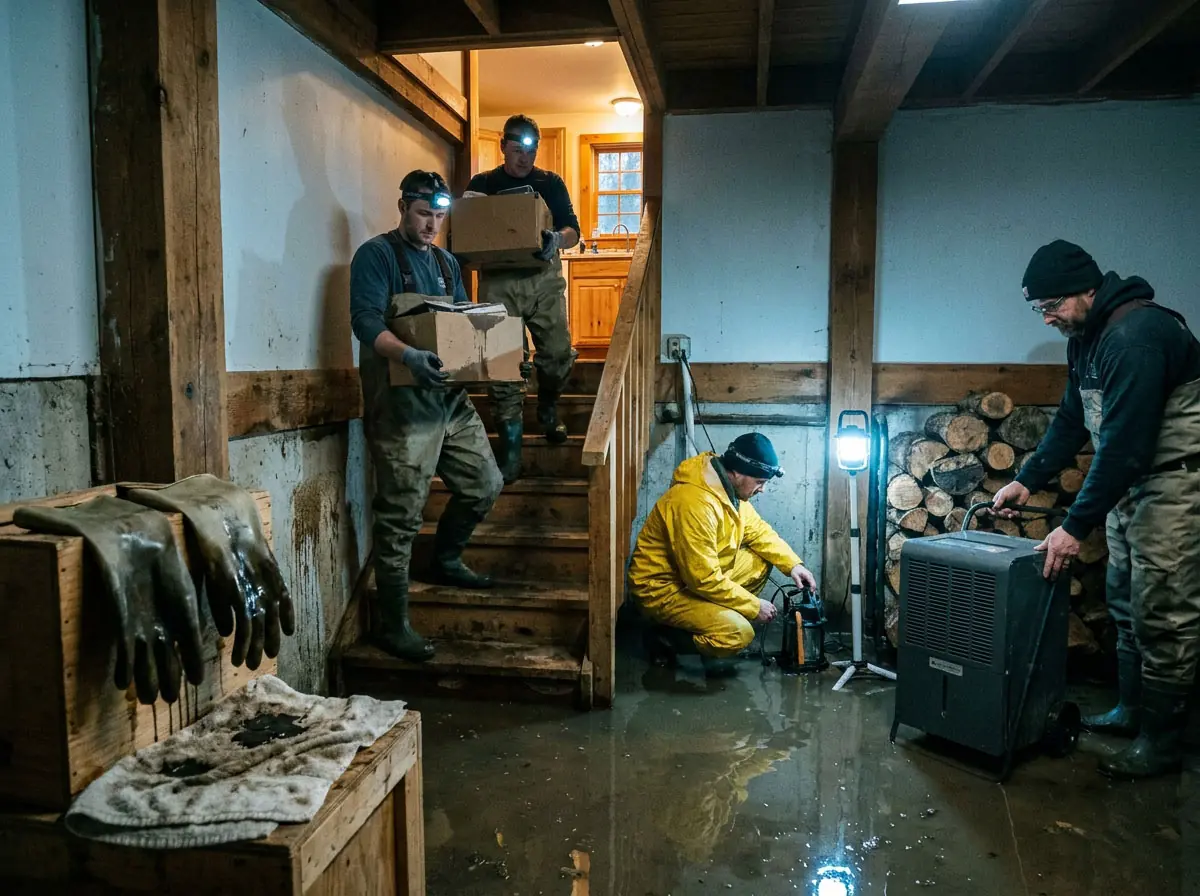
Most Lancaster residents assume that because our weather stays arid, mold is a problem only for people living near the coast. This false sense of security is exactly what allows minor leaks to transform into expensive structural disasters.
In our high desert climate, humidity spikes are deceptive. You might think your home is dry, but moisture hides in places you never check until the damage is already rotting your floorboards.
Consider these sneaky ways water enters your property without you noticing:
- Temperature fluctuations: Drastic changes between day and night cause condensation inside wall cavities.
- Foundation shifts: Small cracks from seismic activity allow ground moisture to seep into your subfloor.
- Improper ventilation: Exhaust fans that do not vent fully outside trap steam inside your attic space.
When you ignore these small breaches, you are not just dealing with a bit of dust. You are building a fertile breeding ground for spores that thrive in the dark, hidden pockets of your wall assembly.
Because the air feels dry, you might notice the musty smell but ignore it because you do not see active puddles. That is a massive mistake. By the time you actually see visual mold on your walls, the colony has likely been feasting on your drywall and insulation for months.
The Anatomy of a Mold Colony: Why Surface Cleaning Fails
Most people treat mold like a common stain. They grab a bottle of bleach, scrub the visible dark patches on the wall, and call it a day. In reality, you are only scratching the surface of a much deeper, aggressive biological network.
Mold is not just the growth you see. It is a massive root system called mycelium that penetrates porous materials like drywall, wood studs, and insulation. Think of it like a weed in your garden; if you cut the top off but leave the roots, it will come back stronger.
Why Bleach Often Makes It Worse
Here is the truth that chemical companies do not want you to know: bleach is mostly water. When you spray porous surfaces with bleach, the water part sinks deep into the material, providing the exact moisture the mold roots need to thrive and spread further.
If you rely on simple surface wiping, you are ignoring the biological reality of the colony. To actually solve the problem, you need to understand where the colony lives:
- The visible growth is just the fruiting body, similar to a flower on a plant.
- The mycelium roots extend inches or feet into the structural material behind your walls.
- Spore release happens constantly when you disturb the surface, sending thousands of microscopic particles into your air vents.
True remediation requires removing the infested material entirely, not just killing the top layer. By ignoring the structural depth, you are leaving behind a ticking time bomb that will eventually compromise the integrity of your Lancaster home.
Identifying Hidden Hotspots: From Attic Leaks to HVAC Condensation
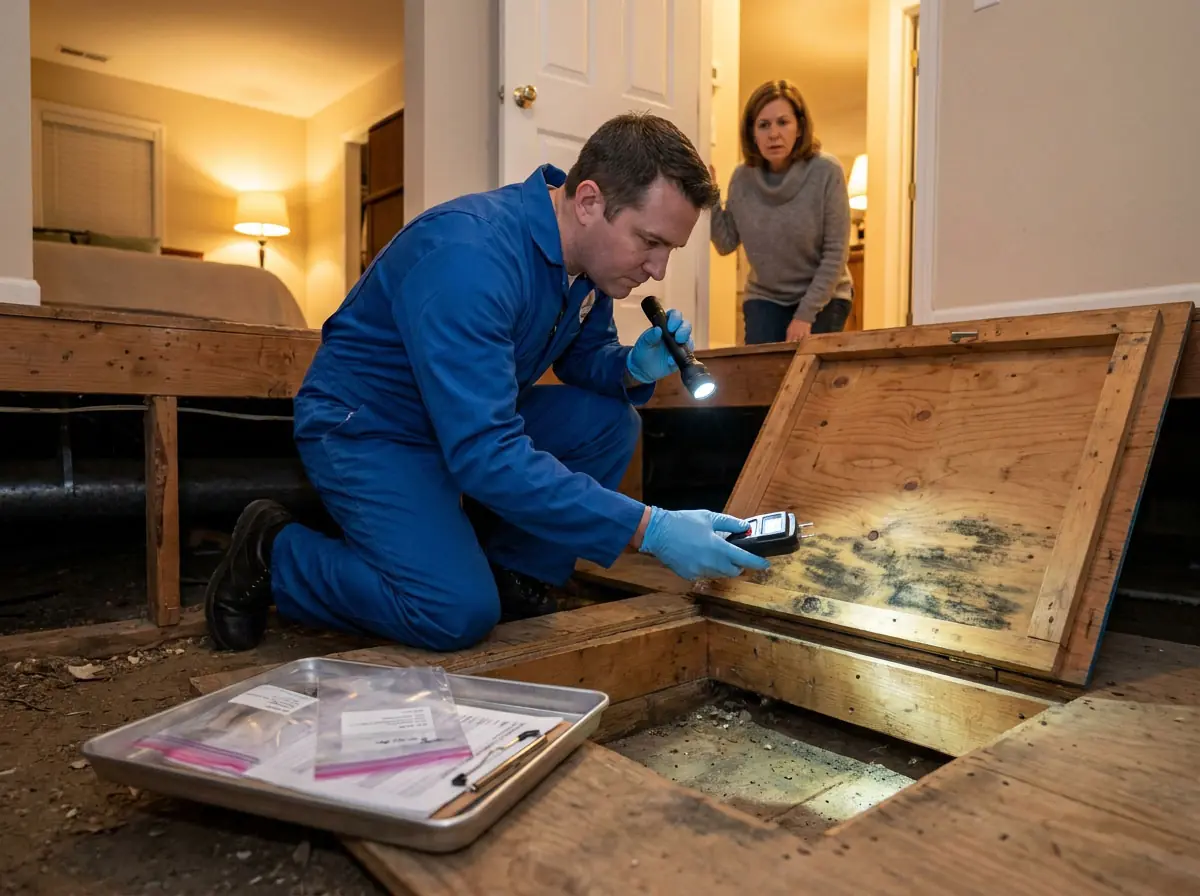
Most Lancaster residents assume that because our air is arid, their homes are immune to moisture traps. This is a dangerous myth. Mold does not need a flood to thrive; it only needs a small, consistent supply of water trapped behind a wall or under a floorboard.
The most common culprits are often invisible to the naked eye. Your HVAC system, which works overtime during our intense Antelope Valley summers, is a frequent offender. If your condensation lines are clogged or your ducts are improperly insulated, you are essentially pumping moisture directly into your dark, undisturbed wall cavities.
Common Trouble Zones to Inspect
Check these areas immediately if you smell that signature musty odor:
- Attic roof sheathing: Look for dark spots near vents where monsoon moisture might have slipped in.
- HVAC plenums: Excessive condensation often pools in the metal casing, feeding spores.
- Kitchen and bathroom cabinetry: Check for slow drips under sinks that saturate the wood backing.
- Exterior wall junctions: Watch for signs of water seeping through cracks in the stucco after a rare desert rain.
When you ignore these hotspots, the colony grows silently in the dark. By the time you notice a visible bloom on your wallpaper, you are likely looking at a massive, deep-seated infestation that has already compromised your indoor air quality. Don't wait for the symptoms to become unavoidable before you start your investigation.
A Comparative Table of Professional Remediation vs. DIY Attempts
Most folks in Lancaster think a bottle of bleach solves everything. It does not. In fact, relying on store-bought cleaners often pushes spores deeper into the porous building materials of your home.
| Feature | DIY Surface Cleaning | Professional Remediation |
|---|---|---|
| Root Cause Analysis | Ignored | Identified and Fixed |
| Mold Removal | Surface only | Full structural extraction |
| Containment | None | Certified negative air pressure |
| Safety Gear | None to minimal | Full PPE and respirators |
| Long-term Result | High risk of return | Guaranteed restoration |
The difference comes down to science versus wishful thinking. When you wipe a surface, you leave the "hyphae"—the root system of the mold—alive and kicking inside your drywall.
Professionals don't just "clean" the area. We utilize industrial-grade tools to verify that the moisture source is gone for good. If you don't stop the leak, the mold will simply grow back within a week, regardless of how much elbow grease you put into scrubbing the wall.
Why DIY Often Backfires
Trying to tackle a mold issue without proper containment turns your home into a spore-spreading machine. Using a standard vacuum or a rag without a HEPA-filtered system kicks billions of invisible particles into your air ducts.
- You inadvertently spread contamination to clean rooms.
- You inhale toxic particles that standard masks cannot block.
- You leave hidden water damage to compromise your home’s structural integrity.
Stop playing games with your family's health. The cost of a professional assessment is pennies on the dollar compared to the massive repair bills caused by neglected fungal colonies.
Professional Containment and HEPA Filtration: The Standard of Care
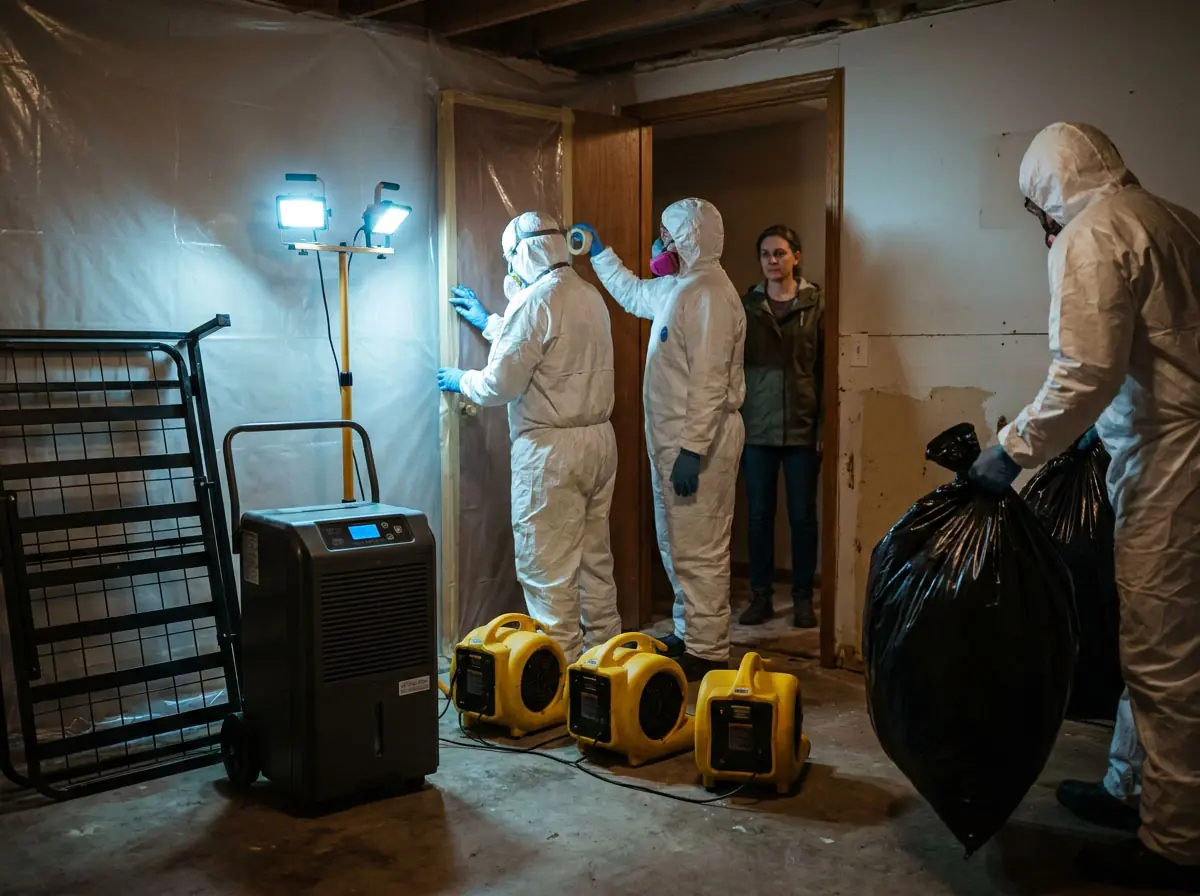
When you hire a pro, we do not just walk in with a rag and a bucket. We create a negative pressure zone that acts like a quarantine chamber for your mold problem. By sealing off the affected room with thick polyethylene plastic, we ensure that microscopic spores do not hitch a ride on the air currents to other parts of your home.
Without this physical barrier, every time you move a piece of contaminated drywall, you are essentially launching a biological weapon into your own HVAC system. This is how a small mold spot in the bathroom suddenly becomes a whole-house nightmare. Professional remediation stops this chain reaction immediately.
The Tools That Actually Kill the Threat
We use HEPA (High Efficiency Particulate Air) filtration units that scrub the air clean of particles as small as 0.3 microns. These machines work constantly to capture the spores that get kicked up during the removal process. Consider the technical difference between our approach and the DIY way:
- Negative Air Pressure: Keeps spores trapped inside the work zone rather than spreading throughout your Lancaster home.
- Industrial HEPA Scrubbers: Removes 99.97 percent of mold particles from the air, making it safe to breathe again.
- PPE Protection: Our crews wear respirators and specialized suits, protecting their health and preventing cross contamination.
- Moisture Mapping: We use moisture meters to find the hidden water source that started the party in the first place.
Once the air is cleaned and the site is contained, we remove the infected materials at the root. We do not stop until the moisture readings indicate the structure is dry. This is the difference between a permanent fix and just painting over a problem that will surely return next season.
Preventing Re-Growth: A Lancaster Case Study on Structural Recovery
Consider a recent job we handled in a West Lancaster residence. The homeowner ignored a minor HVAC leak for months, assuming the desert air would simply dry it out. By the time we arrived, the mold had migrated into the wall cavities and compromised the integrity of the base plates.
We didn't just spray the area; we performed a full structural recovery. This involves removing the contaminated materials and treating the underlying wood with antimicrobial sealants that lock out moisture for good.
The Keys to Long-Term Prevention
Stopping mold isn't about magic; it is about managing your home's environment. If you want to avoid a repeat performance, you have to cut off the mold's food and water supply.
- Inspect your HVAC condensate lines every spring.
- Ensure your attic ventilation is not blocked by insulation.
- Use a dehumidifier in bathrooms that lack high-performance exhaust fans.
- Seal cracks in your exterior stucco to keep monsoon moisture out.
Ignoring these details is how you end up back at square one. Smart locals understand that moisture control is the only way to protect your investment. Once the environment is stabilized, the mold has no reason to return.
Final Words
Mold is not a weekend chore; it is an biological invasion that plays by its own rules. If you ignore the source, you are essentially paying for a guest room that only houses toxic spores.
The smartest Lancaster homeowners stop playing games with bleach and vinegar. They treat their property like the major financial asset it is by calling in professionals who understand the physics of moisture control.
If you see the signs, do not wait for the colony to expand. Ignoring a damp spot today guarantees a massive bill tomorrow. Explore our professional Mold Remediation process to see how we neutralize the threat at the source.
The Reality Check
You have to make a choice between a quick, temporary fix or a permanent solution. The spray bottle approach is a temporary distraction that ignores these critical facts:
- Surface cleaners cannot penetrate porous materials like drywall or wood framing.
- Drying the air is useless if water is still weeping from a hidden plumbing leak.
- Ignoring a small patch today creates an expensive structural nightmare by next season.
Protecting your home comes down to one simple habit. Stop reacting to the smell and start killing the source of the moisture.
People Also Ask
Is mold remediation necessary if I only see a small amount?
Yes, visible mold is often just the tip of the iceberg, indicating a larger colony hidden behind your walls. Professional assessment ensures that the root moisture source is identified and fully eliminated to protect your indoor air quality.Why does my home in Lancaster have mold despite the dry climate?
Even in a desert environment, moisture from pipe leaks, roof damage, or HVAC condensation creates a perfect breeding ground for mold. These hidden pockets of humidity allow spores to thrive in areas you might not check regularly.What are the health risks of living with mold?
Exposure to mold can cause a range of respiratory issues, allergic reactions, and irritation for sensitive individuals. According to the Environmental Protection agency, addressing moisture control is the most important step in preventing long term health concerns related to indoor mold.Can I clean up a mold infestation using household bleach?
Bleach is generally ineffective for porous surfaces like drywall or wood because it only kills surface mold while leaving the roots intact. Professional remediation is required to safely remove the mold, treat the structural materials, and prevent recurrence.How do professionals ensure mold does not spread during removal?
Technicians use specialized containment barriers and high efficiency particulate air filters to trap microscopic spores during the cleanup process. This standard of care ensures that the rest of your home remains uncontaminated while the affected area is restored.Need Water Damage Restoration Services?
We provide rapid emergency water extraction and structural drying services to restore your Lancaster property and surrounding communities. Our expert team arrives promptly to mitigate damage and secure your home or business (93534, 93535, 93536, 93551).
Request Price Estimate