


⚡ TL;DR: To successfully manage mold remediation in your Lakewood home, you should avoid common pitfalls like using bleach or ignoring moisture sources by following these essential professional safety guidelines.
📋 What You’ll Learn
Mold growth in Lakewood requires precise removal techniques to ensure your property remains safe. This guide covers the critical errors homeowners often make during remediation and how to avoid costly complications.
- Identify hidden moisture sources effectively by understanding how Colorado humidity and local climate patterns influence basement dampness, allowing you to stop mold regrowth at the very source.
- Avoid the common bleach trap by learning why household cleaners often fail to kill deep-rooted mold colonies and how using them can actually damage your building materials permanently.
- Implement strict containment strategies to prevent dangerous microscopic spores from traveling through your HVAC system and cross-contaminating other clean rooms in your Lakewood home during the process.
- Prioritize professional remediation protocols by recognizing why DIY testing kits and incomplete removal methods frequently lead to recurring infestations that compromise your indoor air quality and health.
📖 Reading time: 7 min
✍️ Author expertise: Certified water damage professional with a decade of mold remediation experience in Lakewood.
You spot a fuzzy patch in the corner of your basement and reach for the bleach, thinking you have the upper hand. You might feel like you saved a few bucks, but you have likely just triggered a silent, toxic explosion behind your walls.
Mold is not just a cleaning problem. It is a biological invader that thrives on the very mistakes most Lakewood homeowners make during their first attempt at removal.
If you miss these critical steps, you aren't just wasting time; you are risking the long-term health of your family and the structural integrity of your home. Before you grab another rag, take a look at the seven dangerous traps you must avoid to keep your property safe.

Why Bleach is the Worst Enemy of Mold Remediation
The biggest myth in home maintenance is that bleach kills mold on porous surfaces. It is a dangerous half-truth that often leads to a false sense of security.
When you apply bleach to drywall, wood, or carpet, the liquid component (water) soaks deep into the material. The chlorine, however, remains on the surface. You effectively feed the roots while only cleaning the visible top layer.
The result? The mold grows back faster and stronger within days. You are essentially watering a garden of toxic spores right inside your Lakewood residence.
If you rely on bleach for remediation, you face several major risks:
- The water content provides instant hydration for deep-seated mold roots.
- The harsh chemicals can degrade the structural integrity of building materials.
- You create a toxic cocktail of fumes that irritates your lungs without actually removing the problem.
Professional remediation involves targeted antifungal solutions and mechanical removal, not household cleaners. If you want to stop the spread, you must stop treating mold like a simple surface stain.
The Dangers of Ignoring Hidden Moisture Sources
Most homeowners in Lakewood mistakenly believe that killing the visible mold is the end of the job. You scrub the wall until it looks pristine, but you leave the true culprit untouched behind the scenes.
If you do not find and stop the source of the moisture, the mold will simply grow back. It is a cycle of failure that wastes your money and keeps your family breathing in spores every single day.
You must hunt down the root cause before you even think about remediation. Here are the most common places moisture hides in your Colorado home:
- Leaking pipe joints hidden inside wall cavities.
- Condensation buildup caused by poor ventilation in your attic.
- Water seepage through foundation cracks during heavy spring rains.
- Faulty window seals that allow moisture to track into the drywall.
When you ignore these sneaky water entry points, you are essentially feeding the mold a steady diet. Proper drying equipment like high-capacity dehumidifiers and commercial air movers must be used to ensure the structure is bone dry. Without professional thermal imaging tools, these leaks are almost impossible to detect until the damage is already structural and expensive to repair.
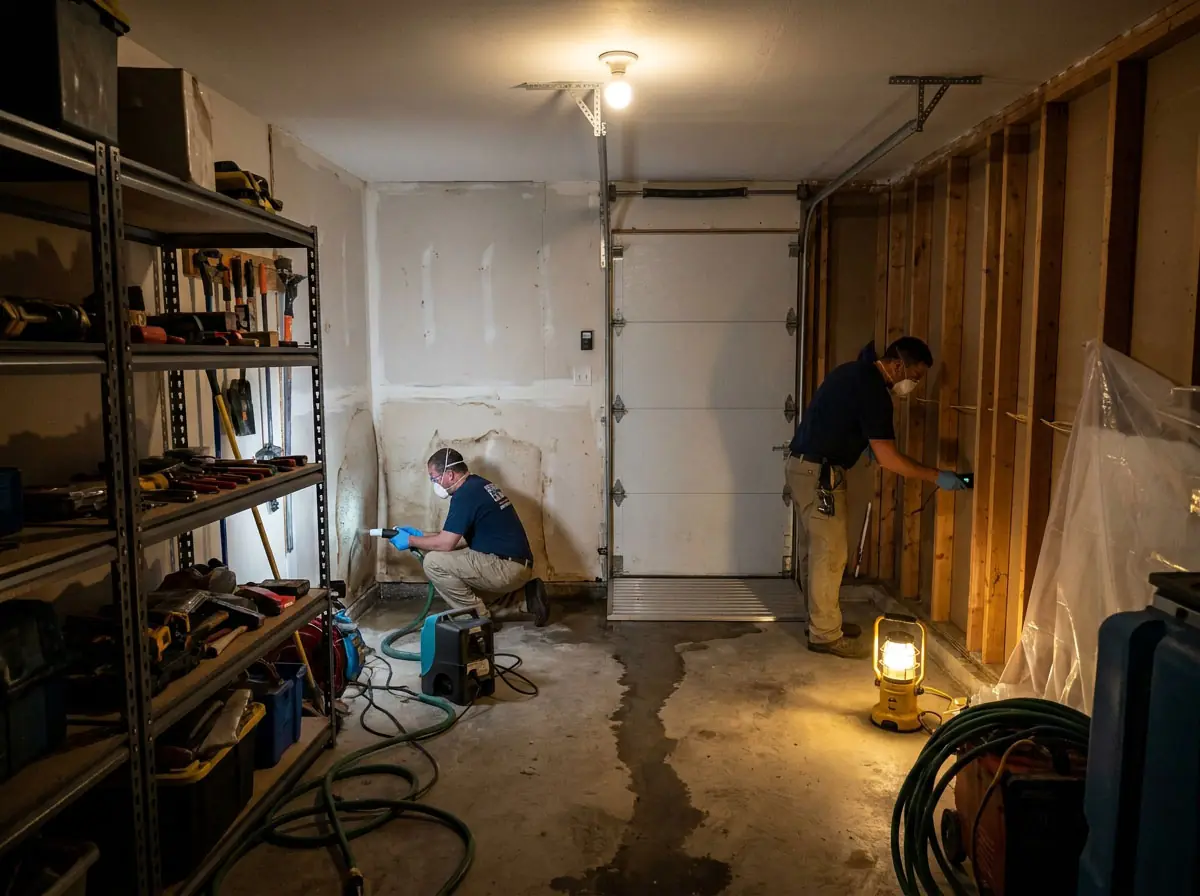
Why Inadequate Containment Spreads Spores Throughout Your Home
When you disturb a mold colony, you trigger a microscopic defense mechanism. The mold releases millions of tiny spores into the air to ensure its survival, and these particles can travel through your HVAC system or under doorways to reach every room in your Lakewood home.
Without proper containment, you are essentially turning a localized issue into a house-wide contamination event. Professionals use specialized physical barriers and negative air pressure to trap these spores, but most homeowners simply open a window and hope for the best.
Think of it like trying to control a smoke plume with a desk fan. You aren't removing the problem; you are just giving it a free ride to your kitchen, bedrooms, and ventilation ducts.
The Consequences of Poor Containment
If you lack industrial-grade barriers, you are guaranteed to cross-contaminate your living space. Consider these specific risks:
- Airborne migration: Spores travel easily on air currents created by your movement or your furnace.
- HVAC infiltration: Your blower fan acts as a giant vacuum, sucking mold into your ducts and distributing it to every vent in the house.
- Surface settling: Spores will eventually land on clothing, furniture, and carpet, waiting for a drop of humidity to start a new colony.
If you decide to handle this alone, you are essentially gambling with your indoor air quality. Do not underestimate the speed at which mold can colonize a new surface once it has been airborne. Once those spores settle into your carpet or bedding, standard cleaning will not be enough to stop the recurring cycle of growth.
Essential Equipment and Safety Gear: A Comparative Table
Most folks think a pair of rubber gloves and a face mask are enough to handle mold. They are dead wrong. Professional mold remediation requires specialized gear to stop microscopic spores from infiltrating your lungs or traveling through your HVAC system into other rooms.
| Equipment | DIY Approach | Professional Standard |
|---|---|---|
| Respirator | Paper Dust Mask | N95 or P100 Full Face Mask |
| Containment | None | 6-mil Polyethylene Sheeting |
| Air Scrubbing | Standard Box Fan | HEPA Filtered Air Machine |
| Surface Prep | Bleach Spray | EPA-Registered Antimicrobials |
| Monitoring | Visual Check Only | Moisture Meters and Hygrometers |
If you skip the HEPA filtration, you are essentially turning your house into a giant spore cannon. A regular shop vacuum will just suck up mold and blast the microscopic particles right out of the exhaust port, spreading contamination everywhere.
Why You Need More Than Just Protection
Real remediation is about containment and control. You need to keep the mold where it is while you remove it.
- Full body disposable suits prevent spores from clinging to your clothes and being tracked into your living room.
- Negative air machines keep the pressure inside the affected area lower than the rest of the home to prevent cross-contamination.
- Moisture meters reveal the hidden wetness inside drywall that you cannot see with the naked eye.
Attempting this work without the proper gear is a gamble with your health. The spores you cannot see are the ones that cause the most damage to your respiratory system, so do not cut corners on your safety.

Real-World Lessons: A Lakewood Mold Remediation Case Study
Last winter, a homeowner near Bear Creek Lake thought they could tackle a basement mold issue alone. They scrubbed the visible growth with a chemical cleaner and assumed the job was done.
Three months later, they called us. The basement air quality had plummeted, and family members were suffering from unexplained respiratory issues.
What they didn't realize was that a leaking pipe behind the drywall was constantly feeding the mold colony from the inside out. By cleaning only the surface, they ignored the source, allowing the fungus to colonize the interior wall cavity undisturbed.
Here is what happens when you skip professional assessment:
- The mold spreads through the HVAC system, contaminating every room.
- Porous building materials like drywall and insulation become permanently saturated with spores.
- The remediation costs triple because the initial DIY attempt made the contamination widespread.
We arrived to find the mold had migrated into the furnace ducts. The repair required full structural drying and air scrubbing to ensure the home was safe to inhabit again.
Do not let your home become a cautionary tale. If you see mold, investigate the root cause before you pick up a single tool.
The Perils of DIY Testing and Incomplete Removal
Most homeowners in Lakewood pick up a cheap test kit from a big-box store and feel like a scientist. The truth is, these kits are often misleading and provide a false sense of security that can actually hurt your home.
Consumer-grade kits fail to differentiate between harmless surface dust and toxic spores that could be damaging your health. Relying on a five-dollar swab to decide the fate of your property is a massive gamble with your family living in the middle of it.
If you miss the root cause, the mold simply returns within a few weeks, often stronger and more widespread than before. Complete removal requires professional detection methods that see through walls and behind insulation where eyes cannot reach.
Why Partial Removal Is a Trap
Many DIY efforts focus only on visible mold, leaving the underlying colony to thrive in the dark. If you do not address the entire affected area, you are just pruning a weed while leaving the roots buried deep in your structural materials.
Consider the dangers of incomplete remediation:
- Spores continue to circulate through your HVAC system, spreading to unaffected rooms.
- The remaining moisture feeds the colony, allowing it to penetrate deeper into wood and drywall.
- You end up paying twice, as a professional must eventually remove the contaminated material you missed.
- Hidden growth compromises the long-term value and safety of your residence.
Stop chasing symptoms and start addressing the structural integrity of your living space. Unless you have industrial-grade HEPA vacuums and moisture mapping tools, you are likely leaving behind the very spores that make your home a hazard.
Final Words on Protecting Your Lakewood Home
Your home is likely your biggest investment, and keeping it mold-free is not a weekend project you can wing. When you realize the problem is deeper than surface-level spores, professional Mold Remediation becomes your most cost-effective insurance policy.
Lakewood weather patterns create a perfect storm for fungal growth. From the shifting humidity to cold basement corners, your property is under constant pressure.
Taking shortcuts does not save you money; it just pushes the bill into the future when the damage becomes irreversible. To keep your living space clean, focus on these three habits:
- Inspect your basement and attic every time the seasons change in Colorado.
- Fix small plumbing leaks the second you see them, even if they seem minor.
- Keep your indoor humidity levels between 30 and 50 percent at all times.
Do not wait for a musty smell to take over your hallways or for family members to start complaining about unexplained allergies. Prevention beats a tear-out every single day.
If you suspect an issue, contact a specialist who knows the specific construction challenges found right here in our community. Your family deserves a home that breathes clean air, not a house hiding toxic secrets behind the drywall.
People Also Ask
Is it safe to remove mold yourself in Lakewood?
Professional remediation is strongly recommended because DIY methods often fail to kill roots, leading to recurring growth. Improper handling can release toxic spores into your HVAC system and contaminate other areas of your home.Does homeowners insurance cover mold removal in Colorado?
Most insurance policies only cover mold remediation if it is a direct result of a sudden, accidental water event like a burst pipe. You should review your specific policy to understand what is covered because mold caused by long term neglect is typically excluded.How do I know if I have a serious mold problem?
Common signs include a persistent musty odor, visible patches of growth on walls or ceilings, and unexplained respiratory issues for residents. According to the federal agency, any significant moisture intrusion must be addressed immediately to prevent biological hazards.What is the most effective way to kill mold?
The most effective approach involves physical removal and moisture control rather than just surface cleaning. Chemicals like bleach often fail on porous materials, so professional crews use HEPA filtration and antimicrobial agents to ensure complete eradication.How long does the professional mold remediation process take?
The timeline depends on the size of the infestation and the complexity of the water damage, usually ranging from a few days to a full week. A professional assessment will provide a clear schedule based on the drying requirements of your specific property.Need Water Damage Restoration Services?
We provide rapid water damage restoration and structural drying services to restore your property in Lakewood and surrounding areas (80214, 80215, 80226, 80228, 80232). Our team arrives quickly to mitigate damage and return your home or business to a safe, dry condition.
Request Formal Estimate