


⚡ TL;DR: Homeowners in Kent can effectively manage mold remediation by addressing hidden moisture sources, utilizing professional containment methods, and following proactive maintenance strategies to ensure a healthy living environment.
📋 What You’ll Learn
Living in Kent means battling constant moisture, but local homeowners have developed effective strategies for mold control. This guide reveals the professional methods and preventative habits that keep homes safe.
- Master effective removal techniques by understanding why household bleach often fails to stop mold regrowth in our specific climate and why containment is essential for your family.
- Pinpoint hidden moisture sources that frequently trigger outbreaks in Kent residences, ranging from poor attic ventilation to subtle plumbing leaks that sustain colonies behind your drywall.
- Follow proven professional protocols used by local experts to ensure that spores are physically eradicated and your indoor air quality is restored to healthy, safe levels.
- Implement long-term prevention habits that protect your property investment by managing humidity levels and addressing moisture vulnerabilities before they develop into expensive, hazardous mold remediation projects.
📖 Reading time: 7 min
✍️ Author expertise: Certified restoration professional with fifteen years of experience mitigating mold in Kent homes.
You wake up to that unmistakable, musty stench clinging to your curtains, and suddenly, you realize your home has become a secret breeding ground for something far more aggressive than simple dust. In Kent, the damp Pacific Northwest climate acts like an open invitation for mold to take root behind your walls, often long before you see a single black spot.
Most homeowners panic and reach for a bottle of bleach, only to find the problem blooming again with a vengeance a few weeks later. Smart residents here know that surface cleaning is just a band-aid on a bullet wound that puts your family’s health and your property value at serious risk.
The pros don't play guessing games with moisture and spores, and you shouldn't either. Here is how the most prepared homeowners in the valley stop mold cold before it destroys their investment.

Beyond the Bleach: Why DIY Mold Removal Fails in Kent’s Humid Climate
If you live in Kent, you know our air stays heavy with moisture for most of the year. Bleach is the classic go-to solution for many, but it is fundamentally flawed when dealing with porous materials like drywall, wood, or insulation. When you spray bleach on these surfaces, the liquid component sinks in, while the chlorine stays on the surface.
This creates a false sense of security while leaving the actual mold roots intact beneath the surface. Essentially, you are feeding the colony the moisture it needs to grow deeper into your home's structural framing.
The Real Danger of DIY Tactics
Attempting to scrub away an outbreak without proper containment turns your home into a construction site for spores. Every time you wipe or brush a moldy area, you release thousands of microscopic spores into the air, allowing them to settle in new, hidden locations.
- Incomplete eradication: Bleach does not kill the root system of mold on porous surfaces.
- Spore dispersal: Aggressive scrubbing spreads contamination to your HVAC system and ventilation ducts.
- Health risks: Inhaling disturbed spores can trigger immediate respiratory issues and long-term allergic reactions.
Smart homeowners realize that if you can see the mold, the real problem is likely much larger than what is visible. Professional remediation focuses on source removal and environmental control, rather than just masking the symptoms with a cleaning agent. Stop chasing the color and start attacking the moisture cycle that keeps the fungus alive.
The Anatomy of an Outbreak: Identifying Hidden Moisture Sources in Your Home
Mold does not just appear; it hunts for water. In the Kent area, the culprit is rarely a massive flood that you can easily spot. More often, it is a slow, rhythmic drip or condensation buildup occurring inside your walls or under your flooring.
If you wait for a visible colony to appear on your drywall, the damage is already systemic. Smart homeowners investigate the infrastructure of their property, looking for these common moisture traps:
- Leaking plumbing lines hidden behind vanity cabinets or kitchen islands.
- Improperly vented bathroom fans that pump humid air directly into the attic.
- Cracked window seals allowing exterior moisture to seep into wood framing.
- Cold-bridging near foundation walls where warm indoor air hits freezing concrete.
- Crawlspace vapor barriers that have been punctured by pests or debris.
You need to play detective before the mold takes hold. Use a moisture meter to test suspect areas around pipe penetrations or baseboards. Even a small increase in dampness creates the perfect petri dish for fungal growth.
If you find water, you must stop the source immediately. Drying the surface is useless if the wall cavity remains damp. Professionals focus on the moisture cycle, ensuring the source is sealed before starting any remediation work.
Professional Protocols for Containment and Spore Eradication
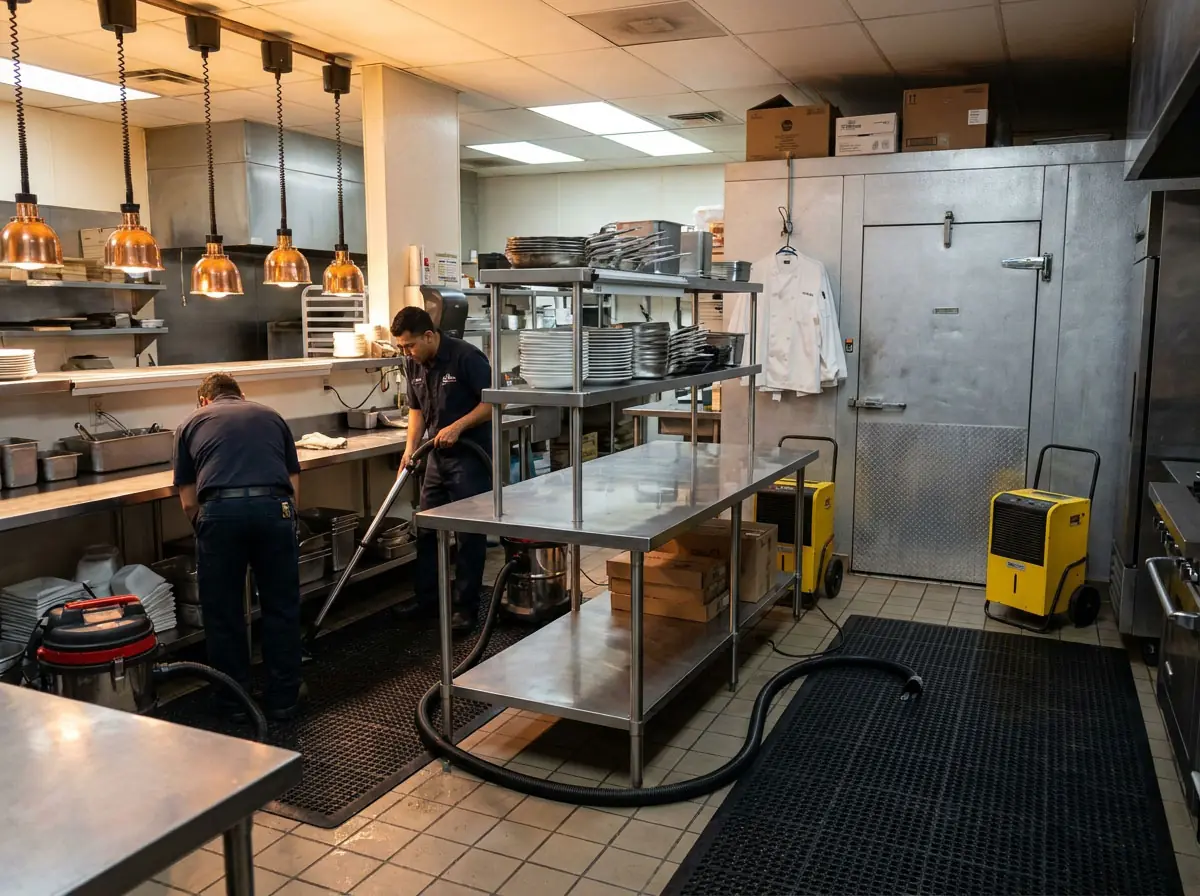
When you hire a professional team in Kent, we do not just scrub the walls. We follow rigorous industry standards to ensure that toxic spores do not travel to clean areas of your house during the cleanup process.
The first step is containment. We use heavy-duty plastic sheeting and negative air pressure machines to lock the mold inside the affected zone. This keeps your kitchen or bedroom air quality safe while we work.
The Science of Spore Removal
Next, we move into the actual eradication phase. Simply wiping a surface does nothing for the root system growing deep into porous materials like drywall or wood studs.
Our technicians use specific tools to ensure nothing is left behind:
- HEPA-filtered vacuums to trap microscopic particles.
- Industrial-grade dehumidifiers to dry out the structure.
- Antimicrobial treatments that stop future growth.
- Air scrubbers to clear the remaining atmosphere of spores.
If we find that the building materials have sustained too much damage, we perform controlled demolition. We remove the compromised sections entirely rather than risking a secondary outbreak. This surgical approach ensures your home remains a healthy space for your family long after we pack up our gear.
Local Restoration in Action: A Kent Homeowner’s Success Story
Take the case of the Miller family over in the East Hill neighborhood. They noticed a faint, recurring dampness near their basement baseboards, but ignored it, assuming it was just a byproduct of a wet Kent winter.
By the time they pulled back the drywall, they found an extensive mold colony thriving on the backside of the studs. It wasn't just surface growth; the structure was already being compromised.
Instead of scrubbing the area with household cleaners, they contacted our team immediately. We didn't just wipe away the visible spores; we dismantled the contamination site and addressed the root moisture intrusion.
The Millers' Strategic Cleanup Checklist
- Immediate isolation of the basement zone to prevent cross-contamination.
- HEPA-filtered air scrubbing to capture airborne spores during demolition.
- Professional moisture mapping to find the hidden leak behind the insulation.
- Application of commercial grade antimicrobial sealants on structural timber.
- Post-remediation clearance testing to guarantee the air quality returned to safe levels.
Today, their basement is dry, odor-free, and most importantly, safe for their kids to use as a playroom again. They saved thousands in long-term structural repairs simply by taking decisive action when they saw the first sign of trouble.

Evaluating Remediation Options: A Comprehensive Service Breakdown Table
Most homeowners assume that fixing mold means just scraping off the visible grime. That is a dangerous mistake. You need to choose a path based on the severity of the infestation and the structural integrity of your home.
| Service Level | Best For | Key Actions |
|---|---|---|
| Assessment | Early Detection | Moisture mapping and air quality testing. |
| Containment | Active Spread | HEPA air scrubbing and poly sheeting. |
| Remediation | Moderate Growth | Removal of affected drywall and biocide treatment. |
| Full Abatement | Severe Infestation | Complete structural sanitization and mold blocking. |
When you start shopping for a pro, do not just look at the lowest quote. A cheap price usually hides a lack of containment protocol, which actually spreads spores to other rooms in your Kent house.
Look for these specific standards to ensure the job is done correctly the first time:
- Third party testing to verify the mold is actually gone after cleaning.
- The use of industrial grade HEPA filtration to trap microscopic spores.
- Documented moisture removal to ensure the mold does not have a reason to return.
If a service provider cannot explain how they stop cross-contamination, walk away. Your home is not a place for trial and error; it is where your family spends their time.
Safeguarding Your Property: Proactive Maintenance Strategies for Long-Term Prevention
Stopping mold in Kent is not about reacting to a crisis; it is about taking control of your home environment before the spores find a foothold. Humidity levels in the Green River Valley can spike quickly, turning a minor leak into a major headache if your property is not prepared.
The smartest homeowners here treat their houses like machines that require regular checkups. By staying ahead of moisture, you save thousands in restoration costs and protect your family from respiratory irritants.
Key Defensive Measures for Kent Homeowners
Implementing these habits is the difference between a dry, healthy home and a structural nightmare. Start by focusing on these high-risk areas:
- Check your attic and crawl spaces twice a year for signs of condensation or wood rot.
- Ensure your gutters are clear so that water flows away from your foundation rather than pooling against your siding.
- Install high-quality dehumidifiers in basements or lower levels to keep the air moisture consistently below 50 percent.
- Fix dripping faucets or pipe leaks immediately, no matter how small they seem to be.
- Keep interior doors open to encourage airflow in corners and closets where air often goes stagnant.
Routine inspections are your strongest weapon against the humid Northwest climate. Never ignore a faint musty smell, even if you cannot see the source of the dampness. By maintaining your home proactively, you keep the spores out, the air clean, and your property value where it belongs: at the top of the market.
Final Words
Mold is not just a cosmetic nuisance; it is a direct threat to your home's structural integrity and your family's health. Taking a half-baked approach to Mold Remediation is like trying to put out a forest fire with a water pistol.
You need a strategy that attacks the root of the problem, not just the visible surface. If you ignore the moisture, the spores will continue to thrive in the dark corners you cannot reach.
Before you commit to a restoration plan, keep these non-negotiables in mind:
- Always verify that your contractor uses industrial-grade dehumidifiers during the drying process.
- Ensure they utilize HEPA filtration to stop cross-contamination of your living spaces.
- Demand a moisture map report that proves the source of the leak is actually fixed.
A professional team provides more than just cleanup; they provide peace of mind. By stopping the moisture cycle today, you protect your bank account from the massive repair bills that come with long-term wood rot and toxic buildup. Stop waiting for the problem to grow; take control of your environment now.
People Also Ask
How can I tell if I have a mold problem in my Kent home?
You might notice a persistent musty odor, visible patches of discoloration, or unexplained respiratory issues among family members. Since our local climate is damp, checking basements and crawl spaces for signs of moisture is a smart first step.Is it safe to clean mold with bleach?
Bleach is generally ineffective on porous surfaces like drywall or wood because it only kills surface growth while leaving roots behind. According to the environmental protection agency, biocides are not recommended for routine mold cleanup in homes.Why does mold keep coming back after I scrub it away?
Mold returns because the underlying moisture source was never addressed, allowing new spores to colonize the area. Professional remediation involves drying out the structure to ensure the environment is no longer hospitable for fungal growth.Does homeowners insurance cover mold removal in Washington?
Coverage depends on whether the mold resulted from a sudden, accidental plumbing failure or long term neglect like a leaking roof. Review your specific policy details to see if your claim qualifies under your current protections.What should I look for when hiring a mold remediation company?
Prioritize companies that use specialized containment equipment, HEPA filtration, and advanced moisture mapping technology. Ensure they provide a clear scope of work that details how they will address the source of the dampness.Need Water Damage Restoration Services?
We provide rapid emergency water extraction and structural drying services to restore your Kent, WA property to its pre-loss condition. Our team responds immediately to mitigate damage and prevent secondary issues throughout the region (98030, 98031, 98032, 98042).
Request Custom Estimate