


⚡ TL;DR: This guide provides Kansas City homeowners with essential steps for effective burst pipe cleanup, professional remediation strategies, insurance documentation tips, and methods to prevent long term structural damage.
📋 What You’ll Learn
Dealing with a burst pipe in Kansas City requires swift action to protect your home. This guide provides essential steps, professional insights, and recovery strategies to help you navigate water damage restoration.
- Stabilize your property immediately by following our expert steps to shut off the main water line, which prevents further flooding and minimizes saturation to your floors and walls.
- Evaluate the need for pros when you understand why specialized extraction equipment is necessary to pull deep moisture out of Kansas City basements and prevent long term structural decay.
- Manage hidden secondary damage by identifying early signs of mold growth and structural weakening that often appear behind drywall or under flooring long after the initial pipe burst.
- Navigate insurance claims successfully by using our documentation guide, ensuring you track every detail of the damage to secure the maximum coverage allowed under your homeowners policy terms.
📖 Reading time: 8 min
✍️ Author expertise: Kansas City water damage specialist with ten years of field experience in home restoration.
You wake up at 3:00 AM to the rhythmic, sickening sound of water spraying behind your drywall. By the time you find the main shutoff valve, your Kansas City living room floor is already starting to buckle and warp.
A burst pipe is every homeowner's worst nightmare, turning a quiet night into a multi-thousand-dollar emergency in mere minutes. The clock is ticking, and the longer that water sits, the faster mold and structural rot move in to claim your property.
You do not have time to guess what to do next or wait for a slow response. Here is exactly how to stop the damage and save your home before the situation spirals out of control.

Immediate Steps to Stabilize Your Property After a Pipe Bursts
The first few minutes after you discover a burst pipe are the most critical. You must act decisively to stop the flow of water and protect your assets from further saturation.
Locate your home’s main water shutoff valve immediately and turn it clockwise until it stops. If the pipe burst is isolated to a specific fixture like a sink or toilet, closing the local shutoff valve under that unit is often enough to stop the flooding.
Once the water is off, prioritize your safety above everything else. Follow these rapid response steps to minimize loss:
- Turn off the main electrical breaker if water is near outlets or appliances to prevent shock.
- Move portable furniture, rugs, and personal items to a dry area to stop water wicking.
- Punch small holes in ceilings where water is bubbling to release trapped fluid and prevent collapse.
- Document the scene with clear photos and video footage for your insurance provider before you start cleanup.
Do not attempt to walk through deep standing water if you suspect live electrical currents. If your basement is flooded past the depth of the electrical outlets, call an emergency professional before stepping inside.
Your goal right now is containment, not a full restoration. The faster you stabilize the environment, the lower the final repair bill will be when the restoration crew arrives.
Professional Water Extraction: Why Kansas City Homeowners Cannot Do It Alone
You might be tempted to grab your shop vac and a few towels to tackle the mess. Don't be fooled. Residential vacuums and store-bought dehumidifiers lack the muscle required to pull moisture from deep inside floor joists, carpet padding, and wall cavities.
Standing water is only the tip of the iceberg. Professional extraction is a precise science, and without the right tech, you are just moving the problem around instead of removing it.
Here is why local experts make a difference:
- Industrial-grade pumps move thousands of gallons per hour, far faster than manual methods.
- Moisture mapping tools find hidden pockets of water behind drywall where you cannot see or reach.
- High-velocity air movers force evaporation in areas that would otherwise stay damp for weeks.
If you leave moisture behind, you are inviting secondary damage. When water wicks into porous materials like wood studs or insulation, it creates the perfect breeding ground for toxic mold to start growing in as little as 24 to 48 hours.
Our team utilizes specialized extraction equipment that reaches deep into the structure. We don't just clear the surface; we dry the entire building assembly to prevent rot, warping, and long-term air quality issues.
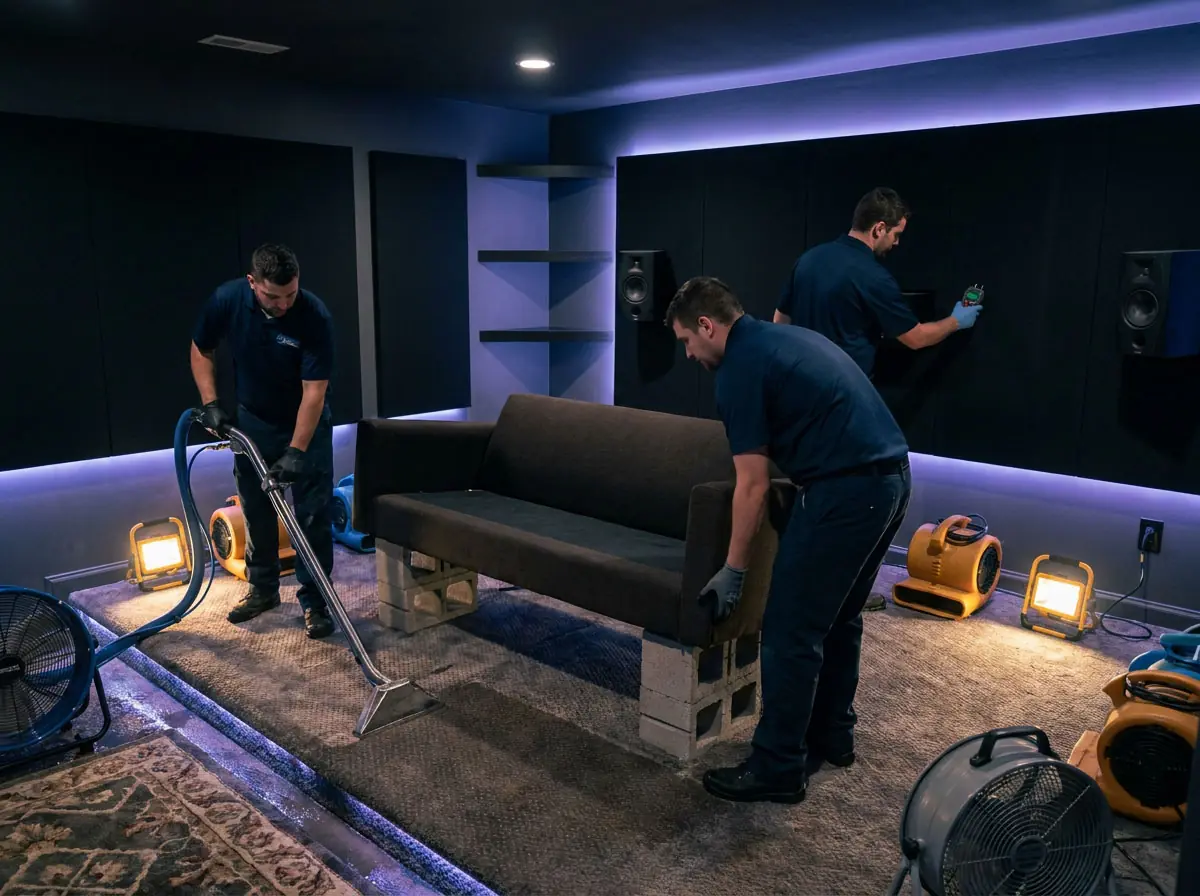
Essential Burst Pipe Damage Restoration Timeline Table for Quick Reference
When a pipe ruptures in your Kansas City home, time is your worst enemy. Water is a fast moving intruder that does not wait for you to find a contractor or call your insurance agent. Having a clear plan of action helps you minimize the total cost of repairs and prevents long term issues.
| Time Elapsed | Critical Action Needed |
|---|---|
| 0 to 2 Hours | Shut off main water and call professional restoration. |
| 2 to 24 Hours | Water extraction and industrial dehumidification begins. |
| 24 to 48 Hours | Mold prevention treatment and structural drying. |
| 48 Hours to 1 Week | Moisture mapping and final cleanup of damaged materials. |
| 1 Week+ | Property reconstruction and repairs begin. |
The first few hours are the most critical phase of the entire project. If you act quickly, you can save expensive flooring and stop water from soaking into your framing members. Once the moisture is removed, we move into the structural drying stage to stop rot before it starts.
Key Milestones for Homeowners
Keep these priorities in mind as the clock ticks:
- Safety First: Ensure the electricity is off if water has reached any outlets or light fixtures.
- Document Everything: Take clear photos of every wet area and damaged item before we begin moving things.
- Contain the Area: If the burst is confined to one room, keep doors closed to prevent humidity from spreading to the rest of the house.
Professional technicians use industrial grade equipment to pull water out of carpet pads and subfloors. Do not assume that a wet-dry shop vac is enough for the job. Our machines create the right environment to pull deep moisture out of walls and floorboards, ensuring your home stays safe from long term decay.
Hidden Dangers: Managing Secondary Damage Like Mold and Structural Decay
Stopping the initial flood is only half the battle. If you ignore the moisture trapped inside your walls, you are inviting a silent enemy to settle into your home.
Mold spores love the damp, dark environments left behind by a burst pipe. Within 24 to 48 hours, these spores begin to colonize, spreading across your drywall, insulation, and even your wooden floor joists.
Once mold takes hold, it does not just stay on the surface. It eats away at organic materials, turning your home’s structural framework into a soggy mess that loses its strength over time.
The Risks You Can't See
You might think that if the carpet feels dry, the problem is gone. However, water often wicks upward into baseboards or hides behind vanity cabinets, creating a reservoir for long term issues.
Watch for these warning signs that indicate your home is still hiding moisture:
- A persistent, musty smell that lingers despite opening windows.
- Peeling wallpaper or bubbling paint on walls near the burst site.
- Soft spots in your flooring or warped door frames that suddenly stick.
- Visible fuzzy patches or dark discoloration appearing on drywall seams.
Do not wait for these signs to become obvious. Structural decay moves quickly, and ignoring the dampness behind your walls is a direct path to a much more expensive repair bill later on.

Rebuilding a Kansas City Basement: A Case Study in Burst Pipe Recovery
When a client in Overland Park dealt with a burst copper pipe behind their finished basement wall, the damage was hidden but severe. The water didn't just pool on the floor; it wicked up the studs and saturated the drywall insulation, creating a breeding ground for hidden rot. We arrived within forty-five minutes to begin the emergency extraction and drying process.
The recovery process required a systematic approach to save what could be salvaged while removing anything that posed a health risk. We focused on three critical phases to return the home to its original condition:
- Controlled demolition of moisture-wicked drywall up to two feet above the water line.
- Application of industrial-grade antimicrobial treatments to prevent microbial growth.
- Deployment of specialized dehumidification units to draw moisture from the concrete foundation.
Rebuilding a basement after a flood isn't just about replacing carpet; it is about restoring the structural integrity of your home. We replaced the compromised sections of the wall with moisture-resistant materials and ensured the vapor barrier was properly sealed to prevent future issues. The end result was a basement that looked better than it did before the pipe burst, with added peace of mind that no hidden moisture remained.
Navigating Insurance Claims and Documentation Requirements for Water Damage
Dealing with a burst pipe is stressful enough without the added headache of fighting your insurance provider. The secret to a successful claim is thorough documentation from the very first second you spot the water.
If you fail to prove the extent of the damage, you are leaving money on the table. Use this checklist to build a rock-solid case for your adjuster:
- Take high-quality photos and videos of the standing water before you begin any cleanup.
- Record the specific source of the leak, such as a rusted fitting or a frozen pipe.
- Create a detailed list of every damaged item, including brand names and approximate age.
- Keep physical copies of every receipt related to temporary repairs or emergency supplies.
- Request a formal, itemized damage report from your restoration contractor immediately.
Do not throw away any ruined belongings until an adjuster has physically inspected them. It sounds counterintuitive, but holding onto water-logged carpet or warped drywall serves as vital evidence for your claim.
If you rush to clear the mess and toss the damaged goods into a dumpster, the insurance company may assume the damage was less severe than it actually was. Always check your policy for emergency mitigation coverage, which often covers the cost of professional extraction if it prevents further loss.
Remember that the adjuster works for the insurance carrier, not for you. Provide them with the facts, keep your communication in writing, and stay persistent if they try to undervalue your loss.
Final Words
When your home is drowning, you need more than a mop and a bucket. You need a team that acts like their own house is under siege.
Speed is the only currency that matters during a burst pipe emergency. Hesitation is the silent partner of rot and black mold.
If you are currently facing a flooding situation, stop reading and start acting. Our expert team specializes in Burst Pipe Cleanup to ensure your property remains a safe place for your family.
The Keys to a Rapid Recovery
- Cut the water at the main valve immediately.
- Kill the power to wet areas to prevent electrical fires.
- Document everything with photos for your insurance adjusters.
Waiting for the morning or hoping the water dries on its own is a recipe for permanent structural damage. Trust the pros who know exactly how to pull the moisture out of the studs and floorboards before the damage becomes irreversible.
We are ready to move the moment you call. Your home is your most valuable asset, so do not settle for anything less than immediate, professional intervention.
People Also Ask
How much does burst pipe cleanup cost in Kansas City?
Costs vary based on the extent of water saturation, the room affected, and whether secondary mold remediation is required. On average, homeowners can expect to pay based on industry standard restoration rates that factor in labor, equipment usage, and specialized drying techniques.What should I do immediately when a pipe bursts in my home?
First, locate your main water shutoff valve to stop the flow of water into your property. Once the water is off, contact a professional restoration service to begin the mitigation process and prevent further damage to your home structure.How do I know if I have mold after a burst pipe?
Mold growth can appear within 24 to 48 hours in damp, dark environments behind walls or under flooring. You should monitor for musty odors, visible discoloration, or persistent dampness to ensure your home remains safe according to EPA standards.Does homeowners insurance cover burst pipes in Kansas City?
Most standard homeowners insurance policies cover sudden and accidental water damage caused by a burst pipe. However, you must document all damage thoroughly with photos and video before starting cleanup to support your claim effectively.How long does the water extraction process take?
The initial extraction process usually takes a few hours to remove standing water, while the structural drying phase often takes several days. Professional dehumidifiers and air movers are necessary to ensure moisture is removed from porous materials like drywall and subflooring.Need Water Damage Restoration Services?
We provide rapid water damage restoration across Kansas City and surrounding communities to return your property to a safe, pre-loss condition. Our team delivers immediate drying and cleanup services to stabilize your home or business (64101, 64105, 64106, 64108, 64111).
Request Price Estimate