


⚡ TL;DR: This guide helps Hemet homeowners identify signs of crawl space water removal needs and provides effective strategies to protect foundations from the unique local soil and climate conditions.
📋 What You’ll Learn
Dealing with standing water under your Hemet home requires immediate action to protect your foundation and indoor air quality. This guide provides essential steps to mitigate moisture damage effectively and safely.
- Identify specific Hemet soil risks by understanding how our unique regional climate and drainage patterns contribute to chronic water pooling and foundation vulnerability beneath your residential crawl space area.
- Recognize hidden warning signs early to detect subtle indicators of sub-floor moisture intrusion before they escalate into major structural rot, mold infestations, or expensive damage to your property foundation.
- Compare effective mitigation techniques by weighing the benefits of professional industrial pumps against various DIY moisture control methods to determine which solution best suits your specific home situation.
- Follow essential emergency steps to safely handle standing water events, minimize hazardous mold growth, and preserve the integrity of your home until professional restoration experts can fully dry out.
📖 Reading time: 7 min
✍️ Author expertise: Local water damage specialist with years of hands-on crawl space restoration in Hemet.
You bought a home in Hemet to enjoy the sunny California lifestyle, not to host a private swamp underneath your floorboards. Yet, when the heavy rains hit or a pipe gives way, that dark, forgotten crawl space can turn into a breeding ground for rot, mold, and structural ruin.
Most homeowners assume a little moisture down there is just part of living in the valley. They are dead wrong, and that mistake is costing them thousands in property value.
Ignoring standing water beneath your home is like letting a slow-motion wrecking ball swing at your foundation. Before you lose your subfloor to decay or your indoor air quality to toxic spores, here is exactly how to stop the water and reclaim your home.

Why Hemet’s Unique Soil and Climate Increase Crawl Space Vulnerability
Hemet sits in a geographical bowl where the local soil composition works against you. The heavy clay content found throughout the San Jacinto Valley acts like a sponge, holding onto water long after the rain stops.
When the ground stays saturated, there is nowhere for the water to go. It searches for the path of least resistance, which is almost always the dark, porous perimeter of your home's foundation.
Consider these local factors that turn a minor storm into a major foundation headache:
- Expansive Clay Soils: This soil type swells when wet and shrinks when dry, creating cracks that allow liquid to seep directly toward your crawl space.
- High Water Table Shifts: During wetter seasons, the underground water table rises, pushing moisture up through the earth and into your subfloor area.
- Drainage Obstacles: Hemet’s flat terrain means that runoff does not always move away from the house effectively, often pooling right against the crawl space vents.
This environmental trap means your home is constantly fighting a battle against moisture from below. Even if you do not see a literal lake in your yard, the ground underneath is likely holding enough moisture to spark rapid mold growth and wood rot.
Think of your crawl space as a basement that never dries out. If you leave it exposed to Hemet’s specific soil conditions, you are essentially inviting structural damage to move in permanently.
Identifying the Hidden Warning Signs of Sub-Floor Water Intrusion
You probably don’t crawl under your house on a Tuesday night just for fun. Because of this, moisture issues often turn into expensive disasters before you even know they exist. You have to keep an eye on the subtle cues your home gives off when the space underneath starts holding water.
Keep a sharp lookout for these red flags that indicate you have a moisture problem brewing beneath your feet:
- A musty, earthy smell that seems to drift up through your floor vents or around baseboards.
- Unexplained high humidity levels inside your home, causing windows to fog up or wallpaper to peel.
- The sudden appearance of pests or termites, which thrive in damp, dark environments.
- Soft or spongy spots in your flooring that creak or give way when you walk over them.
- Increased energy bills, as your air conditioner struggles to battle the moisture-laden air being sucked up from the sub-floor.
Don't wait for your floorboards to warp or rot before you take action. If your indoor air quality starts to drop or you notice consistent dampness in your closets, it is time to grab a flashlight and investigate the crawl space. Spotting these issues early is the only way to avoid the gut-wrenching cost of a full structural rebuild.

A Comparison Table of Mitigation Methods: Professional Pumps vs. DIY Moisture Control
When standing water appears under your Hemet home, your first instinct might be to grab a shop vac or a cheap sump pump from the hardware store. While these might clear a few puddles, they rarely address the deep moisture saturation embedded in your soil and structural joists. Professional restoration services provide a more aggressive, permanent solution that prevents the recurring cycle of rot.
| Feature | DIY Moisture Control | Professional Mitigation |
|---|---|---|
| Extraction Power | Low (Surface only) | High (Industrial grade) |
| Mold Prevention | Minimal | Advanced biocides |
| Structural Check | None | Full assessment |
| Speed | Slow | Rapid response |
| Long Term Goal | Temporary fix | Complete drying |
The danger of the DIY approach is that it creates a false sense of security. You might see the water vanish, but the trapped humidity continues to feed mold spores behind your baseboards and inside your wall cavities. Moisture meters and commercial dehumidifiers are the only ways to ensure your subfloor is truly bone-dry before you seal the area back up.
Choosing a professional team means you get more than just a pump. You get a full inspection of your vapor barrier and drainage system, which is crucial for Hemet’s specific soil conditions. We don't just move the water; we ensure it never comes back.
Key Benefits of Professional Intervention
- Access to high-volume commercial grade pumps.
- Advanced moisture mapping to find hidden saturation.
- Expert evaluation of foundational health.
- Guaranteed removal of airborne mold contaminants.
Emergency Steps to Take When Standing Water Strikes Your Hemet Property
When you discover standing water beneath your home, your first instinct might be to jump into the crawl space with a shop vac. Stop. Safety comes first, and water combined with household electricity creates a lethal hazard.
Before you do anything else, prioritize these three critical actions to prevent a catastrophe:
- Cut the power to your crawl space by flipping the circuit breakers in your main electrical panel. Do not step into the water until you are certain that submerged wires or outlets are dead.
- Identify the source of the flood immediately. If it is a broken pipe, shut off your main water valve to stop the inflow.
- Avoid touching any damp insulation or wood, as these surfaces can quickly become coated in sewage or mold spores.
Once you have secured the area and verified that no live electricity is interacting with the water, you must act fast to limit the damage. Every hour that water sits, your floor joists absorb more moisture, which leads to permanent warping and structural decay.
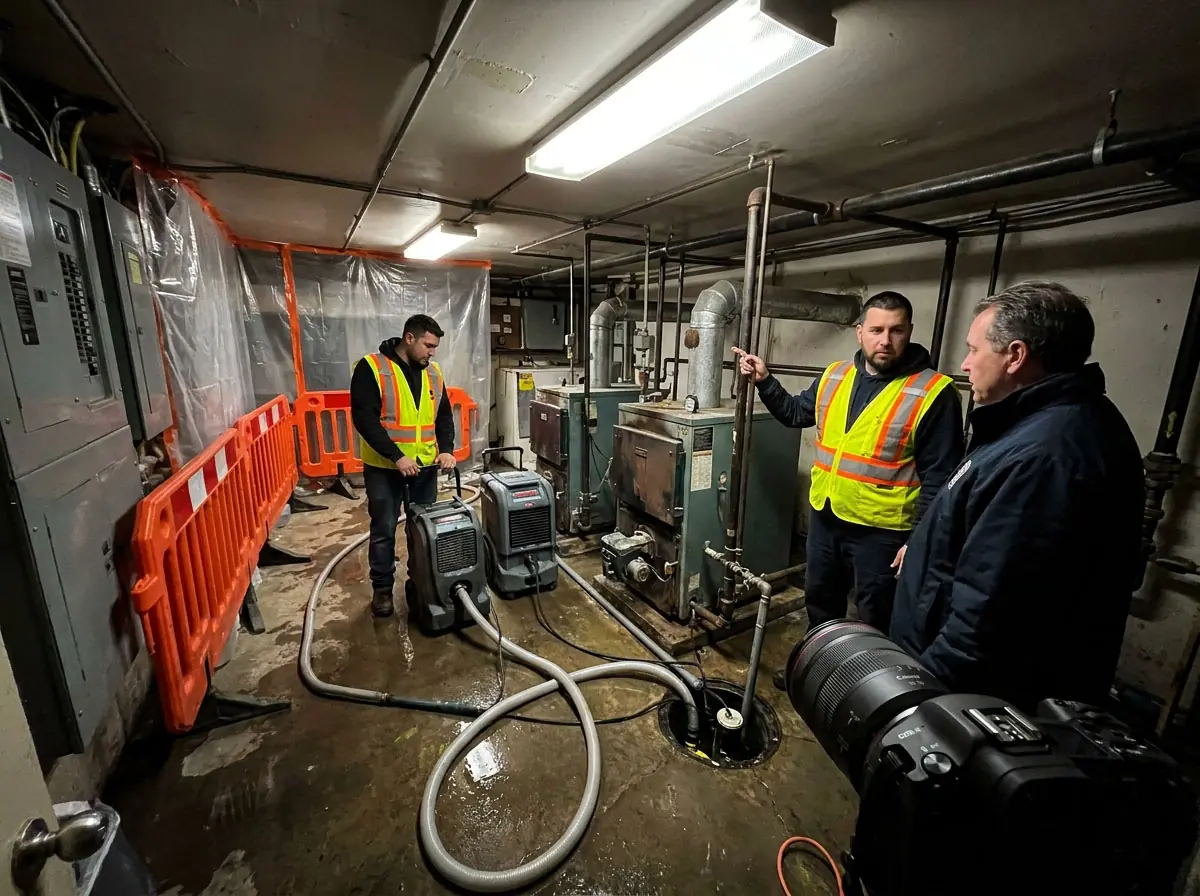
Do not wait for the water to evaporate on its own, because in our local climate, it simply will not happen fast enough. Call a professional restoration team that carries specialized submersible pumps and industrial grade dehumidifiers to extract the liquid and stabilize your property before rot sets in.

From Flooded Foundation to Dry Space: A Local Hemet Restoration Case Study
Last winter, a homeowner in the Seven Hills neighborhood called us in a panic. Heavy rains had overwhelmed their aging drainage system, sending nearly three inches of runoff straight into the crawl space.
The smell of wet earth had already crept into the living room, and the hardwood floors were starting to cup. We arrived within two hours to find the insulation sagging under the weight of trapped water and the support beams showing early signs of fungal growth.
Here is how we turned that disaster around in just three days:
- Phase One: We extracted the standing water using industrial pumps to prevent further soil saturation.
- Phase Two: We removed all water-logged insulation and performed a deep antimicrobial treatment on the floor joists.
- Phase Three: We installed a heavy-duty vapor barrier and a commercial-grade dehumidifier to lock out future moisture.
By the time we left, the air quality in the home had improved significantly, and the structural integrity was fully restored. It was a classic example of fast intervention saving the homeowner from an expensive foundation replacement down the line.
Long-Term Strategies for Encapsulation and Moisture Prevention
Once we have cleared the standing water from your Hemet home, the real work begins: keeping it dry for good. Relying on gravity alone is a losing game when the local soil acts like a sponge.
Crawl space encapsulation is the gold standard for long-term property protection. By sealing your foundation with heavy-duty vapor barriers and ensuring proper drainage, you effectively divorce your home from the dampness of the earth below.
Key Components of a Dry Crawl Space
- Heavy-duty 12-mil or 20-mil vapor barriers to seal off exposed soil.
- Commercial-grade dehumidifiers that cycle air constantly.
- Sealed foundation vents to prevent humid air from entering during Hemet’s changing seasons.
- Sump pumps with battery backups to handle sudden spikes in groundwater.
Think of encapsulation as a permanent suit of armor for your floor joists and insulation. When you eliminate the humidity cycle, mold spores lose their fuel source and structural wood rot stops in its tracks.
You are not just protecting a dark hole under your house. You are investing in your home's total longevity, improving your indoor air quality, and preventing the kind of deep rot that makes buyers run for the hills during a future home inspection.
Final Words
Your home is likely your biggest investment, and that crawl space acts as the silent foundation of your entire property. Treating moisture issues as a minor inconvenience is a gamble that almost always ends with a heavy repair bill.
If you see signs of dampness, do not wait for the next storm to make it worse. Whether you need a full inspection or immediate extraction, our team specializes in professional Crawl Space Water Removal to keep your Hemet home standing tall.
Three Golden Rules for a Dry Home
- Inspect often: Check your crawl space at least once every quarter, especially after significant rainfall.
- Prioritize drainage: Ensure your gutters direct water far away from your perimeter to stop soil saturation before it starts.
- Act fast: Mold spores and wood rot move quickly; waiting just forty-eight hours can turn a simple drying job into a major restoration project.
Staying ahead of the damage is much cheaper than tearing out rotted floorboards later. Take control of your home today by sealing up those vulnerabilities and keeping your foundation dry for the long haul.
People Also Ask
How much does crawl space water removal cost in Hemet?
The cost depends on the volume of standing water, the presence of mold, and the source of the leak. Most homeowners can expect to pay for a professional inspection to determine if the issue is groundwater intrusion or a plumbing failure.What are the health risks of water in a crawl space?
Standing water often leads to toxic mold growth and structural decay that can compromise your indoor air quality. According to the Environmental Protection agency, moisture problems should be addressed immediately to prevent the spread of harmful spores throughout your home.Does homeowners insurance cover crawl space flooding?
Coverage typically depends on the root cause of the water intrusion. Standard policies usually cover sudden plumbing bursts, but they often exclude damage caused by natural groundwater or surface flooding.How do I know if my crawl space has a moisture problem?
Look for signs like a musty odor inside your home, sagging floors, or visible water stains on your floor joists. High humidity levels inside the living space can also indicate that moisture is rising from beneath your home.How often should a Hemet crawl space be inspected?
It is recommended to have your crawl space checked at least once a year, preferably before the rainy season begins. Regular inspections help identify small leaks before they escalate into costly structural damage.Need Water Damage Restoration Services?
We provide rapid water damage restoration to stabilize your property and prevent further structural issues in Hemet and surrounding areas (92543, 92544, 92545, 92582). Our team arrives quickly to extract water and initiate professional drying to return your home to a pre-loss condition.
Request Price Estimate