


⚡ TL;DR: This guide teaches Fall River homeowners how to address hardwood floor water damage through rapid response, expert drying methods, and essential protocols to ensure long term structural restoration.
📋 What You’ll Learn
Facing hardwood floor water damage in your Fall River home requires swift, decisive action. This guide provides essential steps to minimize structural damage, restore your property, and prevent long-term mold growth.
- Identify immediate saturation steps to stop moisture from spreading deeper into your floorboards, helping you prevent irreversible warping before a professional restoration team arrives to start the drying process.
- Assess floor damage signs by learning how to distinguish between minor cupping and severe buckling, allowing you to determine if your historic floors are salvageable or require full replacement.
- Avoid common drying mistakes such as using household fans, which often trap moisture beneath the wood and lead to hidden mold growth and subfloor rot in your Fall River residence.
- Evaluate repair versus replacement through our detailed cost breakdown, providing the financial clarity needed to make an informed decision based on your specific hardwood type and extent of damage.
📖 Reading time: 8 min
✍️ Author expertise: Certified water damage restoration expert with fifteen years of experience serving Fall River properties.
You wake up to the sound of water dripping, rush to the living room, and find your beautiful hardwood floors cupping and warping right before your eyes. That sinking feeling in your gut isn't just panic, it is the realization that your most valuable home asset is currently rotting from the inside out.
Most homeowners in Fall River make a catastrophic mistake the moment they spot a leak, turning a minor puddle into a full-scale floor replacement bill. If you want to stop the decay and salvage your investment before the damage becomes permanent, you need to move with precision.
Here is exactly how you can identify the danger signs and take the right steps to save your floors today.

Immediate Response Actions to Stop Floor Saturation
When water hits hardwood, time is your worst enemy. The clock starts ticking the second the first drop lands, and every minute of standing water pushes the wood closer to the point of no return.
Your first move is to eliminate the source. Shut off the main water valve if a pipe has burst or place a heavy container under the leak immediately to keep the water from spreading across your floorboards.
Once the source is managed, your priority shifts to removing surface moisture. Use high-absorbency towels or a wet-dry shop vacuum to pull every drop of water off the surface. Do not ignore the gaps between the boards, as moisture loves to hide there and soak deep into the grain.
Essential Steps for Rapid Moisture Extraction
- Remove all furniture from the affected area to prevent weight from forcing water into the subfloor.
- Mop up standing water using microfiber cloths; they pull more moisture out of tight spaces than standard cotton rags.
- Clean the area with a pH-neutral wood cleaner to prevent chemical staining once the wood begins to react to the moisture.
- Avoid harsh heat sources or direct sunlight.
Many homeowners make the fatal error of cranking the heat up or aiming a space heater at the floor. This forces the wood to dry too quickly, which leads to immediate cracking and permanent structural failure.
Instead, keep the room temperature stable and focus on circulating air. Use a dehumidifier if you have one to pull the humidity out of the air, which encourages the trapped water in your floors to evaporate naturally rather than violently.
Evaluating the Severity of Cupping, Crowning, and Buckling
When moisture invades your hardwood, the wood fibers react instantly. You need to identify exactly which type of deformation is occurring, as each stage tells a different story about the hidden damage beneath your feet.
Cupping happens when the edges of your floorboards rise higher than the center. This creates a concave shape that often points to moisture coming from underneath the boards, usually due to a leaking pipe or a damp crawlspace.
Crowning is the exact opposite; the center of the board arches upward while the edges sink. This typically occurs when you sand a cupped floor too quickly before it has fully dried, effectively trapping the moisture inside.
Buckling is the most extreme form of damage. This occurs when the wood pulls away from the subfloor entirely, lifting in large sections or waves. If you see this, the structural integrity of your floor is likely compromised, and you must act immediately to stop further spreading.
How to Identify the Damage
Walk through your home and look for these warning signs. Even if the floor looks flat, check for these hidden indicators:
- Visible gaps between boards that widen when the humidity shifts.
- A dull or cloudy finish that appeared suddenly after a spill or leak.
- Creaking sounds when you step on specific areas that were previously quiet.
- Discoloration or dark stains near the seams of the planks.
Ignoring these signs is a financial trap. A small patch of cupping can often be salvaged with professional drying, but once the wood begins to buckle, the cost of repair skyrockets because the subfloor and the fasteners usually need full replacement.
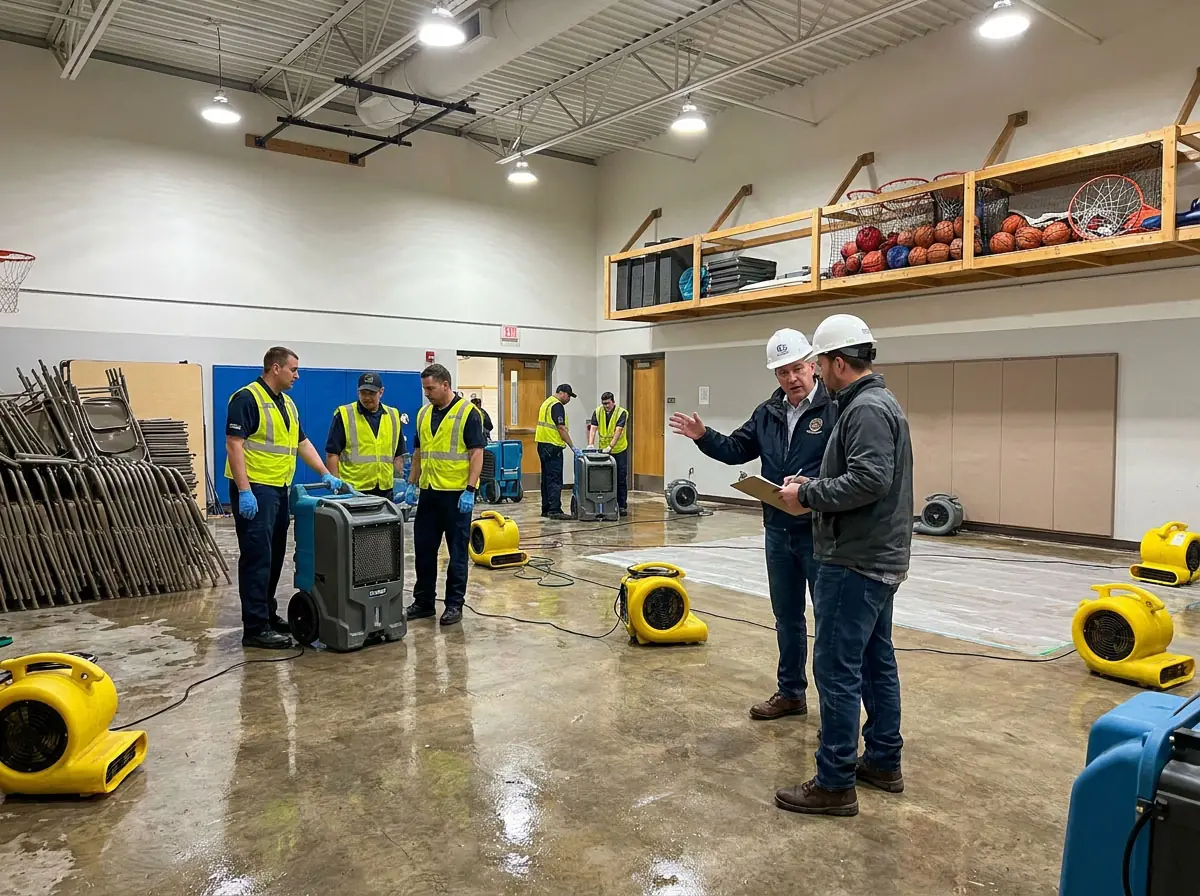
Professional Drying Techniques vs. DIY Fan Failures
The biggest trap homeowners fall into is thinking a box fan and a dehumidifier from the hardware store will save the day. While airflow feels like a smart move, surface-level drying often locks moisture into the subfloor, creating a hidden breeding ground for mold while the top of your floor looks bone dry.
Professional restoration requires industrial grade equipment that most people cannot access. We use specialized moisture meters to track deep saturation and high velocity air movers designed to force airflow into the tongue and groove joints of your hardwood planks.
Why Professional Drying Beats DIY Methods
- Dehumidification: We use refrigerant units that pull gallons of water directly from the air, not just move humidity around the room.
- Targeted Heat: Controlled heat helps release trapped moisture from within the wood fibers without causing the floor to crack or shatter.
- Moisture Mapping: Our gear detects exactly where water has migrated behind baseboards and under floorboards, ensuring nothing is missed.
When you rely on standard household fans, you are likely only drying the top layer of finish. This false sense of security allows trapped water to destroy the integrity of your floorboards from beneath. Our process pulls that deep moisture out completely, preventing the long term rot that makes an expensive replacement necessary.
A Comparative Cost Breakdown of Repair vs. Replacement
When your floors get soaked, your wallet takes a hit. Most homeowners panic and assume a total tear-out is the only path forward, but that is often a costly mistake.
Professional drying and sanding can often bring your hardwoods back to life for a fraction of the cost of new materials. However, if the water has compromised the structural integrity of the subfloor, replacement becomes the only logical choice.
| Damage Scenario | Repair Estimate | Replacement Estimate |
|---|---|---|
| Minor Cupping | $500 - $1,500 | $5,000 - $12,000 |
| Buckling & Warping | $2,000 - $4,500 | $7,000 - $15,000 |
| Mold/Rot Infestation | N/A | $8,000 - $20,000 |
| Historical Preservation | $3,000 - $6,000 | $12,000+ |
The numbers above reflect average market prices in Fall River, but your specific outcome depends on the species of wood and the duration of exposure. If you act within the first twenty-four hours, you are significantly more likely to fall into the lower-cost repair bracket.
Remember that replacement is not just about the cost of boards. You must factor in:
- Demolition and debris removal fees
- The cost of leveling the underlying structure
- Refinishing and matching existing wood stains
- Extended displacement time for your family
Do not throw your money away by jumping to the worst-case scenario. Get a professional moisture reading before you call a contractor to rip anything out, because you might be able to save your floor for pennies on the dollar.

Restoring a Historic Fall River Home: A Hardwood Salvage Case Study
Many homeowners in our historic Fall River districts, especially those with properties dating back to the textile boom, assume that water-damaged oak or maple floors are beyond saving. When a burst pipe flooded a century-old Victorian in the Highlands, the homeowner feared the original tongue-and-groove planks were destined for a dumpster. We intervened by bypassing standard hardware store fans and instead applied industrial desiccant dehumidification to pull moisture out of the wood slowly without forcing the grain to crack.
By monitoring the wood's moisture content with precision probes, we saved 90% of the original flooring. This strategy preserved the character of the home while avoiding the impossible cost of sourcing period-matched lumber today.
Key Lessons from the Highland Salvage Project
- Control the Environment: We sealed off the room to maintain a specific humidity level; this prevented the wood from shrinking too rapidly.
- Sanding and Finishing: Once the subfloor was confirmed dry, we performed a light refinishing to remove surface stains and seal the pores against future humidity.
- Subfloor Inspection: We removed baseboards to allow air circulation behind the walls; this hidden step is vital for stopping rot that owners rarely see.
Historic homes require a surgical approach rather than a demolition mindset. Treating these floors requires patience and professional tools designed for deep structural extraction, not just surface air movement.
Mold Prevention Protocols for Subfloor Protection
When water seeps through the cracks of your hardwood, the damage rarely stays on the surface. The subfloor acts like a sponge, trapping moisture in a dark, stagnant environment where mold colonies thrive within 24 to 48 hours.
If you ignore the space beneath your boards, you are inviting a hidden disaster that can rot your floor joists. You must treat the subfloor with the same urgency as the finished wood surface to stop an infestation before it spreads to your home’s structural foundation.
Critical Steps to Block Mold Growth
- Remove all standing water immediately using a wet-dry shop vacuum.
- Pull up saturated baseboards to improve airflow across the edge of the subfloor.
- Apply a professional-grade antimicrobial solution to neutralize hidden spores.
- Monitor the moisture levels of the floor joists with a digital meter to ensure they fall below 16 percent.
Do not simply spray bleach on the area and assume you are safe. Bleach often fails to penetrate porous wood materials, meaning the mold roots remain alive deep inside the subfloor fibers. Professional remediation is the only way to ensure the area is truly sanitized and safe for your family.
Final Words
Time is the silent killer of beautiful woodwork. If you wait even twenty-four hours to address moisture, you are essentially inviting mold to set up shop underneath your planks.
You have to act with absolute speed to prevent the wood fibers from reaching their saturation point. If you suspect your home has sustained Hardwood Floor Water Damage, stop guessing and start calling for help.
Keep these priorities in mind when you are staring down a flooded room:
- Cut the water source immediately to stop the flow.
- Extract standing liquid with a high-grade shop vacuum.
- Avoid using standard box fans which often push moisture deeper into the grain.
- Call professionals who have the industrial grade dehumidifiers required to pull water from the subfloor.
Saving your floors is not about luck. It is about mechanical moisture removal and controlling the environment before the structural integrity of the wood fails completely.
Do not let your floors sit in a puddle while you debate whether it is serious. Once cupping starts, the clock is ticking on a replacement bill that will cost thousands more than a professional drying service.
People Also Ask
How long do I have before hardwood floors are permanently damaged by water?
Hardwood floors typically begin to absorb moisture within a few hours, leading to expansion and potential surface damage. It is critical to initiate professional extraction within 24 to 48 hours to prevent irreversible warping or microbial growth.Can I use a dehumidifier to dry my hardwood floors in Fall River?
While a household dehumidifier helps manage air moisture, it is rarely sufficient to pull water from deep within the wood grain or the subfloor. Specialized industrial drying equipment is required to restore the material to its equilibrium moisture content according to EPA standards.What is the difference between cupping and buckling in hardwood floors?
Cupping occurs when the edges of a floorboard rise higher than the center, often due to moisture trapped underneath the boards. Buckling is a more severe form of damage where the wood planks actually pull away from the subfloor and lift upward.Does insurance cover hardwood floor water damage in Fall River homes?
Coverage depends on the source of the water; sudden pipe bursts or appliance failures are typically covered under standard homeowner policies. However, damage resulting from long-term neglect or slow leaks often requires specific additional riders to be eligible for a claim.Is it possible to salvage historic hardwood floors after a flood?
Historic wood is often more dense than modern materials, making it a strong candidate for professional restoration if addressed quickly. Drying specialists use non-invasive moisture meters and targeted airflow to save original floors without needing full replacement.Need Water Damage Restoration Services?
We provide rapid water damage restoration and structural drying services to restore your property quickly in Fall River and the surrounding areas (02720, 02721, 02723, 02724, 02790). Our team responds immediately to mitigate damage and return your home or business to a safe, pre-loss condition.
Request Price Estimate