


⚡ TL;DR: This comprehensive guide helps homeowners in Elizabeth manage hardwood floor water damage through effective mitigation steps, professional restoration strategies, and practical advice on navigating insurance claims for property repairs.
📋 What You’ll Learn
If your Elizabeth home has suffered water damage, this guide explains how to protect your investment, identify structural flooring issues, navigate insurance claims, and decide between professional restoration or complete replacement.
- Identify specific floor damage patterns so you can distinguish between cupping, crowning, and buckling to determine if your wood is salvageable after a leak or a major plumbing failure.
- Implement immediate mitigation steps today by learning how to properly extract standing water and control humidity levels to stop the rapid spread of mold growth across your hardwood surfaces.
- Compare professional restoration versus DIY to understand why industrial dehumidification and specialized moisture meters often produce better long term results than simple fans or household drying methods alone.
- Navigate New Jersey insurance claims effectively by gathering the necessary documentation and evidence required to secure fair coverage for the repair or total replacement of your damaged flooring.
📖 Reading time: 8 min
✍️ Author expertise: Elizabeth water damage restoration specialist with decades of local hands on field experience.
You wake up to the sickening sound of a dripping ceiling and walk into your living room, only to see your beautiful hardwood floors cupping and buckling right before your eyes. That sinking feeling in your gut isn't just panic; it is the realization that your most expensive home investment is actively rotting away.
Most homeowners in Elizabeth assume the wood is a total loss the second water hits the boards, but that is a costly mistake. You do not have to rip everything out and drain your savings account just because of a pipe burst or a leaking roof.
If you act fast enough, you can actually pull those boards back from the brink and save your floors from the landfill. Here is exactly what you need to do right now to stop the damage before it becomes permanent.

Immediate Mitigation Steps to Stop Floor Saturation
Time is your greatest enemy when water touches hardwood. If you leave moisture sitting on the surface, the wood acts like a sponge, soaking up every drop until the fibers swell and warp beyond recovery.
Your first goal is to eliminate the source and strip away the standing water. Do not wait for a professional restoration crew to arrive before you take control of the situation.
Grab your gear and follow these critical steps to stop the clock on your floor damage:
- Shut off the main water valve immediately if the leak originates from a pipe or appliance.
- Use a wet vac or a shop vacuum to extract all standing water from the surface. Do not use a standard household vacuum, as it will likely short out.
- Wipe down the boards with absorbent towels to pull moisture out of the seams and crevices.
- Set up industrial dehumidifiers and heavy duty fans directed across the floor surface to promote rapid evaporation.
Do not be tempted to use heat lamps or hair dryers to speed up the process. Excessive heat causes the wood to dry too quickly, which leads to cracking and irreversible splintering.
Keep the room temperature steady and consistent. Your objective is to dry the boards gradually to ensure they maintain their structural integrity while the moisture levels drop.
Identifying the Difference Between Cupping, Crowning, and Buckling
When water strikes your hardwood, the wood cells soak up moisture like a sponge. This expansion creates pressure, leading to specific structural patterns that tell you exactly how bad the situation has become.
You need to recognize these signs immediately because they dictate your next move. Here is what to look for:
- Cupping: The edges of the board rise higher than the center, creating a concave or saucer shape. This usually happens when moisture comes from below or when the air is humid.
- Crowning: The opposite of cupping; the center of the board rises while the edges sink. This often occurs if you try to sand the floor while it is still cupped before the moisture has fully evaporated.
- Buckling: This is the most severe stage where the floor actually detaches from the subfloor. You will see boards lifting in large sections or waves, often caused by massive flooding.
If you see your boards lifting significantly off the subfloor, do not wait for them to settle. Buckling represents a total loss of bond, and ignoring it will lead to rot in the wood underneath. Cupping might be reversible with professional drying equipment, but you must stop the moisture source first.
Treat every board movement as a ticking clock. The longer these shapes hold, the more likely the wood will permanently warp, making it impossible to restore the floor to its original flat finish.
Professional Restoration Techniques vs. DIY Drying Methods
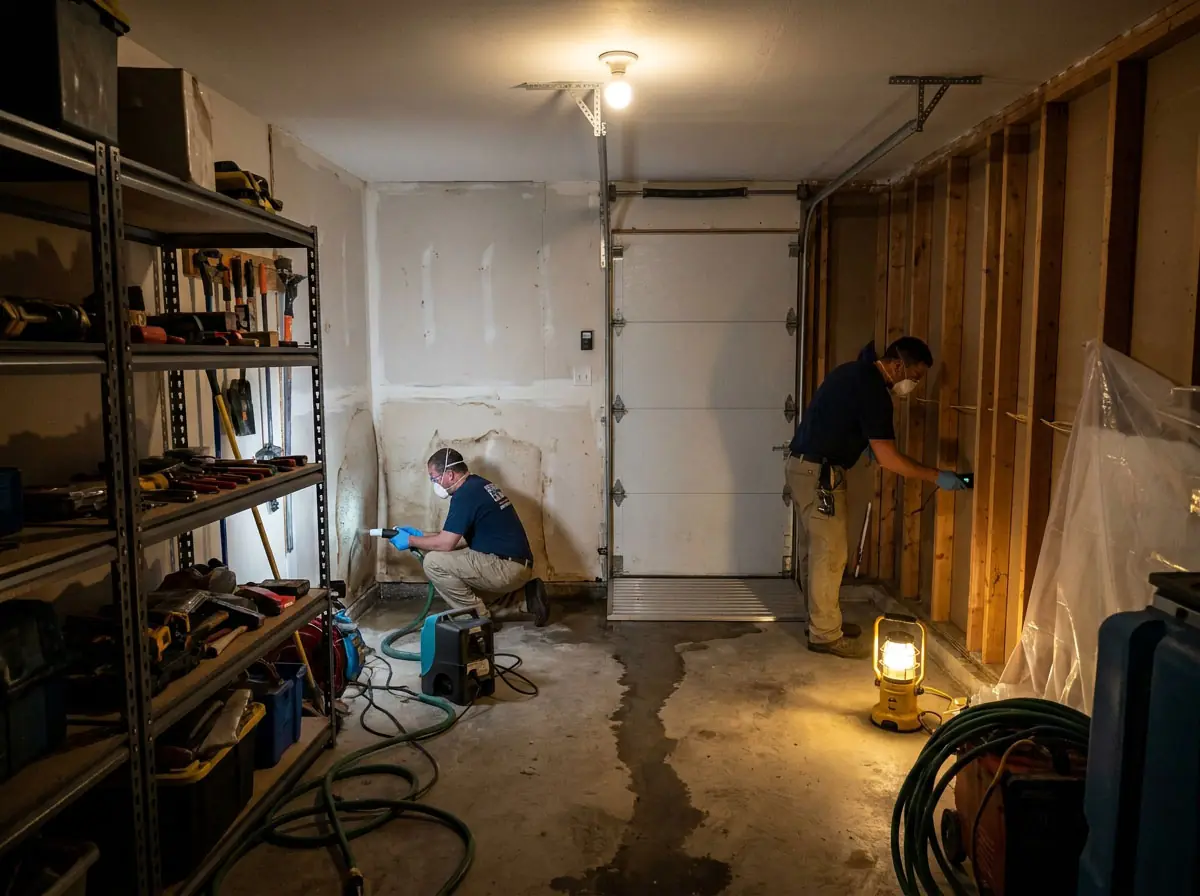
Many homeowners try to tackle moisture issues with box fans and store-bought dehumidifiers, but these tools rarely penetrate the subfloor or the tight tongue and groove seams of your hardwood. DIY drying often leaves moisture trapped deep beneath the surface, which inevitably leads to mold growth and permanent rot.
Professional restoration changes the game entirely. We bring in industrial-grade drying systems and moisture mapping technology to see exactly where the water is hiding behind your walls and under your boards.
Why Professionals Win Every Time
- Targeted Dehumidification: We use refrigerant dehumidifiers that pull moisture out of the air and the wood fibers simultaneously.
- Moisture Mapping: Our sensors pinpoint hidden pockets of water that a standard moisture meter simply cannot detect.
- Specialized Extraction: We apply high-pressure air injection systems to drive water out from under the flooring without requiring a full tear-out.
- Sanitization: Water from a pipe burst is often contaminated, so we apply antimicrobial treatments to stop biological growth before it starts.
When you rely on basic DIY methods, you are essentially gambling with the structural integrity of your home. A professional crew in Elizabeth has the gear to dry your flooring in days, while a box fan might take weeks to achieve only a fraction of the progress. Speed is the only thing that separates a restored floor from a total demolition.
A Comparative Cost-Analysis Table: Repairing vs. Replacing Hardwood
When your floors suffer water damage, your checkbook is likely the first thing on your mind. Most folks jump straight to the conclusion that a full replacement is the only path forward, but that is often a major financial miscalculation.
| Damage Level | Repair Cost (Per Sq. Ft.) | Replacement Cost (Per Sq. Ft.) |
|---|---|---|
| Minor Cupping | $2 - $5 | $15 - $25 |
| Moderate Buckling | $6 - $12 | $15 - $25 |
| Deep Subfloor Rot | $10 - $18 | $20 - $30 |
| Structural Warp | N/A | $20 - $35 |
Professional repair usually involves industrial-grade dehumidification and precision sanding. This process saves the character of your original wood while avoiding the high costs of demolition and material removal.
On the flip side, replacing your hardwood is a massive undertaking. You are looking at the price of new planks, disposal fees, and labor to install and finish the surface. If the water damage is localized, patching in matching wood is almost always the smarter move for your bank account.
When Is Replacement Necessary?
- The wood has sustained significant rot or fungal growth.
- The tongue and groove system is completely compromised.
- The subfloor underneath has been saturated for too long.
- The cost of professional restoration exceeds 60% of a full replacement.
Before you commit to tearing everything out, get a moisture reading from a specialist. You might find that your floor is salvageable, saving you thousands of dollars in unnecessary renovation fees.
Restoring Historic Elizabeth Brownstone Flooring After a Pipe Burst
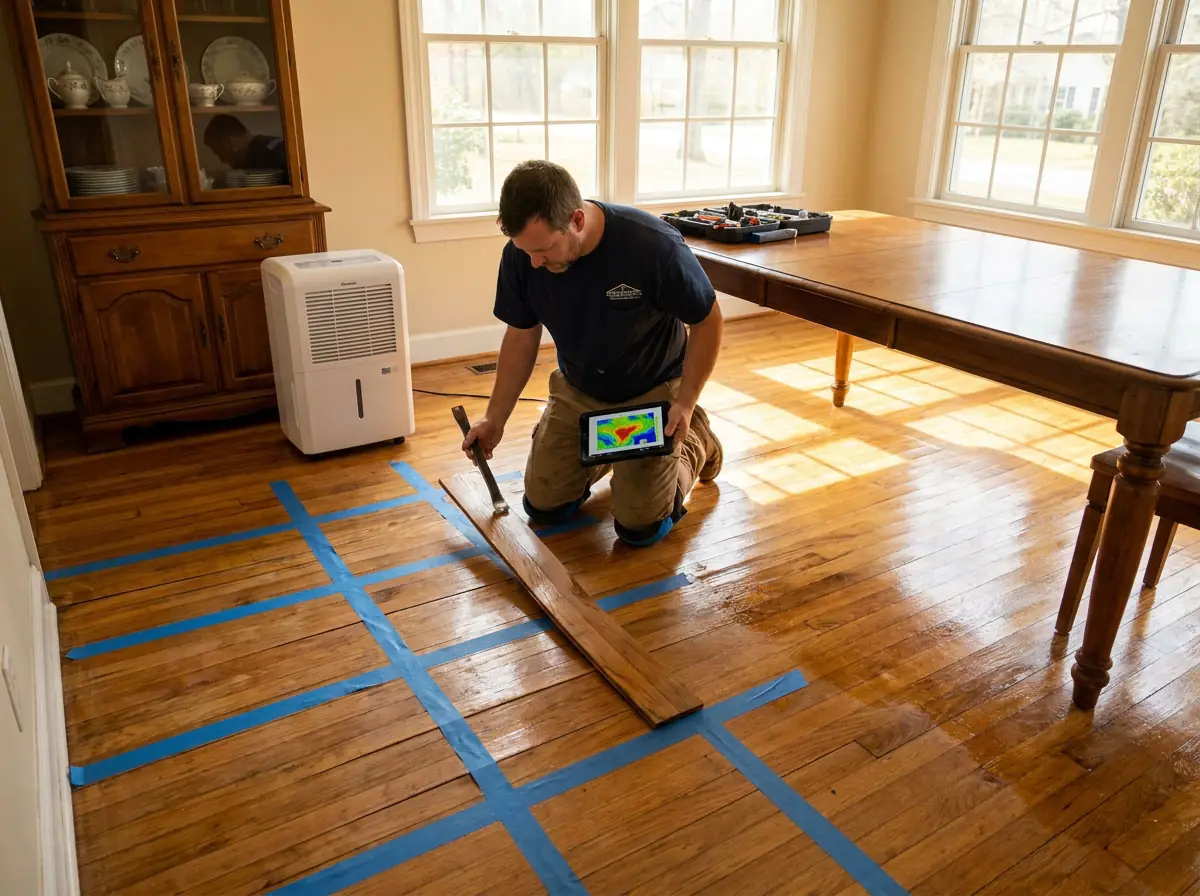
When a century-old brownstone in the heart of Elizabeth suffered a major pipe burst, the original oak flooring seemed doomed. The owner was convinced the boards were ruined, but our team arrived before the moisture could seep deep into the subfloor.
We did not just dry the surface; we treated the antique wood as a priceless asset. By using heavy-duty dehumidification and precise moisture mapping, we extracted water trapped deep within the grain without warping the boards.
Key Success Factors for Historic Restoration
- Controlled drying cycles to prevent rapid wood shrinkage.
- Specific extraction tools designed for tongue and groove joints.
- Continuous moisture monitoring to ensure zero mold growth.
The result was a total preservation of the home's character. By avoiding a full replacement, we saved the homeowner thousands of dollars and maintained the historical integrity of the property. When it comes to vintage materials, your biggest enemy is waiting too long to call for help.
Navigating Insurance Claims for Water-Damaged Flooring in New Jersey
Filing a claim for your hardwood floors in New Jersey is often a battle against insurance adjusters who want to pay the bare minimum. You need to understand that your policy coverage hinges on proof, documentation, and the specific language used in your contract.
Before you call your agent, follow this checklist to secure your position:
- Take high-quality photos of the damage from multiple angles before moving a single piece of furniture.
- Document the exact source of the water; sudden pipe bursts are usually covered, while slow leaks caused by home maintenance neglect are often denied.
- Obtain a detailed professional estimate from a reputable local restoration company that specializes in hardwood salvage.
Most homeowners make the mistake of waiting for the adjuster to suggest a contractor. Do not fall for that trap; you have the right to choose your own professional restoration team to ensure the job is done right the first time.
Keep a physical log of every conversation you have with your insurance company, including names, dates, and exactly what was promised. If they try to push for a cheap patch job instead of a proper floor restoration, show them the expert assessment that proves the subfloor integrity and structural safety are at risk.
Final Words
Time is the silent killer of hardwood. Every hour you wait allows moisture to penetrate deeper into the subfloor, turning a simple drying job into a complete renovation nightmare.
If you have recently dealt with a leak, don't play guessing games with your home equity. Head over to our Hardwood Floor Water Damage page to see exactly how we pull the moisture out before the mold sets in.
Your Immediate Action Plan
You need to stay proactive to protect your investment. Here is the checklist to keep on your fridge in case of an emergency:
- Cut the water source at the main shutoff valve immediately.
- Remove standing water with a shop vac or towels; do not use a standard household vacuum.
- Call a professional team to measure the moisture content of the subfloor.
- Use dehumidifiers to pull water vapor out of the room air.
Remember, once the wood warps, the structural integrity is compromised. Professional intervention is often the difference between a quick sanding and a total floor replacement.
People Also Ask
How soon should I call for professional help after floor water damage?
You should contact a professional restoration service immediately after discovering water on your hardwood floors. Rapid intervention is crucial because wood acts like a sponge, and moisture trapped beneath the boards can lead to irreversible damage and mold growth within 24 to 48 hours.Can I dry water damaged hardwood floors using a dehumidifier?
While using a high-capacity dehumidifier is a helpful step, it is rarely enough to remove moisture trapped deep within the subfloor or beneath individual planks. Professional grade drying equipment is necessary to extract water thoroughly and prevent long-term structural issues.What is the difference between cupping and buckling?
Cupping occurs when the edges of a floorboard are higher than the center, creating a concave appearance caused by moisture absorption from below. Buckling is a more severe condition where the floorboards lift completely away from the subfloor, often requiring professional intervention to safely repair.Does homeowners insurance in New Jersey cover hardwood floor restoration?
Coverage for water damage depends on the source of the leak, as sudden pipe bursts are generally covered while damage from long-term neglect or flooding may not be. You should consult the federal guidelines to understand how different types of water events impact your specific policy protections.Is it better to repair or replace hardwood floors after a flood?
Repair is often a viable option if the damage is caught early and the wood has not sustained permanent structural deformation or mold contamination. Replacing is typically reserved for instances where the wood has reached its saturation point or the flooring material has been compromised by contaminated water.Need Water Damage Restoration Services?
We provide rapid water damage restoration to stabilize your property and prevent further structural issues in Elizabeth and surrounding areas (07201, 07202, 07206, 07208). Our team arrives quickly to extract water and initiate professional drying to restore your home or business.
Request Price Estimate