


⚡ TL;DR: When dealing with burst pipe cleanup in Duluth, homeowners should prioritize water shutoff, avoid dangerous drying tactics, and properly document damages to ensure a safe and successful recovery.
📋 What You’ll Learn
Dealing with a burst pipe in the harsh Duluth winter requires immediate action. This guide outlines how to mitigate water damage effectively while avoiding common mistakes that lead to structural failure.
- Master the emergency shutoff process to immediately halt water flow and prevent catastrophic flooding throughout your Duluth home before professional restoration teams can arrive to begin the recovery.
- Avoid permanent structural damage by learning why DIY drying efforts often fail to reach hidden moisture, which can ultimately lead to rotting wood, compromised flooring, and severe mold growth.
- Identify dangerous thawing methods that create fire risks or further pipe damage, ensuring you use safe and effective techniques to manage frozen plumbing during our frigid Minnesota winters.
- Navigate insurance claims successfully by understanding exactly how to document your losses, gather essential evidence, and communicate with adjusters to ensure your restoration expenses are covered without delays.
📖 Reading time: 7 min
✍️ Author expertise: Duluth water damage restoration expert with over a decade of local field experience.
You hear that sudden, violent hiss followed by the sound of rushing water behind your drywall. In the middle of a sub-zero Duluth winter, that isn't just a plumbing issue, it is a full-blown financial disaster waiting to swallow your home.
Most homeowners react on pure instinct, grabbing towels or space heaters in a frantic bid to save their floors. That is exactly how you turn a manageable repair into a structural nightmare involving black mold and thousands of dollars in lost equity.
Before you make a move that ruins your basement, read these critical mistakes you need to stop making immediately.

Shutting Off the Main Water Valve: The First Critical Step for Duluth Residents
When a pipe ruptures, every second you spend watching the water spray is literally soaking your equity into the floorboards. Your immediate priority is not grabbing a mop; it is cutting off the flow at the source.
Most Duluth homes have a main shut-off valve located in the basement, a crawlspace, or near the water meter. If you do not know where yours is, find it today, because you will not have time to hunt for it while your drywall is melting.
What to do when the water won't stop:
- Locate your home main shut-off valve before an emergency happens.
- Turn the valve clockwise until it stops to kill the pressure completely.
- If the valve is rusted or stuck, do not force it with a pipe wrench or you might snap the valve stem, which creates an even larger disaster.
- Call a professional plumber immediately if the valve fails to turn.
Once the water is off, open the lowest faucet in your home to drain the remaining water out of the pipes. This simple pressure relief prevents trapped water from expanding further as it freezes, which protects your home from additional cracks.
Why DIY Drying Efforts Often Lead to Permanent Structural Damage
Most homeowners assume that if a surface feels dry to the touch, the job is done. This is a dangerous misconception that often leads to rot, warped floorboards, and expensive secondary damage months down the line.
When water from a burst pipe seeps into your Duluth home, it doesn't just sit on top of your carpet. It forces its way into the subfloor, behind baseboards, and deep into the wall cavities where airflow is non-existent.
Relying on standard household fans and open windows is rarely enough. In our cold climate, moisture gets trapped inside insulated wall cavities, creating a thriving greenhouse for mold that you cannot see until it has already compromised your home structure.
The Hidden Risks of Amateur Drying
When you attempt to dry a home without professional-grade dehumidifiers and moisture meters, you are essentially gambling with your property value. You might clear the puddles, but you are leaving behind the real threat.
Consider these common DIY mistakes that trap moisture:
- Running fans directly against wet walls, which can force mold spores into the air and deeper into the drywall.
- Ignoring the space under your cabinets, which acts as a collection point for stagnant water.
- Leaving furniture in place, which prevents the floor underneath from ever fully breathing.
True restoration requires industrial-grade extraction to pull water from the materials before it settles. If you leave moisture behind, the wood will eventually swell, buckle, and grow toxic mold colonies that require professional removal.

Hidden Hazards: A Table Breakdown of Material Moisture Retention and Mold Risk
Most Duluth homeowners assume that if a surface feels dry to the touch, the water damage is gone. That is a dangerous misconception. Porous materials act like sponges, soaking up hidden moisture that creates a perfect breeding ground for mold within 24 to 48 hours.
| Material Type | Moisture Retention | Mold Growth Risk |
|---|---|---|
| Drywall | Very High | Extreme |
| Hardwood Floors | High | Moderate to High |
| Fiberglass Insulation | High | Extreme |
| Concrete | Low | Low |
| OSB/Plywood | Moderate | High |
You cannot see what is happening inside your walls. Even if you mop up the puddles on the floor, the moisture trapped behind baseboards or inside your insulation stays active. Mold spores thrive in these dark, damp pockets, and they will start colonizing the structure before you even realize you have a problem.
Why Common Materials Are Vulnerable
Standard building supplies are not designed to survive a flood. Here is why specific areas of your home are at risk:
- Drywall: The paper facing is basically food for mold. Once it gets soaked, it loses structural integrity and must be removed to prevent contamination.
- Insulation: Fiberglass acts as a filter for dirty water and stays damp for days. It creates a heavy, sagging mess that holds humidity against your wall studs.
- Subflooring: Wood-based boards absorb water quickly. If not dried with professional-grade dehumidifiers, they will warp, buckle, and grow unseen colonies of fungus.
Ignoring these hidden reservoirs is a direct path to a costly health hazard. If you do not pull back the wet materials, you are simply leaving a ticking time bomb inside your home. Proper remediation involves specialized sensors to track deep-seated moisture that your eyes simply cannot detect.
The Dangers of Using Space Heaters to Thaw Frozen Lines
When the pipes freeze in your Duluth home, the temptation to point a space heater at the wall is intense. You want a quick fix, but you are actually flirting with a major house fire.
Portable heaters are designed to warm air, not to penetrate deep behind drywall to thaw solid ice inside a pipe. By focusing heat on one localized spot, you create intense thermal stress that can cause the pipe to split wide open once the ice thins, releasing a flood of water while your heating element is still running nearby.
Even worse, you risk igniting the hidden dust, insulation, or debris tucked away inside your wall cavities. Once a fire starts behind a partition, it can burn undetected for a long time, spreading smoke throughout your home before you even notice the smell.
Safer Alternatives to Radiant Heat
Professional restoration crews never use open flames or high-intensity space heaters on frozen plumbing. Instead, focus on these controlled methods to get the water flowing again safely:
- Open your interior cabinet doors to let the warm air from your home circulate around the pipes.
- Use a hair dryer on a low setting, moving it slowly along the pipe to thaw the ice gradually.
- Apply warm, wet towels wrapped around the exposed pipe sections.
- Keep your thermostat set to a consistent temperature, even at night, to prevent the freezing from returning.
If the pipe is already leaking, stop everything. Do not try to thaw it further; shut off the water main immediately and call a professional to prevent a larger water intrusion that will wreck your floors and walls.
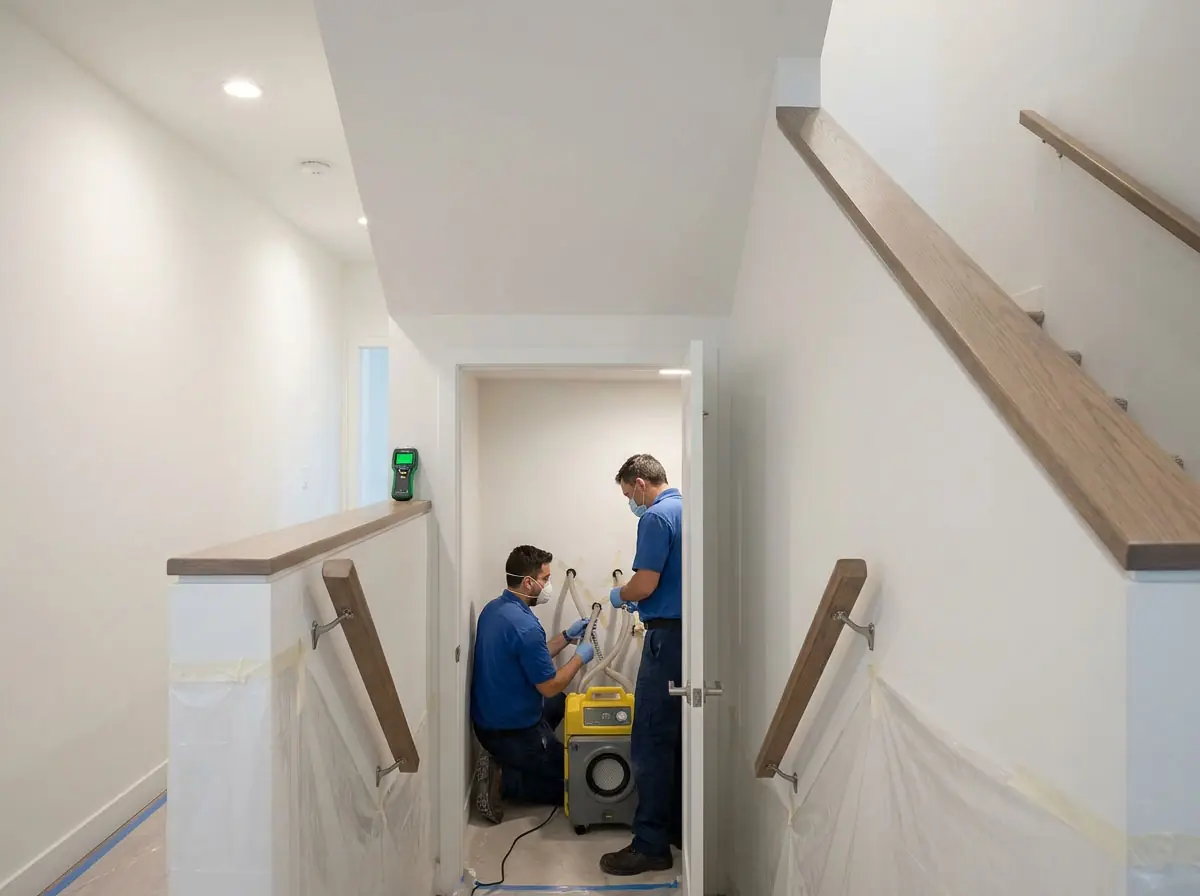
Lessons from Restoring a Canal Park Basement After a Major Pipe Burst
Last winter, we handled a nightmare situation in a historic Canal Park basement. The homeowner thought a few floor fans would dry out the saturated carpet and pad, but they ignored the water that seeped behind the wooden wall studs.
By the time they called us, the moisture had migrated up the drywall, creating a perfect colony for toxic mold. We had to gut the entire lower level because simple drying isn't enough when water hides inside your building materials.
To avoid a total gut job in your own home, keep these specific warnings in mind:
- Don't assume that if the carpet feels dry, the floor joists are safe.
- Water travels downward and settles in the lowest, darkest corners where you cannot see it.
- Leaving wet baseboards in place acts like a sponge, wicking water into the structure for weeks after the initial leak.
We often see homeowners focus only on the visible puddle while neglecting the wicking effect of wood and insulation. Our team uses thermal imaging cameras to track exactly where that water went. It is the difference between a quick cleanup and tearing out your entire basement finish to stop a mold infestation.
Navigating Insurance Claims and Documentation Requirements for Frozen Pipe Losses
Most Duluth homeowners assume their insurance company will simply write a check for the repairs. The truth is often colder than the Minnesota winter. Insurance adjusters require proof of loss before they authorize a single dime of coverage.
If you fail to document the damage correctly, you are leaving your financial security in the hands of someone whose goal is to minimize the payout. You must treat this situation like a legal case from the very first minute.
Start by capturing high-resolution photos and videos of the standing water before you move a single item. If you move furniture to a dry area, keep a detailed log of what was discarded and what was saved.
Essential Documentation Checklist
- Take wide-angle photos of every affected room to show the scope of the flood.
- Record close-ups of the burst pipe and the source of the water entry.
- Create an itemized list of damaged personal belongings with approximate values and purchase dates.
- Retain every single receipt for emergency mitigation services, such as professional water extraction or drying equipment rentals.
- Keep a copy of all correspondence between you and your insurance agent, including dates and times of every call.
Do not throw away any ruined materials until the adjuster has inspected them. A soggy piece of drywall might seem like trash, but it is critical evidence that validates your claim. If you clear everything out prematurely, you lose the ability to prove the extent of the saturation, which almost always results in a denied or reduced settlement.
Final Words
When your home is flooding in Duluth, you do not have time to guess. Every second you spend debating your next move is another second that water wicks into your studs and insulation.
The smartest play is to kill the water supply, clear the area, and call in a crew that lives for this. You want experts who understand how Duluth homes are built, not a handyman who happens to have a shop vac in his truck.
Ignoring the severity of the flood is the quickest way to invite toxic mold into your living space. If you want to stop the bleeding before your equity disappears, reach out for professional Burst Pipe Cleanup immediately.
What to remember:
- Do not wait for the water to stop on its own.
- Avoid using standard home fans, as they only push moisture deeper into the drywall.
- Document every single inch of the damage with high resolution photos for your adjuster.
Staying calm is the hardest part when your basement looks like a lake. However, taking the right action today is the only thing standing between a simple repair and a total home renovation.
People Also Ask
What is the first thing I should do if a pipe bursts in my Duluth home?
You must locate and shut off the main water valve immediately to stop the flow of water into your property. Once the water is off, contact a professional restoration team to begin the water extraction process before secondary damage spreads.Can I dry out a burst pipe water leak on my own?
DIY drying is rarely sufficient because moisture often hides behind drywall and under floorboards where you cannot see it. Improper drying frequently leads to mold growth and structural degradation that requires expensive professional repairs later.Does homeowners insurance in Minnesota cover burst pipes?
Most standard homeowners policies cover water damage from burst pipes, provided the damage was sudden and accidental rather than the result of neglect. Always document the scene with photos and videos immediately to ensure your insurance claim is processed correctly.How long does it take for mold to grow after a pipe burst?
Mold can begin to colonize damp surfaces within 24 to 48 hours if the area is not dried professionally. Keeping the humidity levels controlled and removing saturated materials is essential to preventing a full scale infestation.Is it safe to use space heaters to thaw frozen pipes?
Using open flames or high heat sources like space heaters is extremely dangerous and poses a significant fire risk in your home. Instead, open cabinet doors to let warm air circulate around the pipes or use a hair dryer on a low, safe setting.Need Water Damage Restoration Services?
We provide rapid emergency water extraction and structural drying to restore your property in Duluth and surrounding communities. Our team stabilizes your home or business quickly to prevent long-term damage (55802, 55803, 55804, 55805, 55811).
Request Price Estimate