


⚡ TL;DR: This guide explains how to identify and address hardwood floor water damage in Columbus by using professional drying techniques to protect your home from humidity and mold growth.
📋 What You’ll Learn
Discover how to address hardwood water damage in Columbus, GA effectively. This guide provides actionable steps to mitigate moisture, identify floor damage, and restore your home to its original condition.
- Stop moisture at the source by learning the critical emergency steps required to prevent further saturation of your wood flooring before more extensive structural damage develops in your home.
- Assess severe floor distortions by recognizing the visual signs of cupping, crowning, and warping so you can accurately determine if your planks require professional replacement or simple drying services.
- Navigate Columbus humidity challenges by understanding how our specific regional climate aggravates water damage and why specialized drying techniques are necessary to maintain your wood floor integrity long term.
- Identify hidden mold risks by exploring the dangers lurking underneath your subflooring that can compromise indoor air quality and require immediate professional intervention for a safe home environment.
📖 Reading time: 7 min
✍️ Author expertise: Local Columbus water damage restoration specialist with decades of hands-on property recovery experience.
You wake up, walk into the living room, and your bare feet land in a puddle. Your heart sinks as you look down at your beautiful hardwood floors, now cupped, stained, and buckling from a hidden leak.
That sight is every homeowner's worst nightmare in Columbus, but you do not have to rip out the boards and start over just yet. Time is the enemy here, and the way you react in the next few hours will decide if you save that expensive wood or pay for a full replacement.
Here is exactly how you stop the damage from spreading and what steps you need to take right now to reclaim your floors.

Immediate Emergency Steps: Stopping the Moisture Source
The very first thing you must do is hunt down the culprit. Whether it is a burst pipe behind the wall or a leaky refrigerator line, you have to stop the flow of water immediately.
If you cannot find the source, head straight to your main water shutoff valve. Turning off the main line will kill the water pressure to your entire home and halt the damage in its tracks.
Once the water is off, grab your mop, towels, and a wet-dry vacuum to clear standing water from the surface. Speed is the only thing that matters here.
Essential Actions to Take Right Now
- Cut the power to the affected room if there is standing water near electrical outlets.
- Move all furniture off the wet wood to prevent rust stains and further absorption.
- Clear away rugs and carpets, as they will trap moisture against the wood and accelerate rot.
- Open windows if the Columbus air is dry, but seal them shut if it is raining or humid outside.
Do not try to force dry the boards with a space heater or a high-heat hair dryer. Rapid, uneven drying will cause the wood to crack or split, which often leads to permanent structural failure.
Instead, focus on removing the excess liquid and calling in professionals with commercial-grade dehumidifiers. Your hardwood acts like a sponge, and you need to get the moisture out of the air before it seeps deep into the floorboards and subfloor.
Assessing the Severity: Identifying Cupping, Crowning, and Warping
Once you cut off the water, you must inspect the floor to see what you are dealing with. Hardwood floors act like a sponge; they absorb moisture and physically change shape as they swell. Look closely at your boards to see which of these three common patterns has appeared:
- Cupping: The edges of the board rise higher than the center, creating a concave shape. This happens when the bottom of the plank stays wetter than the top.
- Crowning: The center of the board is higher than the edges, creating a convex curve. This is often the result of sanding down cupped boards too soon before the wood was fully dry.
- Warping: The board twists or bends out of shape entirely, often causing it to pull away from the subfloor or pop completely loose.
You need to be honest about the damage level before you spend money on repairs. If the wood has been exposed to water for more than 48 hours, you are likely looking at permanent structural changes. Ignoring these signs will only lead to rot and a much bigger bill later on.
Check for these specific red flags to gauge your next move:
Gaps between planks: Indicates the wood is shrinking as it tries to dry out unevenly. This usually points to deep moisture trapped in the subfloor.
Discoloration or black stains: This is a clear warning sign of mold or mineral deposits reacting with the wood tannins. If you see dark spots, the damage has likely moved past the surface layer and into the wood grain itself.
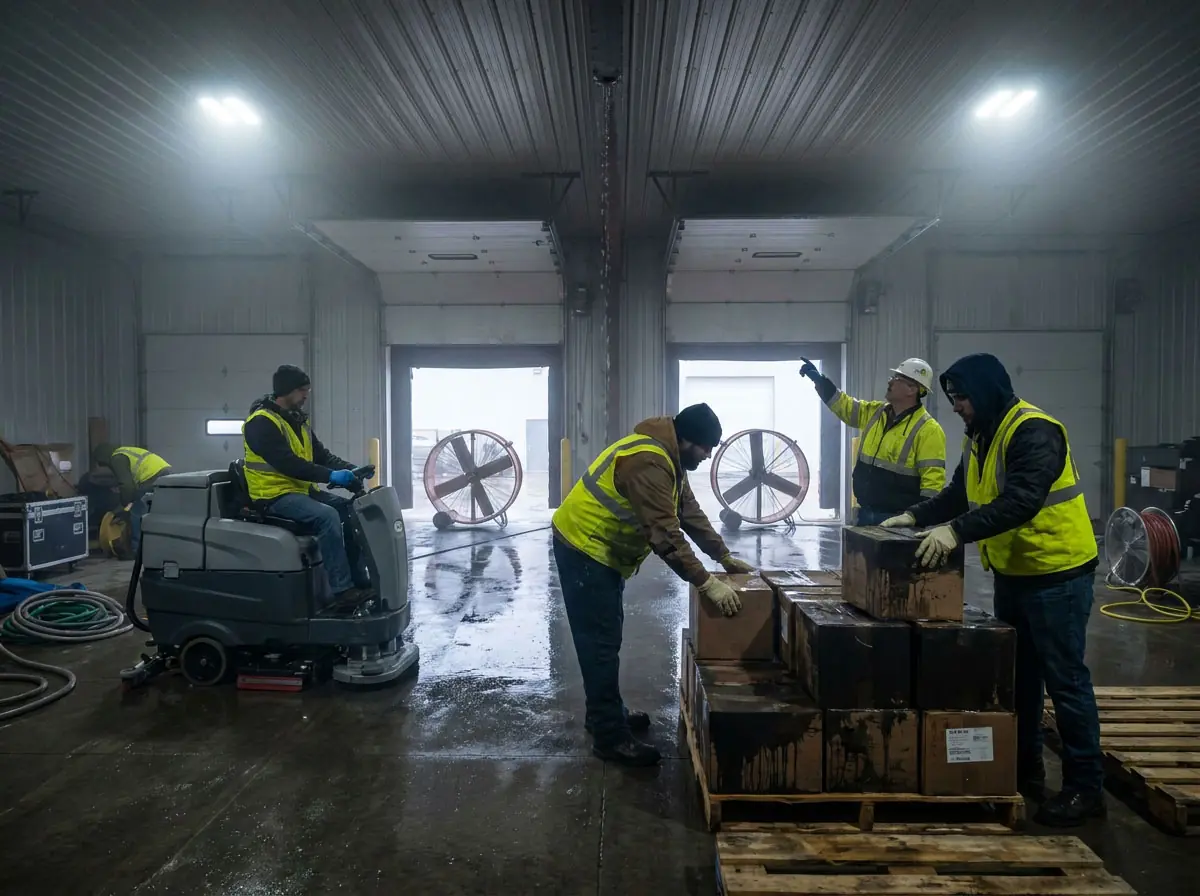
Professional Drying Techniques vs. DIY Surface Solutions: A Detailed Comparison Table
Most homeowners grab a towel or a fan when they spot water, but that usually just treats the surface symptoms while hidden moisture rots the wood from the bottom up. Professionals use industrial grade equipment that doesn't just push air around; it actively extracts deep moisture trapped within the planks and subfloor.
| Feature | DIY Surface Methods | Professional Restoration |
|---|---|---|
| Drying Depth | Surface only | Subfloor and core |
| Equipment Used | Fans and towels | Injectidry and dehumidifiers |
| Moisture Testing | Visual inspection | Digital moisture meters |
| Risk of Mold | High | Low |
| Long-term Success | Unpredictable | Guaranteed |
Relying on fans often causes the top of the wood to dry too fast while the bottom stays saturated. This mismatch leads to cracking and permanent splitting of your beautiful hardwood.
Our team uses moisture mapping to track exactly where water has traveled beneath your floors. We then implement controlled drying that preserves the structural integrity of your boards. If you try to force dry the surface, you risk warping the wood beyond the point of repair. You need to pull water out of the grain, not just off the finish.
Why Professionals Win Every Time
- Deep Extraction: We pull moisture from the subfloor to prevent long-term rot.
- Industrial Dehumidification: We balance the ambient humidity in your home to stop the wood from shrinking or expanding further.
- Prevention: We treat the area to ensure mold spores do not find a new home in your flooring.
Why Columbus Humidity Levels Aggravate Hardwood Damage
Living in Columbus means living with high humidity. That thick, soupy air does not just make your shirt stick to your back; it acts like a sponge that keeps your hardwood floors in a constant state of flux.
When your floors suffer water damage, they are already bloated with liquid. The high ambient moisture levels in our local climate prevent those boards from releasing that trapped water, effectively locking the damage in place.
Because the air is heavy with moisture, the natural drying process is severely stunted. Without professional dehumidification, your home remains a humid trap that invites wood rot and further distortion.
The Local Environmental Factor
Think of your wood floor like a giant puzzle that is trying to expand in a room that is already packed to the brim. If you have a leak, the wood absorbs the liquid and grows, but the humid Columbus air prevents the evaporation needed to shrink it back down.
- Moisture gets trapped in the subflooring.
- Floorboards cannot release water into the already saturated air.
- Chemical bonds in wood finishes begin to break down faster.
- The risk of hidden mold colonies multiplies within 48 hours.
You cannot rely on simple box fans to move this kind of air. In our climate, you need industrial strength equipment that pulls moisture out of the air and the wood simultaneously to stop the cycle of destruction.

From Buckled to Beautiful: A Columbus Restoration Case Study
Last spring, we received a distress call from a homeowner in the Midtown area whose kitchen floor looked like a rolling sea of waves. A slow pinhole leak behind the refrigerator had gone unnoticed for weeks, turning high quality oak planks into a buckled, warped mess.
The owner feared the entire kitchen layout required a complete gut job. However, our team arrived to assess the moisture saturation levels before recommending any drastic teardowns.
By using professional grade industrial dehumidifiers and specialized floor mat drying systems, we targeted the moisture trapped beneath the finish. We treated the wood precisely to allow it to release water slowly, preventing the boards from cracking or splitting during the recovery process.
The Result of Our Intervention
Within six days, the cupping subsided and the wood settled back into its original flat position. We saved the client thousands of dollars by avoiding a full floor replacement.
- The boards were sanded down to remove surface stains caused by the leak.
- A fresh coat of high durability sealant was applied to lock out future humidity.
- The kitchen was fully functional again without the need for new materials or extensive construction.
When you catch the damage early, your floors can bounce back to their former glory. Do not assume that visible warping means the wood is ruined, because professional intervention often preserves the structural integrity of your home.
The Hidden Risks of Mold Growth Under Subflooring
Most homeowners assume that if the surface of the floor looks dry, the danger has passed. Unfortunately, the space between your hardwood planks and the subfloor acts like a sealed greenhouse.
Trapped moisture creates the perfect breeding ground for mold colonies that you cannot see. This fungal growth doesn't just damage the structural integrity of your home; it introduces dangerous airborne spores that compromise your indoor air quality.
You should watch for these warning signs that indicate mold is taking root beneath your feet:
- A persistent, musty odor that gets stronger during humid Georgia afternoons.
- Unexplained allergic reactions or respiratory irritation while spending time in that room.
- Soft or spongy spots when you walk across the floor boards.
- Darkening or discoloration along the edges of the planks that refuses to fade after drying.
If you suspect mold, do not simply cover it up with a rug or seal it with varnish. Trapping the moisture only accelerates rot and makes the eventual repair bill substantially higher.
Our team uses industrial moisture meters and infrared cameras to detect these hidden pockets. We get to the root of the problem before the wood becomes unsalvageable, ensuring your home remains a healthy environment for your family.
Final Words
When your floors are submerged, you are fighting a race against time, moisture, and structural decay. Every minute you wait allows water to seep deeper into the wood fibers and the subfloor beneath.
Acting fast prevents a minor spill from turning into a total loss. Professional intervention is often the difference between a simple repair and an expensive, total floor replacement.
Protecting Your Investment
Do not gamble with your home equity by hoping the water will just dry on its own. Mold and wood rot are patient, and they will wait for you to ignore the problem before taking root.
If you suspect water has migrated beneath your boards, our team is ready to deploy industrial-grade drying equipment to your Columbus property. You can explore more about our specialized Hardwood Floor Water Damage services to see how we handle these high-stakes situations.
Your Immediate Checklist
- Cut the water supply to stop the source of the leak immediately.
- Clear all furniture and area rugs off the damp floor to allow airflow.
- Document the damage with clear photos for your insurance adjusters.
- Call a restoration team before the wood loses its structural integrity.
Remember that wood behaves like a sponge, expanding and warping as it absorbs liquid. The sooner we arrive with moisture meters and dehumidifiers, the higher the chance we can save your beautiful hardwood floors.
People Also Ask
Can hardwood floors be repaired after water damage?
Many hardwood floors can be restored if the water damage is addressed immediately by professionals. Drying the wood properly often reverses minor warping before permanent structural damage occurs.How do I know if my hardwood floors are ruined by water?
Signs of severe water damage include significant cupping, crowning, or black stains indicating mold growth. If the boards are loose or splintering, the wood has likely lost its structural integrity and may require replacement.Does homeowners insurance cover water damaged wood floors in Columbus?
Coverage depends on the specific source of the water damage, such as sudden pipe bursts versus long term leaks. You should consult your policy documents or contact your provider to understand the flood insurance requirements for your specific property.How long does it take for mold to grow under wet hardwood floors?
Mold can begin to grow under your flooring in as little as 24 to 48 hours when moisture is trapped. Promptly drying the subfloor is essential to preventing hazardous mold colonies from spreading through your home.Why is humidity in Georgia bad for hardwood floors?
High humidity causes wood to absorb moisture from the air, leading to expansion and pressure between boards. In Columbus, keeping your indoor climate controlled is vital to preventing your floors from buckling during humid months.Need Water Damage Restoration Services?
We provide rapid water damage restoration across Columbus, GA and surrounding areas to dry your property and prevent further structural issues. Our response team acts immediately to mitigate damage and restore your home to a safe condition (31901, 31904, 31906, 31907, 31909).
Request Price Estimate