


⚡ TL;DR: This informative guide helps Clearwater property owners understand the technical process of professional structural drying services, ensuring they select qualified experts to protect their homes from water damage.
📋 What You’ll Learn
Navigating water damage in Clearwater requires precision. This guide explains how to identify trapped moisture, select the right restoration equipment, and hire certified professionals to preserve your property’s structural integrity.
- Master the science of moisture mapping to look beyond simple surface drying and ensure that hidden pockets of water inside your walls and floors are completely addressed.
- Evaluate essential drying equipment standards so you can distinguish between ineffective household fans and the industrial dehumidifiers required to prevent long term structural rot in humid climates.
- Identify key signs of trapped moisture by using our comprehensive checklist to spot early warning indicators before minor water intrusion develops into costly, dangerous mold growth issues.
- Verify professional restoration credentials effectively by knowing exactly which licenses and certifications to request before you sign a contract with any local water damage repair company.
📖 Reading time: 7 min
✍️ Author expertise: Certified Clearwater water damage expert with fifteen years of local field restoration experience.
You wake up to the sound of water dripping behind your drywall, or perhaps a pipe burst while you were out enjoying a day at Clearwater Beach. Panic sets in, but the real danger isn't the water you see; it is the moisture trapped deep within your floorboards and studs that creates a breeding ground for toxic mold.
Most homeowners make the mistake of renting a few loud fans and hoping for the best. That is a shortcut to a secondary disaster that will cost you thousands in hidden repairs later on.
Getting your property back to pre-loss condition requires a calculated, scientific approach to structural drying rather than just blowing air around. Here is how you can spot the pros from the amateurs before the damage becomes irreversible.

The Science of Moisture Mapping: Beyond Surface-Level Evaporation
Most people think drying out a home is as simple as running a dehumidifier until the floors feel dry to the touch. This is the biggest lie in the restoration business. If you only focus on what you see, you are leaving an invisible enemy to rot your home from the inside out.
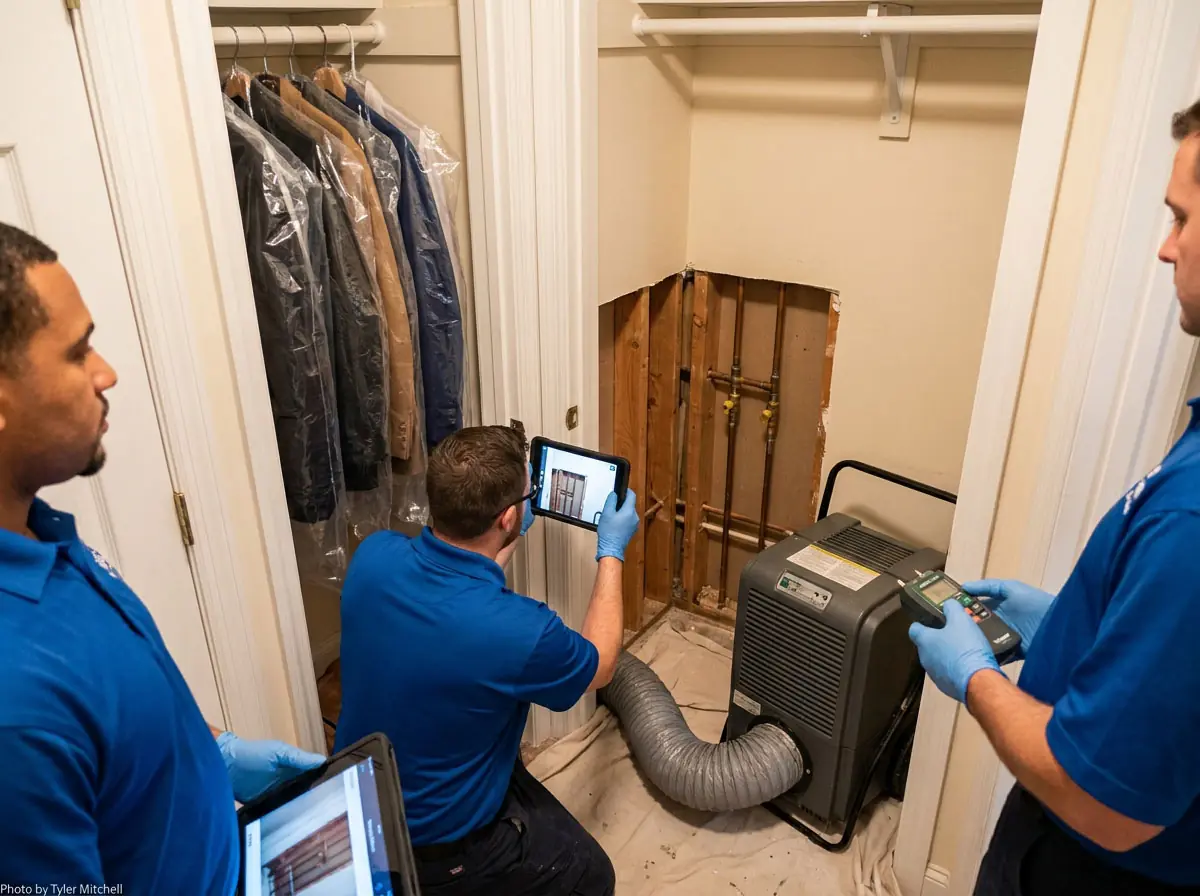
Our team uses moisture mapping, a high-tech diagnostic process that looks behind your walls. We use thermal imaging and moisture meters to create a literal map of wet zones that haven't surfaced yet. This prevents us from tearing out perfectly good drywall while ensuring we don't miss a single damp stud.
Professional moisture mapping relies on a few key steps to ensure total safety:
- Mapping the migration pattern of water through porous materials like wood, insulation, and drywall.
- Establishing a dry standard based on the baseline moisture content of unaffected areas in your home.
- Continuous monitoring to ensure that the material is actually shedding water, not just being blown by hot air.
Ignoring the hidden pockets of saturation is how mold takes root within forty-eight hours. By mapping the structure before starting the heavy equipment, we identify the exact path of the water. This targeted approach stops the decay cycle cold and saves your property from costly structural failure.
Essential Equipment: Why Industrial Dehumidifiers Outperform Box Fans
If you think a few oscillating fans from the local hardware store will save your Clearwater home, you are setting yourself up for failure. Moving air is not the same as removing moisture. High velocity air movers are just the beginning of a complex drying system.
Professional restoration crews rely on LGR (Low Grain Refrigerant) dehumidifiers to get the job done right. These machines do not just circulate air; they scrub the moisture out of the air entirely.
Without this specialized gear, your home remains a high humidity zone. This creates a perfect environment for mold colonies to take root inside your walls while you wait for the air to feel dry.
The Equipment Advantage
Industrial grade dehumidifiers are engineered to handle the harsh, humid climate we deal with here in Florida. They pull massive amounts of water vapor from your structural materials, even when the humidity outside is high.
- Targeted Air Movers: These units are positioned to create a vortex, forcing air into tight crevices where water hides.
- Industrial Dehumidifiers: These units act like powerful moisture vacuums, lowering the grains per pound of water in your indoor air.
- Moisture Meters: Sensors are used throughout the process to track exactly how much water is left in your wood, concrete, and drywall.
When you hire a pro, you are paying for the equipment that actually stops the damage at the molecular level. Do not settle for a surface level fix. Your home deserves the right tools to prevent long term rot and hidden structural decay.

Indicators of Trapped Moisture: A Checklist Table for Property Owners
Most water damage hides where your eyes cannot see. You might wipe up a puddle, but the structure remains soaked, inviting rot and structural failure behind the walls.
| Sign of Damage | Where to Look | Urgency Level |
|---|---|---|
| Musty or Earthy Odor | Behind cabinets and closets | High |
| Buckling Hardwood | Flooring seams | Critical |
| Wall Discoloration | Baseboards and corners | High |
| Peeling Paint | Drywall edges | Moderate |
| Soft Drywall | Areas near pipe runs | Critical |
If you notice these red flags, stop wasting time with store-bought box fans. Trapped moisture does not evaporate on its own; it migrates to cooler areas of your home and settles into your subflooring.
What to look for right now:
- Check for blistering paint or wallpaper that seems to bubble near the floor.
- Press gently on your drywall near the floor; if it feels spongy, you have significant water intrusion.
- Look for darkening or salt-like deposits on concrete surfaces or grout lines.
- Listen for a hollow sound when tapping on wooden baseboards that were recently submerged.
Ignoring these signs is a financial gamble. Once moisture settles into your structural framing, the cost to repair the damage often triples compared to immediate professional drying services.
Case Study: Saving a Clearwater Waterfront Home from Sustained Water Damage
We recently handled a call from a homeowner on the Clearwater waterfront who faced a massive pipe failure in their master suite. The owner had already tried to dry the space for forty-eight hours using three hardware store box fans.
By the time we arrived, the hardwood flooring was cupping, and a distinct, musty odor was already emanating from behind the baseboards. Our moisture mapping revealed that the water had migrated thirty feet away from the initial leak point, seeping deep into the subfloor and the wall cavities.
Had the owner relied on those cheap fans for another day, the cost of the repair would have tripled. We immediately deployed LGR dehumidifiers and high-velocity air movers to pull the moisture out of the materials before organic growth could take root.
The Results of Our Strategic Drying Process
We saved the original flooring and prevented the need for a full wall replacement. By controlling the vapor pressure in the room, we forced the wood to release its trapped moisture without warping further.
The owner avoided a complete reconstruction of their luxury suite. This is the difference between simple air movement and true, science-backed structural restoration.
- The homeowners saved roughly $12,000 in potential renovation costs.
- Mold remediation was completely avoided because we caught the moisture early.
- The property was returned to its pre-loss state in just four days of focused drying.
Always remember that water doesn't just sit on top of your floors; it travels, hides, and settles in places you cannot see. When you see a leak, skip the consumer grade equipment and call in a team that knows exactly how to track that water to its final destination.

Preventing Secondary Damage: Protecting Your Building Materials from Decay
When you ignore the moisture hiding inside your walls, you aren't just dealing with a damp house; you are inviting structural decay. The silent killer here is secondary damage, which happens when high humidity levels settle into porous materials like drywall, baseboards, and wood framing.
Left unchecked, these materials begin to warp, rot, and lose their structural integrity within 48 to 72 hours. This is why our team moves fast to establish a controlled environment that stops the clock on mold growth and material breakdown.
Here are the primary ways secondary damage silently wreaks havoc on your Clearwater property:
- Drywall Crumbling: The gypsum core turns to mush and loses all load-bearing strength.
- Wood Rot: Floor joists and studs absorb moisture, becoming soft and perfect for fungus.
- Metal Corrosion: Hidden nails and electrical components begin to rust, creating long-term safety hazards.
- Adhesive Failure: Flooring glues break down, causing tiles to lift and carpets to delaminate.
To keep your home standing strong, we focus on dehumidification kinetics. By dropping the relative humidity in your rooms, we force the trapped moisture out of your building materials and into the air, where our industrial machines can safely capture it.
If you wait too long, these materials often move past the point of restoration. Replacing a single water-damaged wall is manageable; replacing a water-rotted structural frame is a nightmare you want to avoid at all costs.
Professional Credentials to Verify Before Signing a Restoration Contract
When your Clearwater property is at stake, you cannot afford to hire a handyman with a shop vac. You need a technician who understands building physics and the IICRC standards for water damage restoration.
Do not sign a contract until you have verified these specific credentials. These certifications prove the company has the technical training to dry your home properly:
- IICRC Certification: Look specifically for the Water Damage Restoration Technician (WRT) or Applied Structural Drying (ASD) designation.
- State License: In Florida, ensure they hold a valid Mold Related Services Remediator license if mold is a concern.
- Insurance Coverage: Ask for a certificate of insurance that includes General Liability and Pollution Liability coverage.
Ask the restoration lead these direct questions before they touch a single wall. If they hesitate or try to dodge the answers, walk away immediately.
Critical Questions to Ask
- Can you provide proof of your current IICRC certification?
- Do you use moisture mapping reports to document the drying process?
- Are you familiar with the specific humidity levels required for the Clearwater climate?
A true professional will offer these documents upfront without you needing to ask. They understand that transparency is the hallmark of a reputable business. If they pressure you to sign a contract before you see these credentials, they are looking to profit from your emergency rather than fix your home.
Final Words
Your property is likely your biggest investment, and structural drying is not a task for the handyman or the shop vac enthusiast. When you ignore the physics of moisture, you invite mold, rot, and structural failure into the bones of your home.
Hiring a qualified team that understands psychrometry is the only way to ensure your home returns to a safe, healthy state. Don't wait until you smell the musty scent of fungal growth behind your baseboards.
If you suspect water has migrated into your walls or floors, take immediate action by contacting our Structural Drying Services team for an inspection. We use thermal imaging and moisture sensors to find what the naked eye cannot see.
Protecting Your Future
Remember that time is your greatest enemy after a water loss. The longer moisture sits, the more expensive the final bill becomes.
- Inspect your home for warping or discoloration regularly.
- Never rely on household fans to dry deep saturated wood.
- Verify all certifications before allowing a contractor to start work.
By choosing professionals who prioritize moisture mapping, you save your building materials and your wallet. Do it right the first time, and you will prevent a lifetime of headaches and health hazards.
People Also Ask
How long does the structural drying process usually take in Clearwater?
The duration depends on the extent of the water intrusion and the building materials involved. Most residential drying projects are completed within three to five days using professional equipment.Why is professional structural drying better than DIY methods?
Professional teams utilize industrial-grade dehumidifiers and moisture mapping to ensure water is removed from deep within the building envelope. Using simple fans often leaves moisture trapped, which can lead to mold growth and significant structural decay.What are the signs that my home has trapped moisture?
Look for visible signs like warping floorboards, bubbling paint, or a persistent musty odor. You may also notice condensation on windows or feeling dampness in carpets that never seems to fully evaporate.Does homeowners insurance cover structural drying services?
Most standard homeowners insurance policies cover water damage restoration if the cause is sudden and accidental, such as a burst pipe. We recommend contacting your provider immediately to document the damage and confirm your specific coverage limits.What credentials should I look for in a Clearwater restoration contractor?
Ensure the company holds IICRC certification, which confirms their technicians are trained in advanced restoration standards. Always verify their local business license and check for positive reviews from other property owners in the Clearwater area.Need Water Damage Restoration Services?
We provide immediate water damage restoration in Clearwater and surrounding communities to return your property to a dry, safe condition. Our rapid response teams operate across (33755, 33756, 33759, 33761) to mitigate damage and stabilize your home or business.
Request Price Estimate