


⚡ TL;DR: This guide helps Castle Rock homeowners identify moisture sources, manage effective crawl space water removal, and implement lasting drainage solutions to protect their foundations from future water damage.
📋 What You’ll Learn
Dealing with crawl space water in Castle Rock requires immediate action to protect your foundation from our unique climate challenges. This roadmap provides the essential knowledge to keep your home dry.
- Identify hidden moisture sources by recognizing how our local soil conditions and spring thaw cycles contribute to recurring water intrusion underneath your home and throughout your crawl space.
- Assess structural damage risks to your foundation by learning how to spot warning signs of wood rot, mold growth, and compromised support beams caused by standing water exposure.
- Perform effective water extraction using a professional, step by step approach that prioritizes moisture removal, rapid structural drying, and the implementation of heavy duty dehumidification systems for safety.
- Implement long term prevention through proven encapsulation techniques and drainage solutions designed to shield your Castle Rock property from future water damage and improve your indoor air quality.
📖 Reading time: 8 min
✍️ Author expertise: Local water damage specialist in Castle Rock with decades of crawl space restoration experience.
You probably don't think about what is happening under your living room floor until a damp, musty smell starts creeping up through the vents. By the time you notice that telltale odor, your Castle Rock home might already be playing host to unwanted moisture, mold, and structural rot.
Most homeowners write off a wet crawl space as a minor annoyance, but ignoring it is a fast track to a ruined foundation and a massive repair bill. Moisture doesn't just sit there; it eats away at your investment from the bottom up.
Whether it is melting snow or a high water table causing the trouble, you need to stop the damage before it gets worse. Here is exactly what you need to do to dry out your home and keep that water out for good.

Identifying the Primary Sources of Crawl Space Moisture in Douglas County
Castle Rock experiences a unique set of geological challenges that put your crawl space directly in the crosshairs. Because much of our soil contains expansive clay, water does not drain away as easily as you might hope. Instead, it pools against your foundation, looking for any small gap to seep inside.
The spring thaw is often the biggest culprit for local homeowners. As the heavy snowpack in the Rockies melts, that water has to go somewhere; frequently, it migrates toward the lowest point of your property, which is often right under your house.
Beyond seasonal weather shifts, there are several man-made or mechanical factors that act as silent intruders:
- Poor grading: If the dirt around your home slopes toward the foundation rather than away, you are essentially creating a funnel for rainwater.
- Gutter failures: Downspouts that dump water too close to the house foundation are a common cause of localized flooding.
- High water tables: Some areas in Douglas County sit on land where the groundwater level is naturally closer to the surface than others.
- Plumbing leaks: Old pipe joints or pinhole leaks in your supply lines can keep your crawl space damp year-round, even during a drought.
Identifying the source is half the battle. If you cannot pinpoint where the liquid is entering, you are just throwing money at symptoms while the actual problem continues to thrive beneath your feet.
Assessing the Structural Impact of Standing Water on Castle Rock Foundations
In Castle Rock, the soil composition often contains heavy clay, which reacts aggressively to excess water. When your crawl space remains wet, that soil swells and shifts, putting immense pressure on your foundation walls.
This movement isn't just a minor issue; it is a direct threat to the integrity of your home. If you ignore it, you risk seeing cracked concrete, uneven floors in your living area, and doors that refuse to close properly.
The damage often spreads beyond the concrete to the wooden framework supporting your entire house. Once moisture settles into floor joists and support beams, the consequences become permanent and expensive.
The Silent Decay of Your Support System
Wood rot is the silent killer of Castle Rock homes. When your crawl space environment stays humid or flooded, it creates the perfect breeding ground for destructive fungi.
- Joists begin to soften and sag under the weight of your home.
- Metal fasteners and joist hangers corrode, losing their grip.
- Insulation becomes saturated, falling away from the subfloor and inviting pests.
If you suspect water is pooling under your property, you must act before the wood loses its structural capacity. Replacing rotten beams is a high stakes repair that requires jacking up your home, an expense that makes prompt water removal look like a bargain by comparison.

Step-by-Step Guide to Effective Water Extraction and Crawl Space Dehumidification
When you discover standing water, speed is your only ally. You must act aggressively to remove the liquid before it migrates into your subflooring or insulation. Professional extraction starts with high-capacity submersible pumps to remove the bulk of the floodwater. Once the surface water is gone, we turn our attention to the lingering moisture trapped in the soil and porous materials.
Removing the water is just the first step. If you do not dry the space, mold will bloom within 24 to 48 hours. Follow this sequence to secure your crawl space:
- Clear all debris: Remove wet insulation, fallen vapor barriers, and any stored items that have soaked up moisture.
- Deploy industrial dehumidifiers: Standard room units are far too weak for this job. You need high-capacity refrigerant dehumidifiers to pull moisture directly from the air and sub-surface materials.
- Sanitize the area: Apply an EPA-registered antimicrobial treatment to kill hidden fungal spores that thrive in damp, dark environments.
- Monitor the moisture content: Use a wood moisture meter to ensure your floor joists are drying out properly before you consider replacing any materials.
Do not be tempted to just lay a fan down and call it a day. Simple air movement does not remove moisture; it only pushes the dampness into your floorboards and wall cavities. True drying requires controlled humidity levels throughout the entire crawl space. Keeping the relative humidity below 50 percent is the secret to stopping mold growth in its tracks and protecting the structural integrity of your home.
Critical Warning Signs: A Comparison Table for Distinguishing Surface Dampness vs. Severe Flooding
Most Castle Rock residents assume a little moisture is normal when the frost melts. However, there is a massive difference between humidity that needs a dehumidifier and active flooding that threatens your structural integrity.
| Feature | Surface Dampness | Severe Flooding |
|---|---|---|
| Water Presence | Slight condensation on joists | Standing puddles or running water |
| Smell | Mild, earthy scent | Pungent, rotting, or sewer-like odor |
| Insulation | Dry to the touch | Soggy, hanging, or falling off |
| Mold Growth | Minor fuzzy spots | Visible black or green colonies |
| Flooring | No signs of buckling | Visible warping or cupping |
If you see standing water or your insulation is soaked through, you are dealing with a flood event. This level of saturation ruins wood fibers rapidly and can lead to toxic mold colonization within forty-eight hours.
Pay close attention to these red flags that indicate you need professional intervention immediately:
- Visible water lines on the foundation walls or piers.
- Floor joists that feel soft or sponge-like when pressed.
- Persistent humidity levels above sixty percent inside the crawl space.
- Efflorescence or white powdery deposits appearing on your concrete blocks.
Do not wait for the sun to come out and hope it dries up on its own. If you ignore the signs of a severe flood, you are essentially inviting wood-boring insects and rot to destroy your home from the bottom up.
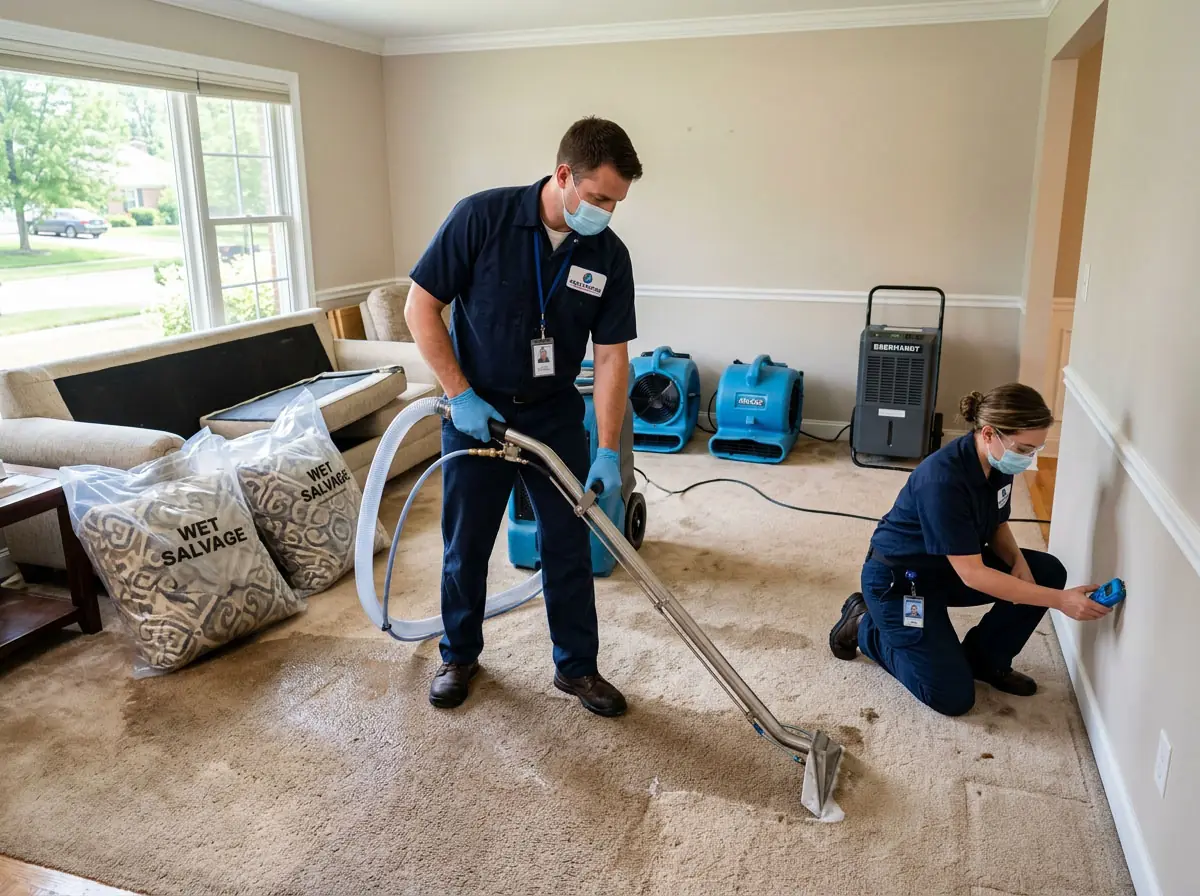
Project Spotlight: Restoring a Flooded Castle Rock Crawl Space After Spring Thaw
Last April, we received a call from a homeowner in the Founders Village area who discovered standing water under their home after a rapid mountain snowmelt. The crawl space was essentially acting as a shallow pond, with nearly four inches of water soaking the subfloor insulation and inviting toxic mold growth.
The situation required immediate intervention to prevent the moisture from migrating into the wall cavities of the main living area. We deployed a team equipped with commercial-grade submersible pumps and high-velocity air movers to extract the liquid and initiate the drying process.
Key Restoration Milestones
Once the standing water was cleared, the focus shifted to environmental stabilization. We performed a comprehensive moisture map of the wooden joists and subflooring to identify hidden saturation points.
- Removed and disposed of all saturated fiberglass insulation to stop mold spores from spreading.
- Applied an antimicrobial treatment to all exposed wooden surfaces to kill dormant fungi.
- Installed industrial dehumidifiers to drop the relative humidity below 50 percent within 48 hours.
- Sealed foundation cracks that allowed exterior runoff to seep directly into the dirt crawl space.
The result was a completely dry, sanitized environment that passed a follow-up inspection with flying colors. By acting before the humidity levels triggered major structural decay, the homeowner saved thousands in potential joist replacement costs. They now enjoy a bone-dry crawl space that no longer threatens the indoor air quality of their primary living space.
Implementing Long-Term Encapsulation and Drainage Solutions to Prevent Reoccurrence
Once you have extracted the standing water, the real battle begins: keeping it out for good. Crawl space encapsulation is the gold standard for Castle Rock homeowners, as it seals your home against the erratic Colorado climate.
By installing a heavy-duty vapor barrier across the floors and walls, you effectively separate your home from the damp earth. This process stops moisture migration before it ever has a chance to settle in your floor joists.
Essential components for a dry crawl space
You need a multi-layered defense to keep your sub-structure bone dry. Relying on one solution rarely works when the spring thaw hits or local water tables spike.
- Sump pumps with battery backups to move high volumes of water out instantly.
- French drains to intercept ground water before it seeps into the interior.
- Commercial grade dehumidifiers to maintain a humidity level below 50 percent, which prevents mold growth.
- Sealed foundation vents that stop humid outdoor air from condensing on cooler pipes and wood surfaces.
Do not rely on cheap plastic sheeting from a hardware store; it will tear and fail within months. Professional-grade liners are puncture-resistant and chemically treated to inhibit bacterial growth. When these systems work together, your crawl space transforms from a swampy liability into a clean, dry area that protects the structural integrity of your entire home.
Protecting Your Home Investment Through Routine Maintenance
You have worked hard to build equity in your Castle Rock home. Treating your crawl space like a forgotten storage unit is a gamble you cannot afford to take.
Most structural failures in Douglas County start with a slow leak or a neglected sump pump. By the time you spot visible mold, the damage has already moved deep into your floor joists.
Professional Crawl Space Water Removal is a reactive fix, but consistency is the only way to avoid recurring disasters. You must stay ahead of the weather cycles here in Colorado.
The Maintenance Checklist for Every Homeowner
You do not need to be a contractor to protect your subfloor. Simply performing a few quick checks each season will save you thousands of dollars in potential foundation repairs.
- Inspect your sump pump during every heavy spring rain to ensure the float switch moves freely.
- Clear out your gutter downspouts so water is pushed at least ten feet away from your exterior walls.
- Check the crawl space vapor barrier for tears, gaps, or signs of rodent activity.
- Look for fresh efflorescence or white chalky deposits on your foundation walls, which signal active water intrusion.
Set a calendar reminder to peek under your home twice a year. If you smell earth or see standing water, do not wait for the season to change before calling for help.
Being proactive is the cheapest form of home insurance you will ever find. Keep your crawl space dry, and your entire house will stand strong for decades to come.
People Also Ask
Is water in my crawl space covered by homeowners insurance?
Coverage depends on your specific policy and the cause of the water intrusion. Standard policies often cover sudden pipe bursts, but they typically exclude damage resulting from ground water seepage or poor drainage maintenance.How do I know if I have mold in my Castle Rock crawl space?
Look for visible fungal growth on insulation or floor joists and watch for a persistent musty odor throughout your home. You should also be aware that excess moisture can lead to mold growth that threatens indoor air quality.What is the most effective way to remove standing water from a crawl space?
Professional restoration teams use industrial grade sump pumps and high capacity wet vacuums to extract standing water quickly. Once the water is removed, the area must be professionally dried using commercial dehumidifiers to prevent structural damage.Why does my Castle Rock home have water under the crawl space after snow melts?
Spring thaw often causes the ground to saturate when the soil cannot absorb melting snow fast enough. If your property lacks proper grading or an efficient exterior drainage system, this runoff can easily find its way into your foundation vents or floor gaps.How often should I inspect my crawl space for moisture?
It is recommended to inspect your crawl space at least twice a year, specifically after the spring thaw and during late autumn. Regular monitoring allows you to identify minor leaks or condensation issues before they escalate into major water damage.Need Water Damage Restoration Services?
We provide rapid emergency response to restore your property and mitigate water damage in Castle Rock and surrounding communities (80104, 80108, 80109). Our team arrives quickly to extract water and stabilize your home, minimizing long-term structural impact.
Request Professional Estimate