


⚡ TL;DR: This guide teaches Bloomington homeowners how to manage hardwood floor water damage through prompt mitigation, professional drying techniques, and expert advice on assessing potential rot in older homes.
📋 What You’ll Learn
Facing hardwood floor water damage in your Bloomington home can be overwhelming. This guide provides essential local strategies to identify risks, minimize structural harm, and navigate the restoration process effectively.
- Take immediate steps to mitigate damage by stopping the source of water and removing excess moisture before it seeps deep into the wood fibers, causing permanent warping and cupping.
- Understand moisture migration patterns to grasp how humidity levels in Central Illinois impact your floor boards and why professional dehumidification is critical to preventing long term microbial growth.
- Evaluate damage with our reference table which helps you distinguish between minor surface issues that require simple refinishing and deeper signs of rot that demand a full replacement.
- Analyze a real local case study from a historic Bloomington property to see how professional restoration techniques can save vintage flooring when traditional DIY drying methods are insufficient.
📖 Reading time: 8 min
✍️ Author expertise: Bloomington water damage restoration specialist with decades of field experience handling local floods.
You wake up in your Bloomington home to the sickening sound of a leaking pipe, only to find your beautiful hardwood floors cupping and buckling right before your eyes. That panic is real, and the clock is ticking against the structural integrity of your investment.
Most homeowners assume a quick mop-up is enough, but water hides deep within the grain and subfloor, quietly inviting mold and permanent rot. If you ignore the science of drying wood, you are essentially setting a trap for a massive repair bill down the road.
Here is exactly how you can stop the damage in its tracks and salvage those floors before the moisture takes control for good.

Immediate Mitigation Steps to Stop Floor Saturation
When water hits your hardwood, speed is your only ally. Every minute the liquid sits on the surface, it forces its way deeper into the pores of the wood. You must cut off the source of the water immediately, whether that means shutting off a local valve or turning off the main water line for your entire Bloomington property.
Grab a shop vacuum, not a mop, to pull standing water out of the cracks. A mop just pushes moisture further into the seams, which is the exact opposite of what you want to achieve.
Your First Response Checklist
- Shut off the water source immediately to prevent further flooding.
- Use a shop-style vacuum to suction water from the crevices between planks.
- Wipe the surface dry with clean, absorbent towels; do not use heat sources like hair dryers.
- Remove any area rugs or furniture to allow the wood to breathe.
Once the surface is clear, focus on atmospheric control. Turn on your air conditioning or use a dehumidifier to lower the humidity in the room.
Do not crank up the heat to dry the wood faster. Rapid drying causes extreme tension in the planks, leading to permanent cracking and splintering that cannot be reversed by simple sanding.
The Science of Moisture Migration in Hardwood Planks
Think of your hardwood floor like a thirsty sponge that never stops drinking. Even after you wipe up the standing water, the wood cells continue to pull moisture inward through a process called hygroscopic migration.
This is why your floors cup or crown days after the initial leak. The wood fibers along the bottom and sides of the plank absorb water faster than the sealed surface, causing the wood to swell and warp with incredible force.
If you don't extract that trapped moisture, it migrates further into the subfloor and joists. This creates a hidden ecosystem for mold growth and structural decay that can rot your home from the bottom up.
The Migration Chain Reaction
- Surface liquid penetrates the gaps between boards.
- Water saturates the porous underside of the hardwood.
- The wood expands unevenly, leading to buckling.
- Moisture wicks into the subfloor, trapping dampness against the foundation.
You cannot simply wait for the air in your Bloomington home to dry out the floor. The finish on your planks acts like a moisture barrier that traps the water inside, preventing evaporation. Unless you use industrial-grade equipment to force that moisture out, it will stay buried in the grain, quietly destroying the wood from the inside out.
Warning Signs and Damage Assessment: A Reference Table
Identifying water damage early is the difference between a simple repair and a total floor replacement. Wood is porous, meaning it reacts to water in predictable ways that you can spot with the naked eye if you know where to look.
| Indicator | What It Means |
|---|---|
| Cupping | Edges of planks are higher than the center |
| Crowning | Center of the plank is higher than the edges |
| Dark Staining | Sign of deep moisture or mineral deposits |
| Musty Odor | Microbial growth underneath the boards |
| Separation | Gaps forming between individual boards |
If you see cupping or crowning, your floor has already absorbed significant moisture. These shapes occur because the wood fibers expand unevenly, pushing against each other until the material has nowhere else to go but up.
Don't just look at the surface, either. Keep an eye out for these critical red flags that indicate the damage has penetrated beyond the finish:
- The floor feels spongy or soft when you walk across it.
- You notice white, chalky spots on the wood surface.
- Baseboards show signs of swelling or water rings near the floor.
- Squeaking sounds emerge in areas that were previously quiet.
If you observe these signs, you need to act immediately. The structural integrity of your subfloor is likely already compromised, and waiting another day will only drive up the cost of the professional restoration you will inevitably need.
Professional Dehumidification vs. DIY Drying Methods
Most homeowners in Bloomington reach for a box fan or a space heater when they see a puddle on their oak flooring. This is a mistake that often leads to warped boards and split finishes because these tools only move surface air.
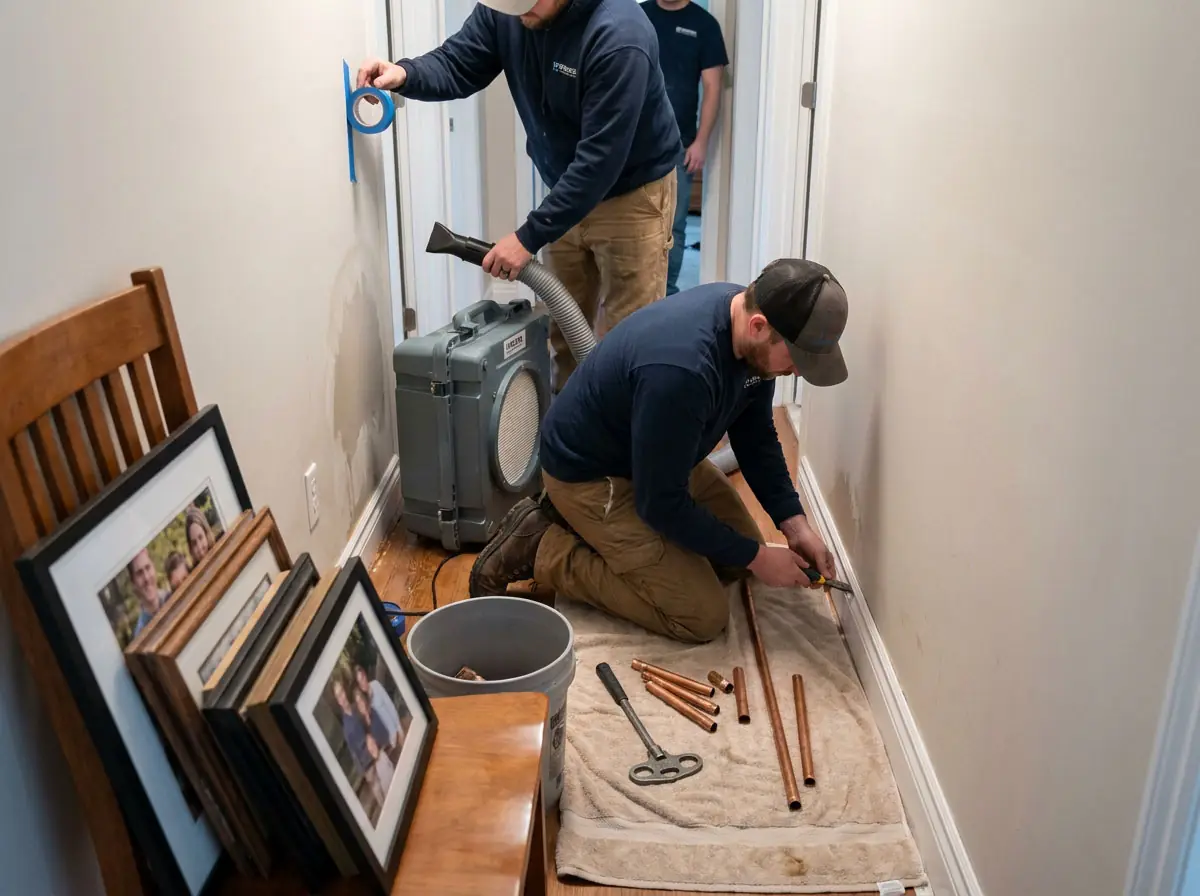
Professional restoration requires Industrial Grade Dehumidification. We use specialized equipment designed to pull moisture out of the wood grain through low grain refrigerant dehumidifiers. This creates a dry environment that forces the wood to release its trapped water safely.
Think of it like this: a box fan is a band-aid on a broken bone. If you don't extract the deep moisture, you are simply leaving a damp sponge underneath your floorboards. That trapped water is the fuel for mold growth and long-term rot.
The Risks of DIY Methods
Relying solely on household gadgets often leads to these common failures:
- Localized surface drying which causes the wood to crack as the top dries faster than the bottom.
- Heat sources that weaken the structural integrity of the wood fibers.
- Increased humidity levels in the surrounding air, which can cause secondary damage to drywall and trim.
True structural drying is about physics and balance. We monitor the Equilibrium Moisture Content of your floors to ensure they reach a stable state. Skipping this step is the fastest way to turn a manageable cleanup into a full floor replacement.

Restoring a Historic Bloomington Home: A Local Case Study
Old homes in Bloomington have character that modern construction simply cannot replicate. Recently, we worked on a historic property near the Miller Park area where a faulty radiator caused water to pool under century-old oak floorboards.
The owner initially tried using heavy-duty fans, but the moisture was already trapped deep in the grain. We had to implement a specialized drying strategy to save the original boards rather than tearing them out.
Here are the primary variables we analyzed to preserve the historic integrity of those floors:
- Wood Species Age: Old growth timber is much denser than new wood, which changes how quickly it absorbs and releases water.
- Subfloor Condition: We inspected the original pine subflooring to ensure it wasn't harboring hidden mold colonies.
- Adhesion Methods: Many historic floors are nailed or pegged, which creates specific pathways for moisture to travel underneath.
Because the finish was delicate, we avoided aggressive sanding during the initial phase. We used low-grain refrigerant dehumidifiers to slowly pull moisture from the planks without causing them to crack further. Saving a floor with this much history requires patience, not brute force.
When Refinishing Isn't Enough: Identifying Irreversible Rot
Sometimes, the damage goes deeper than simple surface aesthetic issues. When moisture penetrates the core of the wood for extended periods, the structural cells actually collapse and begin to decay.
You might notice a persistent musty odor that just won't quit, even after the floor feels dry to the touch. That scent is a telltale sign of internal microbial growth feeding on the decomposing wood fibers.
If you observe these specific structural failures, refinishing is no longer a viable option:
- The wood feels spongy or gives way under light pressure.
- You spot dark, irregular staining that does not sand away.
- The boards have separated significantly, exposing the subfloor to ongoing moisture.
- Visible fungal growth or white fuzzy patches have appeared on the underside or between planks.
At this stage, attempting to sand and refinish is merely putting a bandage on a broken bone. You are essentially polishing a board that has lost its structural integrity.
Our goal is to save your home from further degradation. If the wood has reached the point of rot, the only responsible choice is removal and replacement to keep your Bloomington property safe, clean, and sound.
Protecting Your Floors for the Long Haul
Your hardwood investment represents more than just a floor; it is the heartbeat of your home. When moisture strikes, speed is your only ally.
Leaving standing water for even a few hours invites structural degradation that often hides beneath the surface. If you see signs of warping, do not wait for the wood to dry on its own.
Check our Hardwood Floor Water Damage guide to understand the specific risks Bloomington winters pose to your interior finish. Catching the problem early separates a simple sanding job from a total floor replacement.
Proactive Maintenance Tips
Prevention is cheaper than restoration. Use these simple steps to defend your living space against future leaks:
- Check your supply lines under kitchen and bathroom sinks twice a year.
- Place moisture sensors near appliances that use water, such as refrigerators or dishwashers.
- Maintain consistent humidity levels inside your house to stop boards from shifting during temperature swings.
Professional assessment remains the gold standard for long-term peace of mind. We use specialized equipment to detect moisture trapped deep within your subfloor, where standard towels simply cannot reach.
Trusting your gut is smart, but trusting accurate data is how you save thousands in unnecessary repairs. Get a expert inspection today to ensure your floors stay dry, flat, and beautiful for years to come.
People Also Ask
Can hardwood floors be saved after water damage?
Yes, hardwood floors can often be salvaged if professional restoration begins immediately. Rapid extraction and specialized drying techniques are essential to prevent permanent warping or structural decay.How long does it take for hardwood floors to dry after a water leak?
Drying times vary based on the extent of the saturation, but professional equipment typically requires three to seven days. You can learn more about managing indoor air quality and moisture from the EPA website to better understand how humidity affects your home environment.Is it possible to dry hardwood floors using just a space heater?
No, using space heaters or fans alone is ineffective and can actually cause the wood to buckle or crack due to uneven drying. Professional dehumidification is required to draw moisture out of the subfloor and the wood planks safely.How do I know if I need to replace my hardwood floors after water damage?
You should consider replacement if you observe signs of mold growth, persistent cupping that does not flatten, or soft spots in the subfloor. A professional inspection will determine if the damage is structural or purely cosmetic.Why is local Bloomington water damage restoration important for my floors?
Local professionals understand the unique climate in Bloomington and can respond quickly to mitigate damage before it spreads. Rapid response is the most critical factor in determining whether your floors can be restored or must be replaced.Need Water Damage Restoration Services?
We provide rapid water damage restoration to restore your property to its original condition immediately. Serving Bloomington and surrounding communities (61701, 61704, 61705, 61761) to minimize structural damage and downtime.
Request Accurate Quote