
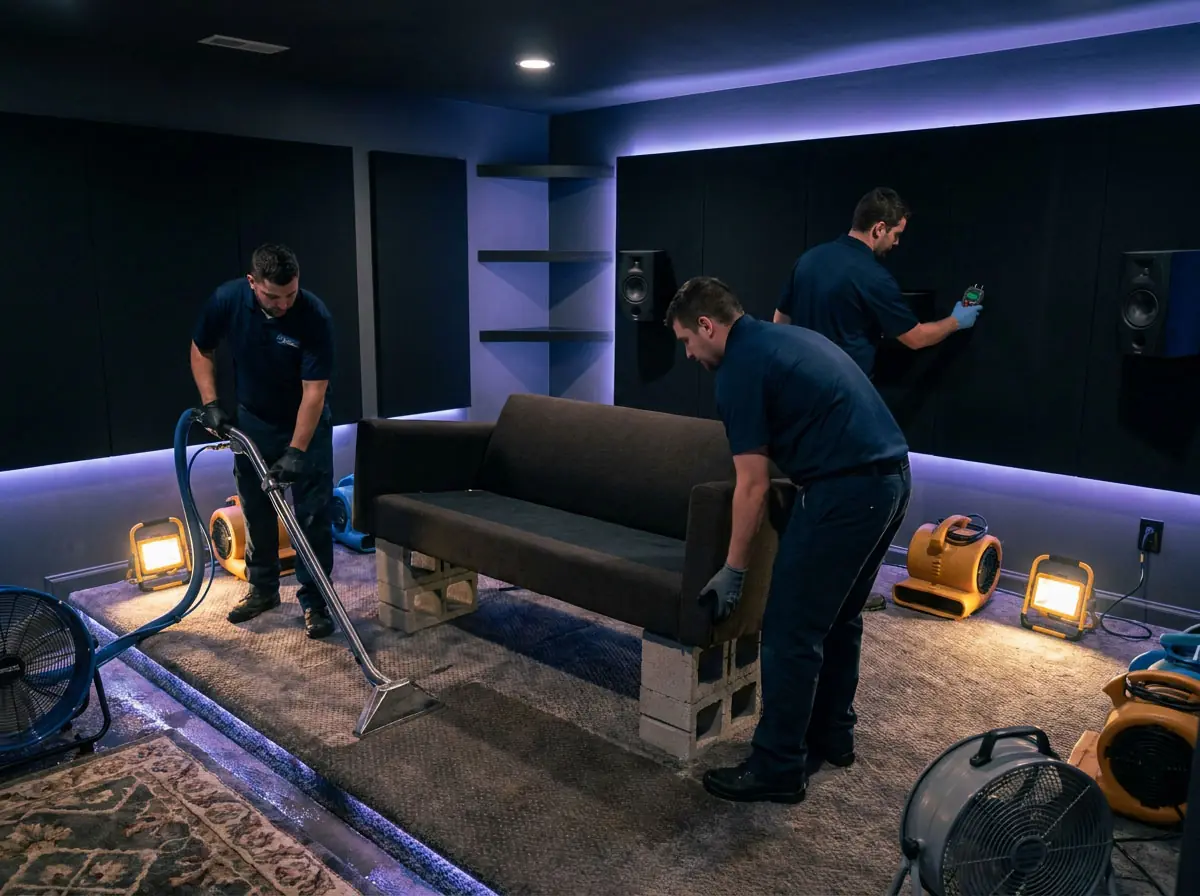


⚡ TL;DR: This informative guide explains why professional Smoke Odor Removal is necessary for Birmingham homes, detailing how industrial techniques effectively eliminate stubborn particles that standard household cleaners simply cannot reach.
📋 What You’ll Learn
Discover how professional restoration experts eliminate stubborn smoke odors from Birmingham homes. We reveal why surface cleaning fails and explain the industrial techniques required to restore your indoor air quality today.
- Understand why store-bought sprays fail because they only mask smells rather than eliminating the microscopic soot particles that infiltrate drywall, carpet, and delicate home ventilation systems permanently.
- Explore the science of particle infiltration in Birmingham properties to see how smoke residue settles deep into structural materials and why specialized industrial equipment is absolutely necessary.
- Master professional HVAC deep-cleaning methods that stop smoke odors from recirculating through your home every time the heater or air conditioner kicks on during the humid season.
- Analyze industrial remediation versus DIY efforts using a detailed comparison to determine when simple household cleaning products fall short and when expert restoration assistance is strictly required.
- Follow strategic steps for odor neutralization to successfully remove smoke contamination and restore your living environment to a clean, fresh, and healthy state for your local family.
📖 Reading time: 8 min
✍️ Author expertise: Birmingham restoration specialist with over a decade of field experience managing fire recovery.
You wake up in your Birmingham home, but instead of the crisp morning air, you’re hit with that thick, unmistakable stench of a fire that happened weeks ago. It sticks to your curtains, clings to your clothes, and makes your lungs feel heavy every single time you take a breath.
Most homeowners assume a quick scrub or a few store-bought candles will kill the ghost of the flames. The truth is, smoke particles are microscopic infiltrators that embed themselves deep into your drywall and ventilation systems, laughing at your best efforts with a vacuum.
If you are tired of living in a house that smells like a campfire, here is the real way to strip away the damage and reclaim your clean air.

Why Store-Bought Solutions Fail Against Smoke Residue
You have tried the scented sprays, the plug-in diffusers, and the mountain of candles from the local big-box store. They might mask the smell for an hour, but as soon as the scent dissipates, that heavy, acrid odor returns with a vengeance.
This happens because store-bought products are designed to cover up odors, not remove them. They are essentially putting a cheap bandage on a deep, structural wound.
Smoke damage is not just a surface-level problem that a spray bottle can fix. When a fire occurs, soot particles become electrically charged and bond to almost every surface in your home.
The Hidden Trap of Surface Treatments
Consumer grade cleaners only reach the top layer of dust and grime. They cannot reach the microscopic crevices where smoke hides.
- Fabric fibers trap soot deep in their weave.
- Porous drywall acts like a sponge, soaking up combustion byproducts.
- Airborne particles settle inside walls where surface sprays never touch.
When you use a generic air freshener, you are simply layering perfume over toxins. This does nothing to stop the chemical reactions still occurring on your walls and inside your furniture.
If you truly want to clear the air in your Birmingham residence, you have to stop thinking about masking scents. You must focus on physical removal of the residue.
The Science of Particle Infiltration in Birmingham Homes
When fire strikes, you are not just dealing with visible soot. You are facing a microscopic invasion of combustion byproducts that act like permanent guests who refuse to leave.
These particles are acidic and oily. Because of Birmingham’s distinct humidity, these microscopic pollutants soften and expand, pushing themselves deeper into the porous materials of your home. It is why that smell never fades on its own; it is literally part of your wall structure now.
Why Standard Cleaning Fails
Most people think a surface wipe clears the air. The reality is much uglier:
- Smoke particles carry an electrostatic charge that bonds them to synthetic fibers.
- They are small enough to pass through your HVAC filters and settle in your ductwork.
- The moisture in the Alabama air traps these particles inside drywall and wood grain.
Once these particles settle, they become chemically bonded to the surface. You can scrub until your arms ache, but you are only removing the top layer while the odor source remains buried beneath the surface.

Professional Techniques for Deep-Cleaning HVAC Systems
Your HVAC system acts as the central circulation hub for your home. When a fire occurs, it doesn't just push heat; it acts like a giant lung that inhales smoke particles and distributes them into every single room in your house.
Even if you wipe down your walls, the internal components of your furnace and ductwork remain coated in acidic soot. Ignoring these hidden pockets is why the odor returns the moment you turn on your air conditioning.
The Professional Decontamination Protocol
To truly clear the air, we use industrial grade methods that go far beyond standard vent cleaning. Here is how we stop the cycle of re-contamination:
- Negative Air Pressure Cleaning: We seal your vents and use specialized vacuums to pull soot out, ensuring particles don't escape back into your living space.
- Chemical Fogging: We introduce a neutralizer into the ductwork that bonds with smoke molecules, effectively turning the smell into an inert, odorless solid.
- HEPA Filtration: All air scrubbers operate with high efficiency filters to catch microscopic remnants that household units simply cannot trap.
- Coil Restoration: We deep clean the cooling coils where smoke residue often cakes on, which restores the actual performance of your system while killing the source of the persistent fire smell.
You cannot scrub the inside of a duct with a rag and some soap. It requires mechanical agitation combined with specialized air pressure equipment to dislodge the soot that has bonded to the metal walls of your ventilation system.
Once we clear these internal pathways, your home stops acting like a giant smoke dispenser. You will finally notice the difference in air quality, and your family can stop breathing in the leftover toxins from the burn.
Proven Restoration Results: A Birmingham Residential Case Study
Last month, we stepped into a historic Birmingham bungalow that had been stagnant with smoke odors for over three months. The homeowners had tried everything from painting over the walls to running ozone generators they rented from the hardware store, but the smell returned every single time the humidity climbed.
Our team performed a comprehensive thermal fogging process coupled with HEPA air scrubbing. We treated the porous structural materials that store-bought sprays simply cannot penetrate. By the end of our three-day protocol, the house felt like it had never seen a fire.
The Restoration Protocol Applied
- Detailed HEPA vacuuming of every attic rafter and crawlspace joist to capture loose soot.
- Application of odor neutralizing agents specifically formulated to bond with smoke molecules at a molecular level.
- Sealing of charred wood framing to prevent future off-gassing of chemical residues.
The secret to our success wasn't just the gear; it was the precision of our inspection. We found that the smoke had actually bypassed the drywall, traveling through electrical outlets and into the wall cavities. Once we tackled those hidden pockets, the air quality shifted from heavy and toxic to crisp and neutral.

Comparative Table of DIY Methods Versus Industrial Remediation
Most folks think a bottle of air freshener or a quick wipe down of the walls will solve their smoke problems. That is a dangerous mistake. You are simply masking the stench while the real problem—toxic soot particles—remains locked inside your building materials.
| Feature | DIY Methods | Industrial Remediation |
|---|---|---|
| Odor Source | Masks the scent | Removes the cause |
| HVAC Cleaning | Surface dust only | Full duct sanitation |
| Chemical Use | Household sprays | Professional enzymes |
| Success Rate | Temporary at best | Permanent results |
| Equipment | Standard vacuum | HEPA/Ozone/Hydroxyl |
The difference between a store-bought spray and industrial equipment is massive. A standard vacuum filter is useless against microscopic soot; it actually blows the dust back into your rooms, making your air quality even worse.
Our team uses industrial-grade technology that goes beyond what you can find at a local Birmingham hardware store. We target the physical soot that clings to porous surfaces, ensuring that the bad smell does not come creeping back the second the air conditioning kicks on.
Why Professional Tools Win Every Time
- HEPA filtration catches particles that are too small for standard household cleaners.
- Ozone and hydroxyl generators break down the molecular structure of odors.
- Specialized detergents lift soot from drywall without damaging your paint.
- Thermal fogging reaches deep into wall cavities where sprays cannot touch.
Strategic Steps for Odor Neutralization and Property Restoration
Getting your home back to normal requires a surgical approach, not just a surface wipe. You need to hit the odor at its molecular level before it becomes a permanent part of your living room.
Most folks try to mask the stench, but you cannot hide a rotting odor with flowery sprays. You have to remove the source, neutralize the chemistry, and seal the porous materials that act as sponges for soot.
The Tactical Plan for Total Odor Removal
- Source Removal: Pull out all debris and charred materials that hold the scent. If it cannot be cleaned, it must go.
- Chemical Neutralization: We use hydroxyl generators or ozone machines to break down the carbon bonds of the smoke particles. This changes the air quality from the inside out.
- Sealing the Surfaces: Once the space is scrubbed, we apply professional-grade encapsulants to drywall and studs. This creates an airtight barrier that locks in any remaining microscopic particles.
- HEPA Filtration: High-efficiency air scrubbers run 24/7 during the process to catch floating debris and dust that your standard AC filter would miss.
Don't fall for the trap of thinking one afternoon of cleaning will solve a fire damage problem. If you miss even a small pocket of soot in the wall cavity, the smell will return the moment the humidity rises in Birmingham.
Real restoration is about consistency and precision. You need to verify that the air quality is actually back to pre-fire standards through professional testing. Only then can you stop worrying about the smell and finally get back to sleeping soundly in your own bed.
Final Words
Living with the ghost of a fire is not just a nuisance, it is a direct threat to your indoor air quality. You have already seen that basic cleaning simply shoves particles around instead of removing them.
When you are ready to stop masking the scent and actually kill it, professional Smoke Odor Removal is the only path forward. Taking action now prevents long term structural damage to your Birmingham property.
The Reality of Professional Recovery
Restoration is about more than just aesthetics. It is about restoring the health of your home environment so you can breathe freely again.
- Industrial air scrubbers pull toxins out of the air at a microscopic level.
- Thermal fogging neutralizes odor molecules where they hide in the drywall.
- HVAC system sanitation ensures your furnace does not recycle the smell every time it turns on.
Do not wait for the residue to set into your carpets and upholstery. Contact our team today to inspect your home and deploy the science needed to scrub your air clean.
People Also Ask
How long does smoke odor typically linger in a Birmingham home after a fire?
Smoke particles are microscopic and can remain trapped in porous materials like drywall, carpet, and insulation for months or years. Without professional intervention, these odors often reactivate during periods of high humidity common in Alabama.Can I remove smoke smell from my walls using vinegar or baking soda?
Store-bought solutions usually only mask the scent rather than removing the underlying particulate matter. Because smoke residue is acidic and deeply embedded in paint, true indoor air quality requires professional neutralization techniques.Why is professional HVAC cleaning necessary for smoke odor removal?
Your air conditioning system acts as a distribution network for soot and ash throughout your entire property. If the ducts are not professionally scrubbed and sanitized, the system will continue to blow smoke particles back into your living spaces every time it turns on.Is it safe to stay in a home that has lingering smoke odor?
Lingering smoke residue contains toxic chemical compounds that can cause respiratory irritation and long-term health issues. We strongly recommend vacating the property until a certified restoration team confirms that the air quality has been restored to safe levels.What distinguishes professional restoration from standard cleaning services?
Standard cleaners lack the industrial equipment like hydroxyl generators and thermal foggers needed to penetrate deep into structural materials. Professional restoration teams utilize specialized chemistry to bond with and encapsulate odor molecules at the molecular level.Need Water Damage Restoration Services?
We provide rapid emergency water extraction and structural drying services to restore your Birmingham area property to its pre-loss condition. Our team mobilizes immediately across Birmingham and surrounding communities to prevent further damage and complete your cleanup quickly (35203, 35205, 35209, 35242).
Request Price Estimate