


⚡ TL;DR: This guide provides essential safety steps and professional advice for managing sewage backup cleanup in Birmingham, helping homeowners protect their families from health risks after a property breach.
📋 What You’ll Learn
When sewage backup strikes your Birmingham property, acting quickly is vital for your health. This guide covers essential protocols, professional restoration standards, and specific local risks for our unique environment.
- Prioritize your immediate household safety by identifying dangerous contaminants, avoiding direct contact with standing water, and knowing exactly when to evacuate your home until professional crews arrive.
- Understand Birmingham sewer line vulnerabilities by learning why our local aging infrastructure and regional weather patterns frequently lead to mainline failures inside residential basements and crawlspaces.
- Master the professional cleanup process as we outline the strict industry standards for containment, heavy-duty sanitization, and structural drying required to safely restore your home after contamination.
- Analyze real-world restoration case studies that show how local experts effectively remediate severe sewage breaches, ensuring your indoor air quality is restored and your property remains structurally sound.
📖 Reading time: 8 min
✍️ Author expertise: Birmingham water damage restoration specialist with decades of hands on site cleanup experience.
You wake up to a stench that stops you dead in your tracks, and a quick glance at your bathroom floor confirms your worst fears: raw sewage is bubbling up where it absolutely does not belong. It is not just a messy plumbing problem; it is a full-blown biological hazard threatening the safety of your family and the foundation of your Birmingham home.
Most homeowners make the mistake of grabbing a mop and bucket, thinking they can handle this like a simple spill. That is the quickest way to end up with a severe infection or permanent damage to your flooring and walls.
Before you touch anything or put yourself at further risk, you need to know exactly how to handle this catastrophe safely. Here is how you protect your property and your health until professional help arrives.

Immediate Safety Protocols: Protecting Your Family from Sewage Contamination
Your first move must be to cut off the source. Locate your home’s main water shutoff valve and turn it clockwise until it stops, as this prevents more water from flooding into the sewage system and compounding the disaster.
Stay far away from the affected area. Sewage is classified as Category 3 water, meaning it contains pathogenic, toxigenic, or other harmful agents that can cause severe illness or death.
Follow these non-negotiable safety steps while you wait for our emergency crew:
- Evacuate all family members and pets from the contaminated rooms immediately.
- Avoid walking through the standing water; your skin can absorb bacteria, and pathogens can easily hitch a ride on your shoes.
- Do not flip any light switches or touch electrical outlets near the water, as the combination of sewage and electricity is a deadly hazard.
- Keep interior doors closed to prevent airborne contaminants from traveling through your HVAC system and into the rest of your home.
Do not try to clean this yourself. Household chemicals, mops, or wet-dry vacuums from the hardware store are completely inadequate against the microscopic threats present in raw sewage.
Instead, focus on protecting your skin with gloves and rubber boots if you absolutely must retrieve personal items from nearby. Wash your hands thoroughly with antimicrobial soap the moment you step outside of the danger zone.
Identifying the Source: Why Birmingham Homes Face Frequent Sewer Line Backups
Living in Birmingham means dealing with an aging city infrastructure that often struggles to keep up with rapid growth. Many of our local neighborhoods sit on older clay pipes that have shifted over decades due to Birmingham’s unique soil composition.
When these pipes crack or collapse, they create the perfect trap for debris. Tree roots are the primary culprits here, aggressively seeking out the moisture leaking from these fractures and eventually crushing the line entirely.
Beyond natural wear, common household habits significantly contribute to these disasters. Many residents unknowingly turn their plumbing into a bottleneck by flushing items that simply do not break down in water.
Consider the following items that frequently block Birmingham sewer lines:
- Wet wipes, even those labeled as flushable.
- Cooking grease and oily food residues.
- Feminine hygiene products.
- Paper towels and thick facial tissues.
Heavy rainfall events common in Alabama often push municipal systems to their breaking point. When the city’s main line reaches capacity, the excess volume has nowhere to go but back up through the lowest point in your home, typically your basement or ground floor drains.
This is not a matter of poor maintenance on your part, but rather a clash between outdated underground systems and modern household usage. Recognizing these patterns helps you stay alert for slow drains or gurgling sounds, which are often the final warnings before a complete backup occurs.
The Health Risks: Categorizing Contaminants and Potential Pathogens
Raw sewage is not merely dirty water. It is a toxic cocktail of bacteria, viruses, and parasites that can trigger severe illnesses within hours of contact.
When a sewer line backs up in your Birmingham home, you are dealing with Category 3 water, also known as black water. This substance is teeming with pathogens that thrive in moist, porous surfaces like your drywall, carpet, and subflooring.
If you or your family members come into direct contact with this waste, the consequences can be serious. Common health threats include:
- E. coli and Salmonella: These cause violent gastrointestinal distress, fever, and dehydration.
- Hepatitis A: A viral infection that targets the liver and is highly transmissible through fecal matter.
- Parasitic Infections: Organisms like Cryptosporidium can cause prolonged diarrhea and abdominal pain.
- Tetanus: If the sewage enters through a cut on your skin, you face a risk of this dangerous infection.
Do not be fooled by the visual appearance of the floor. Even after you clean the visible mess, microscopic pathogens remain embedded deep within your home structure.
These biological agents release airborne particles that you breathe in as you move through your house. Without professional industrial cleaning and high-grade biocides, your home remains a source of infection that could hospitalize your loved ones.
Categorization Table: Breakdown of Water Contamination Levels and Cleanup Requirements
Not all water is created equal. When your home is hit by a backup, professionals classify the mess into distinct categories based on the severity of the contaminants involved.
Understanding these levels is the difference between a simple weekend chore and a serious health threat to your Birmingham household. Using the wrong tools or cleaning methods can spread bacteria throughout your living space, making a bad situation significantly worse.
| Category | Description | Risk Level | Cleanup Action |
|---|---|---|---|
| Category 1 | Clean water from supply lines | Low | Dry and sanitize |
| Category 2 | Grey water from appliances | Moderate | Extraction and disinfection |
| Category 3 | Black water from sewage | High | Professional remediation required |
Category 3 water, which includes raw sewage, is extremely hazardous because it contains pathogenic agents, parasites, and fungi. You cannot simply wipe this away with household soap.
If you encounter this type of water, you must treat the area as a biohazard zone. Following standard cleanup requirements is not enough; you need specialized equipment to ensure the microscopic dangers are physically removed from your property.
Why DIY is Dangerous for Category 3
- Standard vacuums will spray contaminated aerosols into your air.
- Household cleaners lack the biocides needed to kill deep-seated sewage bacteria.
- Porous materials like carpet and padding often must be permanently removed rather than cleaned.

Professional Containment: How Experts Restore Birmingham Properties After a Breach
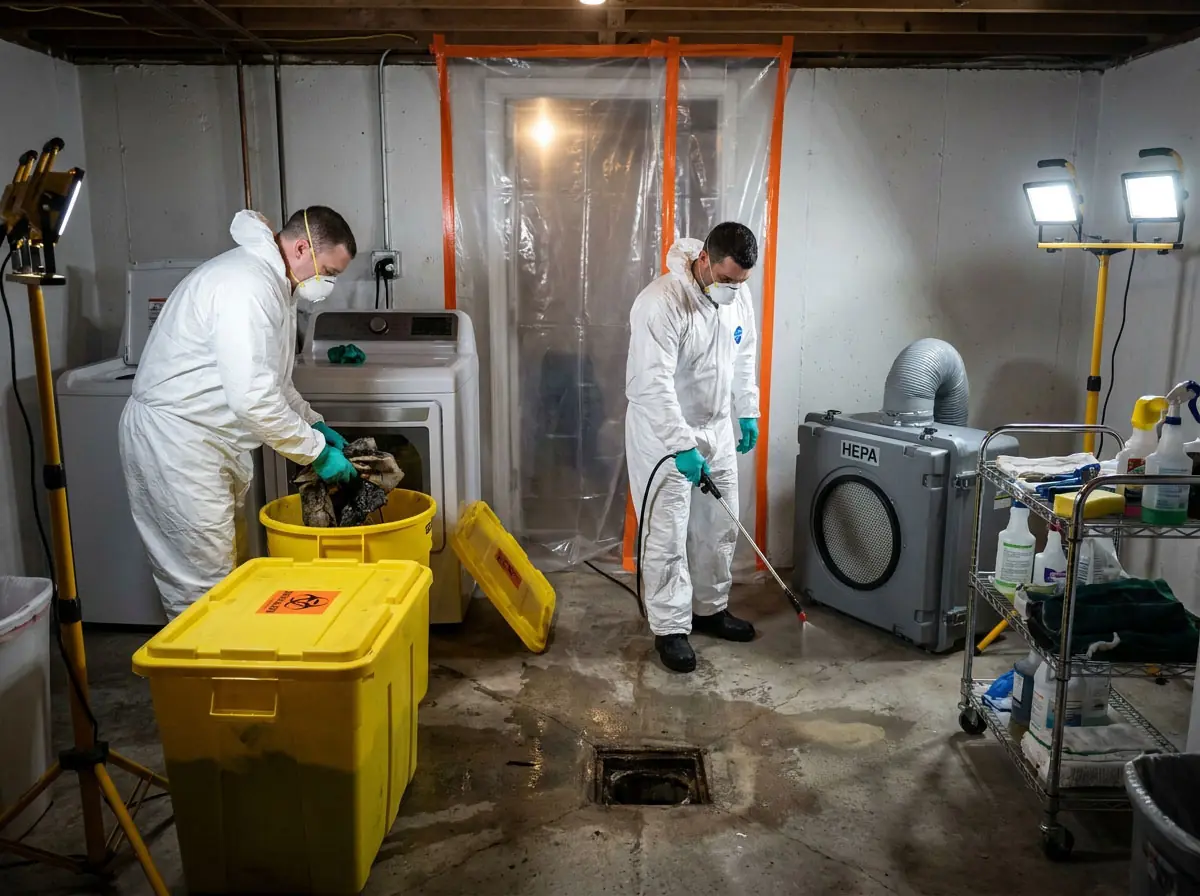
When sewage floods your home, standard cleaning supplies will not cut it. We arrive with industrial-grade equipment designed to stop the spread of microscopic pathogens before they infiltrate your walls, subfloors, and HVAC ducts. Our primary goal is to establish a physical barrier that prevents contaminated air and moisture from moving into unaffected areas of your house.
Containment is a precise operation that requires specific tactical steps to seal off the disaster zone. We manage the air pressure inside the affected area to ensure that hazardous spores do not migrate to your bedrooms or living rooms.
The Professional Restoration Process
- Setting up negative air machines to scrub the atmosphere and remove airborne bacteria.
- Creating plastic sheeting barriers that act as airtight partitions to protect the rest of your residence.
- Removing all porous materials that have touched the sewage, such as carpet, padding, and drywall, because these items cannot be effectively sanitized.
- Applying medical-grade antimicrobial agents to neutralize biological threats on hard surfaces.
Ignoring these steps leads to long-term health risks and deep-seated odors that linger for months. We use high-capacity dehumidifiers and air movers to dry out the structure once the contaminated materials are hauled away, preventing secondary damage like mold growth. Our team works with speed and caution so you can return to a home that is physically safe and medically sterile.
Lessons from a Birmingham Basement Restoration
Last month, we responded to an emergency call in a historic home near Highland Park. A massive city main line failure sent raw sewage flooding into the homeowner’s finished basement, soaking the drywall and expensive carpeting within minutes.
The owner attempted to move some boxes before we arrived, which only spread pathogens across the upstairs hallway. This single mistake turned a localized basement issue into a multi-level sanitization project.
Here is what we learned from the onsite recovery process:
- Time is the enemy. Porous materials like drywall and carpet padding begin to absorb contaminants the moment they touch liquid.
- Containment saves money. By sealing off the basement door immediately, we prevented airborne mold spores and bacteria from circulating through the HVAC system.
- Personal protection matters. Even our crew wears heavy-duty HAZMAT gear because skin contact with black water is an instant health risk.
When our team finally started the cleanup, we had to strip the walls back to the studs to ensure no moisture remained trapped in the insulation. We used medical-grade antimicrobial agents to treat every inch of the concrete floor, ensuring that the home was not just clean, but biologically safe for the family to re-enter.
Do not wait for the smell to subside on its own. Sewage does not disappear; it settles into your structure and waits for the right temperature to start breeding mold. If you see water rising in your basement, treat it like an active crime scene and wait for the experts to secure the area.
Ensuring Your Home Remains Safe and Sanitary
Stopping a sewage disaster is only the first step. You must now focus on long-term prevention to ensure your Birmingham property stays protected against future failures.
Most sewer issues stem from neglected pipes or aging infrastructure. You can stay ahead of the game by scheduling regular inspections before a minor clog turns into a full-scale biohazard emergency.
If you have recently suffered through a spill, remember that thorough remediation is critical. Our experts at our Sewage Backup Cleanup division recommend following these simple maintenance rules to keep your home healthy:
- Never treat your toilet like a trash can; keep paper towels and wipes out of the pipes.
- Install a backwater valve to prevent city line surges from pushing waste back into your basement.
- Schedule a professional pipe camera inspection every two years to spot root intrusion early.
Stay proactive rather than reactive. By keeping your lines clear and your systems monitored, you save your foundation and your bank account from the heavy costs of repeat disasters.
Your home is your biggest investment. Protect it by choosing expert care and staying vigilant about what goes down your drains.
People Also Ask
Does homeowners insurance cover sewage backup in Birmingham?
Most standard homeowners insurance policies do not automatically cover sewage backups unless you have added a specific endorsement. You should contact your insurance provider immediately to review your policy details for water damage coverage.What are the primary health risks associated with raw sewage exposure?
Sewage contains harmful bacteria, viruses, and parasites that can cause serious gastrointestinal and skin infections. According to the federal health guidelines, proper personal protective equipment is essential to prevent disease transmission during cleanup.Should I attempt to clean up a sewage backup myself?
It is strongly recommended to avoid contact with raw sewage, as it is classified as Category 3 water and requires specialized sanitization. Professional restoration companies use industrial grade equipment to safely remove waste and prevent long term mold growth.Why do Birmingham homes experience frequent sewer line issues?
Aging infrastructure and Birmingham’s hilly topography can place significant stress on municipal and residential sewer lines. Additionally, tree root intrusion into older clay pipes is a common cause of backups throughout the local area.How long does it take for mold to grow after a sewage leak?
Mold can begin to colonize damp materials within 24 to 48 hours after a sewage breach occurs. Rapid moisture extraction and professional drying services are required to stabilize your environment and minimize structural damage.Need Water Damage Restoration Services?
We provide rapid emergency water extraction and structural drying services to restore your Birmingham area property to its pre-loss condition. Our team mobilizes immediately across Birmingham and surrounding communities to prevent further damage and complete your cleanup quickly (35203, 35205, 35209, 35242).
Request Price Estimate