


⚡ TL;DR: This guide helps Atlanta homeowners identify hardwood floor water damage, outlines immediate mitigation steps, and explains when to seek professional restoration services to ensure your floors remain beautiful.
📋 What You’ll Learn
Atlanta’s high humidity and sudden storms often wreak havoc on hardwood flooring. This guide explores essential restoration strategies to identify, mitigate, and repair water-damaged floors throughout your local residential property.
- Identify early moisture warning signs such as cupping, buckling, or unusual gaps in your planks before the underlying wood rot spreads further throughout your Atlanta home’s foundation and subfloors.
- Perform immediate mitigation steps that you should take as a homeowner to stabilize your environment while waiting for specialized restoration crews to arrive at your property for help.
- Compare professional drying techniques against common DIY fan tactics to understand why industrial dehumidification is necessary to save your expensive hardwood investment from permanent long term structural damage.
- Navigate full floor replacement decisions by understanding the specific scenarios where refinishing is no longer a viable option due to severe decay or deep saturation of the wood fibers.
📖 Reading time: 8 min
✍️ Author expertise: Atlanta water damage specialist with twenty years of field experience restoring local hardwoods.
You wake up, walk toward the kitchen for your first cup of coffee, and your bare feet land on a squishy, buckled mess instead of smooth timber. That sinking feeling in your gut isn't just about the floor; it is about the thousands of dollars in equity literally rotting away under your roof.
Atlanta humidity is bad enough, but a hidden pipe leak or a sudden storm surge turns your beautiful hardwood into a warped disaster zone overnight. Most homeowners wait too long to act, turning a simple drying job into a complete rip-and-replace nightmare that drains their bank account.
You do not have to watch your investment warp into firewood. Here is exactly what you need to do right now to stop the rot and save your floors before the damage becomes permanent.

Identifying the Early Warning Signs of Atlanta Moisture Intrusion
Atlanta’s subtropical climate acts as a natural pressure cooker for your home, but your hardwood floors shouldn't pay the price. You don't need an expensive thermal imaging camera to spot a problem before it destroys your subfloor. Your nose and your eyes are your best first line of defense.
If you catch these symptoms early, you can often avoid a total floor replacement. Pay attention to these subtle red flags that signal water is winning the war beneath your feet:
- Cupping: The edges of your floorboards appear higher than the center, creating a ripple effect. This usually happens when moisture rises from below.
- Crowning: The center of the board is higher than the edges. This is often the result of sanding a cupped floor too soon before the wood was fully dry.
- Musty Odors: That damp, mildew-like scent is a dead giveaway that mold is colonizing the space between your floorboards and the concrete or wood slab.
- Surface Stains: Dark, black, or grey patches appearing through your finish indicate that water has breached the protective seal and is staining the wood fibers.
Listen to your home. If you hear a slight squeak or a hollow sound when you walk across a section that used to be solid, moisture has likely broken the bond between the wood and the subfloor. Do not ignore these changes. Wood is a porous material; it acts like a sponge, expanding as it drinks in Atlanta's persistent humidity.
Once the boards begin to buckle or push against one another, the damage is already deep. Catching these signs while they are still just surface-level aesthetic issues will save you thousands of dollars in structural repairs. Acting fast is the difference between a simple dehumidification project and a full-scale renovation.
Immediate Steps to Mitigate Water Damage Before Professionals Arrive
Time is the enemy when your floors are soaked. Your priority is to stop the water source immediately, whether that means shutting off the main water valve or placing a tarp over a storm-damaged roof section.
Once the water stops, remove standing liquid right away. Grab every towel, mop, and shop vacuum you own to pull moisture out of the grain. If you leave water sitting on the surface, it will seep into the seams and ruin the subfloor.
Essential Initial Actions
- Cut the power to the affected area if water is near electrical outlets.
- Clear all rugs, furniture, and boxes off the damp wood to prevent color transfer and further moisture trapping.
- Dehumidify the room by cranking up your HVAC or using portable dehumidifiers to pull moisture out of the air.
- Avoid walking on the buckled floor as much as possible; heavy footsteps will push water deeper into the gaps and crush the wood fibers.
Do not try to force the boards back into place with heavy weights or hammers. Wood is a living material that reacts to pressure; pushing on swollen boards usually leads to permanent cracking or splintering. Keep the area ventilated and wait for a professional assessment before you attempt any structural repairs.
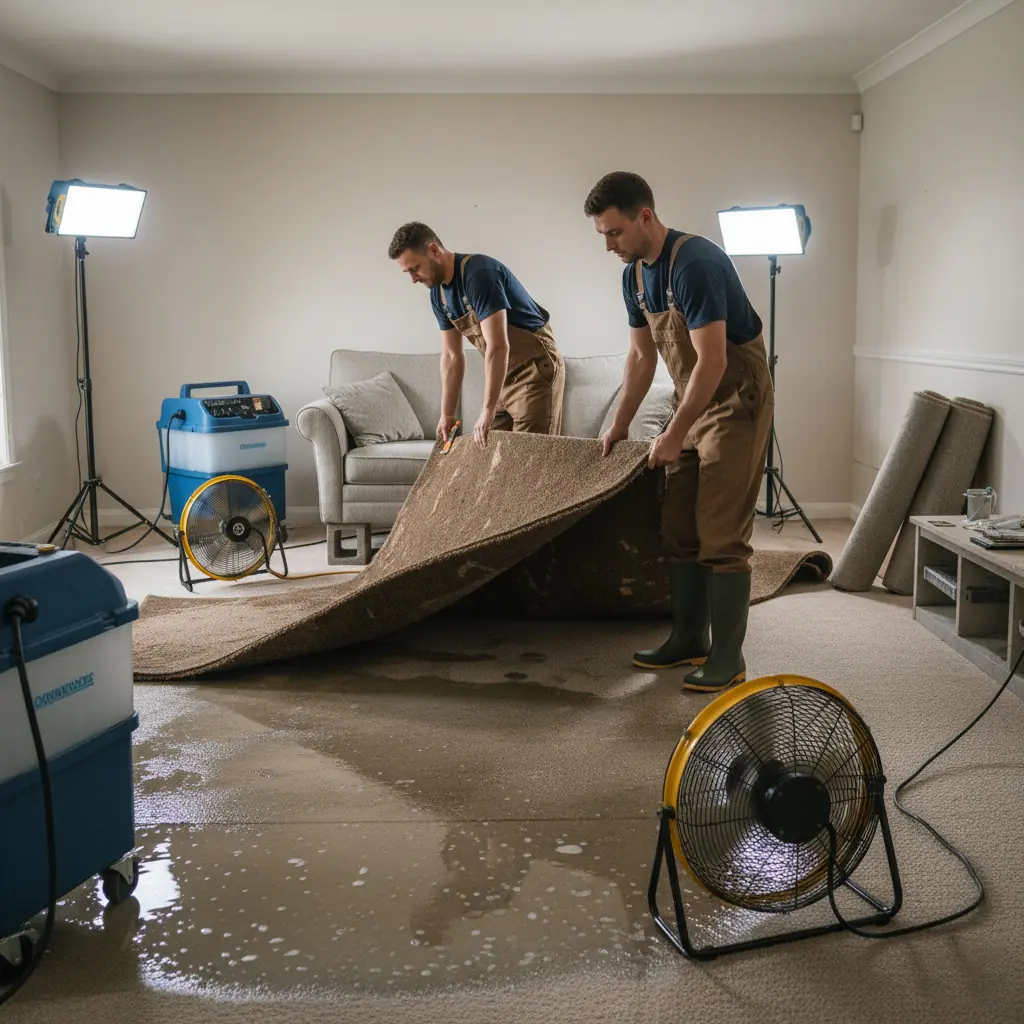
Professional Drying Techniques vs. DIY Fan Tactics
Most homeowners assume that a box fan and an open window will solve a floor soak. This is a dangerous misconception that usually leads to mold growth and permanent structural warping.
While a fan might dry the surface of the boards, it does absolutely nothing for the moisture trapped deep within the grain or the subfloor underneath. Professional restoration experts use industrial grade equipment to pull moisture out from the bottom up.
Why Standard Box Fans Fall Short
You cannot dry hardwood with just air movement. Professional moisture extraction is a precise science, not a breeze.
- Dehumidification: We use high capacity refrigerant units to pull moisture out of the air and the floor, dropping the humidity to levels where mold cannot survive.
- Injection Drying: Specialized mats are placed over the floor to pull water vapor out of the wood fibers and subfloor.
- Moisture Mapping: We use thermal imaging and digital moisture meters to find hidden water pockets that your eyes simply cannot see.
If you rely on a simple desk fan, the moisture will stay trapped in the wood cells. This eventually causes the finish to peel, the boards to crown or cup, and black mold to take root in your floor joists.
Speed is your greatest asset here. If you do not extract that water within the first 48 hours, the floor often becomes a total loss that requires an expensive, full demolition.
Estimated Repair Costs and Restoration Timelines
When your hardwood floors take on water, the clock is your biggest enemy. Costs can spiral quickly if moisture seeps into the subfloor or causes widespread cupping, so having a clear picture of the financial commitment is vital for making smart decisions.
| Repair Type | Estimated Cost | Typical Timeline |
|---|---|---|
| Professional Drying/Dehumidification | $800 - $2,500 | 3 - 5 Days |
| Spot Sanding & Refinishing | $1,200 - $3,000 | 4 - 7 Days |
| Partial Board Replacement | $2,000 - $5,000 | 1 - 2 Weeks |
| Full Floor Replacement | $7,000 - $15,000+ | 2 - 4 Weeks |
The price tag is heavily influenced by the extent of the saturation and the species of wood involved. Simple surface drying is far cheaper than dealing with mold remediation or structural damage to your floor joists.
Keep in mind that these numbers are just benchmarks for the Atlanta area. Factors that often cause unforeseen price jumps include:
- The need for specialized moisture sensors to test subfloor integrity.
- Moving heavy furniture and appliances out of the work zone.
- Custom board matching for older homes with antique flooring.
- The time required for proper acclimation of new wood to local humidity levels.
Trying to cut corners now usually leads to expensive callbacks later. Investing in the right professional equipment at the start prevents the wood from warping again once the weather turns humid.

Case Study: Restoring Historic Buckled Oak Floors in Buckhead
A recent project in an historic Buckhead estate showed exactly what happens when vintage craftsmanship meets modern plumbing failure. A supply line leak had gone undetected for three days, leaving the original white oak planks cupping and separating across the entire formal dining room.
The owners were terrified they would have to tear out floors laid down in the 1940s. Instead, we applied a specialized, controlled-environment drying process designed to draw moisture out gradually without shocking the wood fibers.
Key Success Factors for Historic Preservation
- Targeted moisture extraction allowed the wood to relax back into its original position.
- Deep-cleaning treatments removed surface contaminants pushed into the gaps by the standing water.
- Sand-and-refinish techniques focused on preserving the antique patina rather than replacing the boards.
We managed to save 95 percent of the original hardwood by avoiding the aggressive, quick-dry methods that lead to splitting. This surgical approach to restoration kept the home's character intact while saving the owners roughly half the cost of a total floor replacement project.
When Refinishing Fails: Navigating the Full Floor Replacement Process
Sometimes, the damage goes deeper than the surface finish. If your hardwood subfloor has begun to rot or the boards show signs of permanent fungal growth, sanding and staining simply won't fix the underlying disaster.
When professional moisture meters indicate that the wood’s cellular structure is compromised, full floor replacement becomes the only way to protect your home's air quality and structural integrity. Attempting to hide deep damage with a quick refinish is a recipe for toxic mold blooms later on.
Signs That Replacement Is Non-Negotiable
You cannot ignore the warning signs when the wood is past the point of no return. Look for these specific indicators that your floor needs to be ripped out:
- The boards have significant gaps that do not close after the wood is fully dried.
- You detect a persistent, musty odor that remains even after industrial dehumidification.
- Visible mold or mildew colonies have formed on the underside of the floorboards.
- The wood feels spongy or gives way when you apply pressure.
- The tongue and groove joints have fractured or splintered due to extreme swelling.
The replacement process is more than just swapping out planks. We start by removing the damaged materials and sanitizing the subfloor to prevent secondary moisture issues. Replacing the floor correctly ensures that your home returns to its original value and remains safe for your family.
Final Words
Your hardwood floors are not just interior decor; they are a structural investment that defines the character of your Atlanta home. When moisture strikes, time is the only currency that matters.
Do not wait for the cupping to turn into black mold. If you see signs of distress, visit our Hardwood Floor Water Damage page to start your recovery plan today.
The difference between a quick, professional dry-out and a massive construction project is measured in hours, not weeks. Take these steps immediately to protect your equity:
- Cut the water source at the main shutoff valve.
- Document every square inch of the damage for your insurance adjuster.
- Avoid using heavy sanders or heat guns, which often lock in moisture and warp the wood fibers further.
We see far too many homeowners try to DIY their way out of a disaster, only to find warped floorboards weeks later because the subfloor was never properly treated. Professional equipment is not just about moving air; it is about controlled dehumidification that reaches deep into the foundation of your home.
Get it handled correctly the first time. Your home, and your bank account, will thank you for it.
People Also Ask
How can I tell if my hardwood floors have permanent water damage?
Look for signs like cupping, crowning, or dark staining beneath the finish. If the wood feels soft to the touch or you notice a persistent musty odor, professional intervention is likely required to prevent mold growth.Does homeowners insurance cover hardwood floor water damage in Atlanta?
Coverage depends entirely on the source of the water intrusion and your specific policy details. Sudden events like a burst pipe are often covered, while slow leaks or high humidity damage may be excluded. Consult the Georgia office for guidance on understanding your insurance rights.How long does it take for hardwood floors to dry out after a leak?
Professional drying typically takes between three to seven days depending on the moisture content and the wood species. DIY efforts often fall short because surface drying does not remove moisture trapped beneath the boards.Is it cheaper to refinish or replace water damaged wood floors?
Refinishing is significantly more cost effective if the damage is limited to the surface layer and the subfloor is dry. If the wood has buckled or suffered extensive structural warping, replacement is usually the only viable long term solution.Why are my Atlanta floors buckling during the summer months?
High humidity levels common in Georgia can cause hardwood to absorb moisture and expand beyond its capacity. This lateral pressure forces boards to lift or buckle, even in the absence of a direct plumbing leak.Need Water Damage Restoration Services?
We provide rapid water damage restoration across Atlanta and surrounding areas to stabilize your property and prevent further structural issues. Our team acts immediately to extract water, dry your space, and restore your home or business to its original condition (30303, 30305, 30309, 30318).
Request Price Estimate