


⚡ TL;DR: This guide provides Arvada homeowners with essential strategies for effective mold remediation, helping you identify hidden moisture sources and implement long term solutions to keep your home healthy.
📋 What You’ll Learn
Discover how to protect your property from mold by understanding the specific moisture challenges unique to the Arvada climate and learn proven techniques for effective, long-term remediation and prevention.
- Identify hidden moisture sources by learning where Arvada homes typically harbor dangerous mold colonies that often remain invisible until they begin to compromise your indoor air quality significantly.
- Evaluate professional versus DIY methods by comparing the risks and rewards of tackling remediation yourself versus hiring certified experts to handle complex fungal outbreaks in your home.
- Master critical containment strategies to ensure that mold spores do not travel to clean areas of your house, which is a common mistake that worsens existing contamination issues.
- Implement proactive defense plans to prevent future mold growth by utilizing specific maintenance techniques tailored to the unique humidity levels found throughout the Arvada, Colorado region.
📖 Reading time: 7 min
✍️ Author expertise: Certified Arvada water damage specialist with years of local field remediation experience.
You smell it the second you walk through your front door: that heavy, damp musk that sticks to the back of your throat. Even if you cannot see a single dark spot on your drywall, your Arvada home might already be hiding a toxic colony behind the scenes.
Most homeowners make the mistake of scrubbing the surface or spraying cheap chemicals, only to watch the spores come back angrier and faster than before. That approach is a losing battle that wastes your money and puts your family’s health at risk.
If you want to stop the growth for good, you need to know exactly how these fungi operate in our high-altitude climate. Here are seven professional strategies to help you reclaim your property and keep it mold-free for the long haul.
Why Arvada’s Semi-Arid Climate Actually Fuels Indoor Mold Growth
Most Arvada residents assume that living in a semi-arid climate provides a natural shield against mold. They believe the constant sunshine and dry air will dehydrate any fungus before it can take root.
This is a dangerous misconception that often leads to severe structural damage. In our region, the stark contrast between hot days and cool nights creates a hidden trap inside your walls.
When warm air hits your cold basement foundation, it condenses rapidly. This moisture gets trapped behind your insulation or drywall, creating a perfect petri dish for spores to multiply.
How the Arvada Microclimate Attacks Your Home
- Temperature swings: Sudden drops in evening temperatures pull moisture directly into building materials.
- High altitude effects: UV intensity is higher here, but it cannot reach the dark, damp crevices under your floorboards.
- Foundation seepage: Snowmelt from the Rockies often seeps into crawl spaces, creating stagnant pools that feed colonies for months.
You aren't dealing with a simple surface stain. You are fighting a dynamic environmental cycle that uses your home's own thermal efficiency against you.
Unless you address the source of this moisture, no amount of scrubbing will stop the return of the growth. Understanding that your climate is not an ally is the first step toward winning this battle.
Detecting Hidden Colonies: Where Moisture Secretes Itself in Your Home
Mold rarely starts in the middle of a wall. It seeks out the forgotten, damp corners where air circulation is poor and moisture finds a permanent home. In Arvada, your biggest threats often hide where you least expect them, shielded by furniture or buried within structural layers.
You must play detective to stop an infestation before it spreads throughout your HVAC system. Focus your search on these high risk zones:
- Behind heavy dressers or bookshelves placed against exterior walls.
- Underneath kitchen and bathroom sinks where slow pipe leaks go unnoticed.
- Inside your attic, specifically near roof vents or around chimney flashing.
- Below basement carpeting that has been exposed to even minor seepage.
Moisture is a master of disguise. It often condenses behind baseboards or settles inside wall cavities after a humid summer day or a frozen pipe incident. If you notice a persistent damp scent, the mold is already established and likely feeding on organic materials like drywall paper or wood studs.
Do not wait for visible black spots to appear on the surface. By the time you see the growth, the structural damage is already happening beneath the paint. Use a high quality moisture meter to test areas that feel cool or soft to the touch. If the readings climb, you have located the source and must act immediately to stop the biological colonization of your home.

DIY Versus Professional Remediation: A Comparison Table for Informed Decisions
Most homeowners assume a bottle of bleach and a stiff brush will solve the problem. In reality, surface cleaning is like cutting the top off a weed while leaving the roots buried deep in your drywall. If you miss the source, the mold simply feeds on the moisture and returns within weeks.
| Feature | DIY Approach | Professional Remediation |
|---|---|---|
| Mold Source Detection | Visual only | Moisture mapping sensors |
| Health Risk | High (spore inhalation) | Low (full PPE/containment) |
| Chemical Efficacy | Surface level only | Industrial grade biocides |
| Air Quality | Often worsens spores | HEPA air filtration |
| Long term results | Frequent recurrence | Guaranteed removal |
The danger of the DIY route lies in spore dispersal. When you scrub dry mold, you launch millions of invisible spores into your HVAC system. These spores travel through your home and settle into carpets, curtains, and furniture, creating new colonies in rooms that were previously clean.
Professional remediation is not just about cleaning; it is about controlled extraction. We use industrial HEPA scrubbers to catch spores before they travel and antimicrobial treatments to kill mold at the molecular level. If you are dealing with a colony larger than a dinner plate, or if the growth is inside your walls, the smart money says to call in the experts before your home sustains structural damage.
The Science of Containment and Why Neglecting It Spreads Spores
Most people think a bucket of bleach and a rag is enough to handle mold, but they are dead wrong. When you disturb a mold colony without proper containment, you are effectively launching a biological weapon against your own lungs.
Mold spores act like microscopic dandelion seeds. The moment you scrub an affected area without sealing it off, millions of these spores become airborne, settling into your HVAC system, furniture, and carpet.
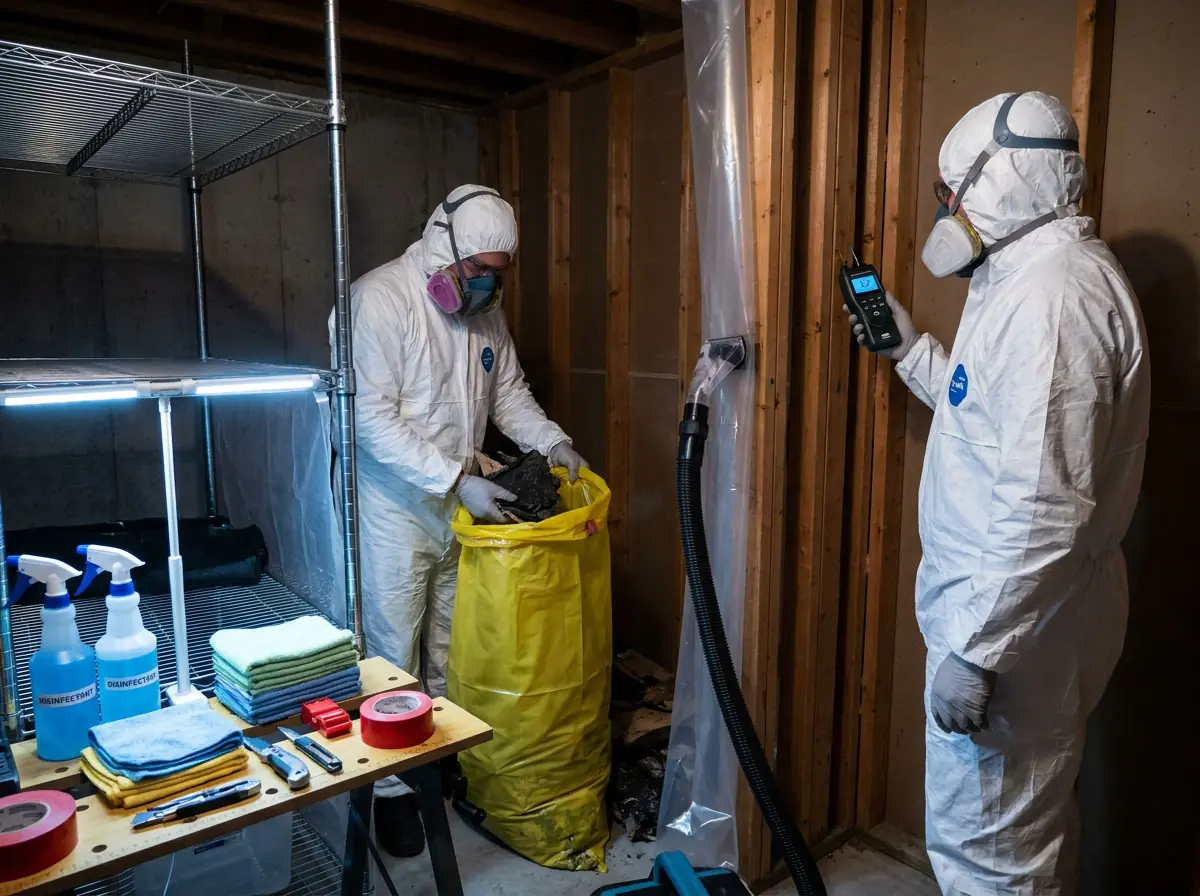
Professional remediation requires a negative air pressure environment to prevent this cross contamination. We use specialized HEPA scrubbers to filter the air while physical barriers keep the rest of your home pristine.
Why Containment is Non-Negotiable
- Prevents cross-contamination: Keeps spores from migrating to your bedrooms or kitchen.
- Protects your HVAC: Stops the furnace blower from distributing toxins throughout the house.
- Reduces liability: Ensures the problem is localized rather than becoming a whole-home disaster.
Neglecting these steps is the fastest way to turn a small, localized patch of growth into a massive restoration project. You are not just cleaning a spot; you are managing a biohazard event. If you skip containment, you are guaranteed to see the mold return within weeks, often in rooms that were perfectly clean before you started.

Remediation Success in Action: A Local Arvada Basement Case Study
Last winter, an Arvada family noticed a strange odor creeping up from their finished basement. While they initially brushed it off as just a damp carpet issue, their health started declining with persistent coughs and headaches.
When our team performed an inspection, we found the culprit: a slow, hidden leak behind the baseboards that had been feeding a massive mold colony for months. The homeowners had tried to mask the smell with candles and bleach sprays, which only fed the fungi the moisture it craved.
Here is what the recovery process looked like once we took the lead:
- Source identification: We located a faulty pipe joint hidden behind the drywall.
- Containment: We sealed the entire basement area to ensure zero cross contamination into the living space.
- HEPA Filtration: Our industrial air scrubbers ran for 48 hours to pull floating spores out of the atmosphere.
- Structural Drying: We used specialized dehumidification gear to return the wall studs and subfloor to their natural moisture content.
The transformation was night and day. By treating the root cause rather than just the surface growth, we stopped the cycle of regrowth instantly. The basement was not only cleared of mold but also moisture-proofed to ensure the issue would never return.
This case serves as a perfect reminder that speed and precision are your best friends. Waiting even a few extra weeks would have turned a simple repair into a full-scale demolition of the home lower level.
Proactive Defense Strategies to Prevent Recurrence After Cleanup
Stopping mold today is only half the battle. If you do not change the conditions that invited the spores in the first place, they will eventually return to feast on your drywall and insulation.
You must treat your Arvada home like a fortress against moisture. Think of your property as a system that needs constant monitoring, especially during our fluctuating seasonal shifts.
Essential Habits for a Dry Home
- Keep your indoor humidity levels consistently below 50 percent. A basic hygrometer is your best friend for tracking these levels.
- Ensure your gutters are clear of debris. If water pools near your foundation, it will inevitably find a way into your basement.
- Check your HVAC filters every month. Dust and organic buildup inside your vents provide a perfect food source for mold once moisture hits.
- Run exhaust fans in bathrooms and kitchens during and after every use. Do not turn them off until the steam has completely cleared.
Inspect your plumbing systems regularly for hidden pinhole leaks. Even a slow drip under the sink creates a microclimate that allows colonies to thrive silently for months.
If you see condensation on your windows during the winter, wipe it down immediately. That moisture eventually runs down the frame and settles into the wall structure, creating the perfect starting line for a new bloom.
Maintaining a Healthy Home Environment Long-Term
Stopping an active outbreak is only the first half of the battle. To keep your Arvada residence safe, you must shift from reactive cleaning to aggressive prevention.
Most mold problems return because the root source of humidity remains ignored. You need to control the environment before the spores find a new place to colonize.
Essential Habits for Lasting Protection
If you want to keep your air quality pristine, follow these core habits. Implementing these simple changes will save you thousands of dollars in future Mold Remediation costs.
- Keep your indoor humidity levels between 30 and 50 percent at all times.
- Check your roof and windows for tiny gaps that let moisture seep in during snowmelt.
- Ensure your dryer vents and bathroom fans exhaust directly outside, not into your attic or crawlspace.
- Monitor your HVAC system to prevent condensation buildup in your ducts.
Think of your home as a living system that needs to breathe. When you block off ventilation or ignore small leaks, you are essentially inviting mold to move back in.
Regular inspections are your best insurance policy. Take ten minutes once a month to look under sinks, check basement corners, and scan your ceiling for any sign of water stains. Spotting a drip early is the difference between a quick wipe-down and an expensive structural overhaul.
People Also Ask
Is mold remediation covered by homeowners insurance in Arvada?
Coverage depends entirely on the source of the moisture and the specific terms of your policy. If the mold resulted from a sudden, accidental water event like a pipe burst, it might be covered, but maintenance related issues are rarely included.How do I know if I have toxic black mold in my home?
You cannot identify toxic mold by sight or color alone, as many harmless fungi look similar to dangerous varieties. To ensure your safety, consult the EPA guidelines regarding the identification and management of indoor air quality issues.How long does the professional mold removal process typically take?
The timeline varies based on the extent of the infestation and the size of the affected area. Most residential projects in Arvada take anywhere from one to five days to complete, depending on the containment and drying requirements.Can I clean up mold myself using bleach?
Using bleach is generally ineffective on porous materials like drywall or wood because it only kills surface mold while the roots remain deep inside. Professional remediation is necessary to physically remove contaminated materials and prevent the spores from spreading further.What is the most common cause of mold growth in Arvada homes?
While our climate is dry, mold is frequently caused by plumbing leaks, basement flooding, or inadequate ventilation in bathrooms and kitchens. These areas trap moisture and create the humid microclimates that mold colonies require to thrive.Need Water Damage Restoration Services?
We provide rapid water damage restoration and structural drying services to restore your property in Arvada and surrounding communities (80002, 80003, 80004, 80005, 80007). Our team arrives quickly to mitigate damage and return your home or business to its pre-loss condition.
Request Formal Estimate